5 Secret Habits of Pro Doubles Players That Amateurs Always Get Wrong
Stop colliding with your partner and lifting the shuttle to your opponent’s smash. ST Badminton Academy reveals the 5 tactical habits that separate elite doubles pairs from struggling amateurs. Whether you play in Kepong, Setapak, or Wangsa Maju, this guide teaches you the correct ready position, the “Bevel Grip” secret for defense, and how to read the game like a pro. It’s time to fix your formation and dominate the court.

Habit 1: The Foundation
Ready Position & Split-Step Timing
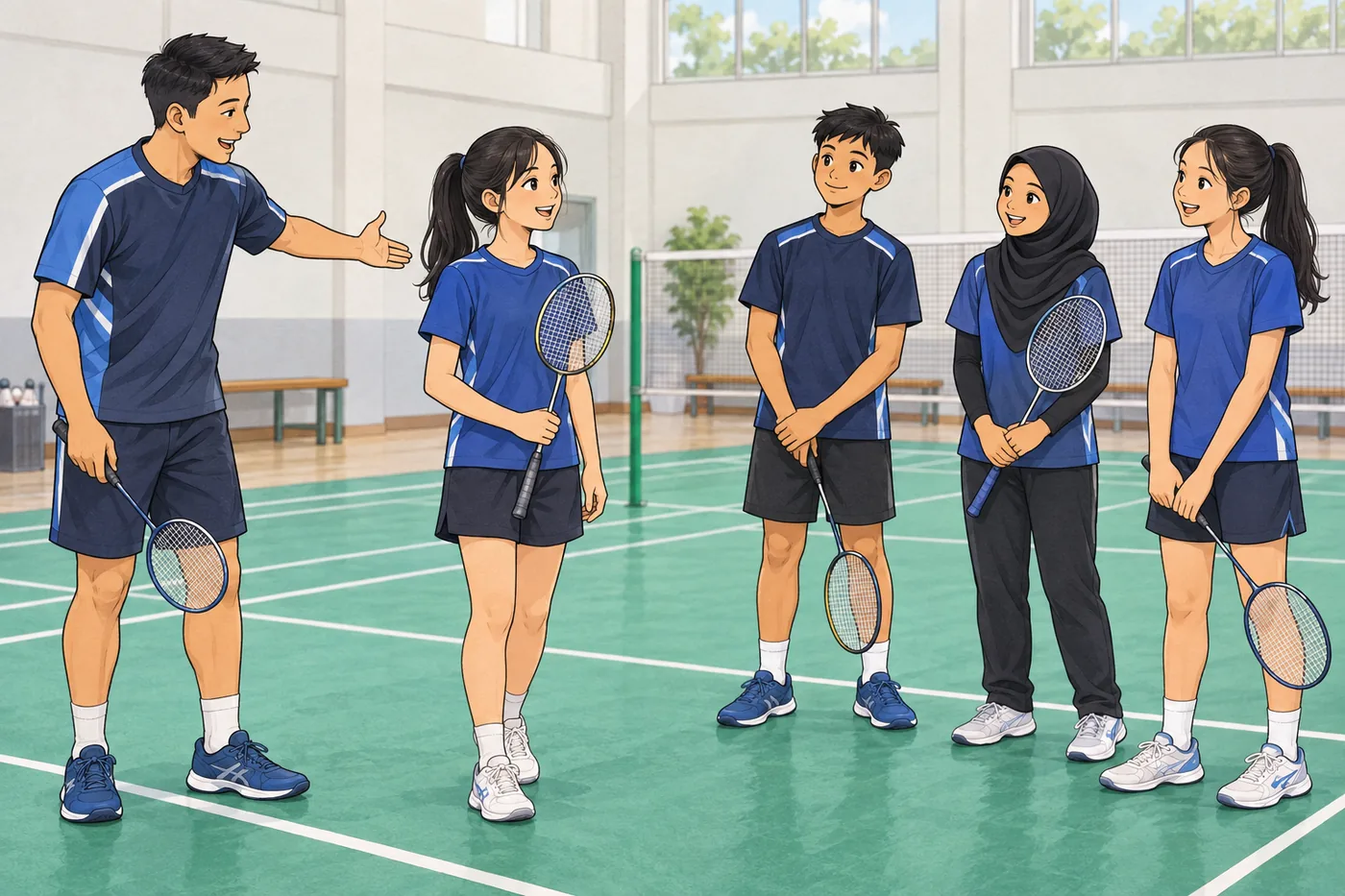
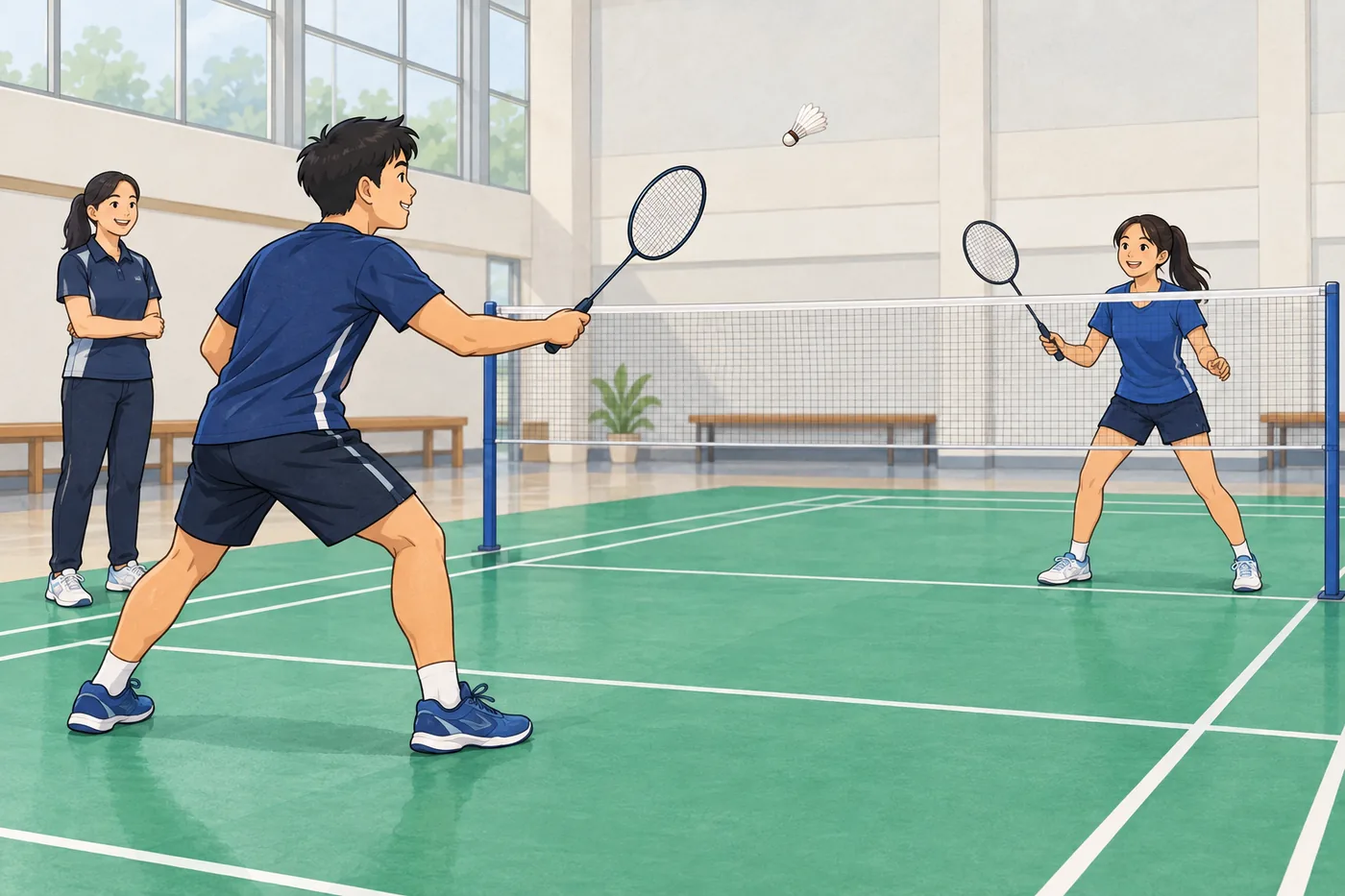
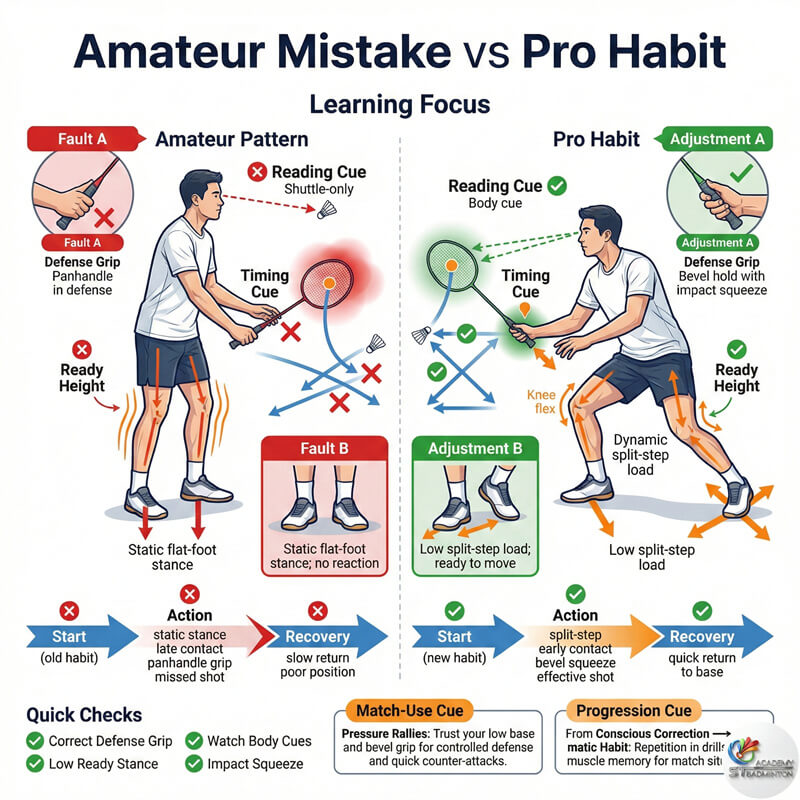
Amateurs often stand tall with flat feet, waiting to see the shuttle before moving. Pros are never static. The “Pro Ready Position” in doubles is lower and wider than singles, with the racket head up at net height.
The Secret: The Split-Step must happen just before your opponent hits the shuttle. This “pre-loading” allows you to explode in any direction. If your heels are touching the ground, you are too slow. In our classes, we drill “Short Ground Contact” to build this explosive habit.

Habit 2: The Defense Key
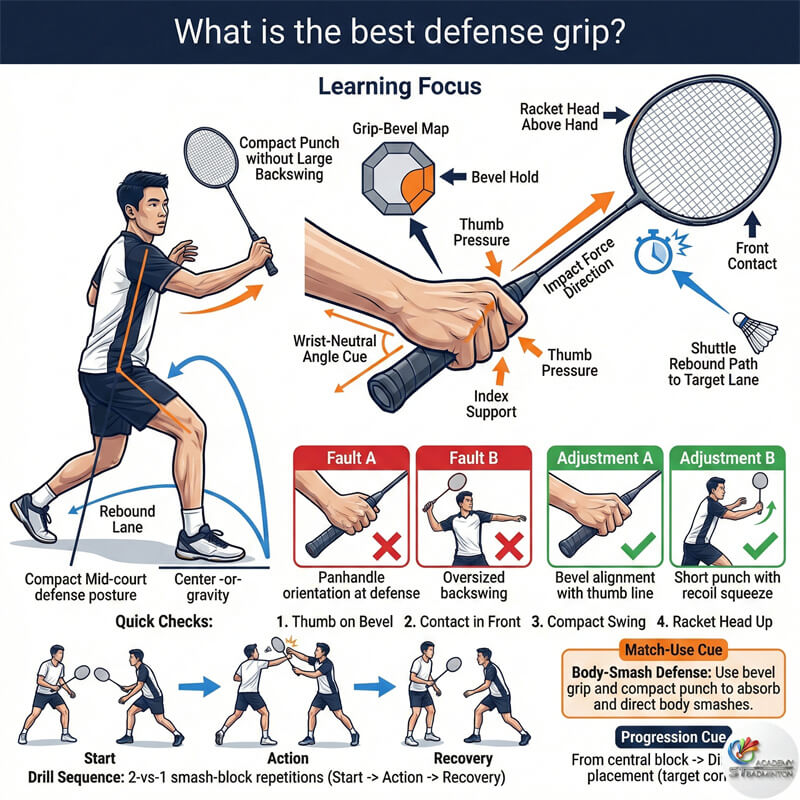
The Bevel Grip for Iron Defense
Amateurs often use a forehand “Panhandle” grip for everything, which makes backhand defense awkward and weak. Pros use a Bevel Grip (or Corner Grip) for mid-court drives and net defense. This involves placing the thumb on the diagonal bevel of the handle, allowing for quick switches between forehand and backhand blocks.
Grip Pressure Habit: Don’t use a “Death Grip” (holding tight 100% of the time). Pros hold the racket loosely to allow the fingers to manipulate the angle, squeezing only at the moment of impact (recoil) to repel smashes.
Habit 3: Positioning
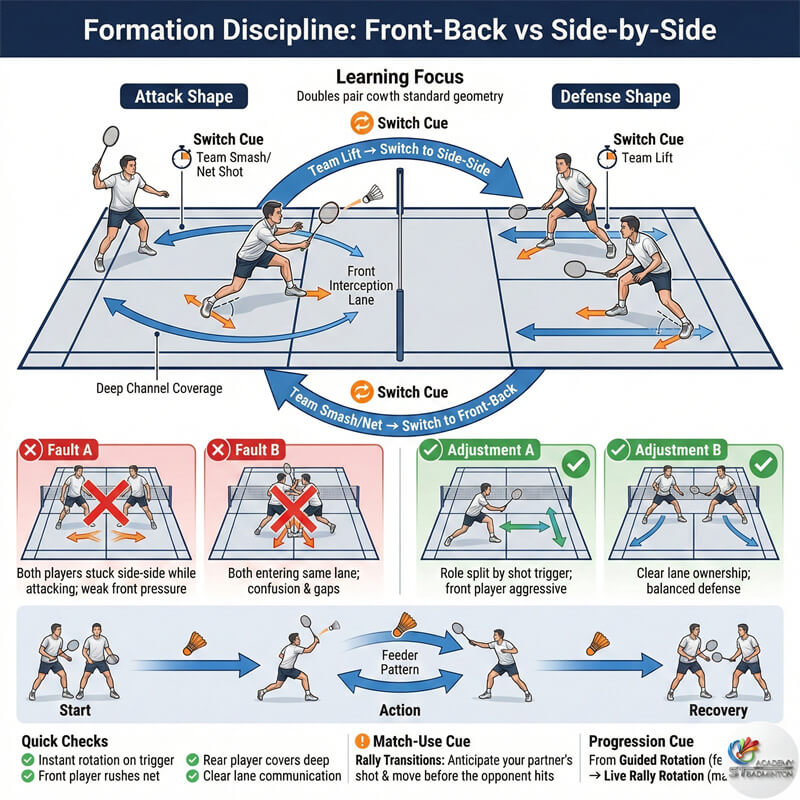
Formation Discipline: Front-Back vs Side-by-Side
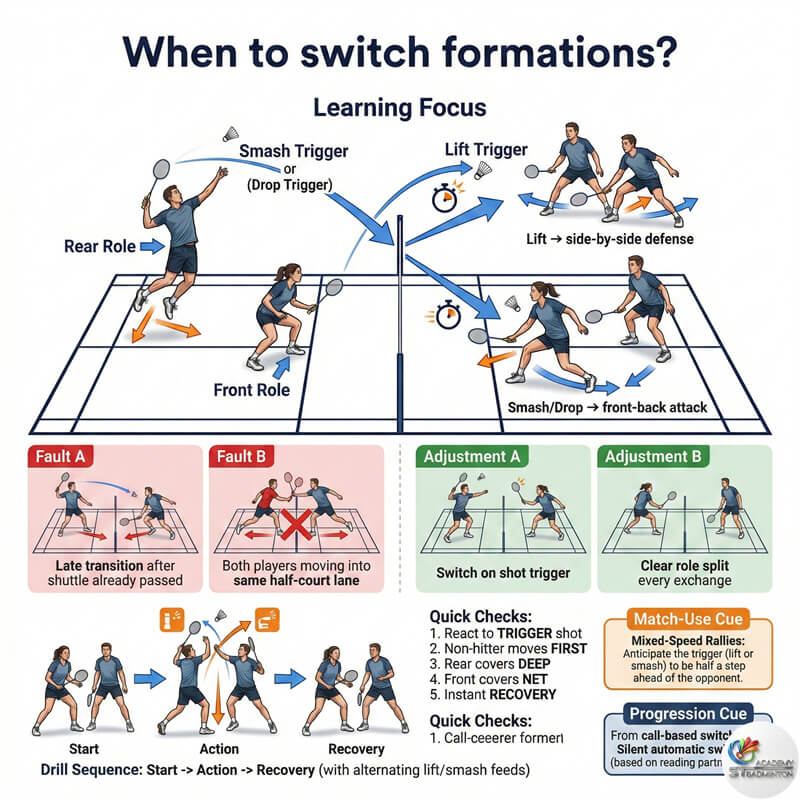
Amateurs often get stuck in “Side-by-Side” mode even when attacking, leaving the front court open. Pros follow a strict rule: Attack = Front/Back, Defense = Side/Side.
The moment you or your partner lifts the shuttle, you must instantly split to Side-by-Side to cover the smash. The moment one of you smashes or hits a net shot, the non-hitter must rush to the front (Net position) to intercept. This “rotation” is what makes doubles fast. Confusion here = lost points.
Habit 4: The First 3 Shots
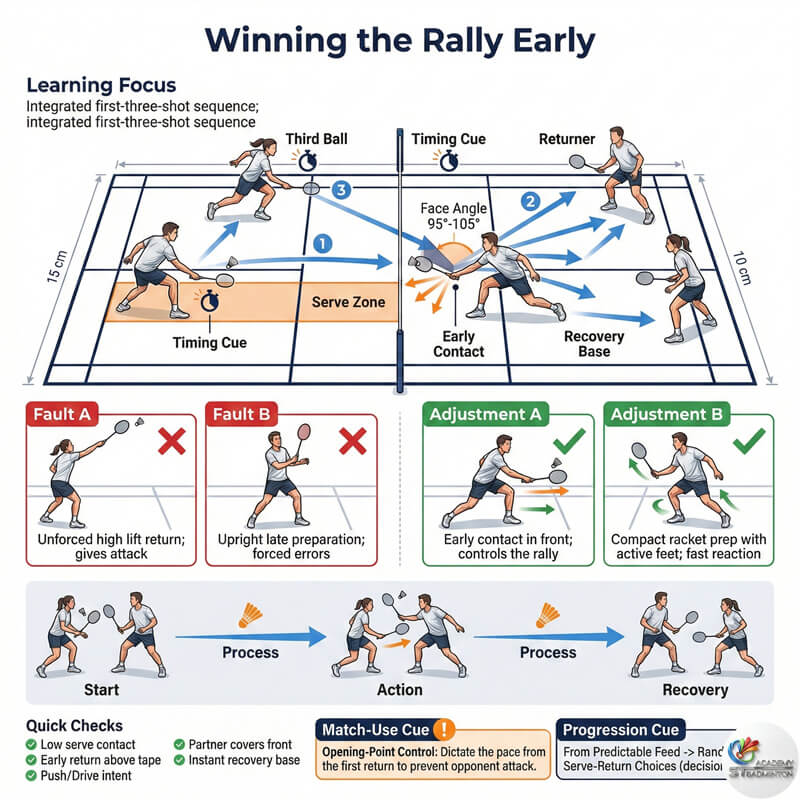
Winning the Rally Early
Amateurs treat the serve as just “starting the point.” Pros treat the Serve, Return, and Third Shot as the most critical phase. 70% of doubles rallies are won or lost here.
Pro Habit: Never lift the serve return unless forced. Always push, drive, or net to force the opponents to lift. This keeps the initiative (attack) with you. If you lift, you give them the attack immediately.
Habit 5: Anticipation
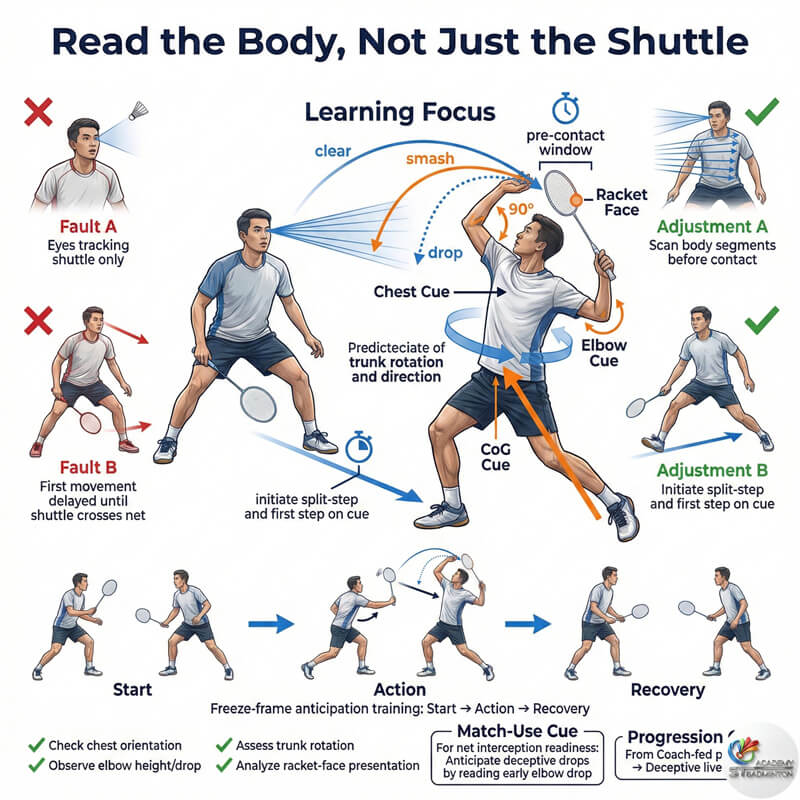
Read the Body, Not Just the Shuttle
Amateurs react to the shuttle. Pros react to the opponent’s body language. To read a drop shot early, look at your opponent’s chest and elbow. If their chest is open and elbow is high, a smash or clear is likely. If their elbow drops or their trunk rotation slows, a drop shot is coming.
Pro Tip: Watch their “Center of Gravity”. If they lean back, they are likely to clear. If they load forward, they are ready to drive or net. We train this “Reading” habit using freeze-frame drills in our Kepong classes.
1.6 Progress & Frequency
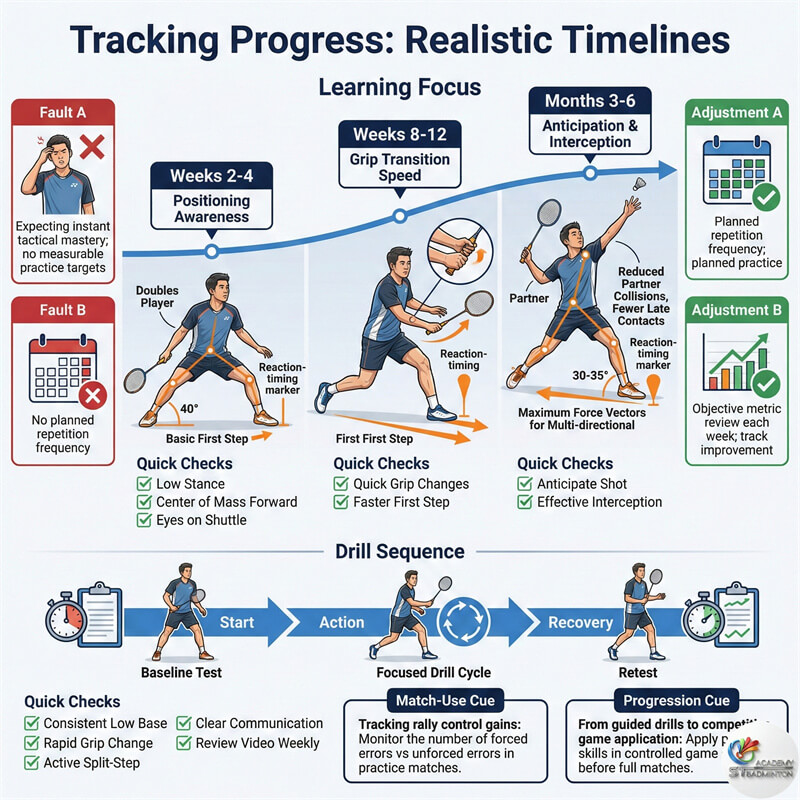
Tracking Progress: Realistic Timelines
Fixing doubles habits takes conscious repetition. For students training 2x weekly in KL, here is a realistic roadmap:
Weeks 2-4: Positioning awareness. You stop crashing into your partner and start respecting the Front-Back/Side-Side rule.
Weeks 8-12: Grip transition speed improves. You no longer panic on backhand defense and can block smashes with the bevel grip.
Months 3-6: Anticipation kicks in. You start moving *before* the opponent hits, intercepting net shots and controlling the rally pace.
1.7 The Coaching Philosophy
Professional Doubles Coaching in KL North
Our coaching philosophy at ST Badminton Academy is strict, educational, and focused on tactical discipline. A dedicated coach in Kepong provides an accountable sports education program designed to instill doubles habits and correct technical mechanics, not just act as a casual shuttle feeder.
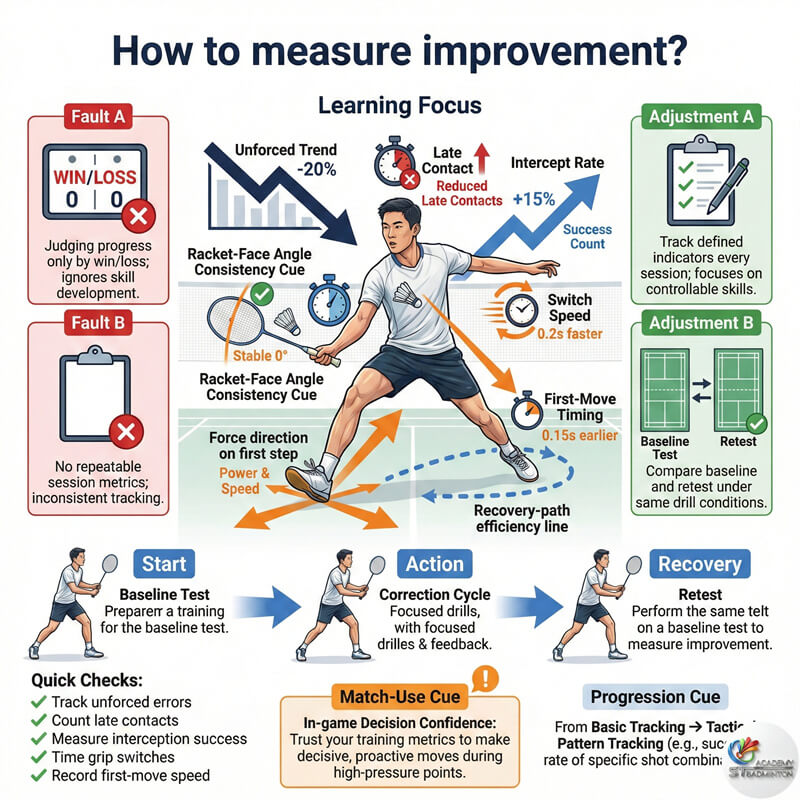
We continuously track progress by evaluating lane coverage, grip switching speed, and interception quality. This focused observation ensures that foundational doubles errors are addressed instantly before they become bad habits.
Common Questions About Badminton Doubles & Tactics
Direct, practical answers to help you understand what to expect from doubles training.
What is the best defense grip?
The Bevel Grip (Thumb Grip). It allows you to block smashes with your backhand in front of your body, which is faster and covers more angles than a forehand grip.
When to switch formations?
Switch instantly based on the shot. If you lift, go Side-by-Side (Defense). If you smash or drop, the non-hitter moves front (Attack Formation).
How to read a drop shot?
Watch the opponent’s elbow and chest. If the elbow drops early or the chest rotation slows down, they are likely playing a drop shot. Don’t guess; observe.
Why hold the grip loosely?
A loose grip allows your fingers to change the racket angle quickly. It also lets you “squeeze” upon impact for power (recoil), which you can’t do if you are already squeezing tight.
What is the split-step cue?
The visual cue is your opponent’s contact point. As they are about to hit, you should be landing your split-step hop to load your legs for movement.
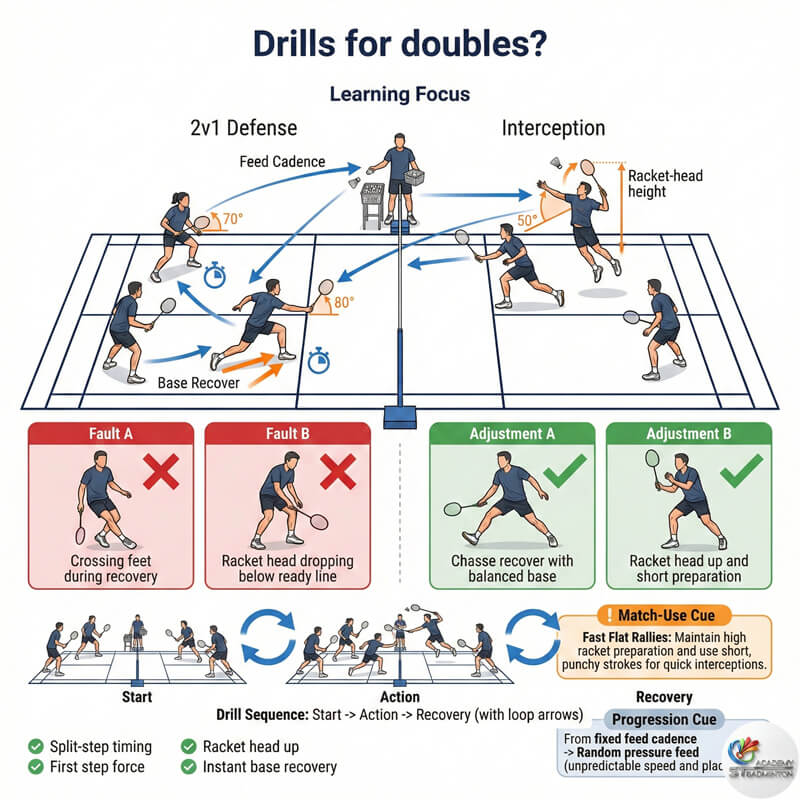
Drills for doubles?
We use “2 vs 1 defense” drills and “Front-court interception” drills. These simulate the speed and pressure of real doubles rallies.
How many sessions per week?
Ideally 2-3 sessions. One session is for technical correction (habits), and the others are for applying them in controlled match play or drills.
Is this for intermediates?
Yes. Intermediates benefit the most because they have the strokes but often lack the tactical habits (positioning/grip) to win against smart opponents.
How to measure improvement?
We track “Unforced Errors” and “Late Contacts.” As you master these habits, you will find yourself in position earlier, reducing panic shots and errors.
Tactical Training Gallery
Tactical Facts
We base our advice on proven doubles strategies used by professional players.
| Habit | Amateur Mistake (Losing Points) | Pro Habit (Winning Points) |
|---|---|---|
| Defense | Panhandle Grip (Weak, Slow) | Bevel Grip (Fast, Versatile) |
| Positioning | Static, Flat Feet | Low, Wide, Split-Step |
| Formation | Confused / Running into Partner | Strict Front-Back (Attack) / Side-Side (Defense) |
| Reading | Watching Shuttle Only | Reading Body Language & Racket Face |
| Grip Pressure | Death Grip (Tight) | Loose-to-Tight (Recoil) |
Get a Doubles Assessment in Kepong
Still unsure if your positioning is correct? At ST Badminton Academy, we don’t just teach shots; we teach doubles tactics and chemistry. Contact us to schedule a session where we can analyze your partnership dynamics and fix your formation errors live on court.