编辑翻译
 所有语言
 简体中文
 繁体中文
 英语
 印度尼西亚语
 日语
 韩语
 Malay
 泰语
 越南语


Badminton for University Students in Malaysia: Clubs, Campus Courts, and Starting Late
University is one of the best times to start badminton, or to return to it after school. Campus clubs are cheap to join, campus courts are close to class, and there are always other beginners who also started late. This guide explains how university badminton works in Malaysia, what a campus club gives you, when an academy adds real value, and how to pick between the two. It covers the MMU Cyberjaya Badminton Club at the MMU Indoor Sports Complex, the Bangi university corridor, and the Sunway student corridor, with the same checks any good class should pass.

Start Here
University Badminton in Malaysia: What to Know First
University badminton in Malaysia usually runs through a student club, not a shop. A campus badminton club books campus courts, runs weekly sessions, organises friendly matches, and sends teams to inter-university tournaments. The MMU Cyberjaya Badminton Club is a clear example: it runs beginner training and tournaments at the MMU Indoor Sports Complex on Persiaran Multimedia in Cyberjaya, and its posts show training and matches taking place there. The club is a university facility, not a public commercial hall, so its sessions are built for students first. That is the model to look for at any campus: student run, close to class, and open to beginners.
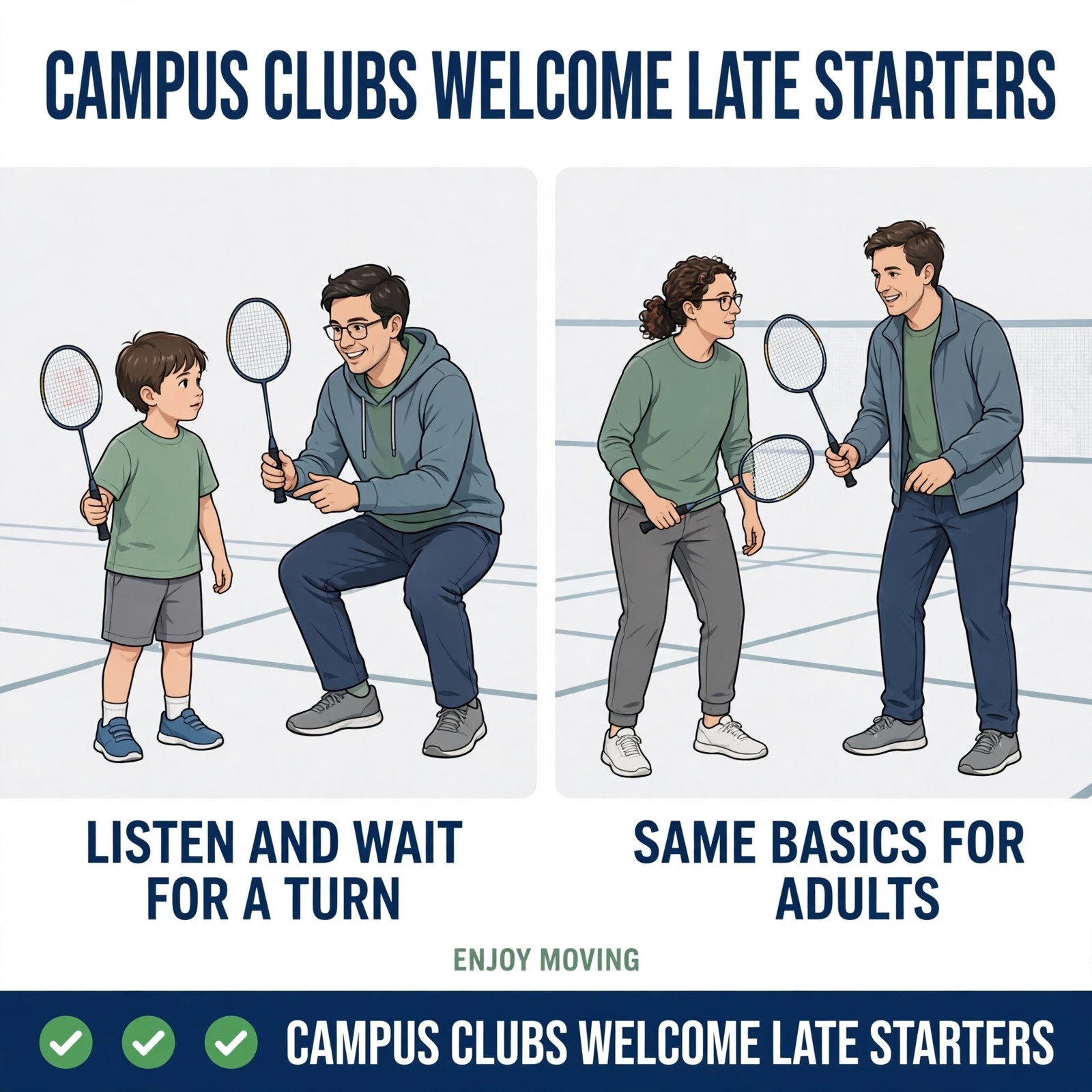
The second thing to know is that starting late is normal at university. Many students arrive having never held a racket, or having played only in school and stopped for years. Campus clubs expect that. A beginner session in a campus club is usually a mix of basic grip, footwork, and short rallies, with older members showing the new members how it works. Nobody expects a first year student to play like a school team player. The students who improve fastest are not the ones who played longest at school, but the ones who turn up every week and practise the basics with care.
Who Can Join
Who Should Join: Beginners, Returners, and Social Players
Beginners belong in a campus club. If you have never played badminton, a club gives you a racket to borrow for the first sessions, a group to learn with, and a coach or senior who checks your grip before a wrong habit forms. The right grip, a handshake hold for forehand and the thumb behind the handle for backhand, is the basis of every shot, and it is far easier to learn it right the first time than to fix it later. Ask the club who teaches the beginners, and whether the beginners get their own court time or are mixed into open play from day one.
Returning players belong too. Perhaps you played in school and stopped when exams took over. Your feet may still remember the rhythm, but your timing and positioning have changed. A good club does not push you to play the way you used to play. The coach or senior will look at how you move now, rebuild your grip, and rebuild your footwork step by step. Many returning players are surprised how fast the old feeling comes back once the basics are fixed the right way.
Social players are the heart of a campus club. Most members join to exercise, to meet people, and to play a game they enjoy after class. Social play is a fine goal on its own. The risk is only that social play without any coaching lets the same mistakes repeat for years. The fix is simple: take one coached session each week, even inside a social club, and use the rest of the week for games. That mix keeps the fun and still builds a cleaner game.

How Classes Run
How a Good Student Class Runs
A good class has a shape you can follow. In the first week, the focus is grip and basic movement. The right grip is checked one student at a time, before a wrong habit has time to form. Basic footwork is taught together with grip: how to stand ready, small steps forward and back, and how to return to the middle of the court after every shot. If a class skips grip and starts with smashing, ask why. The answer will tell you a lot about how the class is planned.
Once grip and footwork start to settle, the class moves to the clear. The clear is a high shot to the back of the court, and it teaches timing, height, and court coverage in one shot. The coach will start with short and easy rallies, so students can feel a clean shot before trying harder shots. The smash is not taught in the first week. That shot needs strong basics first. A student class that teaches the smash on day one is usually a class with no plan, only excitement.
Watch how the coach explains as well. Good explaining uses plain words, one idea at a time, and one short example you can copy. If a coach talks for ten minutes while students stand still, the lesson is a lecture, not training. A good coach also fixes small mistakes right away. One small correction shown in a minute, with a result you can feel yourself, tells you more about the quality of the coach than any poster. Students should ask how feedback works before they join.
Group Size
Why a Maximum Group of Four Matters
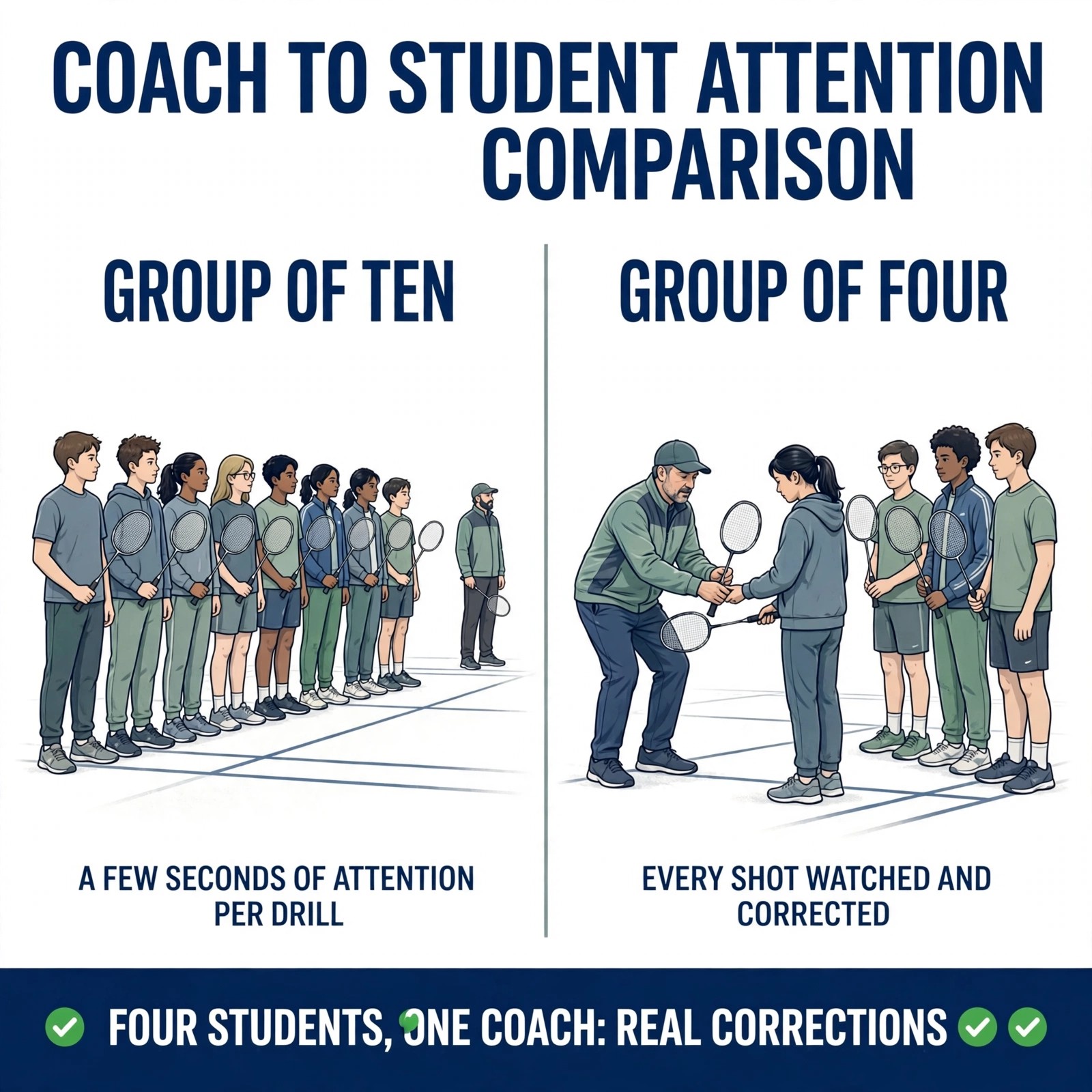
Group size decides how much coaching you actually receive. In a group of ten, the coach can only watch each student for a few seconds in each drill. In a group of four, the coach can watch every shot, fix the grip, adjust the feet, and check the result. The difference shows within a few weeks, not years. Students in small groups learn clean habits from the start. Students in large groups often repeat the same mistake for months before anyone notices. Campus clubs often run large sessions, so ask how the beginners are split up. A club that splits beginners into small groups on separate courts is doing it right.
Ask the academy or club for the real maximum number, not the usual size. Some academies say small group but run classes of eight or ten when the class is full. At ST Badminton Academy, the maximum is four students per coach, and that number does not change when classes are busy. Head coach Mr Eric Chuar teaches these small groups himself, so the corrections come from the coach you meet, not from an assistant who happens to be free that day.
A small group also changes the feel of the lesson. Students get more turns, more rallies, and more chances to ask questions. They learn to watch each other and wait for their turn without losing focus. In a small group, the coach knows the name of every student and the weak shot of every student. In a large group, the coach only knows the loudest student. For a university student with limited free hours, those turns matter, because every session has to count.

Assessment and Progress
Initial Assessment and How Your Progress Is Tracked
Do not sign up for a long programme before you have seen one session. The Initial Assessment is an honest way to check whether the class fits. In a good assessment, the coach watches how you move, how you hold the racket, and how you follow simple instructions. Then the coach tells you clearly what needs work and what the next steps are. You should leave the session knowing more about your game than when you arrived. At ST Badminton Academy, there is no free trial class. New students start with a paid Initial Assessment. The reason is simple: an assessment is real coaching time, not a sales visit.
Progress in badminton is easy to feel but hard to measure without a record. A good coach keeps a record. It can be short notes after each block of sessions: grip fixed, footwork steadier, clear reaching the back line, rallies longer than five shots growing to ten shots. These small notes add up to a picture you can trust. Without a record, every week feels the same, and students have no way to know whether their time and effort are paying off. Ask how the club or academy tracks progress before you join.
Feedback should be regular, specific, and honest. Saying good job every week is not feedback. A useful comment names one thing that has improved and one thing to work on next. Video feedback also helps, when it stays private. A short clip of a student’s clear, watched together with the coach, shows a mistake faster than ten minutes of talking. Ask how often you will hear from the coach, and in what form. A short update after one block of sessions is enough for most students.
Location and Schedule
Campus Courts: Cyberjaya, Bangi, and Sunway
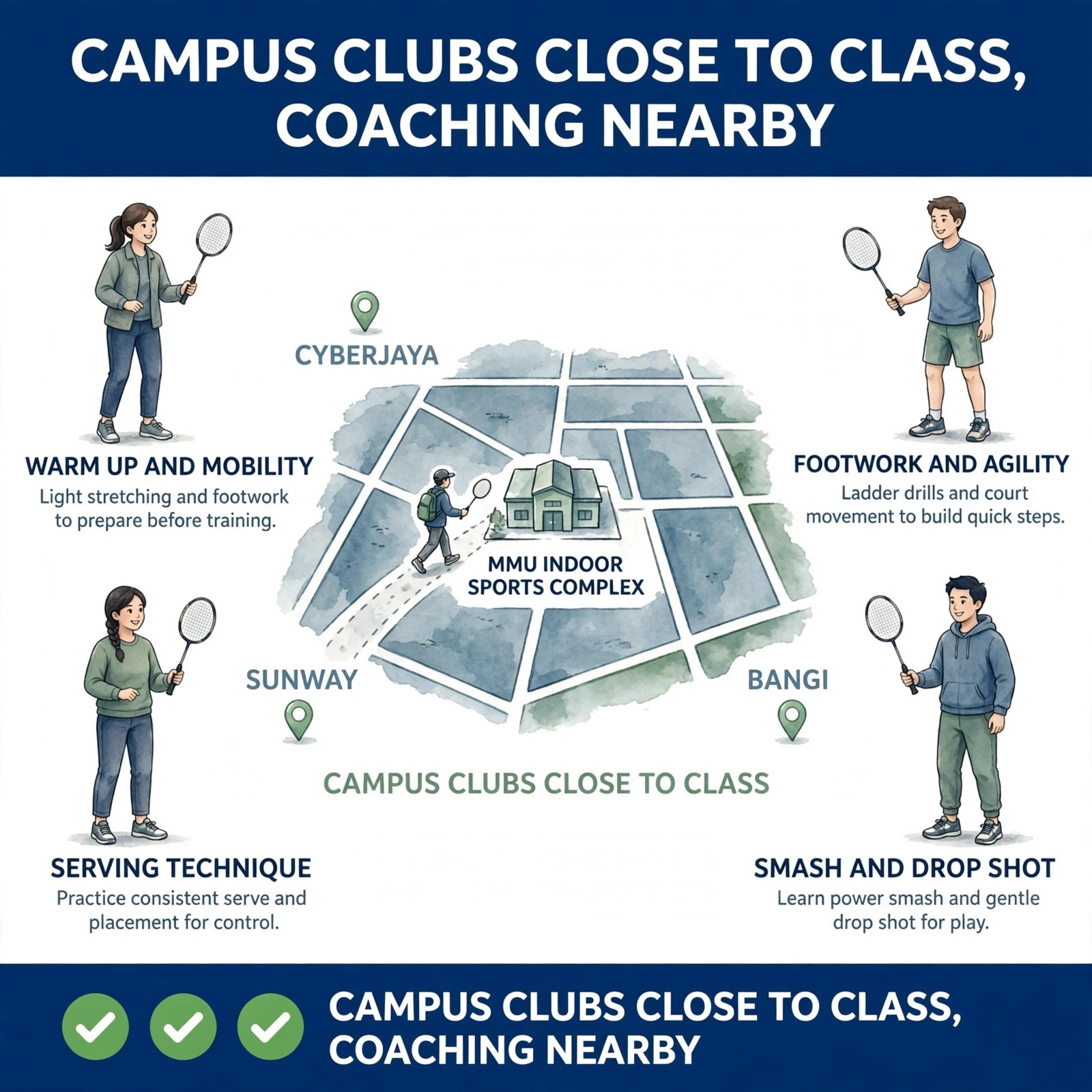
In Cyberjaya, the clearest student option is the MMU Cyberjaya Badminton Club at the MMU Indoor Sports Complex on Persiaran Multimedia. The club runs beginner training and tournaments there, and the complex is a university facility, not a public commercial hall. If you study at MMU Cyberjaya, start with the club: it is close, it is built for students, and it is where you will meet training partners. If you want structured coaching on top of the club, ST Badminton Academy in Setapak is the nearby academy option, and the checks in this guide work the same way there.
Bangi sits on the UKM university corridor, and badminton there runs through commercial halls and social sessions rather than one named campus club. Uptown Sport Bangi is named in social posts for evening sessions, and Kipmall Bangi is named for ladies badminton sessions, but both rest on comment level evidence only, so their current setup could not be fully verified from the sources checked. Treat them as leads to check in person, not as confirmed venues. Students in Bangi should ask their own campus club first, then check the nearest commercial hall in person before committing to a class.
In the Sunway corridor, the student scene links to the halls around Bandar Sunway and USJ. Sunway University Badminton Club points students to CPS Subang, the badminton sports centre at Level 2, Giant USJ 1, which lists 16 badminton courts alongside pickleball courts. The two Sunway venues are X Park Sunway South Quay, with 11 rubberised courts, and Sunway Extreme Park at USJ 1. A student in Sunway can join the campus club for games and take structured coaching at a nearby hall, and the mix of the two usually works better than either one alone.
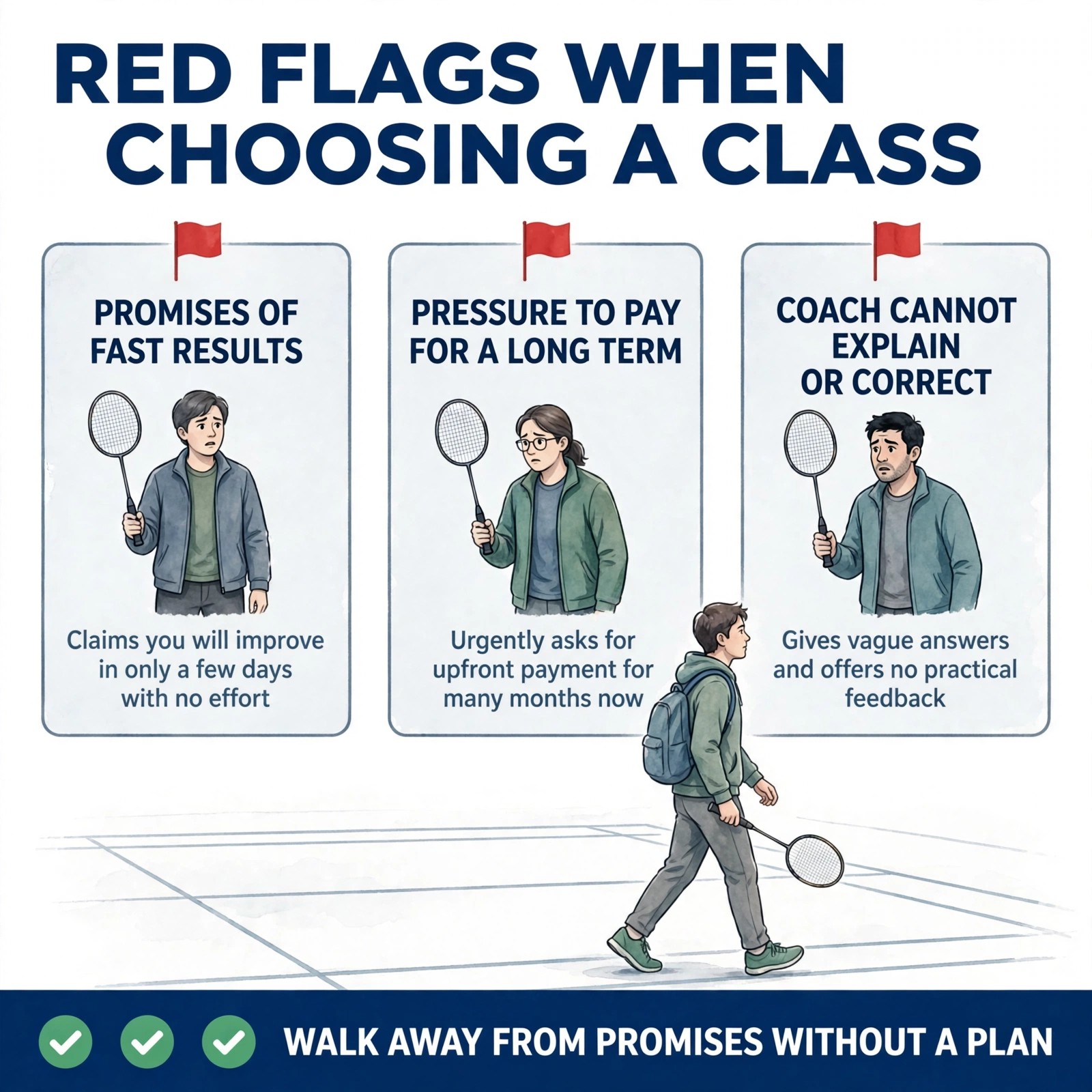
Red Flags
Red Flags: When to Look for Another Class
The first red flag is a promise of fast results. No coach can promise a tournament win, a place on a university team, or a fixed timeline for progress. Badminton rewards steady effort over months, and any coach who guarantees results within a few weeks is selling hope, not training. A good coach talks about the work to be done, the plan to be followed, and the signs of progress you can see, and lets the results be decided by the player.
The second red flag is pressure to pay for a long term before you have seen one session. A fair academy lets you assess first, then decide. Watch out for contracts that lock you in for months, extra charges that only appear after you sign, and answers that dodge direct questions about terms and conditions. Clear terms, given in writing before you commit, are a sign of a serious academy. If you feel pushed, trust that feeling and keep looking. Student budgets are tight, so terms matter even more.
The third red flag is a coach who cannot explain, cannot correct, or will not answer questions. If a coach talks over you, blames the student for every mistake, or runs a group so large that nobody gets attention, look for another class. There are many good coaches in Malaysia. The right coach will welcome your questions, show you the plan, and let the coaching speak for itself. Choose a coach who wants you to understand, not a coach who wants you to simply obey.
Why Eric Chuar Stands Out
A coach can sound good on paper and still teach badly. The difference shows in the details: how a lesson is planned, how mistakes get corrected, and whether a student actually improves week after week. Eric Chuar has spent over 17 years coaching in Malaysia and Singapore, and his teaching is built on proper training, not guesswork. His certificates are listed below, and parents can ask to see them before signing up.
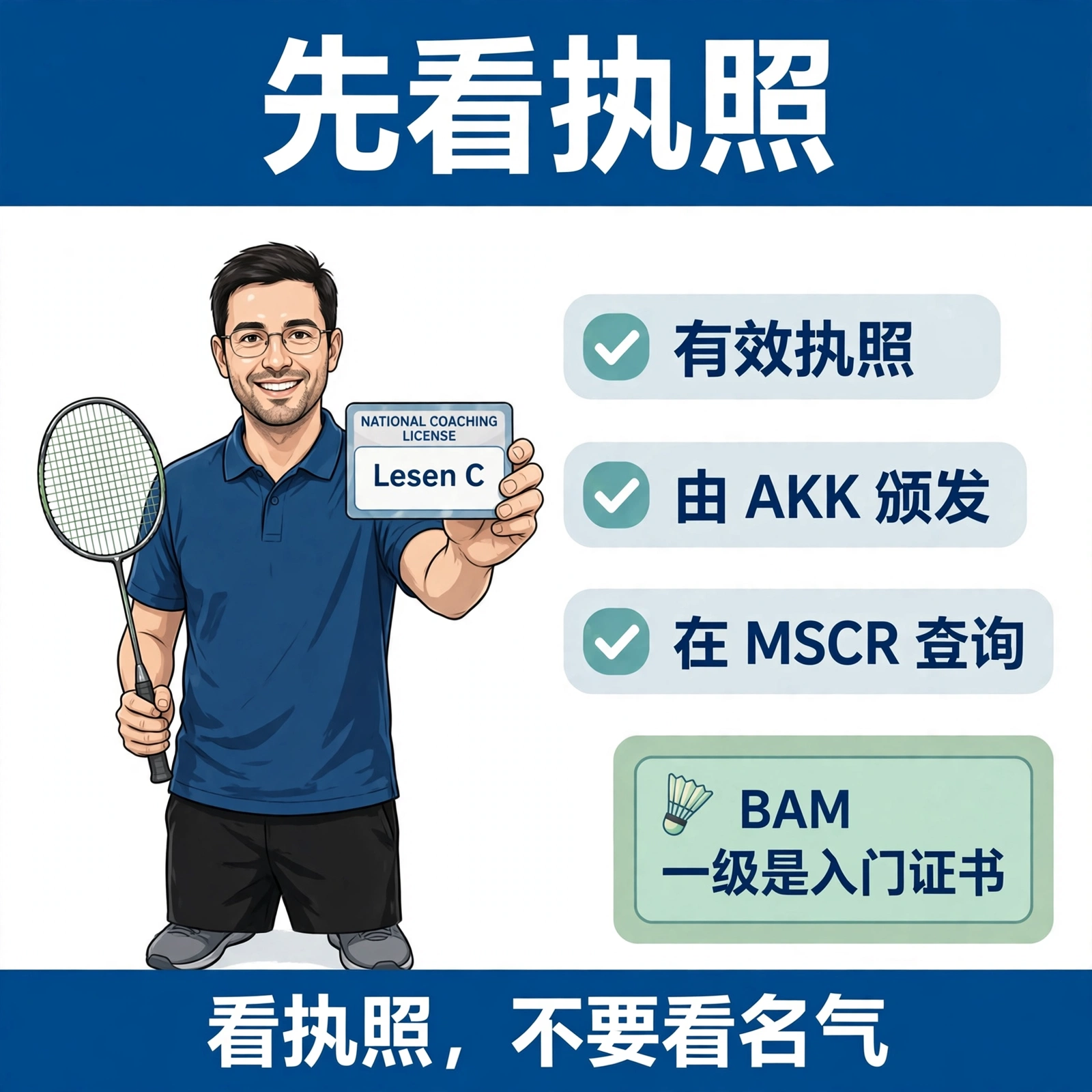
Coaching licences: National Coaching License Lesen C, SLKK Tahap I, issued by Akademi Kejurulatihan Kebangsaan (AKK). This is the licence that confirms legal coaching status in Malaysia, and it can be checked on the Malaysia Sports Coach Registry (MSCR). He is also a Certified National Level 1 Badminton Coach under SPKK, issued by AKK and Institut Sukan Negara, and a Certified Badminton Coach under BAM Level 1.
Sport science: Sport Science Course Level 1 (AKK), covering basic anatomy and physiology, youth training principles, injury prevention, fitness components, training planning, testing and monitoring, and sport psychology basics.
Data and analytics: Sports Performance Analysis, Sports Performance Analytics Specialization, Prediction Models with Sports Data, Data Collection and Processing with Python, Wearable Technologies and Sports Analytics, Machine Learning in Sports Analytics, and a Test on Moneyball and Beyond.
Athlete development and safety: The Science of Training Young Athletes, Motivating Gen Z Learners, Safe Sport Core, Safe Sport (Coach), and Doping in Sports.
He codes, too. The Python and machine learning certificates are real, and he uses them. He builds his own systems for tracking students and planning lessons, so decisions come from records and data, not just feel. A coach who can read the numbers and read the court is hard to find.
Small groups, close attention. Classes stay at a maximum of four students, so every grip, every footwork step and every swing gets corrected properly. With over 17 years of coaching behind him, he has seen the same beginner mistakes hundreds of times, and he knows how to fix them before they become habits.
Sixteen certificates in total, plus registration on the Malaysia Sports Coach Registry. That is the part other coaches cannot match by talking about it.
FAQs: Badminton for University Students in Malaysia
Here are the answers to the questions university students in Malaysia ask most often about badminton clubs, campus courts, and starting late.
Should I join a campus club or an academy?
Join the campus club first. It is close to class, it is built for students, and it gives you training partners and games every week. Add academy coaching when you want structure the club cannot give: a fixed plan, small groups, and a coach who tracks your progress. Many students do both, with the club for games and the academy for one coached session each week. If you can only pick one, pick the option that gives you a coach who corrects you, not only games to play.
I have never played badminton. Is university too late to start?
No. University is one of the best times to start, because campus clubs expect beginners and run beginner sessions. You will learn grip, footwork, and clear in a fixed order, with other beginners learning beside you. Students who start at university and train two to three times a week usually see small changes within a few weeks: a neater grip, feet returning to the middle of the court, and longer rallies. Starting late is not a barrier, but the training plan must fit your body and your timetable.
What should I bring to my first session?
Bring sports shoes with grip for indoor courts, a water bottle, and a towel. If you own a racket, bring it, and the coach will tell you whether it suits you. If you do not own one, ask the club whether rackets are available to borrow for the first sessions before you buy. A beginner should pick a light racket that is easy to control, with a flexible or medium shaft. Real badminton shoes matter, because they are built for side to side movement and sudden stops on court. Ordinary running shoes do not give the same support.
How often should a student train around classes?
Most students train two to three times a week, with rest days between sessions. That schedule gives enough time to repeat what was learned, and rest days between sessions give the body time to recover. One session a week can still help, but progress is slower because too much time passes between sessions. Fit training around your class timetable and assignment deadlines, not the other way around. A session you attend every week is better than a packed week followed by a month away.
Where do MMU Cyberjaya students play badminton?
MMU Cyberjaya Badminton Club runs beginner training and tournaments at the MMU Indoor Sports Complex on Persiaran Multimedia in Cyberjaya. The complex is a university facility, not a public commercial hall, so its sessions are built for students first. If you study at MMU Cyberjaya, the club is the natural first step. Students who want structured coaching on top of the club can look at academies nearby, and the checks in this guide work the same way there.
What about students in Bangi and Sunway?
Bangi sits on the UKM university corridor, and badminton there runs through commercial halls and social sessions. Uptown Sport Bangi and Kipmall Bangi are named in social posts, but both rest on comment level evidence only, so check them in person before committing. In Sunway, the student scene links to CPS Subang at Level 2, Giant USJ 1, which lists 16 badminton courts, and to X Park Sunway South Quay and Sunway Extreme Park. Sunway University Badminton Club points students to CPS Subang.
Does ST Badminton Academy offer a trial class?
No. ST Badminton Academy does not offer a free trial class. New students start with a paid Initial Assessment. In the assessment, the coach watches how you move, how you hold the racket, and how you follow simple instructions, then tells you clearly what needs work and what the next steps are. The assessment is real coaching time, not a sales visit. Other academies do offer free trial classes. Ask first what the trial actually includes before you book it.
How many students are in one group?
At ST Badminton Academy, group classes are limited to four students per coach. In a group of four, the coach can watch every shot, fix the grip, adjust the feet, and check the result. In a group of ten, the coach can only watch each student for a few seconds in each drill. The difference shows within a few weeks. Ask any academy for the real maximum number, not the usual size, because some academies say small group but run classes of eight or ten when the class is full.
What makes Mr Eric Chuar a good coach for students?
Mr Eric Chuar has coached for more than 15 years in Singapore and Malaysia, and he still teaches small groups himself at ST Badminton Academy in Setapak. He holds a valid National Coaching License, Lesen C (SLKK Tahap I), issued by the National Coaching Academy (AKK), plus a National Level 1 Badminton Coaching Certificate under SPKK, a Sport Science Level 1 qualification, and a BAM Level 1 coaching qualification. The first check for any coach in Malaysia is the valid National Coaching License, Lesen C, because it confirms the coach is legally allowed to coach and trained to teach. BAM Level 1 is the entry certificate and is now common, so it should never be the only credential a coach shows you. His groups are limited to four students, so every student gets individual corrections. He teaches the basics first, grip, footwork, then clear, and he tracks progress with regular feedback. Parents can watch one session and judge his coaching for themselves.
University Students Playing Badminton in Malaysia
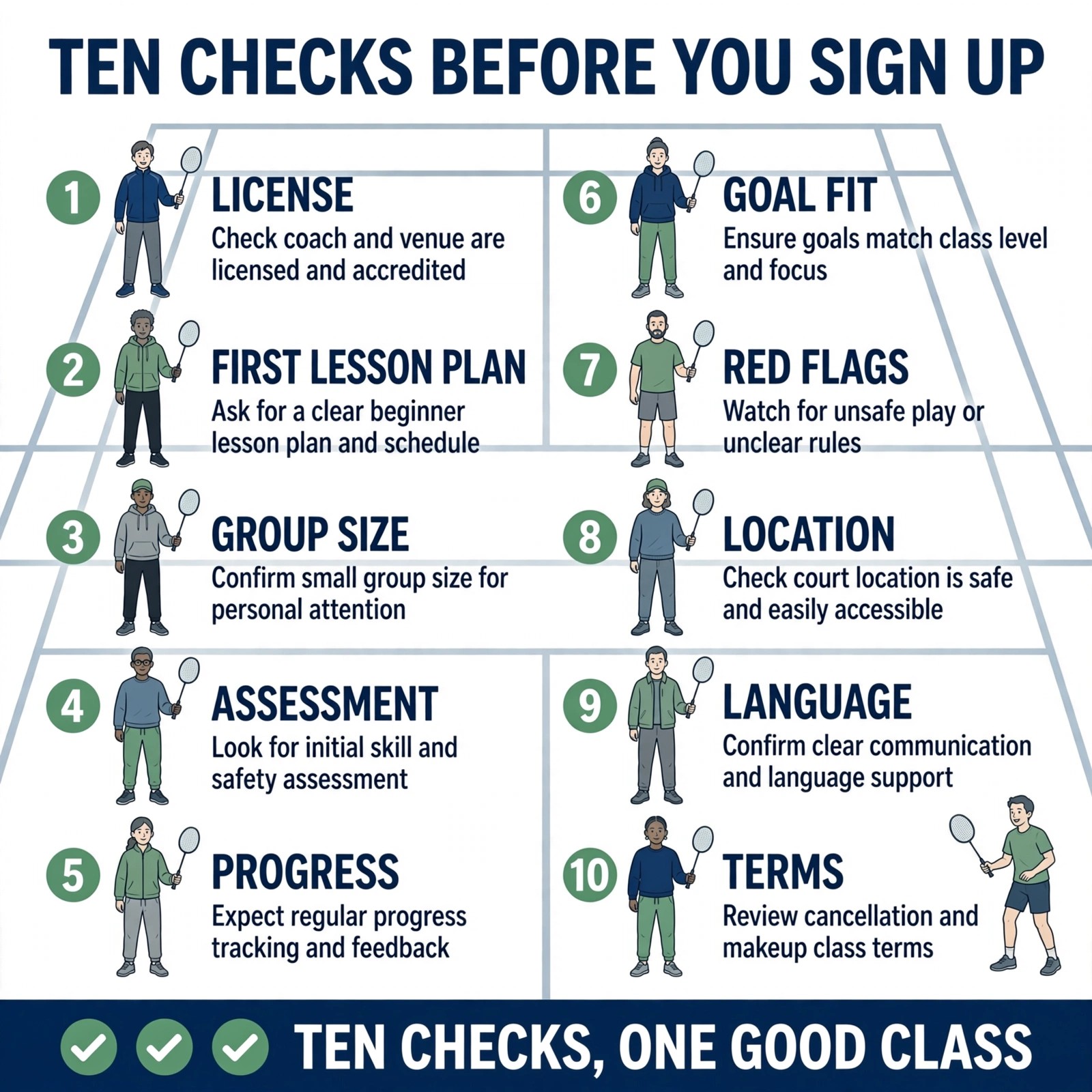
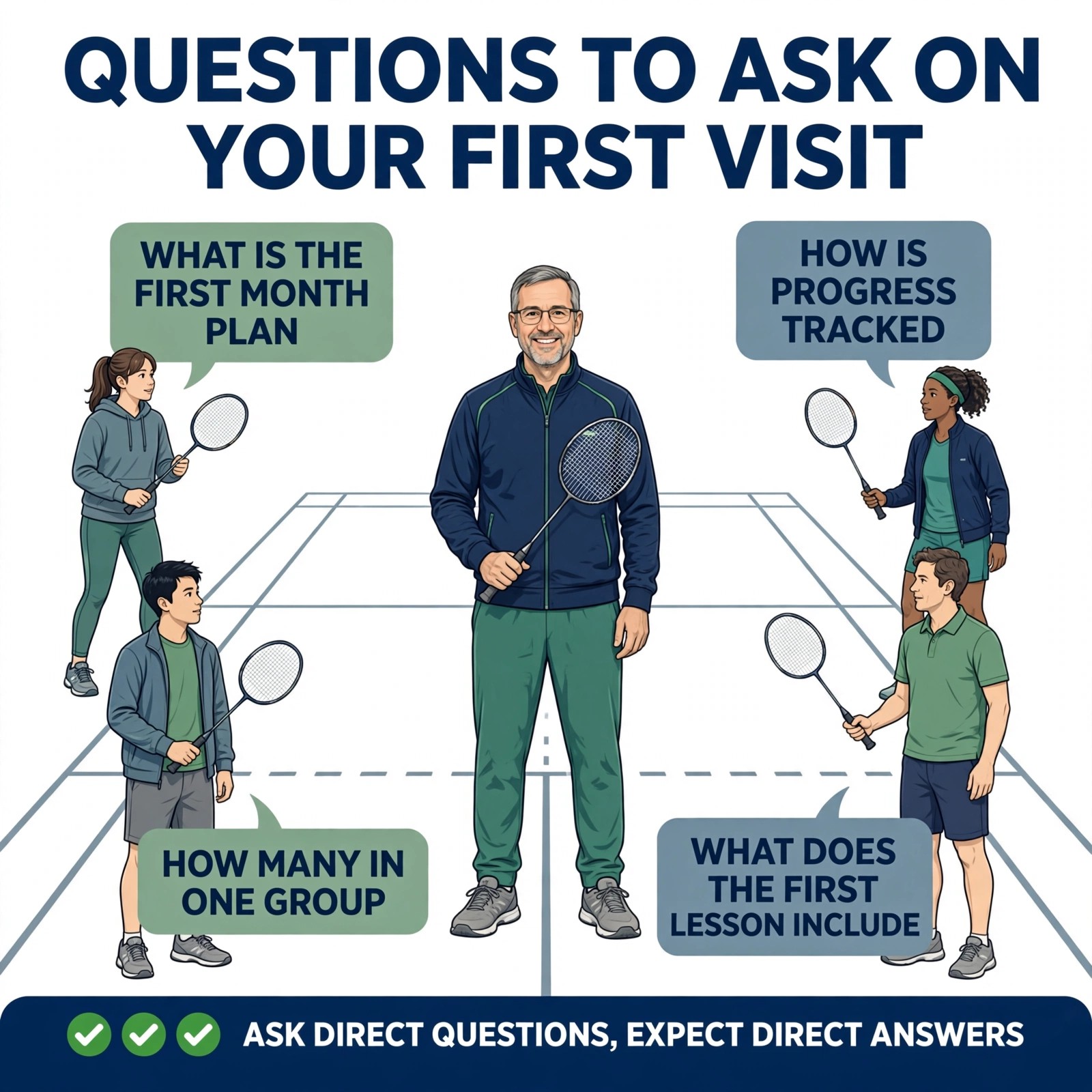

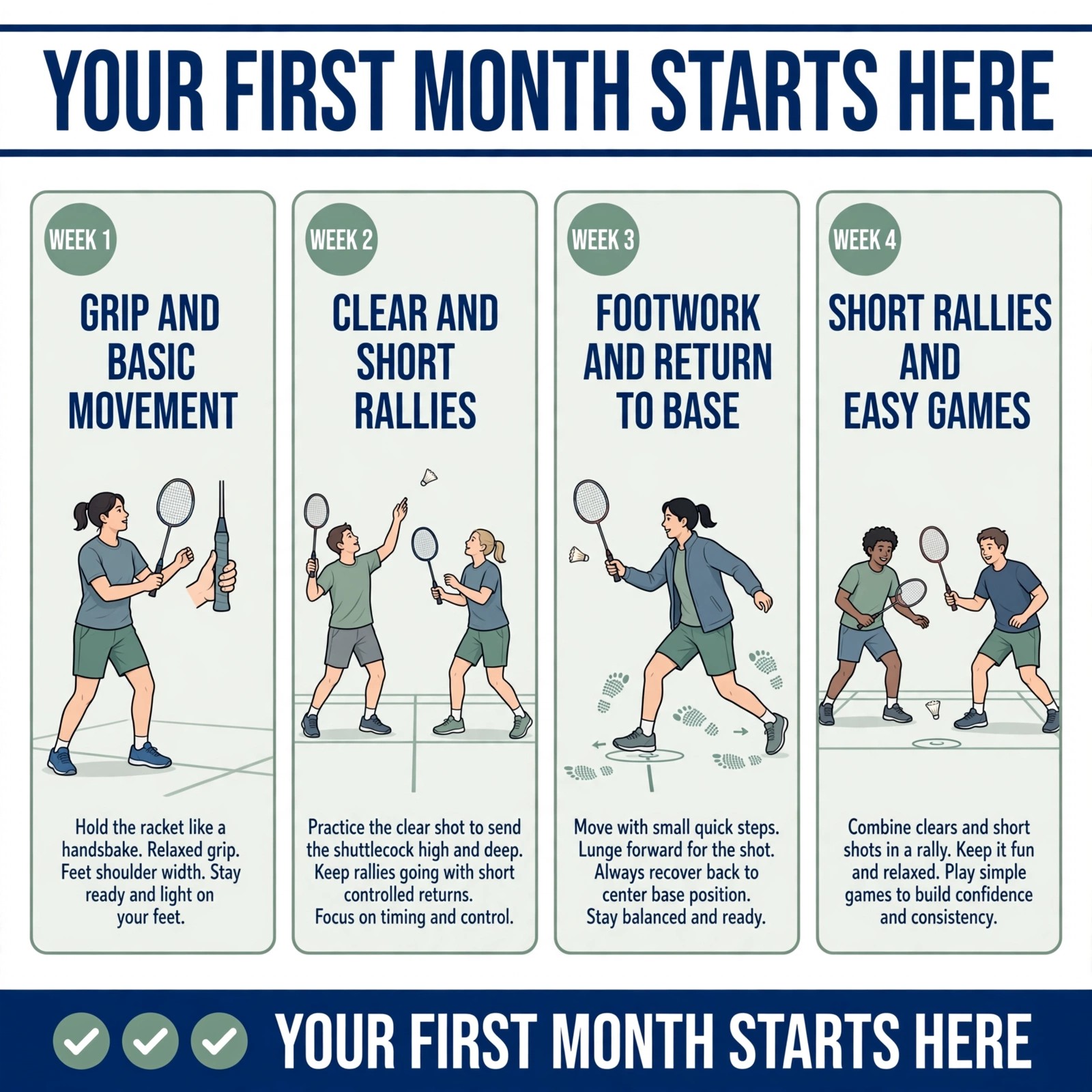
What Good Coaching Looks Like at ST Badminton Academy
Picking a class gets easier when you know what good coaching looks like. These are the standards we hold ourselves to in every session at ST Badminton Academy in Setapak.
| Factor | Campus Club Only | Club Plus Academy Coaching STBA |
|---|---|---|
| Coach Background | Senior students or a part time coach. Credentials may vary. | A qualified coach with a clear teaching record and more than 15 years of experience in Singapore and Malaysia. |
| First Lesson Plan | Join and play. Basics are picked up along the way. | Initial Assessment first, then grip, footwork, and clear in a fixed order. |
| Group Size | Large sessions. Beginners may share one court with many players. | Maximum 4 students. Mr Eric Chuar himself corrects every shot and movement. |
| Progress Tracking | No record. You judge yourself by how games feel. | Regular feedback and a clear record of what has improved and what to work on next. |
| Communication | Short answers between games. Little one to one time. | Clear explanations after sessions, and video feedback that stays private. |
| Training Plan | The same games every week for everyone, whatever their goal. | A plan matched to your goal: fun games, university team, or competition training. |
| Long Term Results | Players who enjoy the game but repeat the same mistakes. | Players with clean basics, clear next steps, and steady progress over time. |
Choose Well, Then Train with Confidence
Before you commit, run three final checks. Check 8: does the location and schedule fit your week without a long trip or late night sessions? Check 9: can the coach explain things in words you understand? Check 10: are the terms and conditions clear, with no pressure to pay for a long term before you have seen one session? If a class passes all ten checks, you have found a class worth training with. ST Badminton Academy in Setapak welcomes university students who want to see good coaching before they commit.