How To Improve Your Badminton Backhand: Techniques And Drills (Backhand Guide)
Every player has one corner that opponents love. For most club players it sits on the backhand side. The moment a rally turns that way, the lifts land short, the defence scrambles, and the point is halfway lost. The good news is that a weak backhand is rarely a talent problem. It is usually a short list of fixable habits: a grip that never changes, contact taken too close to the body, and length asked for before the basics can support it. This guide improves the backhand the way coaches actually build it. Diagnose the leak first, fix the grip, groove the shape, then climb a simple ladder from safe defence to a full length clear, one step at a time.
Backhand Check #1
Spot the Leak: How a Weak Backhand Loses Points
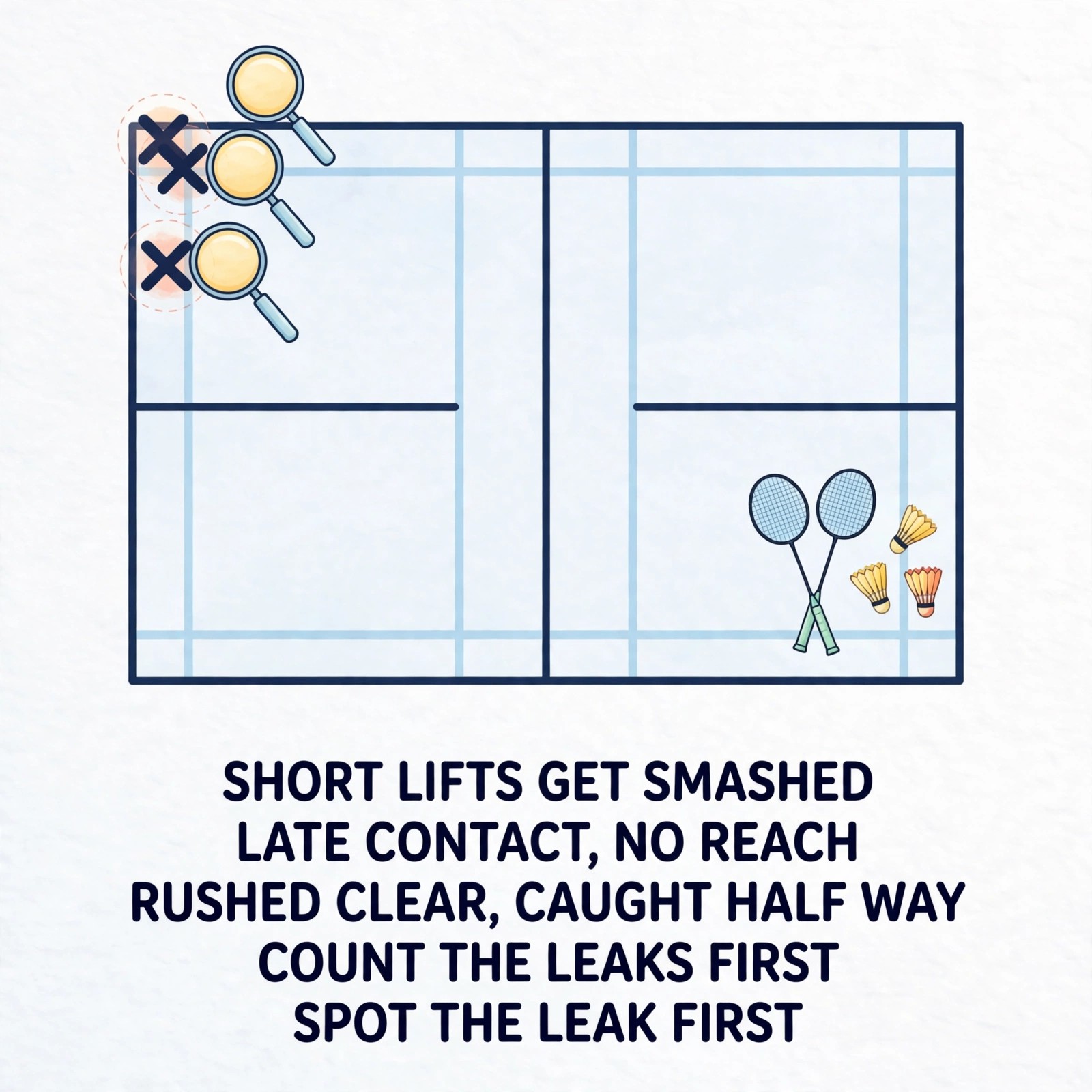
Start by watching your own matches with honest eyes. Count how many points end within two shots of the opponent playing to your backhand corner. For many players it is the biggest single leak in their game, bigger than any smash they face. Opponents notice it quickly. Once they know the corner is soft, they will serve there, drive there and lift there, and every rally becomes a test you did not choose.
The leak usually shows in three ways. Lifts that fall short of the back line and invite a smash. Drives that float because the racket arrives late and cramped. Net replies that sit up because the hand is tense. None of these need a new talent to fix. They need the fault named clearly, then trained in the right order. That order is the rest of this guide.
Backhand Check #2
The Grip Fix: Thumb Up, Fingers Relaxed
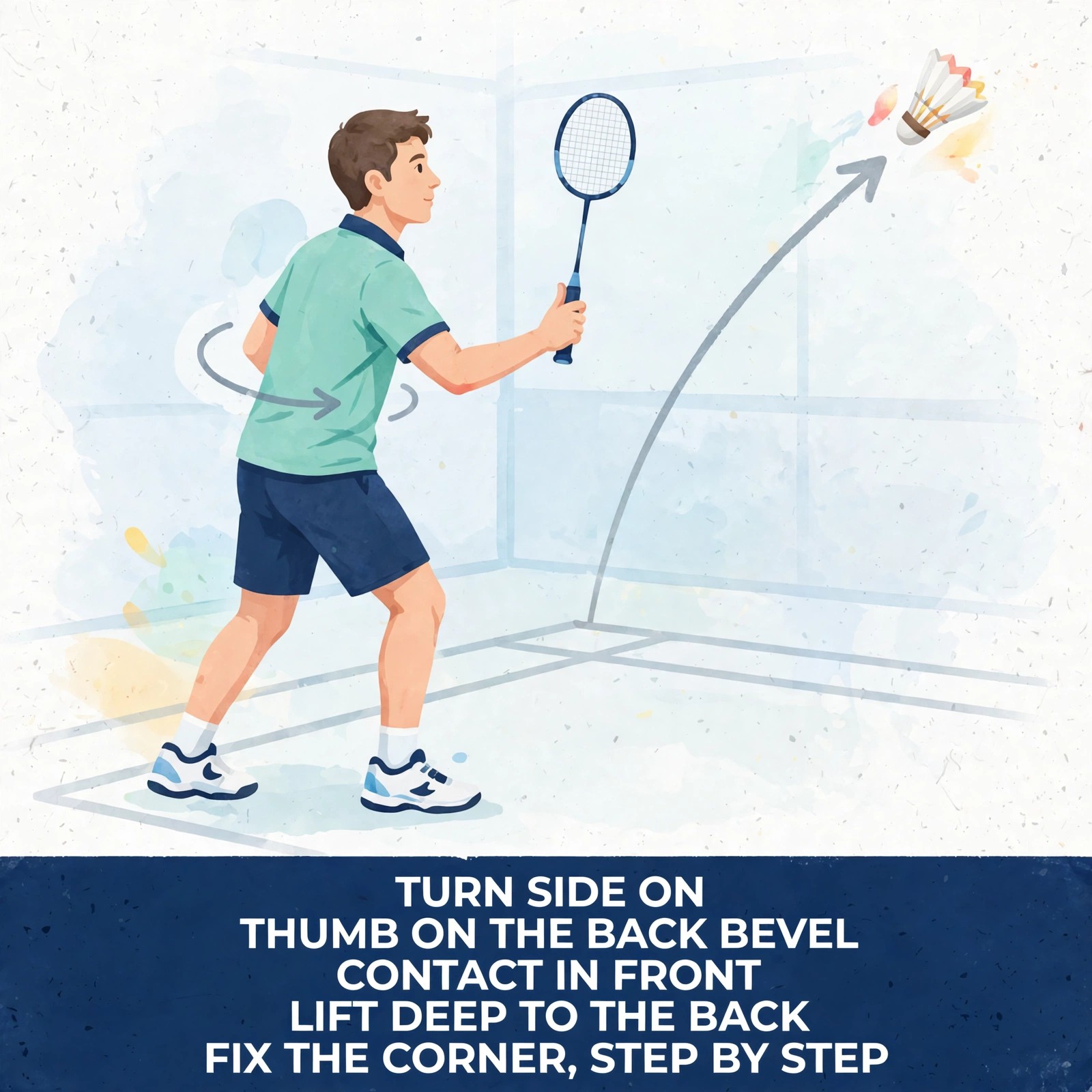
Most weak backhands start in the hand. Players keep the forehand grip for every shot, so the racket face points the wrong way on the backhand side and the thumb has no leverage. The backhand grip is a small change with a big effect. Turn the handle slightly in your fingers and rest your thumb flat on the wide bevel at the back of the handle. That thumb becomes the lever that pushes the racket through the shuttle.
Relaxed fingers matter as much as thumb position. A clenched hand locks the wrist and kills the short, sharp action the backhand needs. Hold the handle softly during the rally, then let the fingers tighten at contact for a brief squeeze of power. This is also where some old advice about shakehand and penhold grips goes wrong. Those are table tennis grips. Badminton uses one handle and quick changes between the forehand grip and the backhand grip.
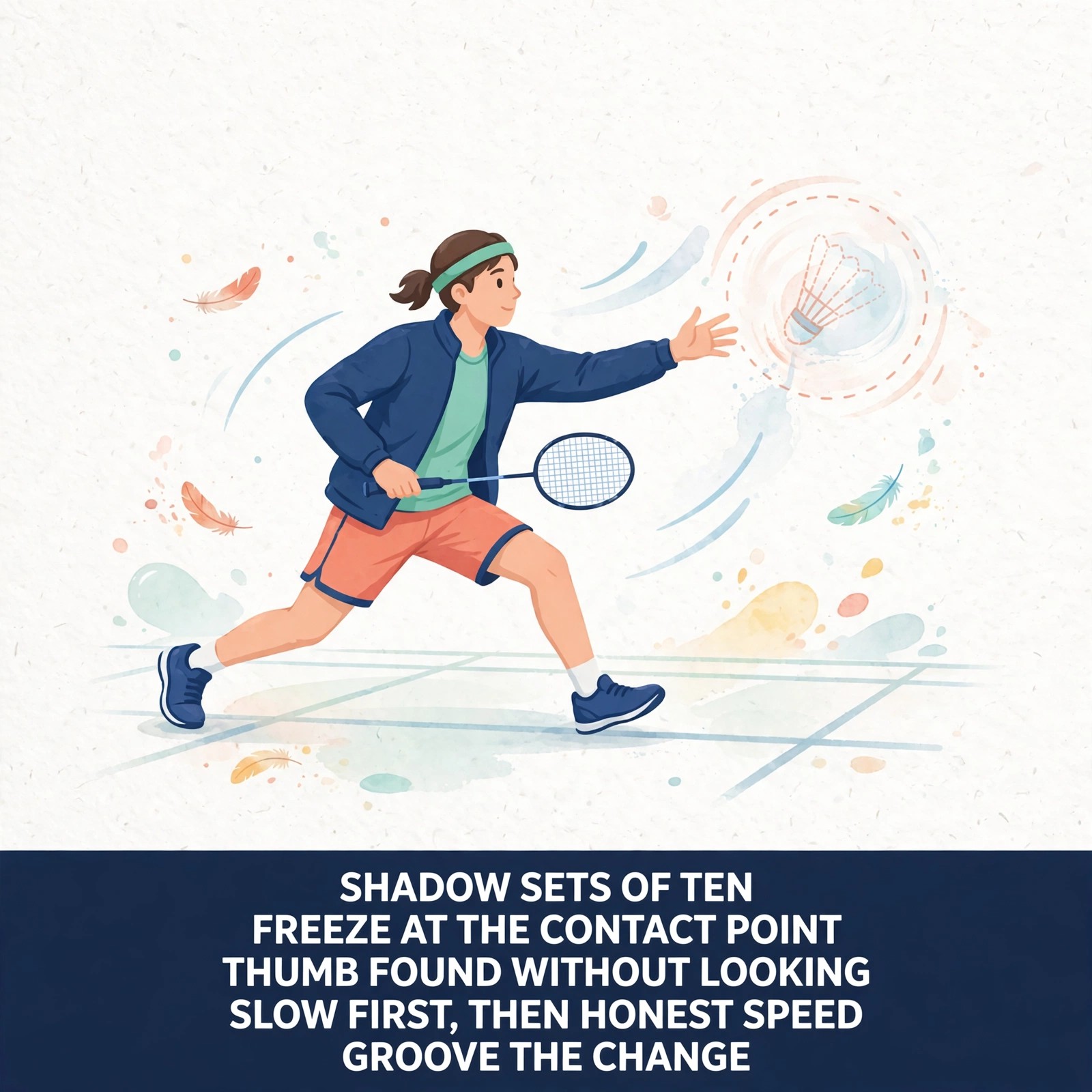
Practise the change until it costs no thought. Stand in your ready position, have a partner point to a side, and switch grips without looking down. At first it feels slow and clumsy. After a few weeks of short daily practice, the thumb finds its place on its own, and the backhand stops leaking easy points from a grip that never arrived.

Backhand Check #3
Build the Shape: Turn, Reach and Contact Point
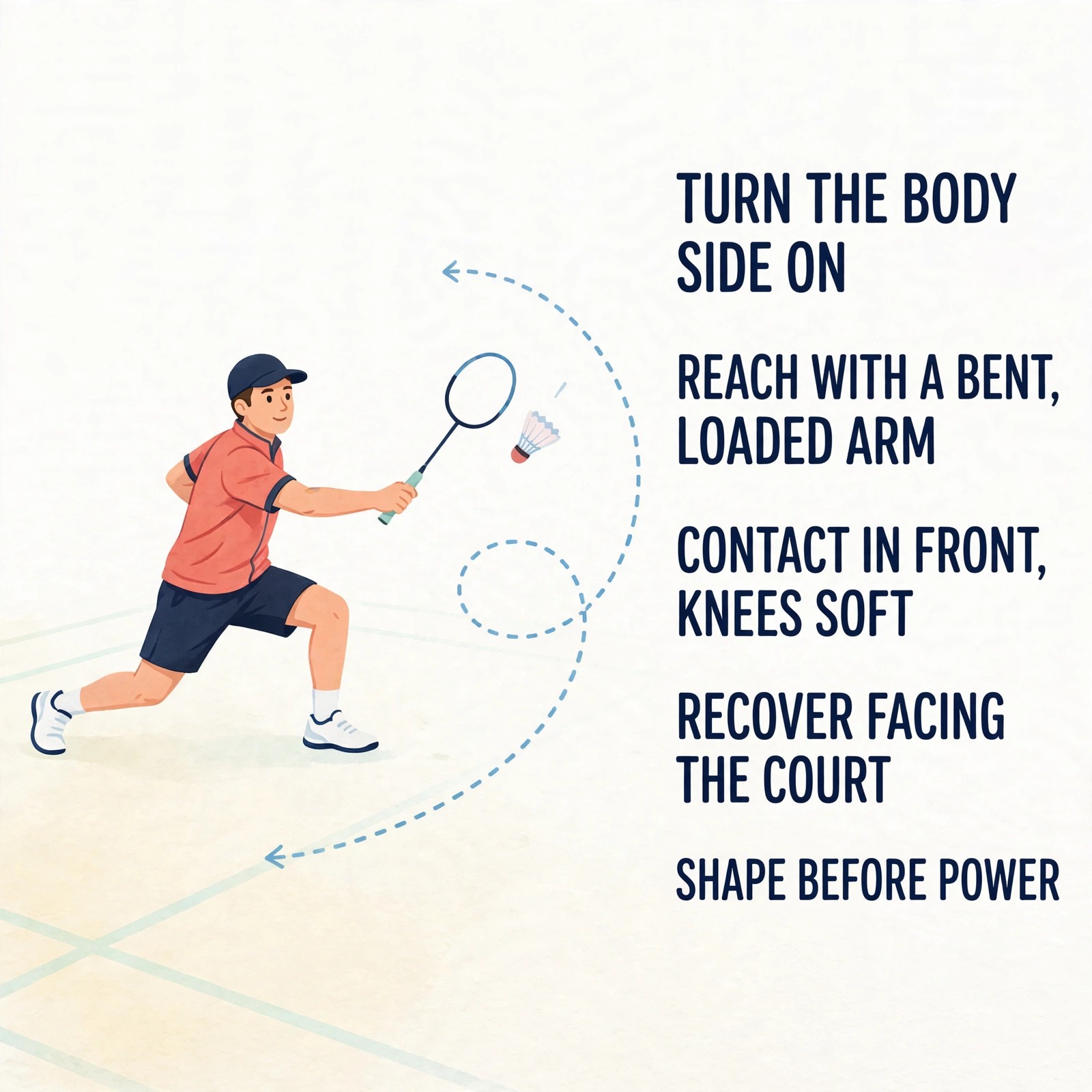
With the grip fixed, build the shape of the shot. For underarm and mid court backhands, the body turns side on, the racket foot steps toward the shuttle, and contact happens in front of the body where you can see it clearly. Contact taken beside or behind the body is the classic reason backhand shots feel weak. There is no leverage back there, only a cramped arm pushing at the shuttle.
For the overhead backhand, the shape is bigger. Turn early so your shoulder points toward the back corner, reach up and across, and let the racket travel in a smooth arc with the elbow leading. The free arm reaches back as a counterweight to keep you balanced. Done well, the movement feels like throwing, not pushing. The follow through brings the racket down across the body and your feet are already turning back toward base.
Keep the shape simple while you groove it. One cue at a time is enough: thumb up, contact in front, finish balanced. Players who chase power before shape end up muscling the shuttle with a bent arm, and the shot tops out early. Shape first means the power has somewhere clean to go when you add it later on the ladder.
Backhand Check #4
The Ladder: Defence First, the Clear Last
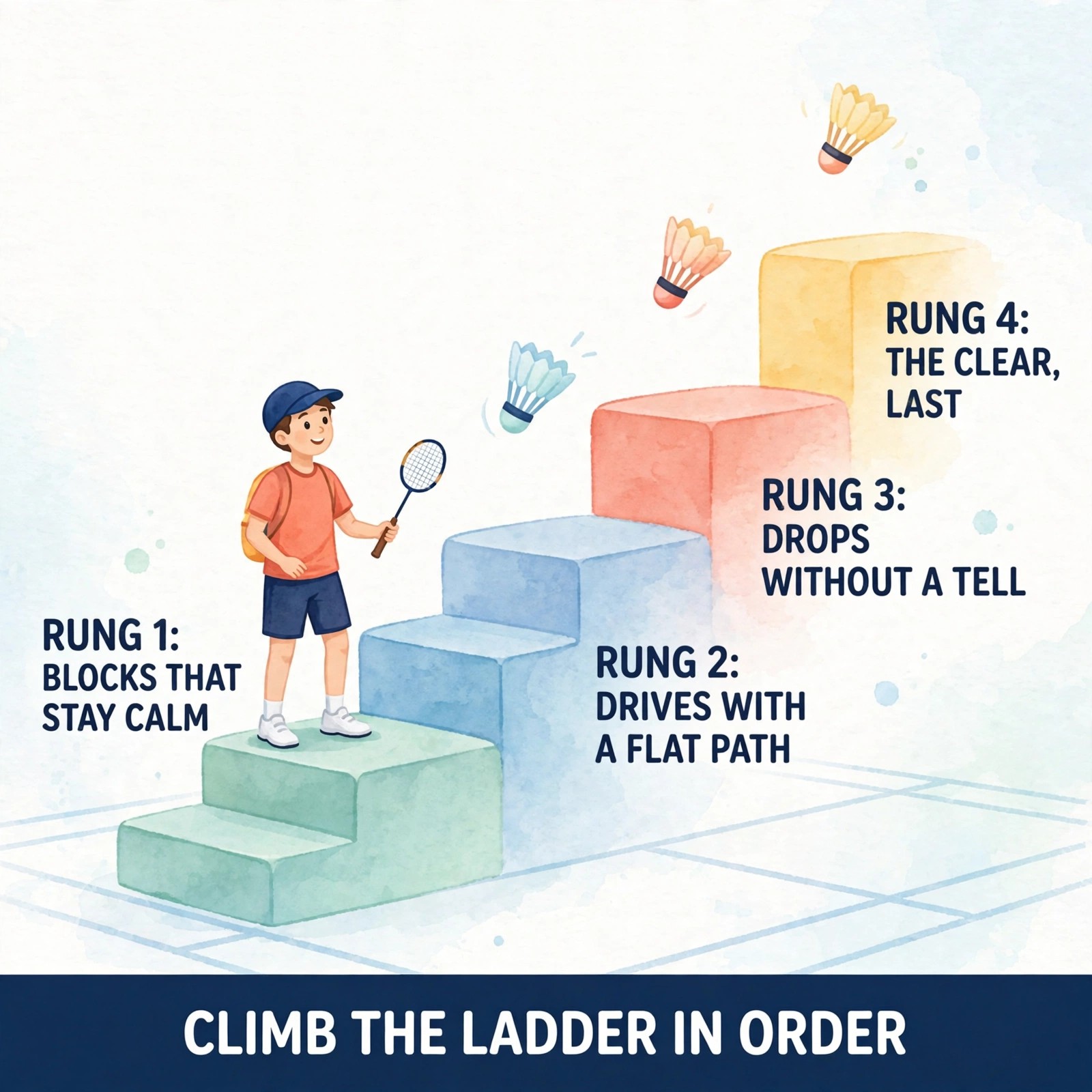
Improvement sticks when it climbs in order. The first step is defence. Backhand blocks and drives keep you alive in rallies, they use a short action, and they groove the grip change under real pressure. A player whose backhand defence is calm has already fixed most of the leak, because opponents stop winning cheap points in that corner.
The second step adds the net shot and the drop. These need touch more than strength, and they teach the hand to stay soft until contact. From there, the lift grows deeper week by week as the shape holds under a longer swing. Length is trained, not forced. Fed drills that start mid court and walk backwards make the lift grow without wrecking the action.
The backhand clear comes last, and honestly it comes slowly. It asks for the grip, the turn, the reach and the timing all working together at full length. Some strong players use it rarely and still win plenty, because their defence and drops are reliable. Treat the clear as the top of the ladder, not the entrance ticket. Climb in order and each step makes the next one easier.
Backhand Check #5
Drills That Groove It: Shadows, Walls and Feeding
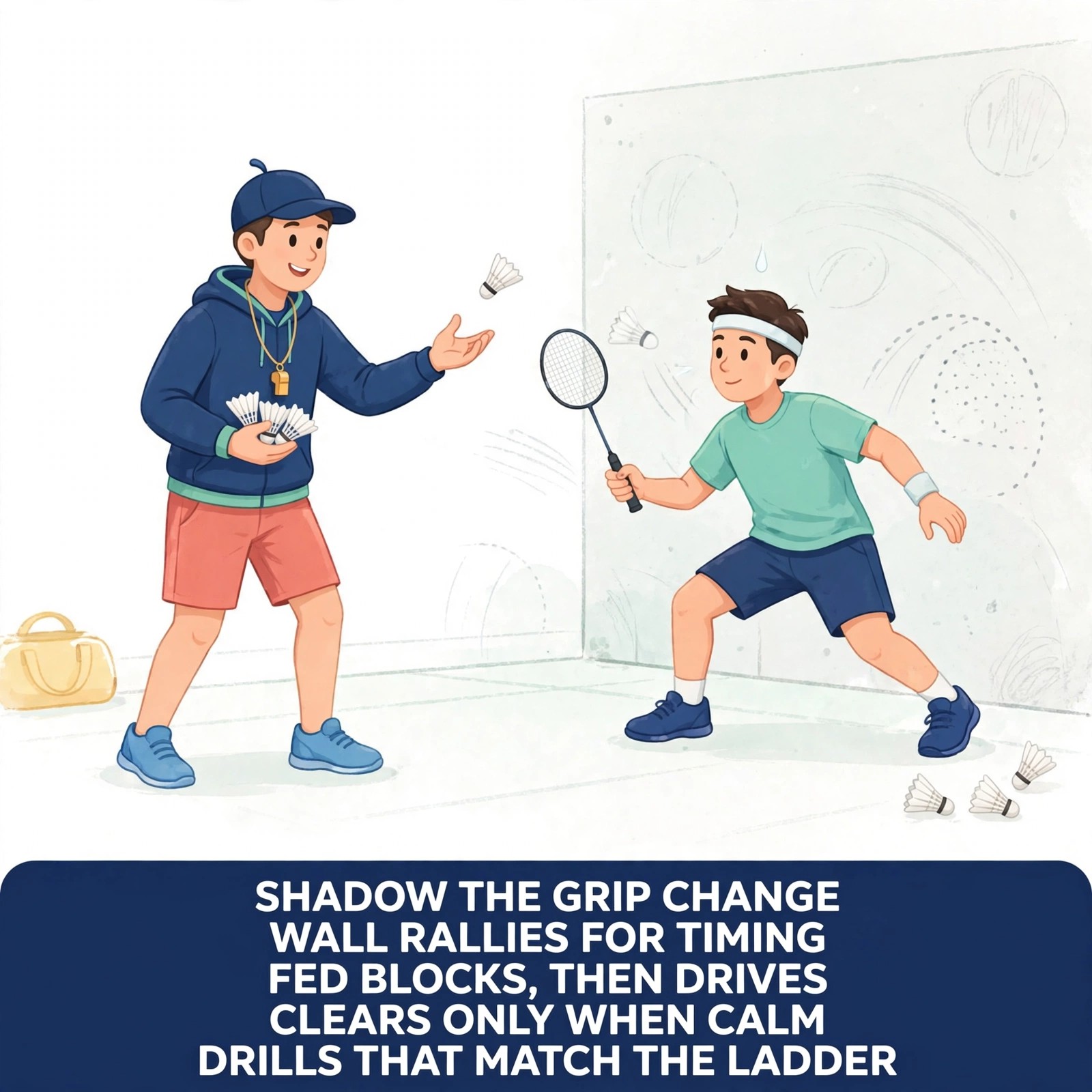
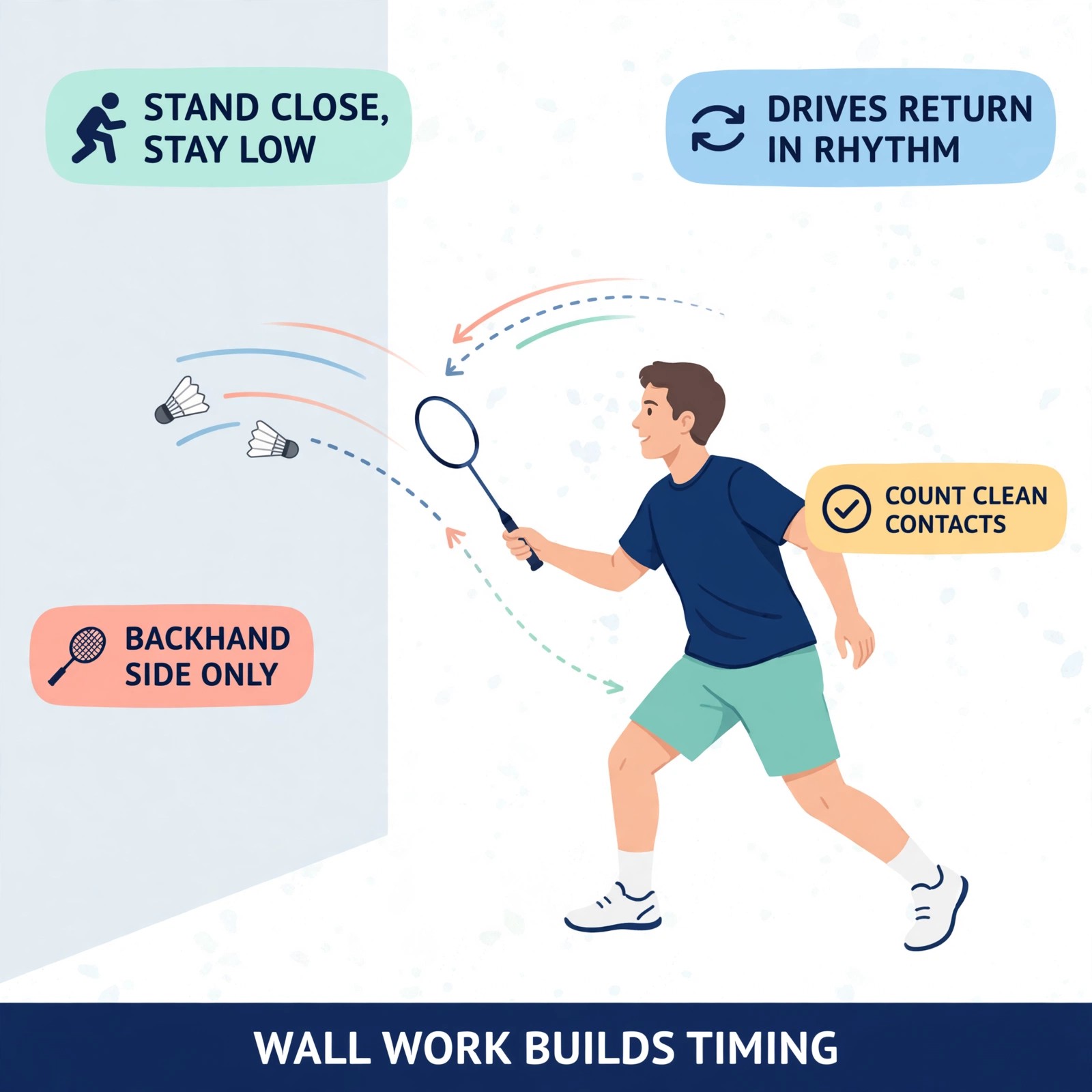
Drills work when they match the ladder. Shadow practice grooves the grip change and the shape with no shuttle to chase. Wall rallies build quick hands for defence, because the shuttle comes back fast and the swings stay short. Fed drives from a partner test the block and drive step, and multi shuttle feeding to the corner builds the lift without match pressure.
Keep sets short and counted. Ten clean blocks beat thirty rushed ones, because the rushed reps groove the panic you are trying to remove. Stop a set while the shape still holds, rest, then go again. If a drill keeps breaking down, the feed is too hard for the step you are on. Slow it down and rebuild. That is not going backwards, it is how the ladder works.
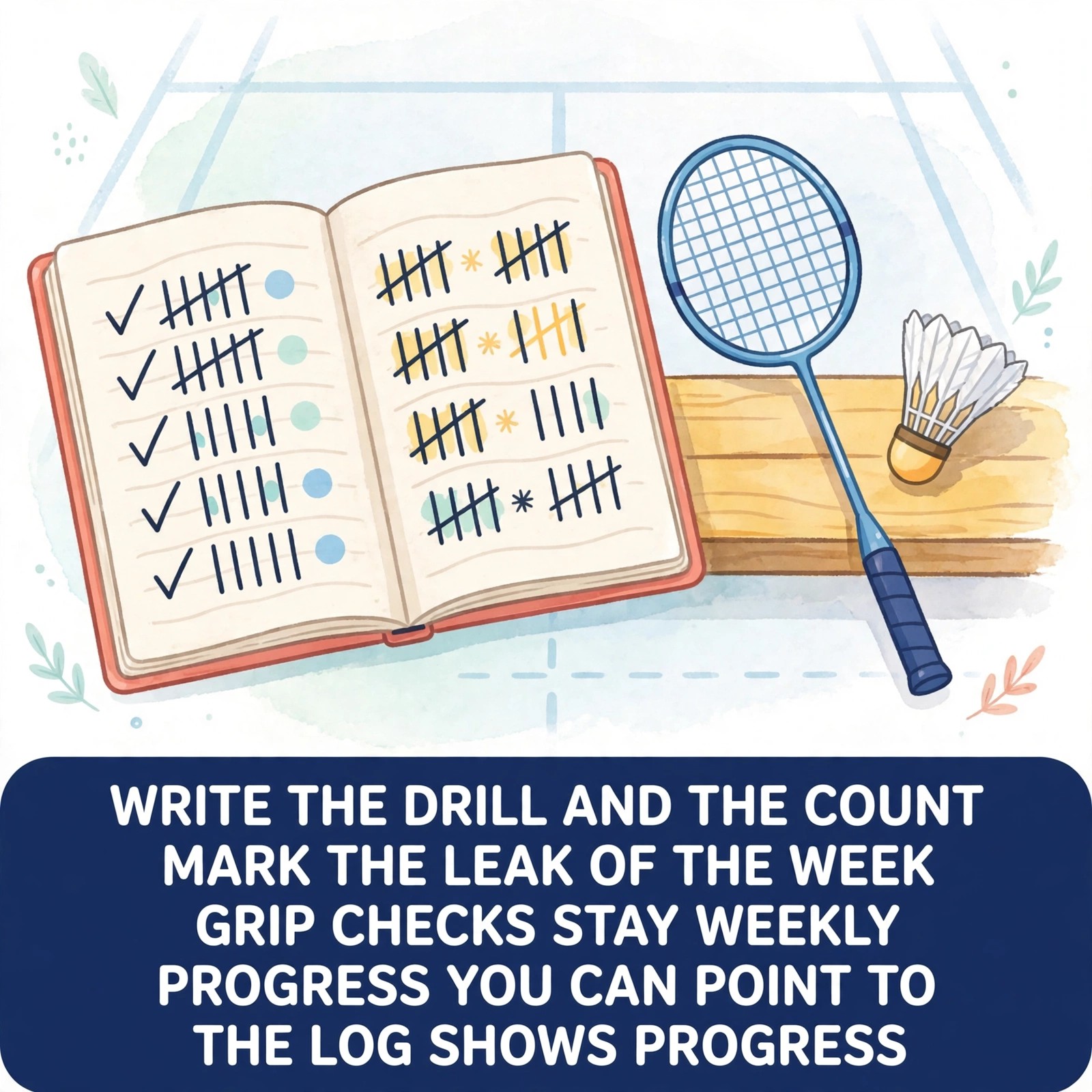
Finish the cycle in matches. Friendly games first, where you can afford to test the new shape, then your normal competitive games. Count the same leak you counted at the start: points lost soon after the shuttle visits your backhand corner. When that number falls, the work is real. When it stalls, the log tells you which step of the ladder needs another week.
Myth vs Reality
Myths About Improving Your Backhand
Myth: a good backhand is pure talent. Reality: the players with famous backhands built them the boring way, with grip changes grooved in practice and defence drilled until it held. Talent decides very little here. The ladder decides almost everything, and the ladder is open to any player willing to climb it in order.
Myth: copy the grip tricks you see in slow motion videos of professionals. Reality: what looks like a trick is usually the standard backhand grip filmed closely, plus years of timing. Copy the basics first. The fancy variations only work on top of a grip change that already costs no thought.
Myth: learn the backhand clear first because it looks impressive. Reality: the clear is the hardest step, and starting there grooves a strained, muscled action that leaks everywhere else. Defence first is not the slow road. It is the road that actually arrives.

Why Choose Us
Why Players Choose ST Badminton Academy
We do not just feed shuttles; we build players. ST Badminton Academy Malaysia is different because our head coach, Mr Eric Chuar, has over 15 years of coaching experience in Singapore and Malaysia, and he corrects technique personally in small groups. A backhand fault hides easily in a big class. In a group of four, it gets seen, named and fixed.
Our small group policy, with a maximum of 4 students, means your grip change, contact point and defence are checked in every session. Players working on a weak backhand follow a clear ladder, and the coach can see at once which step you are on and what comes next. No guessing, and no generic drills copied for everyone.
We focus on long term player development. A reliable backhand changes how opponents play you: they stop targeting the corner, rallies open up, and your forehand gets more chances to attack. That change is worth building properly, with honest assessment and steady, checked progress rather than quick promises.
FAQs: Badminton Backhand Technique and Drills in Malaysia (KL)
Here are answers to common questions from players in Kuala Lumpur about improving a weak backhand, the drills involved, and how coaching at ST Badminton Academy works.
Can a beginner build a reliable backhand in Setapak or Gombak?
Yes. Beginners often improve fastest, because the grip change and the shape are learned correctly from the start instead of being repaired later. Begin with defence, blocks and drives, keep the action short, and add length only when the shape holds. Steady weekly practice turns the corner around.
What is the first backhand fix a new player should make in KL?
Start with the grip. Rest your thumb on the wide back bevel of the handle and relax your fingers, then groove the change until it is automatic. Most weak backhands improve the moment the hand is right, because contact becomes cleaner and the racket face finally points where you aim it.
Why do my backhand lifts keep landing short at club level?
Short lifts usually mean contact is late, low or cramped beside the body, so the swing has no room and no leverage. Turn earlier, take the shuttle in front, and let the fingers add the final squeeze. If the shape is right and lifts still fall short, the step may simply need more weeks of fed practice.
My backhand clear will not reach the back. Should I swing harder or fix my grip first?
Fix the grip and the shape first. Swinging harder with a cramped action only grooves the fault and tires the shoulder. The clear is the last step of the ladder: defence, drops and lifts come before it. When the shape holds at mid court length, full length arrives with practice, not force.
How can I practise backhand drills alone at home during training?
Use shadow practice and a wall. Shadow the grip change and the full shape in short sets, checking your thumb position in a mirror. Against a wall, keep backhand drives going with short swings and count clean contacts. Ten focused minutes most days beats one long, sloppy session each week.
Do you coach backhand technique near Wangsa Maju?
Yes. ST Badminton Academy is based in Setapak, a short drive from Wangsa Maju, Melati Utama and Danau Kota. Backhand work is coached in small groups of no more than four students, so your grip, contact point and defence are watched and corrected personally by the coach in every session.
Where does ST Badminton Academy coach backhand skills in Malaysia?
We coach in Setapak, Kuala Lumpur, and our approach to a weak backhand travels well: diagnose the leak, fix the grip, groove the shape, then climb from defence to length in order. Players from Gombak, Sentul, Ampang and nearby areas train with us each week in small, focused groups.
How do I book a trial session to check my backhand before training?
Message us on WhatsApp and tell us your backhand is the project. We will place you in a small group session where the coach can watch your grip, defence and lifts, then show you the ladder we would follow. One session is enough to leave with a clear plan.
What makes Mr Eric Chuar a suitable coach for backhand coaching in badminton?
Mr Eric Chuar has coached in Singapore and Malaysia for over 15 years and teaches the backhand the way it actually improves: in stages, with the fault named honestly. Because he coaches small groups personally, your grip change and contact point are corrected in the session, not weeks later.
Badminton Backhand Coaching in Action

One Standard for Every Session and Every Player
Improving a backhand at ST Badminton Academy KL follows one standard: honest diagnosis, small groups and checked progress. Every session works on the step of the ladder you are actually on, with a maximum of 4 students per group, so technique is corrected while it is being built, not after bad habits settle.
| Factor | Guess and Push | Build the Ladder BACKHAND |
|---|---|---|
| Frequency | 1 or 2 times a week. Mostly for fun and sweat. | The grip and shape are fixed first, then defence is grooved until it survives real feeding. |
| Drills Focus | Basic static feeding. Minimal footwork pressure. | Length is added in stages: drives and drops before the clear, so power grows on a sound base. |
| Physical Conditioning | Rarely included. Just playing games on court. | Core, agility, and speed training included in every session to prevent injury and build stamina. |
| Tactical Awareness | "Just hit it over." No real game plan. | Video analysis, point construction, and learning to read the opponent's game. |
| Coach Ratio | Large groups (8-10 kids). Coach barely watches you. | Max 4 students. Mr Eric Chuar personally corrects every stroke and movement detail. |
| Goal Setting | Fun and exercise. | Progress is counted in matches: how deep the lifts land and how calm the defence stays. |
| Long Term Result | Good recreational player. | A player whose backhand holds: opponents stop targeting the corner because it stops paying. |
Badminton Backhand Coaching in Kuala Lumpur
This guide gives you the full route: spot the leak, fix the grip, groove the shape and climb from defence to length in order. If your backhand is the corner opponents keep targeting, ST Badminton Academy in Setapak can coach you through the ladder in a small group. Message us to book a trial session.






