Badminton For Weight Loss: Burning Calories And Shedding Pounds (Fitness Guide)
Badminton is one of the most enjoyable ways to get fitter, and for many adults it becomes the exercise they actually keep doing. It is fair to ask what it can do for your weight, and this guide answers honestly. Playing regularly burns energy, builds fitness and strengthens legs, and it can support weight loss as part of a bigger picture that includes food, sleep and daily movement. What it cannot do is promise a number of kilos by a date. This guide covers why the game burns energy, what to expect honestly, how to build your week, which playing styles keep you moving most, and the food and sleep habits that decide the result.

Fitness Check #1
Why Badminton Burns Energy: Movement in Every Rally
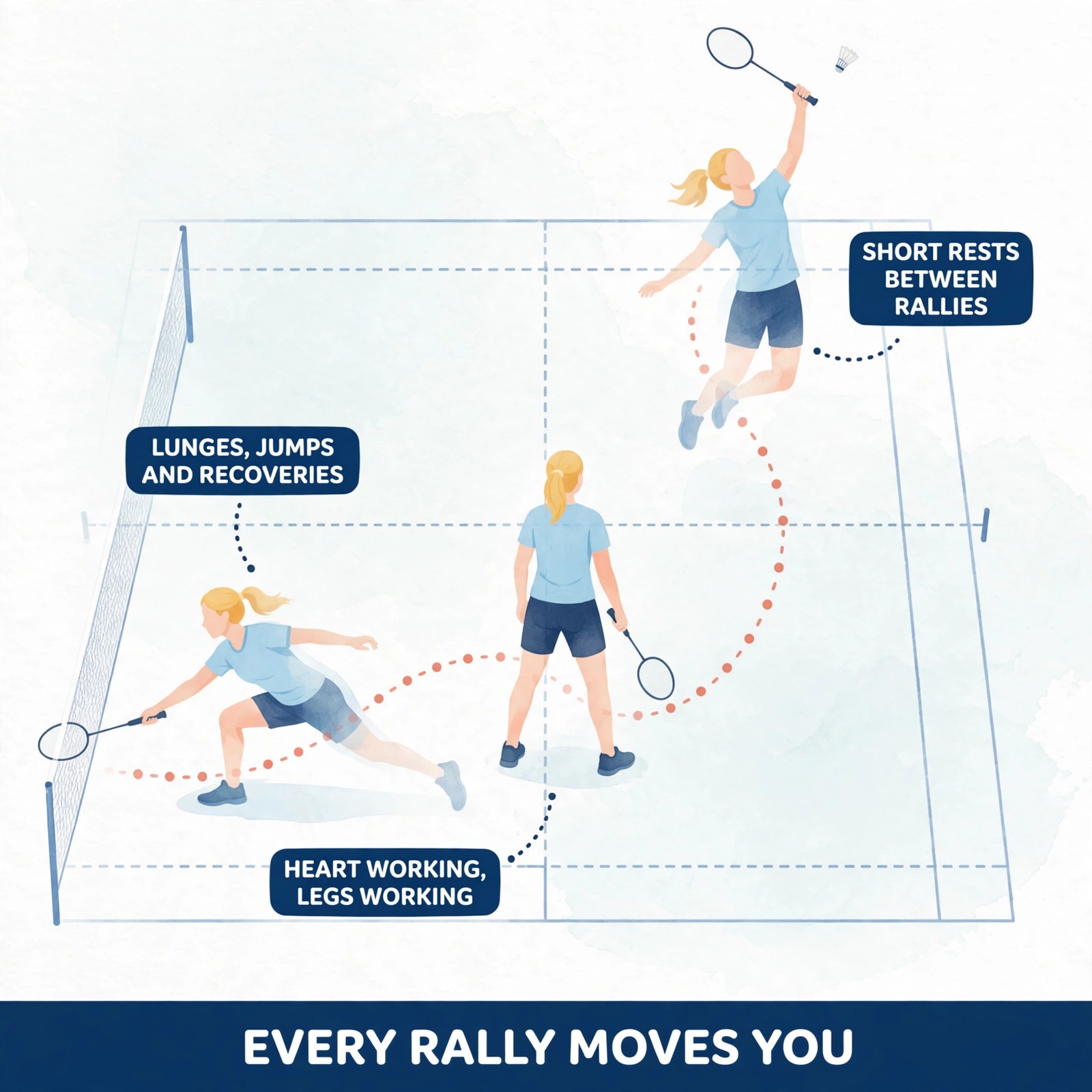
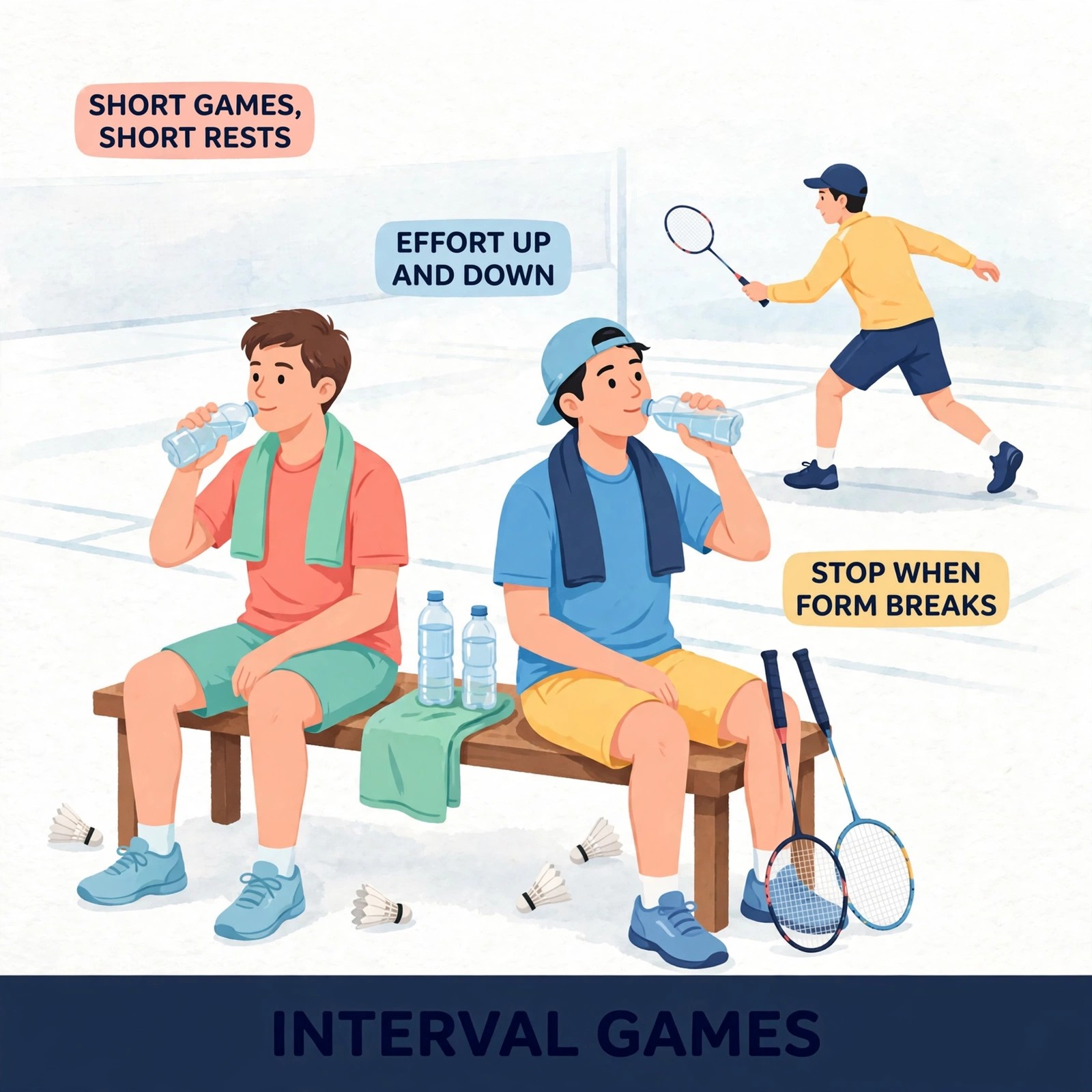
A badminton rally asks your body to work in almost every direction. You lunge to the net, recover to the middle, turn and jump at the back, then do it again a few seconds later. Between rallies there are short rests, so a session naturally rises and falls in effort, a bit like interval training built into a game. Your legs do the carrying, your core steadies every landing and turn, and your hitting arm and shoulder work through hundreds of swings. Few gym routines keep people moving this willingly for a full session, simply because the scoreboard keeps asking for one more rally.
That movement is why badminton earns its place in a fitness plan. Singles covers the whole court with one player, so it asks the most from your legs and lungs. Doubles is quicker in the hands, with shorter rests and constant readiness at the front and back. Even social games keep you on your feet, turning, stepping and swinging far more than an evening walk. The honest measure is not a number on a screen. It is finishing a session warm, breathing hard, having moved in every direction, and wanting to come back and do it again next week.
Fitness Check #2
Honest Expectations: What Play Can and Cannot Do
Honest expectations protect your motivation. Weight changes when your whole week changes: how much you move in total, what and how much you eat, how well you sleep, and how consistent all of that stays. Two or three badminton sessions a week is a strong piece of that picture, but it is one piece. A player who plays hard, then eats far more than they need and sleeps badly, may see no change at all, and that is not the sport failing. It is the maths of the whole week being honest with them.
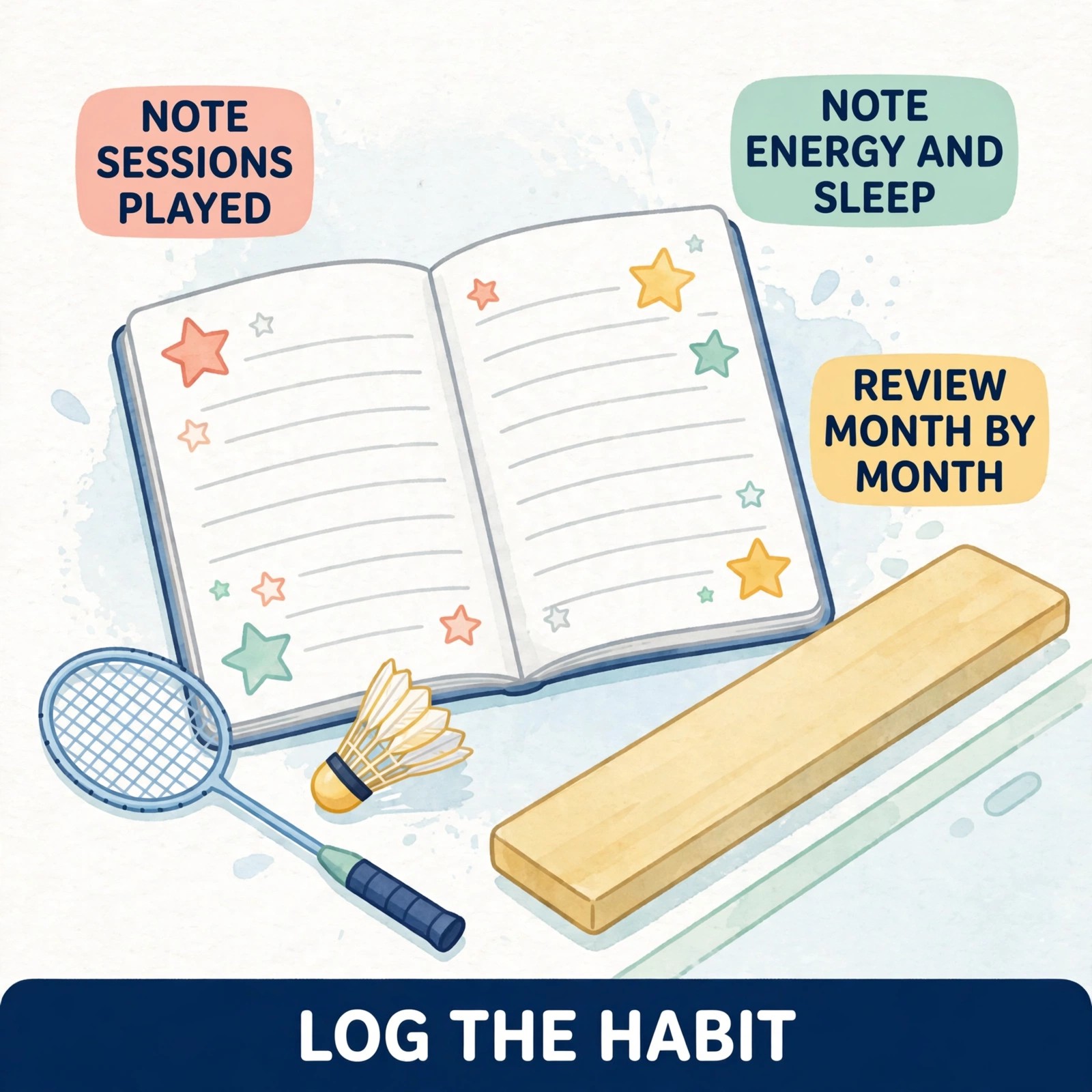
Expect the change to be measured in months, not weeks. Fitness usually improves first: rallies last longer, stairs feel easier, recovery between games gets quicker. Body changes follow more slowly, and they rarely arrive in a straight line. Weigh ins jump around with water, food and timing, so daily scale readings are a poor judge. A fairer review is monthly: how your sessions feel, how your clothes fit, how your energy holds through the day. Players who judge progress that way tend to still be playing, and improving, a year later.
One safety point belongs here. If you have a health condition, joint problems, or you have not exercised hard for a long time, check with a doctor before pushing the intensity up. Start at a level your body can repeat, wear proper court shoes, and build session length gradually. Badminton is a kind sport to start because you choose your own pace: social doubles lets you build quietly, and harder singles will still be there when you are ready for it. Steady and uninjured beats intense and sidelined every time.

Fitness Check #3
Build Your Week: Sessions, Intensity and Rest
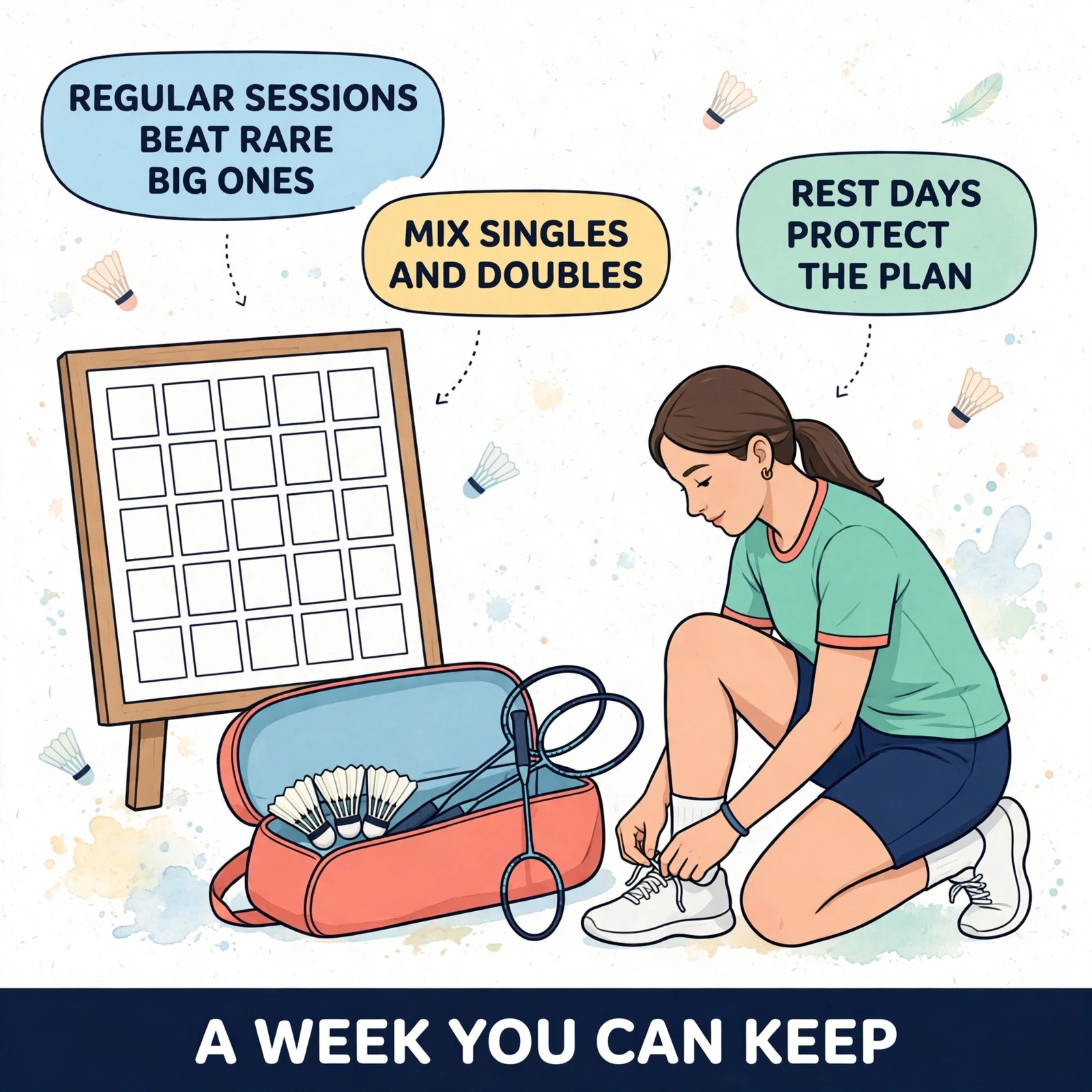
Build your week around sessions you can actually repeat. For most adults, two or three sessions a week is a strong rhythm: enough to build fitness, spaced so the body recovers between them. One giant session after a month of nothing usually ends in soreness and another month of nothing. Put the sessions in your diary like appointments, tell friends you are going, and treat them as fixed. A plan that survives busy weeks at half size is worth far more than a perfect plan that collapses by the third week.
Mix the formats across the week. A singles session asks the most from your legs and lungs. Doubles sessions are easier to sustain, more social, and still keep you moving and reacting. Some players add a coaching session, where drills and games are structured and the coach manages the intensity for them. Rest days are part of the plan, not a failure of it: muscles adapt between sessions, and tired players move badly, land badly and enjoy it less. If a week goes wrong, play once rather than not at all, and restart the rhythm the week after.
Intensity matters more than session length. An hour of full court singles with honest effort does more than two hours of gentle hitting while chatting. At the same time, every session cannot be a maximum effort, or the body stops recovering. A workable pattern is one harder session, one steadier session, and social games whenever you enjoy them. Listen to the simple signals: breathing hard but able to continue, legs tired but moving well, and form holding together. When your footwork falls apart, the useful work is done, whatever the clock says.
Fitness Check #4
Longer Rallies: Playing Styles That Keep You Moving
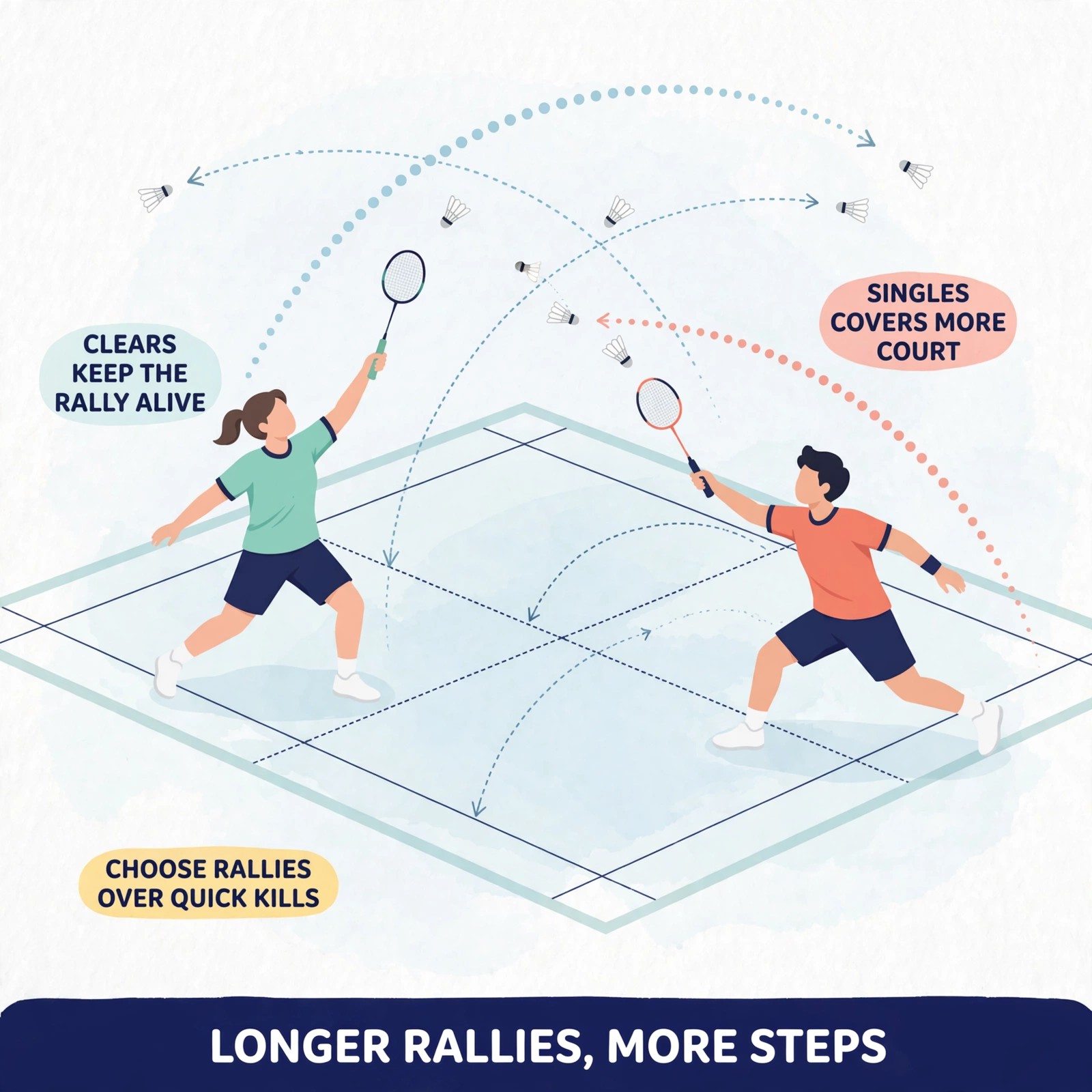
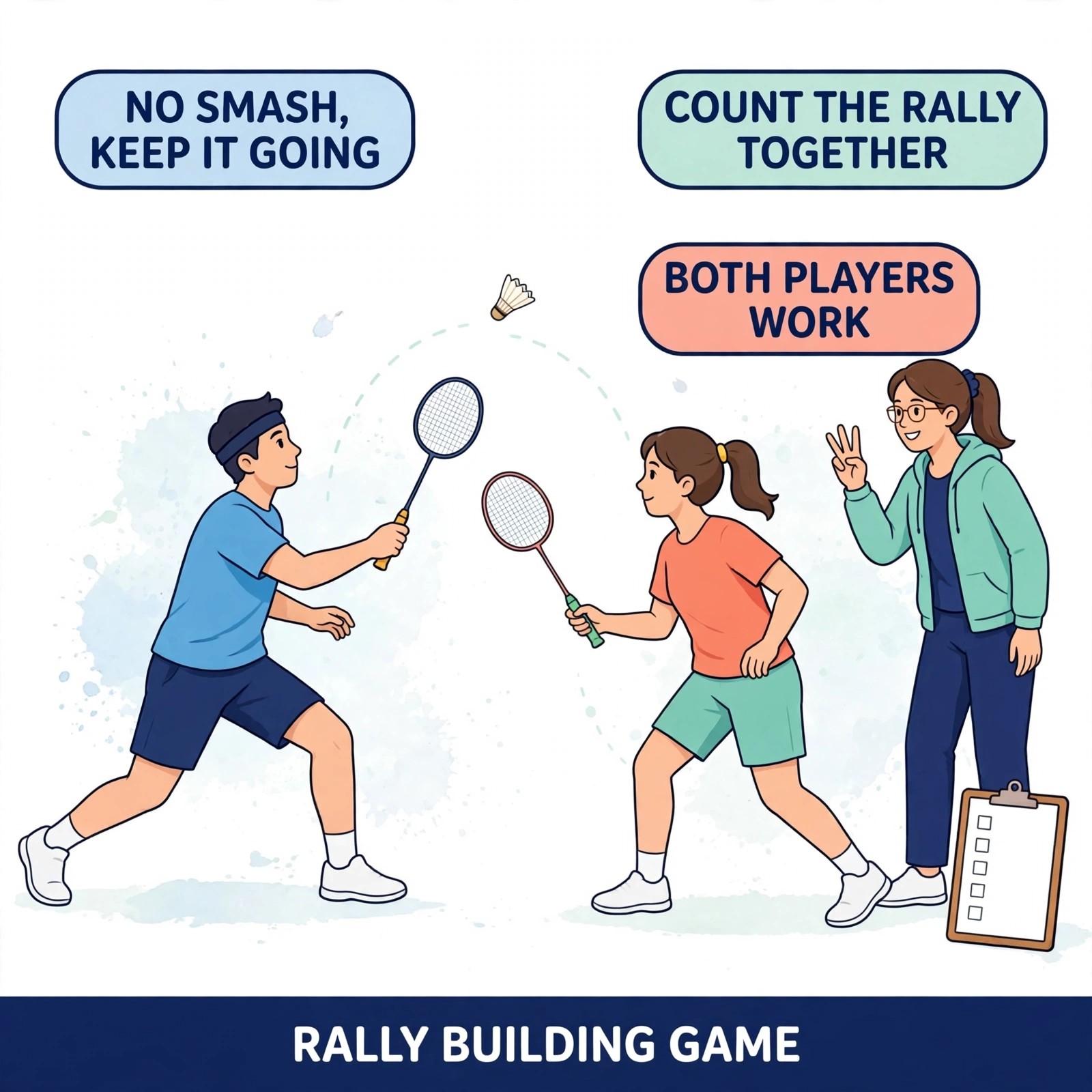
If moving more is the goal, choose rallies over quick finishes. Clears are your friend: high, deep shots move your opponent to the back and keep the rally alive while you recover and reposition. Lifts that buy time, drops that pull them forward, then clears again: a rally built this way keeps both players working for every point. In friendly fitness games, agree to leave the smash out for stretches, so rallies lengthen and the movement adds up. The player hunting winners ends rallies early. The player building rallies finishes the session having moved twice as much.
Singles is the biggest mover, because every shot is yours. If full singles feels too much at first, play half court singles, or conditioned games where one player feeds and the other covers the court. In doubles, volunteer for the roles that move: work the front with interceptions, or take the back and rotate properly instead of parking in one spot. Small habits add movement everywhere: walk back to base properly between rallies instead of standing where the last shot ended, and take the long way round when collecting shuttles.
Technique helps more than effort. A player who reaches the shuttle in balance can play the next shot immediately, so rallies continue and the work continues. A player who lunges late and falls off balance ends rallies with errors, then stands still recovering. This is why a few coaching sessions pay off for fitness players: cleaner footwork and a reliable clear turn short, stop start games into long, flowing ones. You do not need advanced shots. You need the basics solid enough that rallies stop breaking down on your errors.
Fitness Check #5
Food, Sleep and Daily Habits: The Other Half
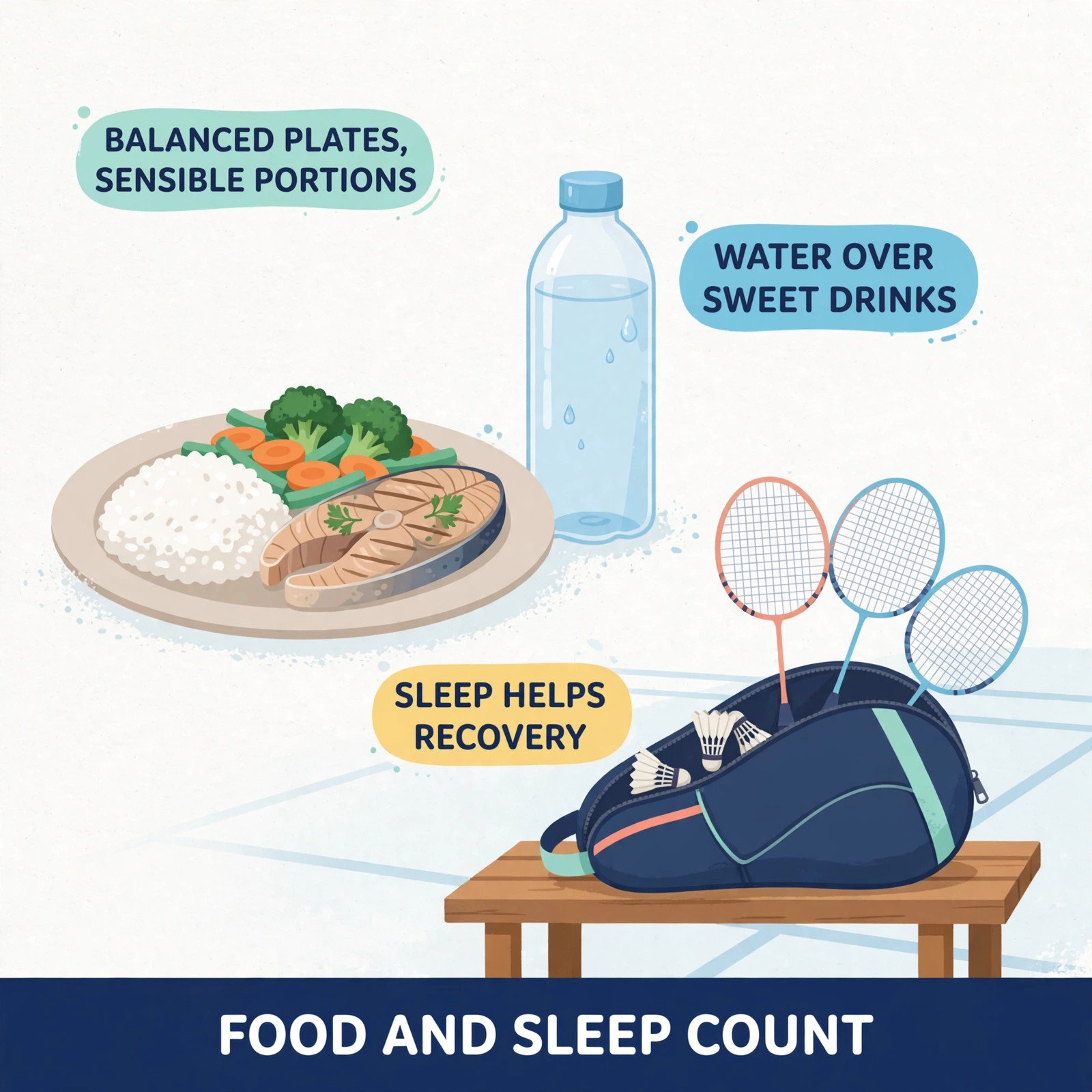
Food decides how much of your playing shows. You do not need a strict diet, and crash diets usually end both the diet and the badminton. Start with portions: regular meals, sized for the day you have actually had, not the day you wish you had. Build plates around foods that fill you properly: rice or noodles in sensible amounts, vegetables in generous ones, and protein like fish, chicken, eggs or tofu at each meal. Eat slowly enough to notice when you are full, because most overeating happens before the body has had time to say so.
Drinks are the quiet trap. Sweet drinks with a meal, and another during the game, can return much of the energy a session just used, without making you feel full at all. Plain water during play, and water or unsweetened drinks with meals, is one of the simplest changes most players can make. Sleep is the other half nobody sees: short, broken sleep raises appetite the next day and lowers the quality of your training. A regular sleep time supports your weight, your recovery and your game at the same time.
Daily movement outside sessions counts more than most players realise. The player who plays twice a week and sits for the other six days is asking two sessions to do the work of a whole lifestyle. Walking more, taking stairs, and staying lightly active on rest days keeps the total energy use of the week honest. None of this needs an app or a target. It needs the same mindset as your training: small, regular, repeatable. Weight that comes off through habits like these is the weight that tends to stay off.
Myth vs Reality
Weight Loss Myths That Set Players Back
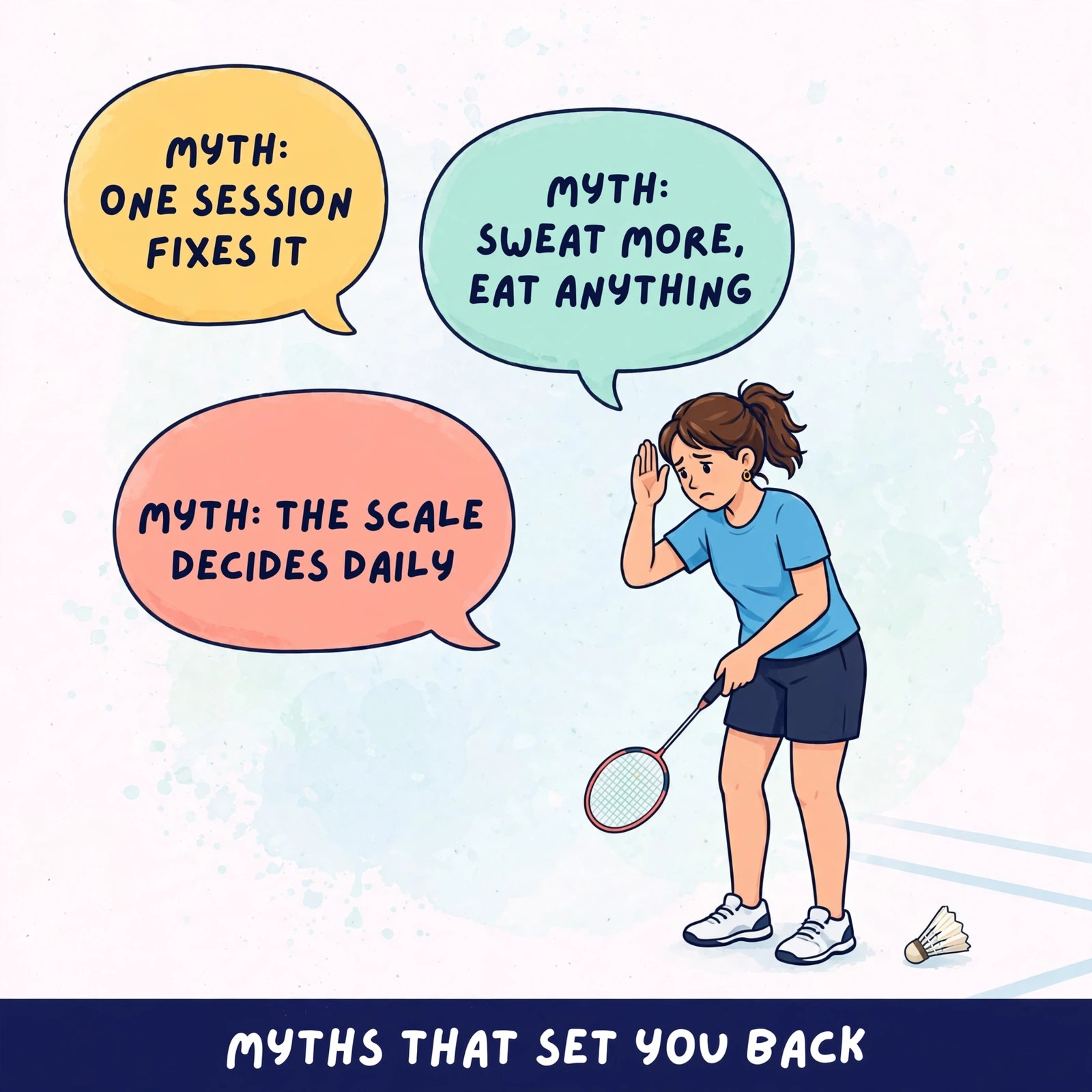
Myth: one hard session a week fixes the week. Reality: a single session, however hard, is a small part of your total movement, food and sleep. It helps, and it is far better than nothing, but it cannot cancel six days of sitting and overeating. Regular sessions across the week, with honest habits around them, are what change a body over months.
Myth: if you sweat enough, you can eat anything. Reality: it is much easier to eat back the energy of a session than to burn it off. A sweet drink and a heavy supper can return a whole evening of rallies in minutes. Sweat shows effort and heat, not a licence. Players who improve are the ones who enjoy their food in sensible portions and let the playing do its share.
Myth: the scale should drop every week, or the plan is failing. Reality: body weight moves up and down with water, food timing and hormones, even in a week where everything was done right. Judge the plan monthly, by fitness, energy, how clothes fit and how sessions feel. Players who weigh daily and panic weekly usually quit a plan that was quietly working.
Why Choose Us
Why Players Choose ST Badminton Academy
We coach plenty of adults who started for fitness and stayed for the game. At ST Badminton Academy, fitness focused training means structured sessions, honest intensity and coaching that keeps rallies alive, so the exercise happens inside badminton you enjoy rather than punishment drills you dread.
Our small group policy, with a maximum of four students, keeps every player moving. In a group of four there is no hiding at the back and no long waits, and the coach can set the intensity of games and drills to the level each player can honestly sustain.
We are honest about results. We will help you build the playing habit, track how your fitness is changing and tell you plainly that food, sleep and daily movement share the credit. No promised kilos, no miracle timelines, just training that works if the week around it works too.
FAQs: Badminton for Weight Loss, Fitness and Honest Results in Malaysia (KL)
Here are the questions adults ask us most about badminton, fitness and honest weight loss.
Can a complete beginner play badminton for fitness in Setapak or Gombak?
Yes, beginners are welcome, and badminton suits people starting from a low fitness base because you set your own pace. Start with social doubles or a coaching session in a group of no more than four, wear proper court shoes, and build session length slowly. If you have a health condition, check with a doctor first.
What is the first habit to fix when playing for weight loss in KL?
Start with regular sessions, because the habit carries everything else. Two or three sessions a week, kept for months, changes fitness more than any single hard week. Then look at the simple food habits: sensible portions and water instead of sweet drinks. Fix the routine first, and the body follows the routine over time.
Why am I playing every week but seeing no change at club level?
Usually the session is being asked to do the whole job alone. One session a week is a small share of your movement, food and sleep, and many players eat back the energy without noticing, especially through drinks. Add a second regular session if you can, check portions honestly, and review monthly rather than weekly before judging.
I play twice a week and nothing changes. Should I just play more or look at the whole week first?
Look at the whole week before adding more court time. If food portions, sweet drinks, sleep and daily sitting are unchanged, more playing may only make you hungrier and more tired. Fix one habit at a time alongside your two sessions, and give each change a month. If nothing improves over months, a doctor check is a sensible next step.
How can I keep playing regularly when work gets busy in Kuala Lumpur?
Protect two fixed slots and let them shrink rather than vanish. A shorter session still keeps the habit alive, and social doubles with friends is easier to keep than solo training. Many of our players book the same group session each week, so the appointment, the coach and the other players all pull them back in.
Do you run fitness focused badminton sessions near Wangsa Maju?
Yes. The academy runs coaching across Kuala Lumpur, with our original base in Setapak and sessions serving players from Wangsa Maju and the wider Klang Valley. Adult sessions run in groups of no more than four students, with structured games and drills that keep everyone moving and the intensity honestly matched to the group.
Where does ST Badminton Academy coach badminton in Malaysia?
The academy coaches in Kuala Lumpur, with our original base in Setapak and players joining from across the Klang Valley. Adults train in groups capped at four students, across social, fitness focused and skills sessions. Coaching covers footwork and rally building, so sessions stay flowing and active rather than stop and start.
How do I book a trial session to start playing in Kuala Lumpur?
Send us a message and tell us your current activity level and what you have played before. We will arrange a trial in a group of no more than four students, where a coach sets a session at an intensity you can sustain and shows you the format. No hard sell. You play, we coach, then you decide.
What makes Mr Eric Chuar a suitable coach for fitness focused training in badminton?
Mr Eric Chuar coaches the academy sessions himself and works with fitness focused adults the way this guide sets out: structured sessions, honest intensity and no promised results. He works with adults in Kuala Lumpur, keeps groups at four students or fewer, and corrects footwork and rally skills so sessions keep flowing.
Badminton Fitness Training in Action

One Standard for Every Session and Every Player
These standards hold for every session and every player: honest advice about what training can and cannot do, no promised results, and coaching in groups of no more than four students. If a habit outside training is holding your progress back, we will tell you plainly and help you fix the routine first.
| Factor | Playing Only | The Whole Week FITNESS |
|---|---|---|
| Frequency | 1 or 2 times a week. Mostly for fun and sweat. | Sessions are regular and planned, so movement becomes a habit instead of a rare big effort. |
| Drills Focus | Basic static feeding. Minimal footwork pressure. | Food, sleep and daily movement are counted as part of the result, not treated as separate problems. |
| Physical Conditioning | Rarely included. Just playing games on court. | Core, agility, and speed training included in every session to prevent injury and build stamina. |
| Tactical Awareness | "Just hit it over." No real game plan. | Video analysis, point construction, and learning to read the opponent's game. |
| Coach Ratio | Large groups (8-10 kids). Coach barely watches you. | Max 4 students. Mr Eric Chuar personally corrects every stroke and movement detail. |
| Goal Setting | Fun and exercise. | Progress is reviewed month by month: energy, fitness and how sessions feel, not daily scale readings. |
| Long Term Result | Good recreational player. | A whole week player: fitter over months, with badminton as the part of the week they look forward to. |
Badminton Fitness Coaching in Kuala Lumpur
This guide gives you the honest picture: badminton burns real energy and builds real fitness, and it supports weight loss when your food, sleep and daily movement pull in the same direction. Start with regular sessions you enjoy, build the week around them, and judge the change over months. Come for a trial session and we will set the first step at a level you can keep.




