Badminton Class Schedules At Top Training Centers (Schedule Guide)
Parents usually ask us the same question first: which class, on which schedule, will actually suit my child? It sounds simple, but a badminton class schedule is more than a timetable. Behind every good schedule sits a plan, levels grouped properly, sessions in the right order, rest days protected, and that plan decides whether a player improves steadily or just stays busy.
This guide explains how top training centres organise their badminton classes: how levels are grouped, how a training week is shaped, and what to ask before you book. Timetables change from term to term, so treat this as a guide to reading any schedule well, and ask the centre for its current timetable before you commit.
Schedule Check #1
Why Does a Class Schedule Matter So Much?
Training that happens at random produces progress at random. A player who practises footwork one week, misses two weeks, then plays only matches for a month is asking their body to start over every time. Skills in badminton build in layers, grip before strokes, strokes before tactics, tactics before match craft, and a schedule is what keeps those layers in the right order.
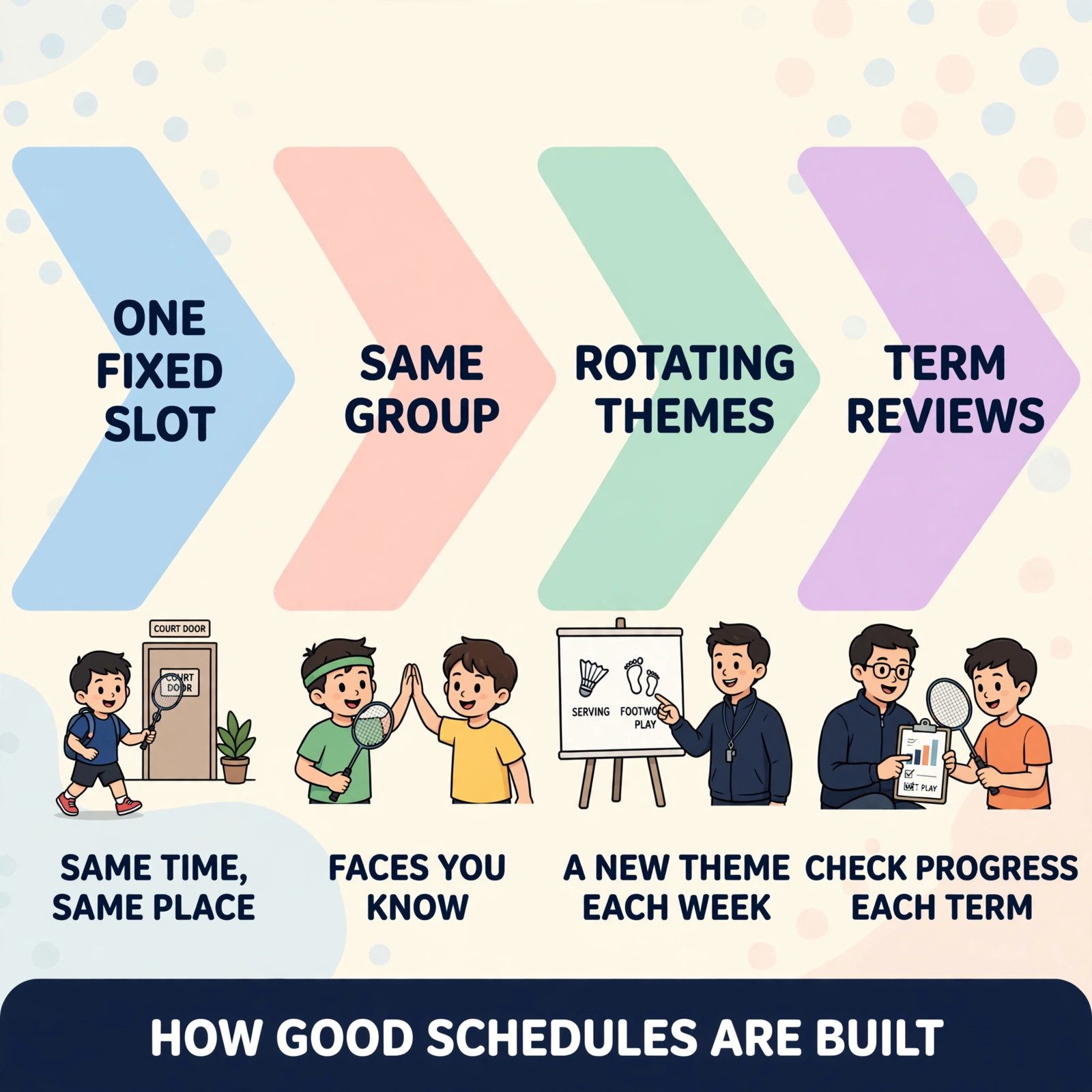
A good schedule also protects motivation. The same slot each week becomes a habit the whole family can plan around: school bags, meals and homework arrange themselves around a fixed point, instead of training being squeezed into whatever gap is left. At ST Badminton Academy Malaysia in Setapak, Kuala Lumpur, classes are organised in small groups capped at max 4 students, placed by level, the schedule works because the grouping works.
Schedule Check #2
How Are Classes Grouped by Level and Age?
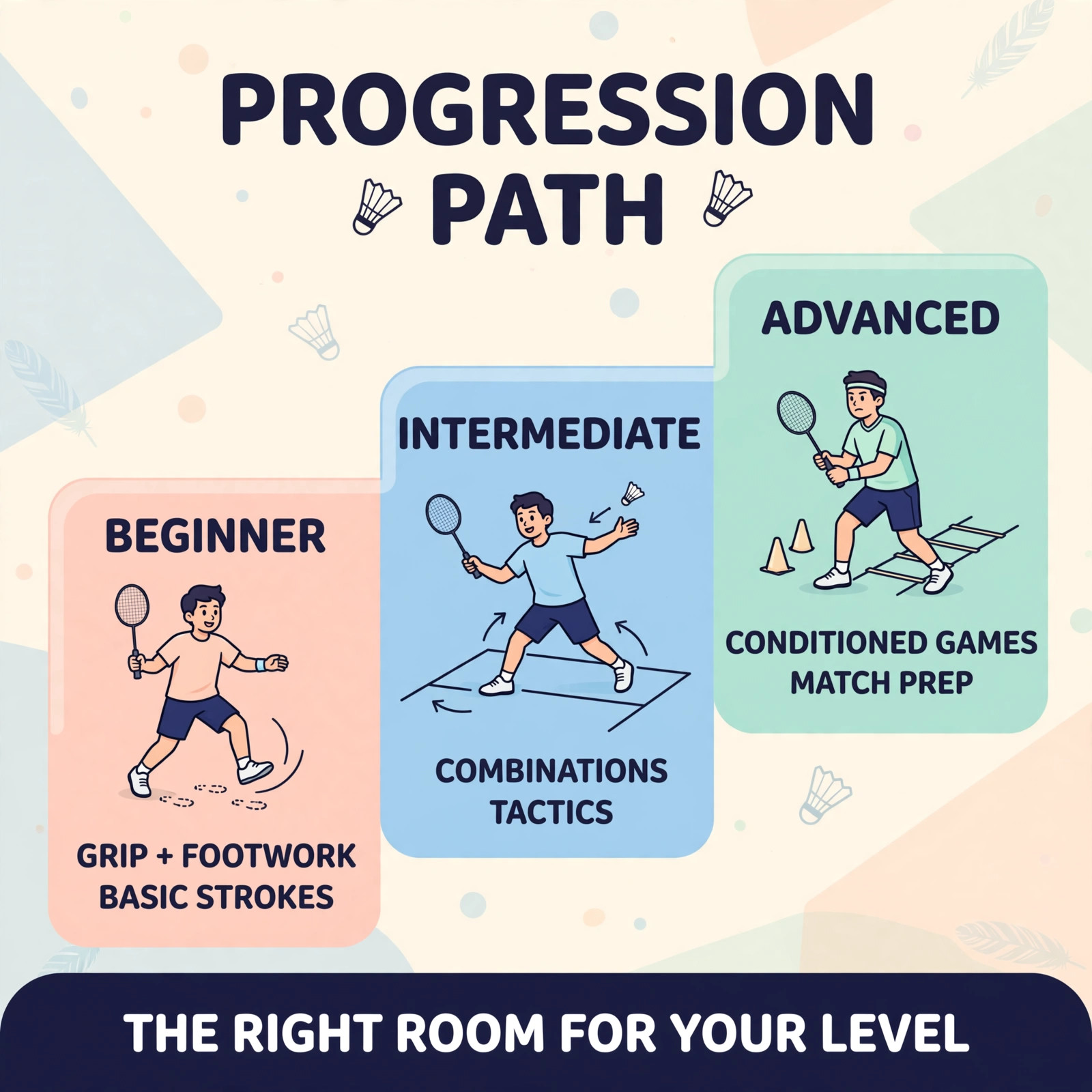
Top centres group classes by level before anything else. Beginner classes cover the foundations: grip, ready position, basic footwork patterns and the first strokes, clear, drop, lift and a legal serve. Players learn to keep a rally going and to move without thinking about their feet on every step.
Intermediate classes build combinations on top of those basics: shots linked together, simple tactics, and rallies played with a purpose. Advanced and competitive classes add conditioned games, pressure scoring and match preparation. The labels matter because the work is different in each room, a beginner placed in an advanced class touches the shuttle least and learns slowest, however hard they try.
Age grouping sits inside the levels. Young children learn best in shorter, game-heavy sessions with lots of movement and variety. Older juniors and adults can hold a theme for longer and handle more technical detail. When ages are close, coaches group by level first and let a slightly younger, stronger player train up. Moving up a level is earned by skills shown in class, not by birthdays, and not by how long a student has attended.
Schedule Check #3
Group Class or Private Slot: Which Fits You?
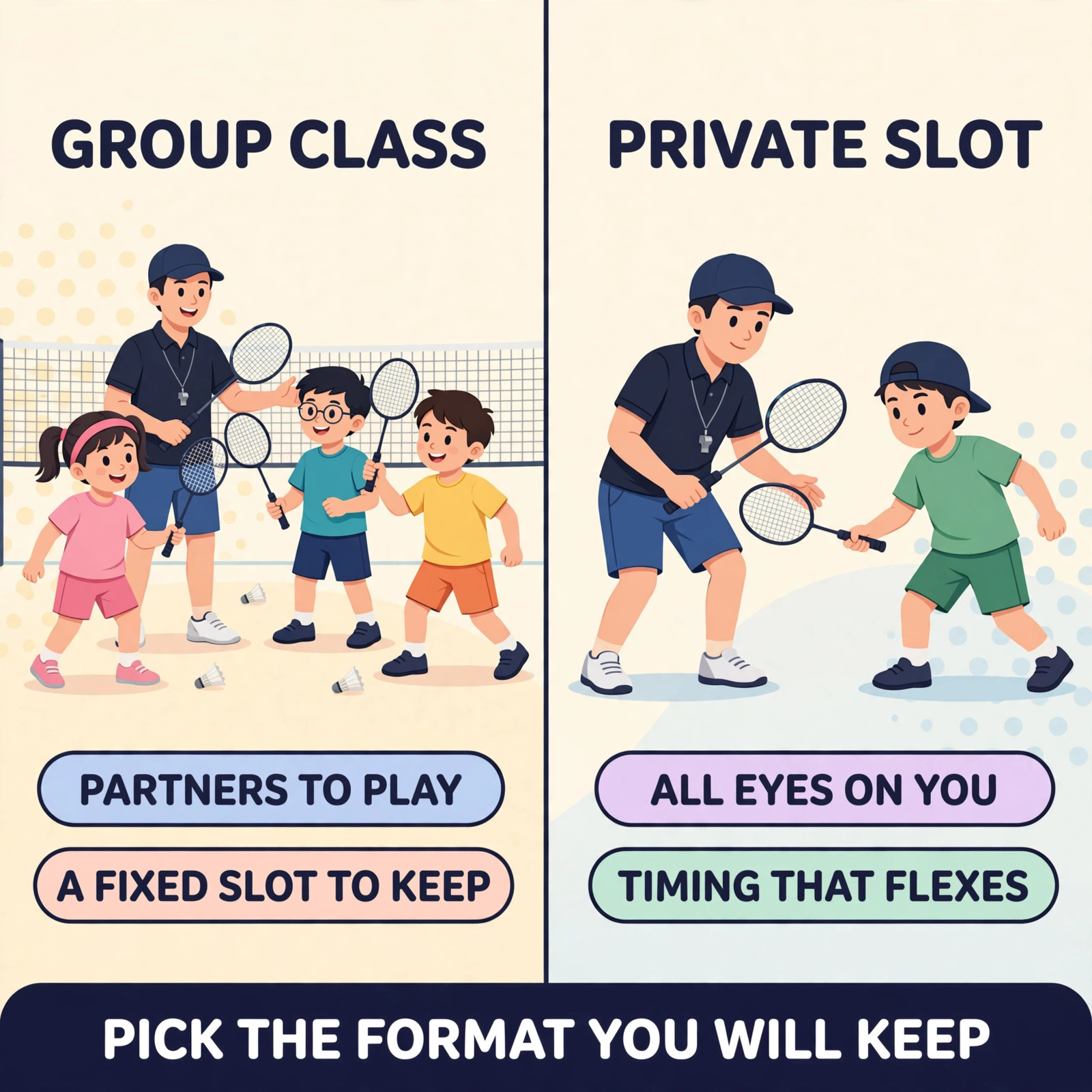
A small group class is the format most players know: a handful of students at a similar level, one coach, and a session that mixes drills, rallies and games. You get partners to play against, other students to learn from, and the quiet push of not wanting to be the one who gives up first. Fixed slots make the habit easy to keep.
A private slot, one-to-one, or a very small private group, trades that social push for speed. Every feed is aimed at your game, every correction is yours, and scheduling can bend around school or work. Players use private slots to fix one stubborn weakness, prepare for a specific event, or catch up after time away.
Many players mix the two: a regular group class as the anchor of the week, topped up with home practice or an occasional private session. There is no single correct format. The best format is the one the player actually attends every week, at a level that stretches them without drowning them.
Schedule Check #4
How Many Sessions a Week Is Right?
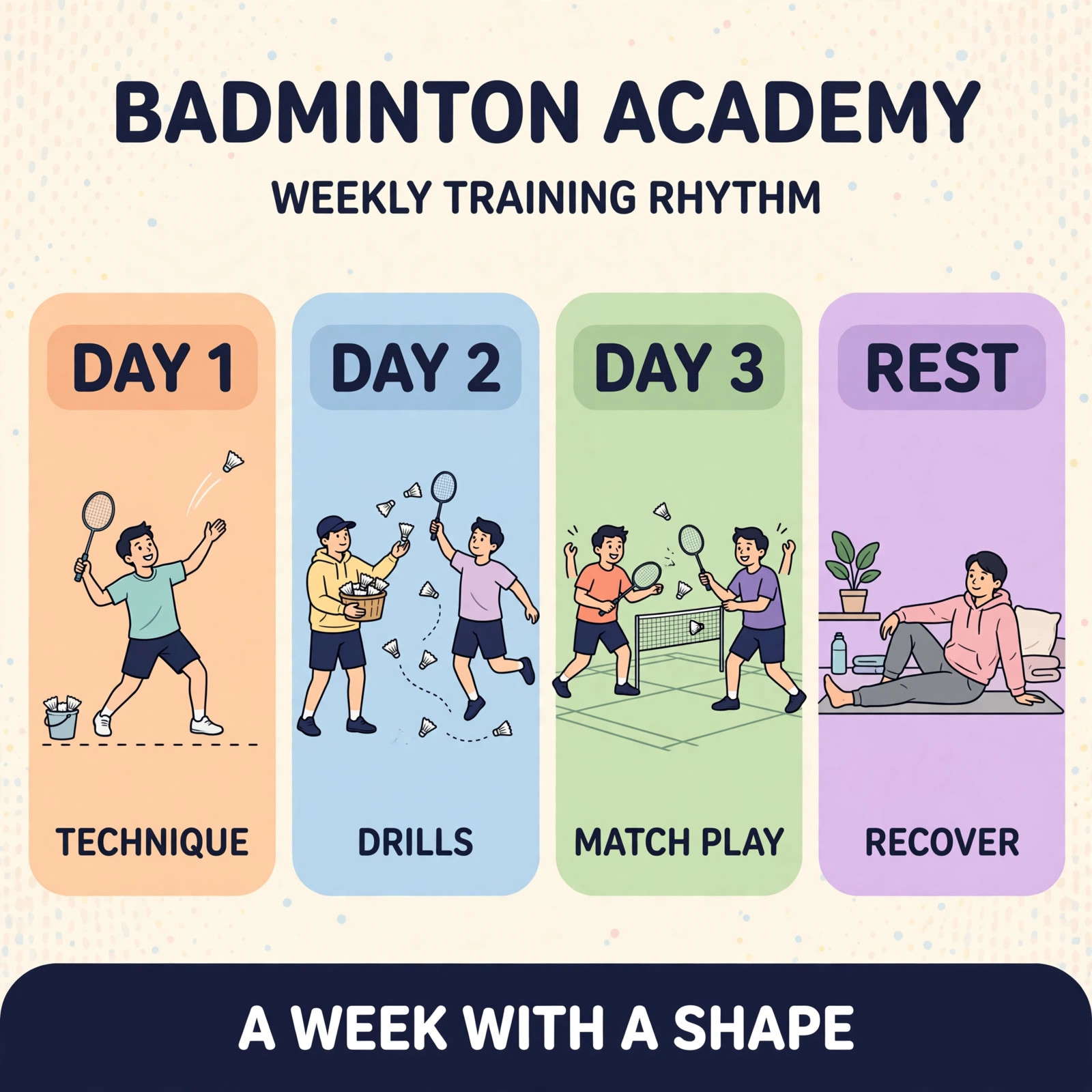
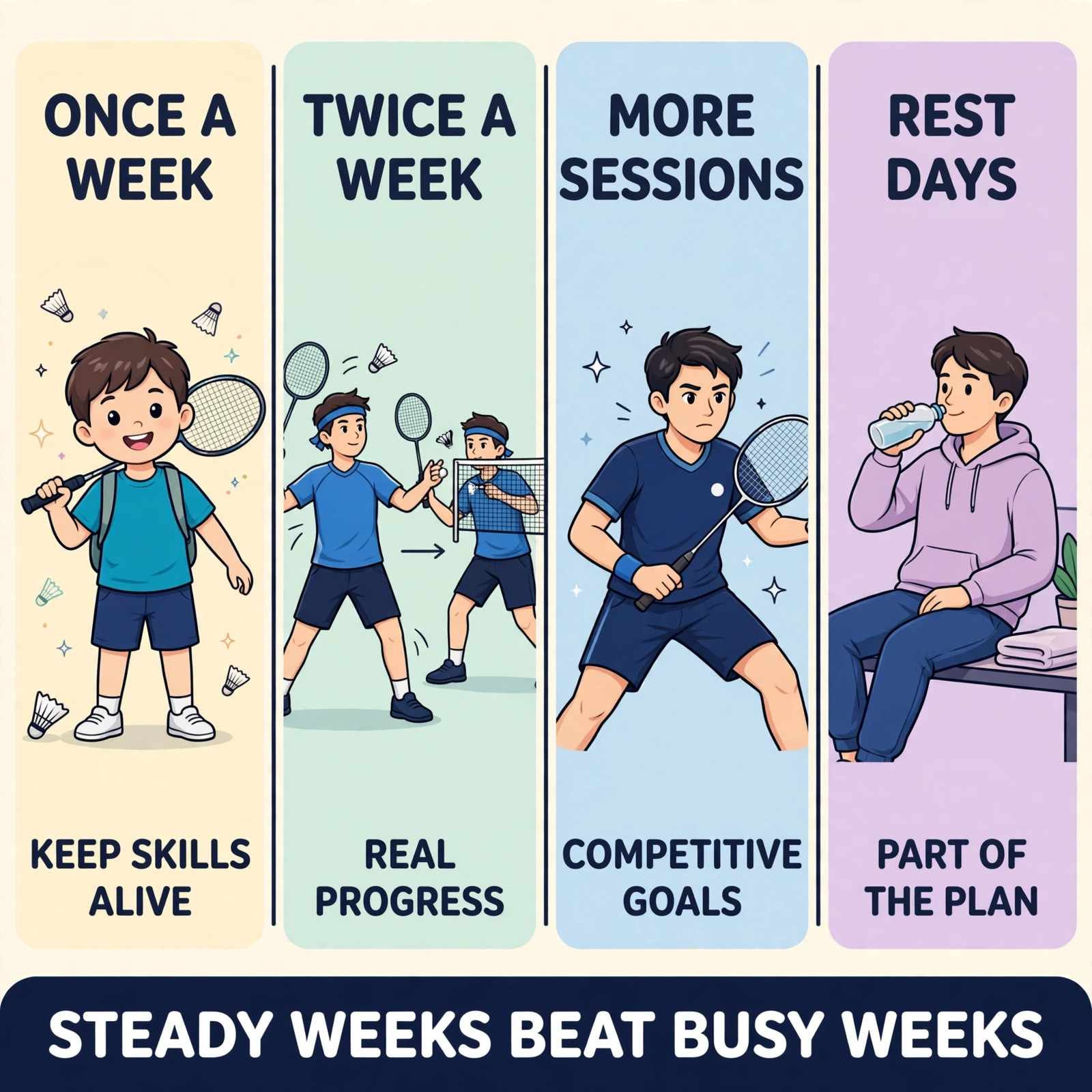
Frequency depends on the goal. One coached session a week keeps skills alive and suits young beginners and busy adults. Two sessions a week is where most school and club players see real, visible progress, enough repetition for new skills to stick, enough gap between sessions for the body to absorb the work.
Rest days are part of the schedule, not a failure of it. Muscles, joints and touch all rebuild between sessions, and school or work still has to fit around training. Exam periods and family holidays happen, a lighter week now and then is fine, as long as the usual slot is waiting when life settles. What slows players down is the stop-start pattern: three big weeks, then a month of nothing.
So the honest answer is: pick the frequency you can still be keeping six months from now. A steady twice-a-week rhythm beats an heroic schedule that collapses by the second month. Coaches would rather see a player improve quietly for a year than burn brightly for four weeks and quit.
The Timetable
What Happens Inside a Scheduled Class?
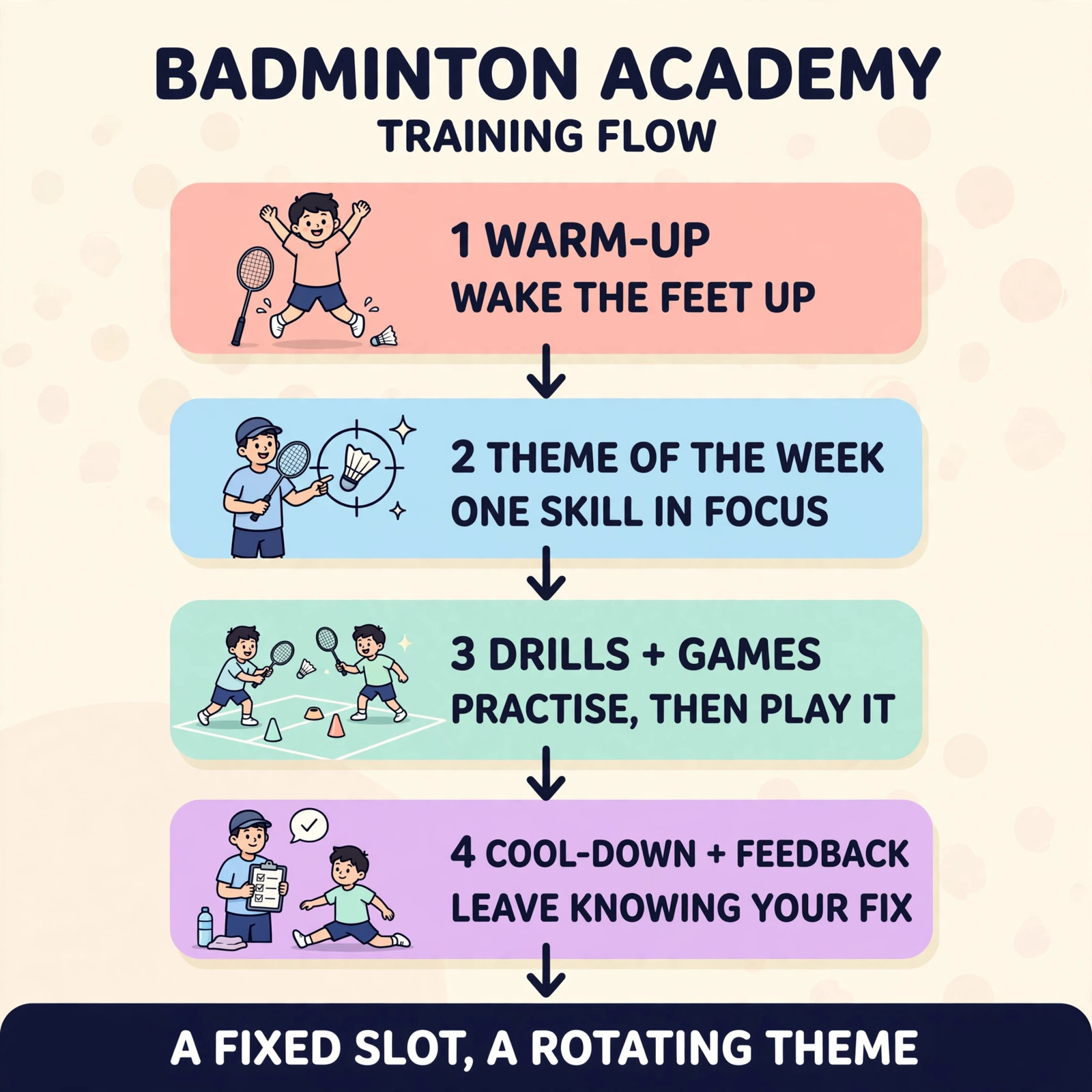
Open any well-run class and you will see the same shape. Warm-up first, movement, stretching and shadow footwork to wake the body up. Then the theme of the week: one skill family, such as net play or back-court strokes, taught and drilled while the legs are fresh. The slot on the timetable stays fixed; the theme inside it rotates, so a term of classes adds up to a complete game.
Coaches plan in terms, not single sessions. Skills are sequenced across the weeks, footwork patterns before the strokes that need them, strokes before the tactics built on them. Near the end of a term, classes include more match play and simple reviews: what improved, what still leaks points, and whether a student is ready to move up a level.
Before booking anywhere, ask four plain questions. How big is the group? How are students placed by level? What happens if we miss a class? And how is progress reviewed? Then ask for the centre’s current timetable and lay it against your own week, school hours, work, family time, and pick the slot you can genuinely keep. A schedule only works if your life can hold it.
Myth vs Reality
Myths About Class Schedules
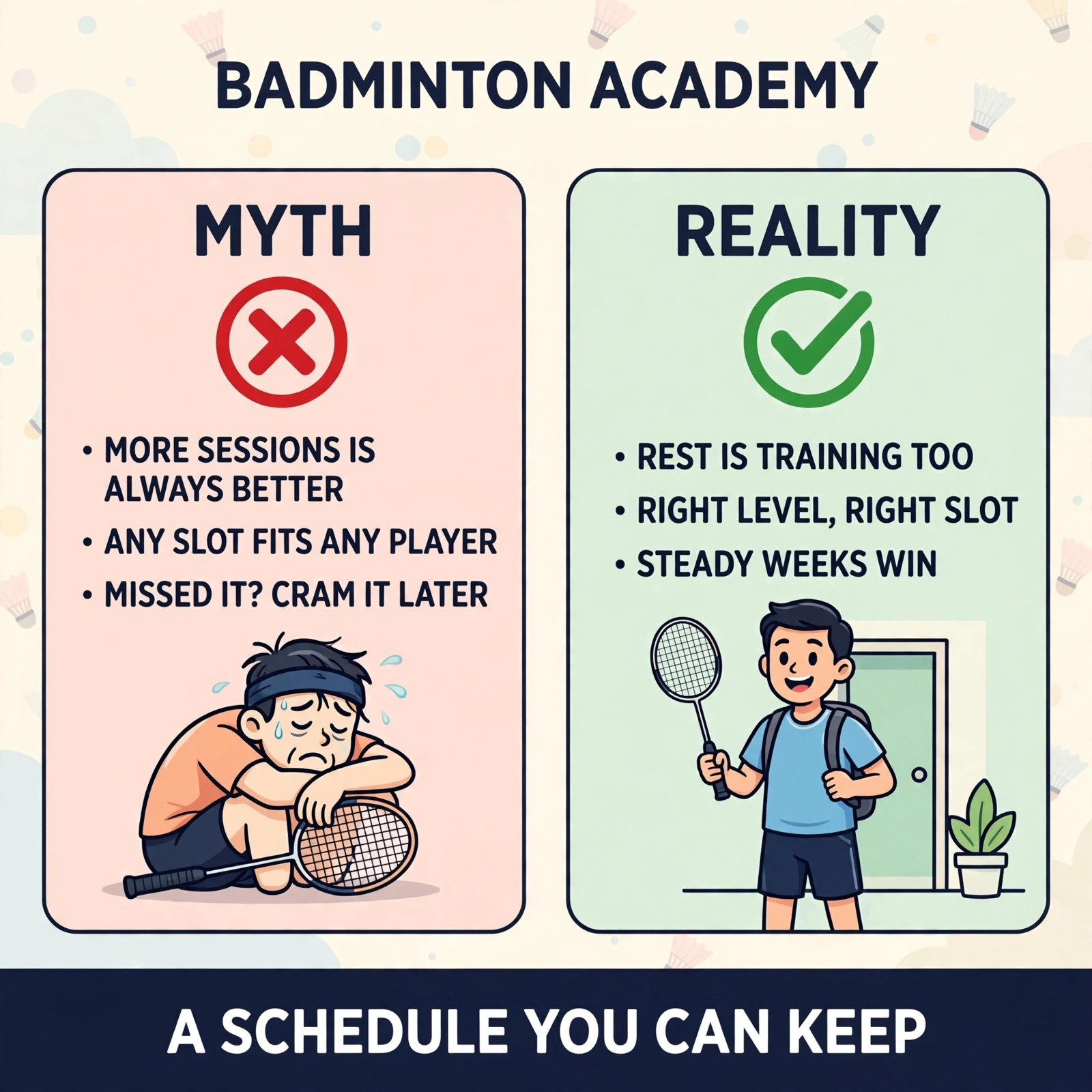
Myth: “More sessions a week is always better.” Reality: Load has to grow with the player. Piling sessions onto a tired student brings sore joints, sloppy technique and a child who starts dreading the hall. The right number of sessions is the number the player can recover from and look forward to.
Myth: “Any slot is fine, training is training.” Reality: The slot sets the level and the group, and a mismatch wastes everyone’s time. A beginner in an advanced group spends the session chasing shuttles; an advanced player in a beginner group stops improving. Myth: “Miss a few weeks, then cram it back later.”
Reality: Badminton fitness and touch fade quickly, and cramming mostly teaches a player how tired feels. The whole point of a schedule is steady rhythm. At ST Badminton Academy KL we place students by level in small groups and review progress term by term, so the schedule keeps working quietly in the background.
Why Choose Us
Real Schedule Planning for Busy Families
A schedule is only as good as the planning behind it. At ST Badminton Academy Malaysia in Setapak, every student is assessed and placed by level first, then fitted into a small group capped at max 4 students, so the slot you book is a group that matches your game, with a coach who knows exactly where you are in the term plan.
Our head coach, Mr Eric Chuar, has over 15 years of coaching experience in Singapore and Malaysia. He plans the term’s skill sequence himself, reviews each group as the weeks pass, and moves students up a level when their game earns it, not before, and not late.
If you are comparing class schedules around Setapak, a short reach from Wangsa Maju, Gombak and Danau Kota, ask us for our current timetable. Tell us your school or work pattern, and we will point you to the group and slot that fits it honestly.
FAQs: Badminton Class Schedules in Malaysia (KL)
Here are answers to common questions from players and parents in Kuala Lumpur about badminton class schedules and how classes are organised.
How do I see the current badminton class schedule if I live in Setapak or Gombak?
Class timetables change from term to term, so the reliable way is to ask us directly for the current one. Tell us the player’s age, level and the days your family can manage, and we will match them to a small group in Setapak, capped at max 4 students, at the right level.
How are badminton classes organised by level for juniors in KL?
Classes are grouped by level first: beginners learn grip, footwork and basic strokes; intermediate players link shots into combinations and simple tactics; advanced groups train with conditioned games and match preparation. A coach assesses each new junior before placing them, and students move up when their skills, not their age, say they are ready.
How many badminton classes a week should my child attend at their current level?
For most children, one or two coached sessions a week is the right load: one keeps skills alive for young beginners, two builds clear progress for school players. Add rest days between sessions, and keep the same slot each week. If your child also plays at school, tell us, we count total load, not just academy sessions.
Can my child join a class mid-term if they are 13 or 14?
Yes, joining mid-term is normal, and 13 or 14 is a common age to start. We assess the player’s grip, footwork and rally level first, then place them in the group that matches, even part-way through a term. The coach briefs them on the group’s current work, so they settle in within a session or two.
What tournament preparation should a junior badminton schedule in Malaysia include before we enter?
Work backwards from the tournament date. The weeks before an event should shift toward match play, pressure games and the shots the player actually uses in competition, with the last week kept lighter so the player arrives fresh. Tell the coach about upcoming school or district events early, so the term plan bends around them.
Do you offer badminton classes with schedules that suit families near Wangsa Maju?
Yes. Our academy is based in Setapak, a short drive from Wangsa Maju, Melati Utama and Danau Kota. Classes run in small groups of max 4 students, placed by level, and many of our families come from these areas. Ask us for the current timetable and we will show you the groups that fit your child’s age and level.
Does your academy help families plan class schedules around school in Malaysia?
Yes. Planning around school is part of the job: we look at the player’s whole week, school training, homework load, exam periods, and fit academy sessions where they help rather than clash. When exams come, a lighter patch is fine; the usual slot and group are still there when the exams end.
Where is ST Badminton Academy KL located for badminton class training?
We are based in Setapak, Kuala Lumpur, easy to reach from Gombak, Air Panas, Wangsa Maju and nearby areas. Classes are organised by level in small groups of max 4 students. If you are nearby, ask for the current timetable, or come and watch a class, seeing the level of a group tells you more than any description.
What makes Mr Eric Chuar a suitable coach for planning junior badminton?
Mr Eric Chuar has over 15 years of coaching experience in Singapore and Malaysia, and he plans the junior programme at our Setapak academy himself. He sequences skills across each term, keeps groups small enough to watch every student, and reviews each junior’s progress before deciding on level moves or tournament entries.
Badminton Classes in Action



What It Takes to Keep a Training Rhythm
A workable badminton schedule follows the same standards every term: a fixed weekly slot, the right level group, rest days protected, themes sequenced in order, and progress reviewed before any level move. Our schedule standards below are the checkpoints we use when we place students and plan terms in Setapak.
| Factor | Random Play | Planned Class Schedule PLAN |
|---|---|---|
| Frequency | 1 or 2 times a week. Mostly for fun and sweat. | A fixed weekly slot with the same group and coach, building across the term. |
| Drills Focus | Basic static feeding. Minimal footwork pressure. | Themes sequenced week to week: footwork first, then strokes, then tactics and match play. |
| Physical Conditioning | Rarely included. Just playing games on court. | Core, agility, and speed training included in every session to prevent injury and build stamina. |
| Tactical Awareness | "Just hit it over." No real game plan. | Video analysis, point construction, and learning to read the opponent's game. |
| Coach Ratio | Large groups (8-10 kids). Coach barely watches you. | Max 4 students. Mr Eric Chuar personally corrects every stroke and movement detail. |
| Goal Setting | Fun and exercise. | Level reviews each term, with tournament preparation added when a player is ready. |
| Long Term Result | Good recreational player. | A player improving steadily on a rhythm their family can actually keep. |
Badminton Classes in Kuala Lumpur
This guide explains how badminton class schedules are organised at good training centres: levels, weekly rhythm, session shape and the questions to ask before booking. ST Badminton Academy KL runs small-group classes in Setapak. If you are in Wangsa Maju, Gombak, Cheras or nearby, ask us for the current timetable today.




