The Best Badminton Compression Shorts For Comfort And Support (Compression Shorts Guide)
Compression shorts arrive wrapped in tall stories: injury prevention, boosted blood flow, less fatigue, faster legs. This guide leaves the stories at the door. Compression shorts are a snug layer of stretch fabric for the legs and hips. They can keep your thighs warm, sit smooth under loose shorts, and help manage the rubbing that long sessions can cause. They cannot prevent injuries, improve your circulation, or make you quicker. Those are claims, not cloth. Read on for what the shorts are, the two honest ways to wear them, how waistband, length and the chafe test decide fit, which fabrics and small features matter, and how to wear, wash and replace a pair well.

Shorts Check #1
What Compression Shorts Are: A Snug Layer for the Legs
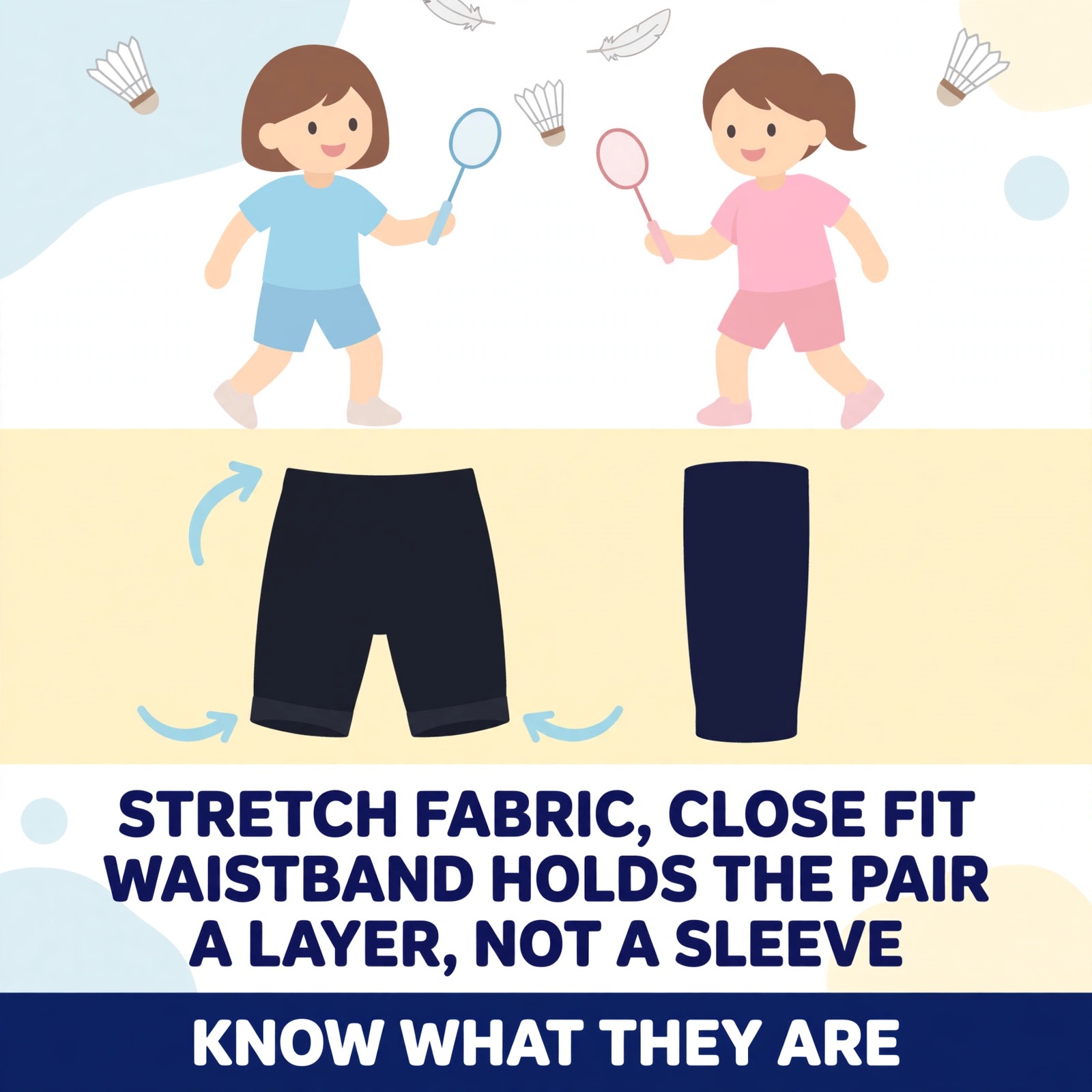
Compression shorts are a full pair of shorts sewn from stretch fabric, usually a polyester or nylon blend with elastane, cut to sit close from the waist to partway down the thigh. A wide waistband holds them in place and leg bands finish the hems. There is no padding in them and no armour. They are a layer, in the same family as a base layer top: cloth that hugs, stretches when you lunge, and springs back when you recover. Everything honest about them starts there. If a pair feels like ordinary thin shorts that happen to be tight, that is because that is close to what they are, well made or badly.
Keep them distinct from a thigh sleeve, because players confuse the two. A thigh sleeve is a single tube that covers one thigh, worn for warmth and a held feeling on that leg. Compression shorts are a complete garment: waist, hips and both thighs in one piece, with a waistband doing the holding. They are also different from a brace. Nothing in the fabric braces a joint, guides a knee, or holds anything in place beyond the cloth itself. Choose shorts when you want a layer for both legs under or instead of loose shorts. Choose a sleeve when only one thigh wants covering. Different tools, different jobs.
Shorts Check #2
Under Loose Shorts or On Their Own
Most badminton players wear compression shorts under loose shorts, and the pairing works well. The snug layer stays put through lunges and jumps while the loose shorts ride over the top, keeping the look a player is used to. Skin that would rub against skin meets smooth fabric instead, and the waistband of the layer holds steady even when the outer shorts shift. It is a tidy arrangement: the loose shorts handle appearance and pockets, the layer handles contact and warmth. If you try only one way of wearing them, try this first, because it changes the least about how you already dress for the court.
Wearing them on their own is equally honest. Plenty of players train in just the compression shorts, especially in drills and fitness work, and find the freedom hard to give up: nothing flaps, nothing catches, every lunge is unimpeded. Tidy, plain pairs look like ordinary training kit, because they are. The choice is personal comfort, and halls differ in what feels normal, so decide by your own ease rather than by anyone’s stare. One practical note: worn alone, the pair carries everything, so the waistband and leg bands must hold properly. Worn under loose shorts, a small slip matters less. That difference is worth knowing before you buy.
Neither way of wearing them changes what the shorts can do, and this is where honesty matters most. The layer does not support muscles in any medical sense, does not shield joints, and does not add spring to a jump. Players sometimes credit the shorts for a good session that was really about sleep, food and a well planned week. Credit the week. The shorts’ real jobs are small and useful: warmth for the thighs in cold halls, a smooth surface where skin would rub, and a feeling of being gathered and ready that some players enjoy. Small jobs, honestly done, are enough reason to wear them. They are not enough reason to believe in them.

Shorts Check #3
Fit: Waistband, Length and the Chafe Test
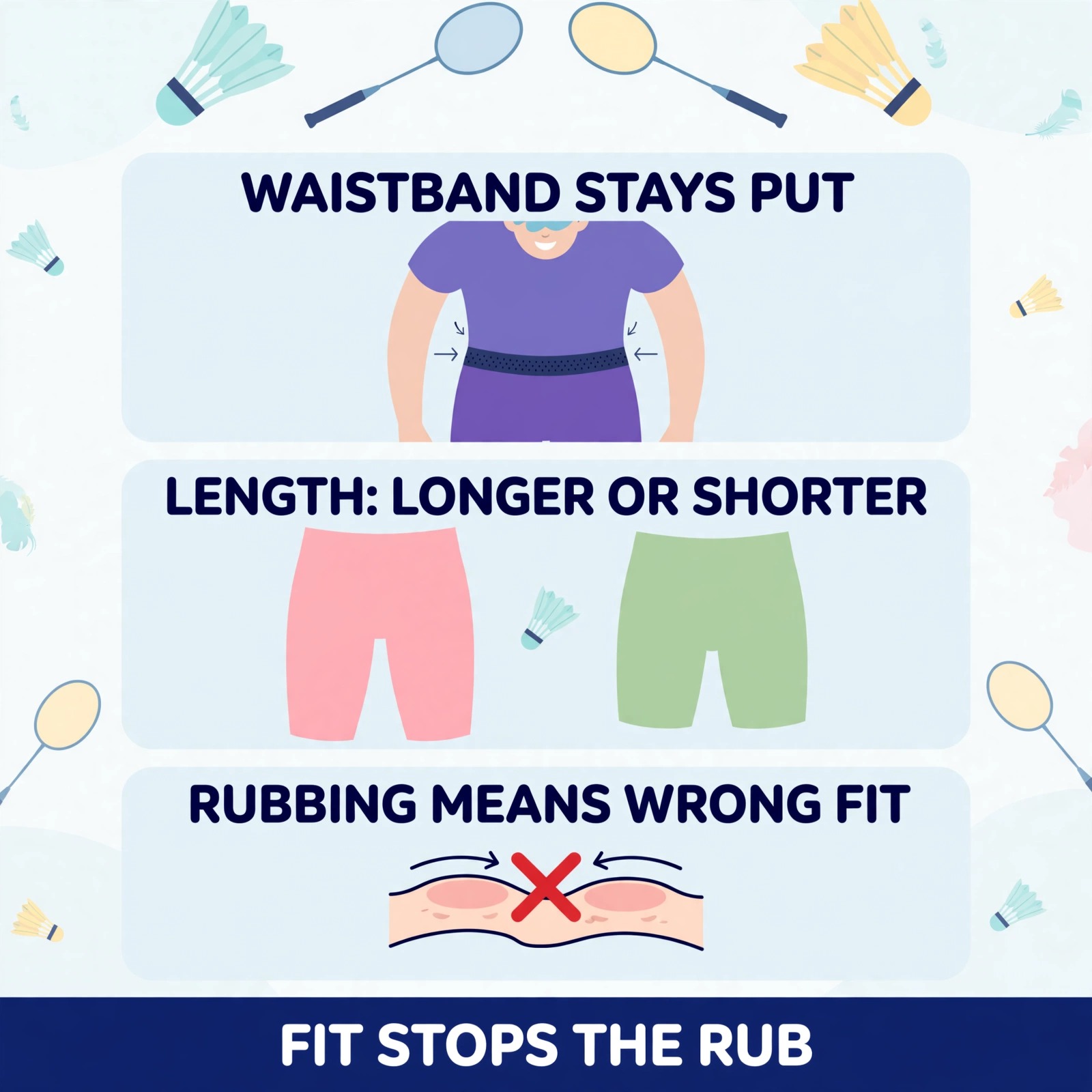
Fit starts at the waistband, because the waistband is the anchor of the whole garment. It should sit flat and firm all the way around, holding through deep squats, lunges and jumps without rolling, folding or sliding down. A drawstring helps fine tune the hold, so use it. The honest test is movement: squat deep, lunge to both sides, jump twice. If the band rolls or you hitch the shorts up even once, the size or the cut is wrong for you, and no amount of patience will fix it mid session. A band that stays put disappears from your attention. A band that moves becomes the session’s background noise, and background noise is what bad fit always sounds like.
Length is the second decision, and it is a real trade. Longer legs cover more thigh: more warmth, and more fabric between skins that would otherwise rub. Shorter legs feel cooler and freer, and suit players who overheat or who wear the pair under loose shorts anyway. Then comes the chafe test, and it is deliberately simple. Walk the length of the hall, climb a few steps, lunge and squat. Feel for any rubbing, especially at the inner thigh and along seam lines. Small rubs found early are information: a different length, a smoother seam position, or a size change fixes most of them before they become sore skin.
Chafing deserves plain words, because it is the problem these shorts are most honestly useful for. Chafing is skin rubbed sore, by skin or by fabric, made worse by sweat and long sessions. A smooth, close layer lowers it in two ways: skin meets fabric instead of skin, and the fabric itself does not flap or fold as you move. That is a comfort effect, not a treatment. If skin is already sore and broken, rest it and let it settle rather than squeezing into a tighter pair and playing on. Soreness that keeps returning in the same spot is worth showing to a doctor or pharmacist. Fit first, fabric second, and honesty about sore skin always.
Shorts Check #4
Fabrics and Small Features
Fabric decides how the shorts feel in the second hour. The blends that work pair a quick drying base, polyester or nylon, with elastane for stretch and return. Read the label in plain words: the base fibre handles sweat and drying, the elastane handles the hug. Good fabric stretches wide for a lunge and comes back flat, wash after wash. Thin, weak blends go baggy at the seat and thighs, and a baggy compression short is a contradiction: it neither holds nor smooths. Weight is a balance. Very light pairs feel like nothing and wear out sooner; heavier pairs last but can feel warm. Most players land in the middle and stay there.
Seams decide whether the fabric’s good work survives contact with skin. Flat seams, sewn so the join lies flush, are the ones to look for, because a raised seam at the inner thigh sits exactly where the rubbing happens and can undo every benefit of the layer. Run a thumb along the inside joins before you buy: smooth is right, ridged is wrong. Seam position matters too. Lines that sit away from the inner thigh’s rub zone cause fewer complaints than lines that cross it. This is unglamorous checking, two minutes in the shop, and it is worth more than any claim printed on the packet.
Small features should stay small. A drawstring is genuinely useful. One small pocket, sized for a key or a locker token, is enough; anything in it during play should be flat and forgotten. Long lists of extras, multiple pockets, zips, straps and panels, mostly add bulk, cost and new places to rub. Colour and print are taste and nothing more. When two pairs fit you equally well, take the simpler one with the smoother seams and the firmer waistband. Players judge shorts by the third game, squatting for a low return with tired legs. In that moment, the only features that exist are fit, fabric and seams.

Shorts Check #5
When to Wear Them, Washing and Replacing
Wear them for sessions, not for the whole day. The pair goes on for training and matches, and comes off after, when you change into dry clothes. Session time only keeps damp, sweaty fabric from sitting against skin for hours, which is how small rubs turn into sore ones. Warm ups in cold halls are where the warmth earns its place: thighs stay comfortable between games instead of cooling stiff. In a hot hall, some players still like the layer for rubbing control and leave warmth out of the decision entirely. Both reasons are honest. What is not honest is wearing them everywhere in the hope the squeeze is training you while you sit. It is not.
Washing decides how long the honesty lasts. Rinse the pair after sweaty play, wash it gently and regularly in cool water, and air dry it fully, open on a line, never bunched in the bag. Heat from hot dryers tires elastic, and a waistband that has lost its snap cannot hold, however good the fabric still looks. Two pairs in rotation is the setup most players land on: one in play, one washed and resting, so nothing stays damp and nothing is worn tired. Rotation also spreads the wear, so both pairs age slowly. A small habit, done every week, is what separates gear that lasts a season from gear that lasts years.
Replace the pair when its behaviour changes. The waistband rolls or needs tying tighter every session. The leg bands slip up the thigh during play. The fabric has thinned, gone baggy at the seat, or stopped springing back. Any of those signs means the layer is no longer doing its small jobs, and wearing it is habit rather than help. A short log makes the call easier: note the fit when new, any rub spots and where they sat, and how the pair ages. If the first pair served you well, the log tells you exactly what to buy again, and the same pair is the simplest purchase in sport.

Myth vs Reality
Myths About Compression Shorts
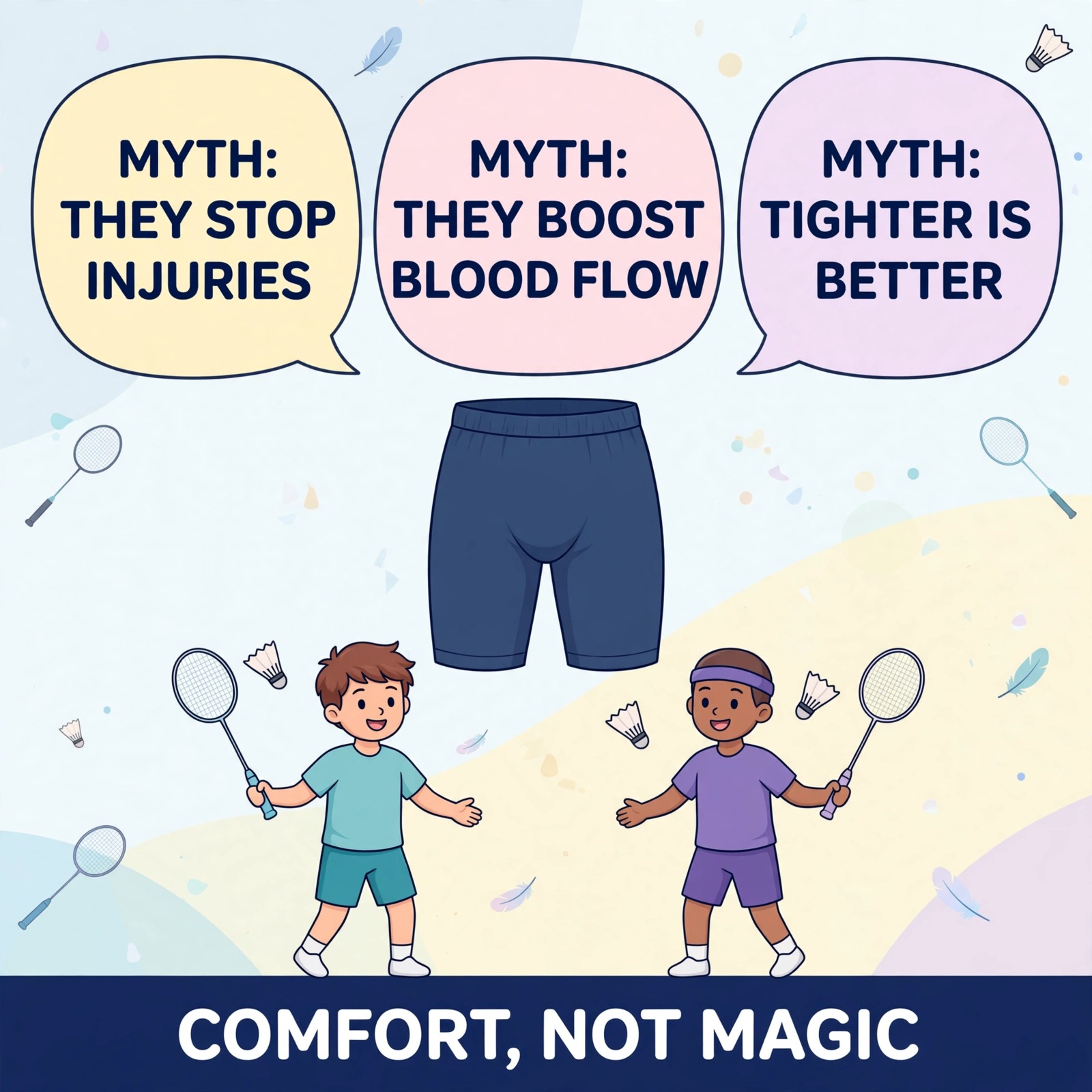
Myth one: compression shorts stop injuries. They do not. Injuries in badminton come from load, fatigue, footing, technique and sometimes plain bad luck, and a layer of stretch fabric answers none of them. The myth is expensive because it changes behaviour: a player who believes the shorts protect them may skip warm ups, ignore a growing ache, or load a tired body harder than they should. Warmth and comfort are real, and they are welcome. Protection is a different claim, and cloth cannot keep it. Warm up properly, build load gradually, rest when the body asks, and let the shorts be clothing.
Myth two: compression shorts boost blood flow. The squeeze of a snug layer is real; you can feel it. The leap from that feeling to improved circulation, faster legs and quicker recovery is marketing, not measurement. Honest answers about circulation claims are dull for a reason: the effects, where they are found at all, are small, mixed and mostly about how things feel. Feeling ready is pleasant and can help a player settle. It is not a physiological upgrade. If your legs are heavy, the causes to check are sleep, food, fluid and training load, in that order. Shorts are not on the list.
Myth three: tighter is better. A pair works by fit, not by force. Sizing down until the waistband digs and the leg bands leave deep rings does not add support; it adds pressure in places that never asked for it, and it can create the very rubbing the shorts were bought to prevent. If a pair needs to be tighter every month to feel right, the elastic is dying, not your standards rising. The right fit is easy to describe: firm waistband that never rolls, leg bands that stay without biting, and a player who forgets the garment by the second game. Forgotten is the goal. Anything you keep noticing is wrong.
Why Choose Us
Why Players Choose ST Badminton Academy
At ST Badminton Academy, gear talk stays honest. When a student asks about compression shorts, the coach asks what problem they are solving. Rubbing on long sessions and cold thighs in an air conditioned hall: fair problems, and the fit and chafe checks in this guide are the ones we share. Injury prevention and blood flow: we say plainly that shorts cannot do those things, because students should hear the truth before they spend, not after. There is no house pair and no sales talk. A student playing happily in ordinary shorts is dressed exactly right, and nobody here will suggest otherwise to move a product.
Small groups make fit problems visible early. With a maximum of four students, a coach notices the tells: a student hitching shorts up between rallies, adjusting a waistband during drills, or shortening lunges because something rubs. The coach can pause, ask, and suggest the squat and lunge check or a length change, while it is still a small fix. Students in Setapak, across KL and at our Singapore classes get the same handling, because the advice travels: honest gear, checked while it is worn, by someone actually watching. In a crowd, those small signs are missed for months. In a group of four, they are caught in a week.
We also encourage students to log their kit, the same way they log drills. Note the fit of a new pair, where any rub spot appeared, and how the waistband ages. Two lines after a session, no more. The log ends the guesswork of which pair caused trouble and when the elastic started going, and it makes the next purchase a copy of a proven choice instead of a fresh gamble. Compression shorts are a small item of clothing. The habit of noticing, noting and choosing on evidence is the larger skill, and it serves a player in every buying decision they will ever make.
FAQs: Badminton Compression Shorts, Fit and Honest Comfort in Malaysia (KL)
Compression shorts questions usually come down to fit, rubbing and honest claims, so the answers below cover first steps when a pair starts rubbing, when shorts make sense, how to judge them over time, what they cannot do, checks before buying, and how our coaches handle gear talk during badminton classes in Kuala Lumpur and Singapore.
What should a player do first when compression shorts start rubbing in Setapak or Gombak?
Change something small first: check the waistband sits flat, try the other length, and move any seam line away from the rub spot. If one spot keeps rubbing, the size or cut is wrong for you. Sore, broken skin needs rest, not a tighter pair and another hard session.
When do compression shorts make sense for a player training in KL?
They make sense for long sessions where thighs rub, in cold air conditioned halls where legs cool between games, and under loose shorts when you want a layer that stays put. They are a comfort choice. If ordinary shorts serve you well already, you are not missing any hidden benefit.
How should a player judge compression shorts while training at a steady level?
Judge by the trend across sessions. Note whether the waistband still holds without rolling, whether rub spots appear and where, and whether the leg bands stay put in the third game. A pair you forget about is working. A pair you keep adjusting is finished, whatever it cost.
Can compression shorts prevent injuries, or is comfort the honest story?
Comfort is the honest story. A snug layer can keep thighs warm and lower rubbing, and that comfort is worth having, but it does not prevent injuries or shield joints. Warm ups, gradual load and rest do the protecting. Buy the shorts for comfort, and do the safety work properly.
What should I check before buying compression shorts for classes?
Check the waistband: firm, flat, no rolling in a deep squat. Check the length against rubbing: longer covers more thigh. Check seams lie flat inside, the fabric springs back when stretched, and a drawstring is present. Check the same pair is easy to buy again when this one wears out.
Do your coaches give honest gear advice about compression shorts to students near Wangsa Maju?
Yes. Coaches answer gear questions plainly, share the fit and chafe checks from this guide, and correct the tall claims on packaging. There is no house product and no sales pressure. If plain shorts serve a student well, we say so and move on to their footwork, which matters more.
Does your academy sell compression shorts or just advise players in Malaysia?
We advise, and students buy wherever they like. A coach will talk waistband, length and seams, and warn when a claim on the packet outruns what cloth can do. What a student wears is their own choice. Our job is to keep the information honest so the choice is a good one.
How long do compression shorts last with regular training?
It depends on use, sweat and washing. A pair that rolls at the waist, slips at the legs or has gone baggy at the seat has finished its useful life, however new it looks on the hanger. Judge by behaviour during play, not by age. Replace it when the holding stops.
What makes Mr Eric Chuar a careful coach for honest advice about compression shorts in badminton?
Eric Chuar starts with the problem, not the product. He has coached in Kuala Lumpur and Singapore for fifteen years, in small groups where he can watch a student’s movement, load and kit at close range. Ask him about compression shorts and he asks first what keeps rubbing, slipping or cooling down.
Badminton Compression Shorts and Training in Action



One Standard for Every Player and Every Session
One standard runs through every session at ST Badminton Academy: honest comfort, honestly described. In groups of no more than four students, coaches spot kit that fights its owner, correct the miracle claims on packaging, and keep protection where it belongs: warm ups, gradual load and rest. No shortcuts, no magic shorts, and no claim that a layer of cloth can guard a joint. Just a snug pair, fitted by checks and judged by weeks, inside a training system that tells the truth.
| Factor | The Honest Comfort | The Claims SHORTS |
|---|---|---|
| Frequency | 1 or 2 times a week. Mostly for fun and sweat. | Packaging promises injury prevention and boosted blood flow. |
| Drills Focus | Basic static feeding. Minimal footwork pressure. | A snug layer that warms thighs and lowers rubbing. |
| Physical Conditioning | Rarely included. Just playing games on court. | Core, agility, and speed training included in every session to prevent injury and build stamina. |
| Tactical Awareness | "Just hit it over." No real game plan. | Video analysis, point construction, and learning to read the opponent's game. |
| Coach Ratio | Large groups (8-10 kids). Coach barely watches you. | Max 4 students. Mr Eric Chuar personally corrects every stroke and movement detail. |
| Goal Setting | Fun and exercise. | Shorts squeezed tighter every month on faith. |
| Long Term Result | Good recreational player. | A player who fits the waistband first and logs rub spots. |
Badminton Coaching and Honest Gear Advice in Kuala Lumpur
Compression shorts are a small tool with honest jobs: warm thighs, a smooth layer, and less rubbing on long sessions. Fit the waistband first, choose length by the chafe test, wear them for play, wash them gently, and replace them when the holding stops. Keep injury prevention for warm ups and sensible load, where it lives. If you would like a coach to watch your movement and talk kit honestly in person, book a trial class with us and bring your racket and your questions.






