How to Play Badminton With Strategy and Creativity: Tactics and Tips (Strategy Guide)
Ask club players what separates the winners from the rest and most will point at smashes. Watch the same match again with fresh eyes and a quieter story shows itself. The winner is usually the player whose shots have a job. Clears push the opponent back so the front court opens. Drops pull them forward so the back court empties. Drives hurry them until a weak reply floats up. A thinking game is built on small decisions like these, repeated calmly. Strategy is not a secret code for professionals. It is the habit of choosing where the shuttle goes, and why, before the rally starts.

Strategy Check #1
Reading Your Opponent: The First Skill of the Thinking Game
Strategy starts with a simple idea: the shuttle is a tool for moving the other player. Every clear, drop, lift and drive either moves them, holds them in place, or gives them a free ride. Players who think about the rally ask one question before each shot. Where will this shot make my opponent stand next? A clear to the backhand corner is not just a safe reply. It buys time, turns their body, and makes the next shot harder for them. A tight net shot is not just pretty. It forces a lift, and a lift is an invitation to attack.
Notice how little of this needs power. A rally is a conversation of positions. The player who runs less and makes the other player run more usually wins the long games. That is why a well placed slow drop can beat a wild smash. The smash ends one rally in three, if it lands at all. The drop starts a pattern that pays off again and again. Start small. Pick one shot in your next game and give it a clear job. Send every clear to the backhand corner for one full game and watch what it does to your opponent.
Strategy Check #2
Building a Rally: Push, Pull and Wait for the Right Ball
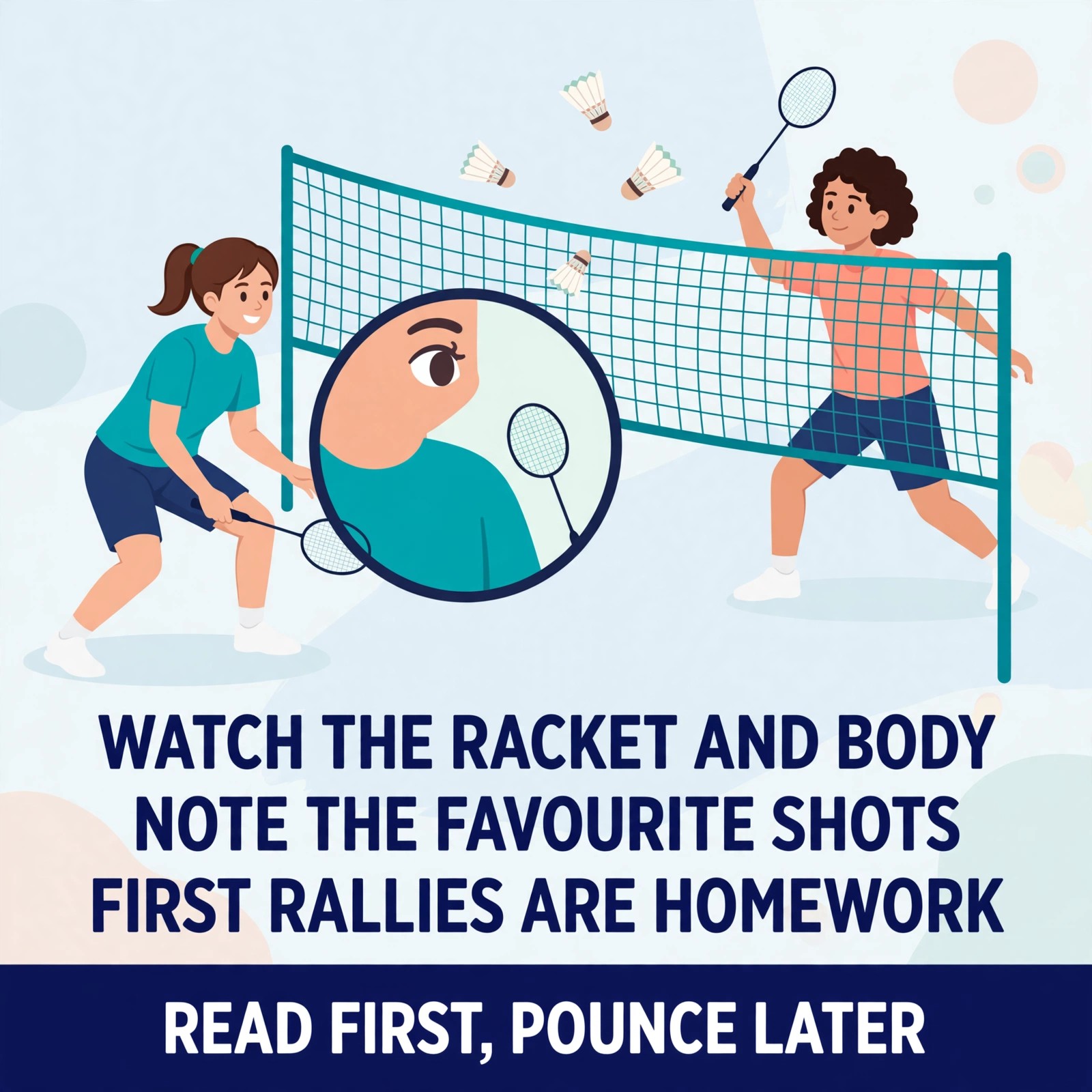
Reading an opponent is a skill, and like any skill it improves with practice. Start during the warm up. Note which side your opponent turns to when a shot goes behind them. Many club players hide a slow backhand corner. Others love the cross court drop and play it whenever they are in trouble. Watch the racket, not just the shuttle. A short backswing and a still wrist often mean a drop is coming. A big wind up from the back usually means a clear. The first few rallies of a match are homework time. Play safe, watch closely, and store what you learn.
Keep track of three things in every match. First, the favourite shot: the one they play when the rally gets tight. Second, the weak corner: the spot they reach late or defend with a weak reply. Third, the habit under pressure: some players always lift long when rushed, others always play straight. Once you know these three things, the match changes. You stop reacting to the shuttle and start playing the person. Feed their favourite shot once or twice early, then take it away. Push rallies toward the weak corner and wait for the loose reply.
Do not guess blindly, though. Reading is not the same as gambling. A guess made before the opponent swings leaves you stranded when you are wrong. A read made from body shape, racket angle and past habits is a decision with evidence behind it. Keep your feet ready and your split step honest until the shuttle is struck. Then move with full commitment. The best readers look calm because they are not chasing every possibility. They have narrowed the likely shots down to one or two, and their first step starts half a moment earlier than everyone else.
Strategy Check #3
Changing Pace and Direction: Small Changes, Big Confusion
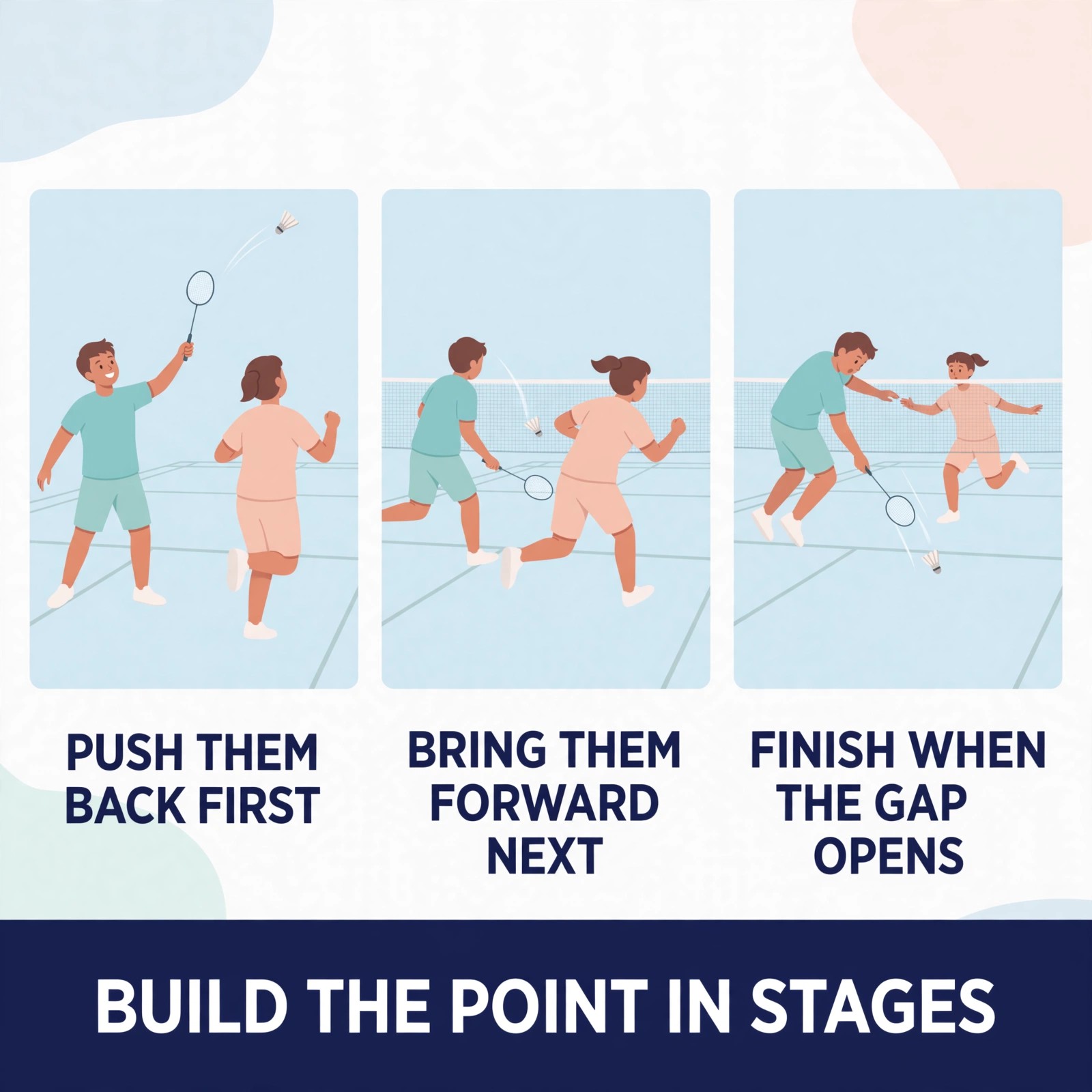
A good rally is built in stages, the way a house is built floor by floor. Stage one is control: keep the shuttle in play and make your opponent move to the back with deep clears and lifts. Stage two is pressure: once they are deep, drop the shuttle soft and short so they must sprint forward. Stage three is the finish: when the reply is weak or short, step in and take it early with a drive, a net kill or a smash at the body. Most club players try to start at stage three. The winners earn it, one honest shot at a time.
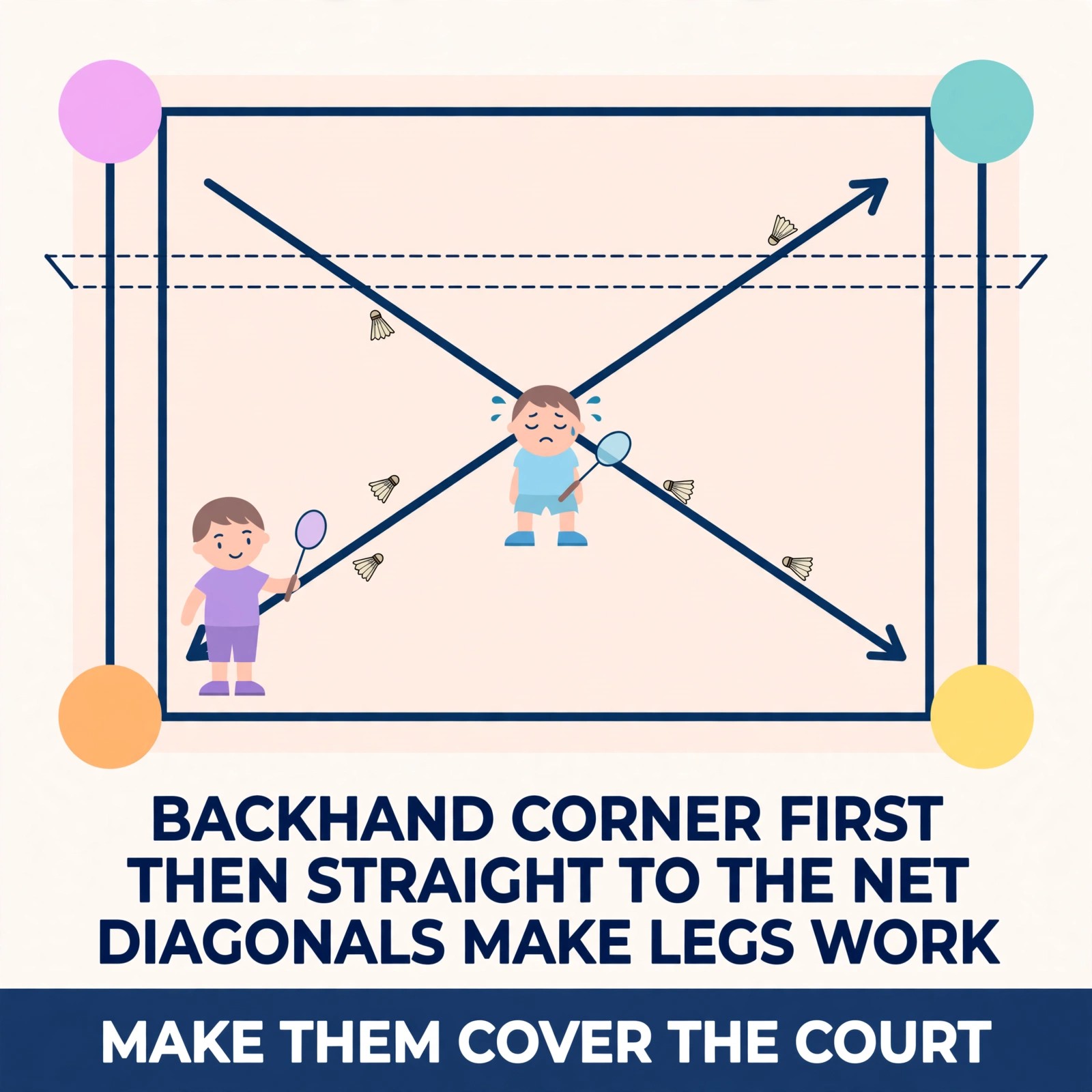
The four corners are your toolbox. A deep clear to either back corner pushes your opponent behind their comfort zone. A drop to either front corner tests their legs and their balance. Mix straight shots with cross court ones so no corner feels safe. The biggest distances in badminton are the diagonals, backhand corner to opposite front corner and back again. Run an opponent along those diagonals a few times and their replies start to fall short. Then your finishes get easier. Placement beats pace over a long match because legs tire before arms do.
Patience holds the whole plan together. Many rallies at club level are lost, not won: the first player who gets bored and swings wildly gives the point away. If your build up is working, keep building. Send the shuttle back one more time, a little tighter, a little deeper. Wait for the short lift or the loose net shot that your patience has earned. This is where strategy feels almost unfair. You are not hitting harder than your opponent. You are simply refusing to hand them the point they are waiting for, until the opening you planned for finally appears.

Strategy Check #4
Creative Shot Choices: Flair That Serves the Plan
Pace is a dial, not a switch, and smart players turn it often. Three or four fast exchanges teach your opponent to expect speed. Then one slow, soft drop shot lands in a different world, and their feet are still moving at the old tempo. The reverse works too. Slow, floating clears lull a patient opponent, and then one flat drive through the middle startles them into a weak block. Change the height as well as the speed. A rally played at one height becomes easy to read. Lift high, drive flat, drop soft, and clear deep again, and the rhythm never settles.
Direction changes work the same way. Play two shots straight, then one cross court. Your opponent sets their feet for the straight reply they have grooved, and the cross court shot passes on the other side of their body. Body shots belong in this toolbox as well. A drive aimed at the chest or the racket hip jams the swing and often pops up a weak reply. Keep the changes small and deliberate. Change one thing at a time so you can see what worked. Wild variety on every shot is not creativity. It is noise, and it confuses your own feet as much as theirs.
Deception has a home here too, but it is the honest kind: the kind built on sameness. When your clear, drop and smash all start with the same body shape and the same racket preparation, your opponent cannot read you early. Hold the racket a fraction longer at the net and the same swing can spin the shuttle tight or flick it deep. This is different from pure disguise tricks. The disguise serves the plan. It keeps your opponent guessing inside a rally you are already controlling, so their first step comes late exactly when your rally building needs it most.
Strategy Check #5
Training the Thinking Game: Drills That Build Match Brains
Creativity in badminton does not mean inventing a new shot every rally. It means seeing more options than the obvious one and picking the option the rally needs. A late cross court net shot, played with a relaxed wrist when a straight reply is expected, can end a rally without any extra power. A sudden change from a deep clear to a short punch clear changes the height the opponent must handle. Even a simple block to the net, instead of the lift everyone expects, can flip a defensive moment into control of the next exchange.
Creative shots carry risk, so manage that risk like a budget. Spend your flair when you are balanced, early on the shuttle, and ahead in the rally. Keep it in your pocket when you are stretched, late, or defending. One surprise per rally is plenty. Two trick attempts in a row tells your opponent you are guessing, and guessing players get punished. Practise creative shots in training until they feel boring. A spinning net shot you have hit a thousand times is not a gamble any more. It is a tool, and tools come out when the job calls for them.
The best creative players look simple on the score sheet. Their unusual shots appear at calm moments and land in the same corners as their basic shots. That is the secret. Flair grows out of solid basics, not instead of them. Keep your grips, footwork and standard shots tidy first. Then add one creative option to one situation at a time. This month, the late hold at the net. Next month, the cross court drop from the backhand side. Small additions, fully learned, beat a bag of half learnt tricks that break down the moment a match gets close.

Myth vs Reality
Myths About Strategy and Creativity
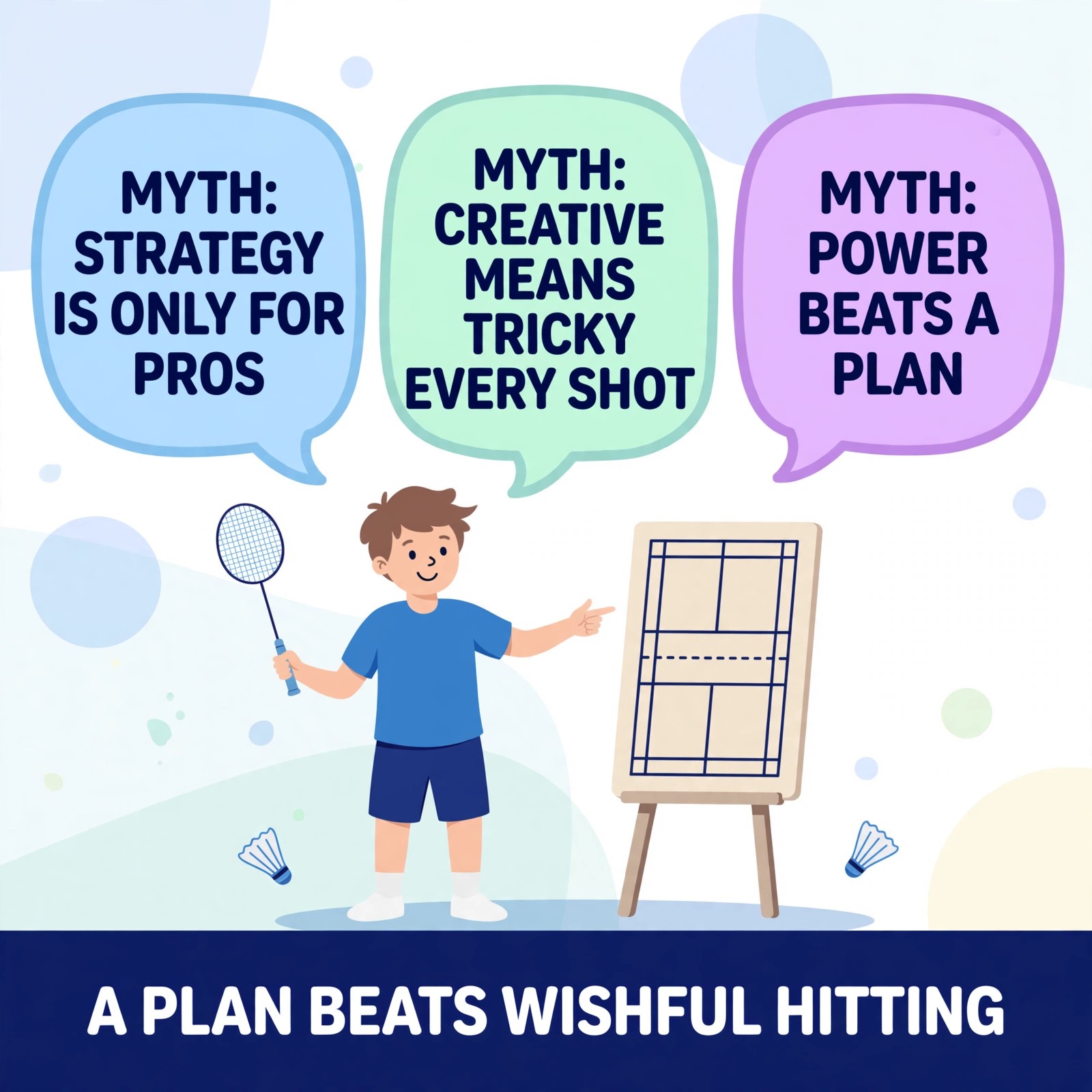
Plenty of myths keep club players from ever thinking about tactics. The biggest one says strategy is only for professionals with coaches and video rooms. In truth, the simplest plans work best at club level, because opponents are less able to adjust. One more myth claims creative play means trying trick shots all the time. Real creativity is choosing the right shot, sometimes the plainest one. A third myth says power beats planning, so players keep smashing from the back line and wonder why better opponents just block and counter. Speed and strength matter, but placement decides where that speed and strength get used.
Here is the honest picture. A basic plan, followed calmly, beats raw hitting at every level of the game below the very top. Think of the last match you lost to a steadier player. They probably did not smash winners past you. They sent the shuttle deep when you attacked, soft when you camped at the back, and waited for your errors. That is strategy, and it is available to you tonight. You do not need new shots. You need a job for the shots you already own.
So retire the myths and keep the habits that actually work. Read first, then play. Build the rally before finishing it. Change one thing at a time and notice the result. Choose creative shots that serve the plan, and leave the rest for practice games. These habits are small, almost boring, and they compound. After a month of thinking this way, your rallies get longer, your errors drop, and opponents start saying you are hard to play against. That compliment never goes to the hardest hitter on court. It goes to the player with a plan.
Why Choose Us
Why Players Choose ST Badminton Academy
Players stay with ST Badminton Academy because the thinking game is taught here, not left to chance. In our small group sessions, rallies are broken down into decisions. Why did that clear work? What did the drop shot make happen next? Students learn to read an opponent during the warm up, to build points in stages, and to pick the creative option only when the moment is right. The court craft is coached the same way we coach footwork: simply, patiently, and with plenty of guided rallies.
The academy runs group training for adults and juniors across Kuala Lumpur and Setapak, with the same structured approach in every session. Groups stay small, with a maximum of 4 students per coach, so your decisions get seen and corrected, not lost in a crowd. Coaches feed rallies that reward good choices, then stop and talk through the options when a rally teaches something. Over a term, students build a personal plan for the opponents they face most, and practise the two or three patterns that win them points.
If your current games feel like coin flips, decided by who swings harder, come and train the other half of badminton. Bring your racket and your questions. We will show you how a clear can be an attacking shot, how a soft drop can be a trap, and how one calm decision per rally changes your results. Book a trial session, meet the coaches, and play a few guided rallies with us. Most players feel the difference in the very first session: the game slows down, the options appear, and the points start to make sense.
FAQs: Badminton Strategy, Creativity and Tactical Play in Malaysia (KL)
Below are the questions players ask us most about strategy, creativity and tactical training at ST Badminton Academy. If your question is not covered, message us and we will help you plan your first session.
Does strategy really matter for club badminton players in Setapak or Gombak?
Yes, and it matters more than most players think. At club level, opponents rarely adjust mid match, so one clear plan can win games on its own. Start with jobs for your basic shots: clears that move your opponent back, drops that pull them forward, and patience until the finish opens. Coaching speeds this up a lot.
How do I read an opponent during the warm up and first rallies in KL?
Watch the warm up and the first few rallies. Note the favourite shot they use under pressure, the corner they reach late, and what they do when rushed. Then build your rallies around those notes. Push play toward the weak corner, take away the favourite shot, and stay patient. Reading gets faster with practice, and we drill it in sessions.
Can I learn creative shots if my basics are still at a beginner level?
You can, and the basics come first. Creativity grows out of tidy grips, balanced footwork and reliable standard shots. Once those are steady, add one creative option at a time, like a late hold at the net, and practise it until it feels normal. Trying trick shots before the basics are ready usually just adds errors to your game.
Which matters more for winning club matches, power or placement?
Neither. Power without placement gets blocked, and placement without any pace gets attacked. The players who win club matches combine both: they place the shuttle to move the opponent, then use pace and the smash to finish openings they have already built. Train your shots in that order and the balance takes care of itself.
Do adults pick up tactical thinking faster than children in classes?
Usually, yes. Creativity is mostly about seeing options, and adults often read games well once someone shows them what to look for. Kids pick up the patterns through games and guided rallies. In mixed sessions we teach the same ideas at different speeds, so everyone practises reading, building and finishing at a level that suits them.
Do I need a notebook or an app for match plans near Wangsa Maju?
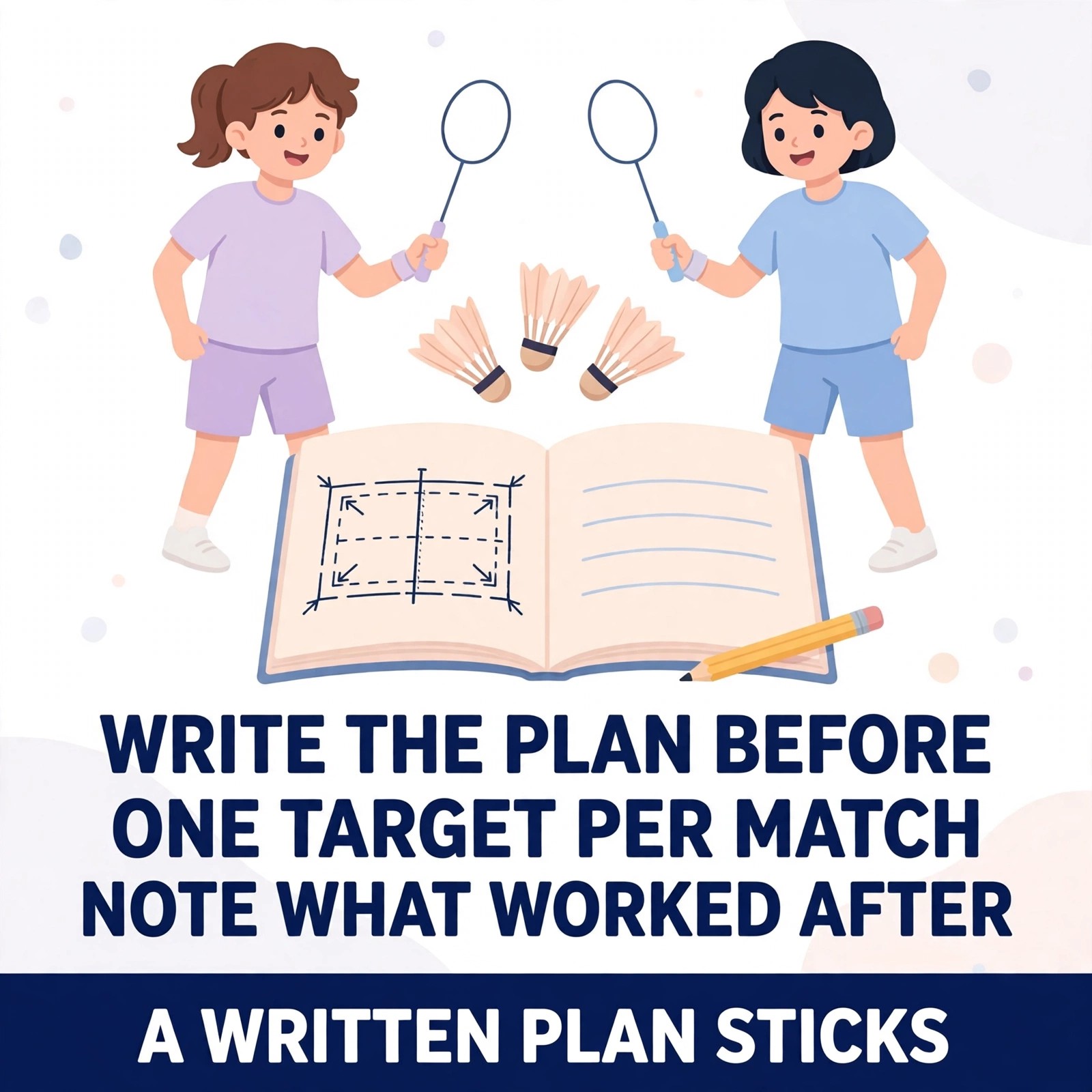
No. A simple notebook is enough, and many players just use their phone. Write the plan before the match in one or two lines, then note what worked after. Three lost rallies with a common cause is the best clue for your next practice focus. Small notes, reviewed weekly, build a real picture of your game.
Where does ST Badminton Academy run strategy focused sessions in Malaysia?
Sessions run at our Setapak training base and at halls around Kuala Lumpur, with group training for adults and juniors through the week. Groups are kept small, with a maximum of 4 students per coach, and your first visit can be a trial session. Message us with your area and playing days and we will match you to a group.
How do I book a trial session to work on my tactics?
Message us on WhatsApp or through the website contact form. Tell us your playing level and what frustrates you most in matches. We will suggest a group and a first session time. Bring your racket and court shoes. In the trial we watch your rallies, talk through your decisions, and show you how tactical coaching works.
What should I bring to my first strategy session for badminton?
Wear proper non marking court shoes and comfortable sports clothes. Bring your own racket if you have one, and a water bottle. That is all. Shuttlecocks are provided in sessions. If you are new to the academy, arrive a little early so we can meet you, learn about your game, and place you in the right group.
Strategy and Creativity Training in Action


One Standard for Every Session and Every Player
Every strategy session at ST Badminton Academy follows the same coaching standards. Rallies are taught as decisions, not just shots. Groups are capped at a maximum of 4 students per coach so each player gets real feedback. Plans are written in plain words a player can remember under pressure. Practice is structured, honest and patient, with no shortcuts sold and no results promised overnight. Players improve because the work is consistent, the groups are small, and the thinking behind every drill is explained on court.
| Factor | Random Hitting | A Planned Game PLAN |
|---|---|---|
| Frequency | 1 or 2 times a week. Mostly for fun and sweat. | Every rally has a job: push back, pull forward, then finish when the gap opens. |
| Drills Focus | Basic static feeding. Minimal footwork pressure. | Shots chosen from what the opponent shows, with pace and direction changed on purpose. |
| Physical Conditioning | Rarely included. Just playing games on court. | Core, agility, and speed training included in every session to prevent injury and build stamina. |
| Tactical Awareness | "Just hit it over." No real game plan. | Video analysis, point construction, and learning to read the opponent's game. |
| Coach Ratio | Large groups (8-10 kids). Coach barely watches you. | Max 4 students. Mr Eric Chuar personally corrects every stroke and movement detail. |
| Goal Setting | Fun and exercise. | Notes kept after matches, so the next plan targets the corners that actually leak points. |
| Long Term Result | Good recreational player. | A calm player who builds points in stages and looks hard to play against. |
Badminton Strategy Coaching in Kuala Lumpur
Your matches do not need more power. They need a plan. Come to ST Badminton Academy in Kuala Lumpur and learn to read opponents, build rallies and finish points on purpose. Book a trial session this week, bring your racket, and play your first guided rally with us. The thinking game is learnable, and it starts with one calm decision.






