How To Develop Your Badminton Smash: Techniques And Training Methods (Smash Guide)
Every player remembers their first real smash: the shuttle jumps off the strings, the sound changes, and the point ends before the opponent moves. Then comes the frustrating part. The smash works in practice and vanishes in matches, or arrives with power one day and nets the next. A dependable smash is not found. It is developed, in stages: the overhead shape first, feet that get you behind the shuttle, timing at the top, placement before raw power, and training that builds without wrecking your shoulder. This guide walks through those stages in the order coaches actually teach them.
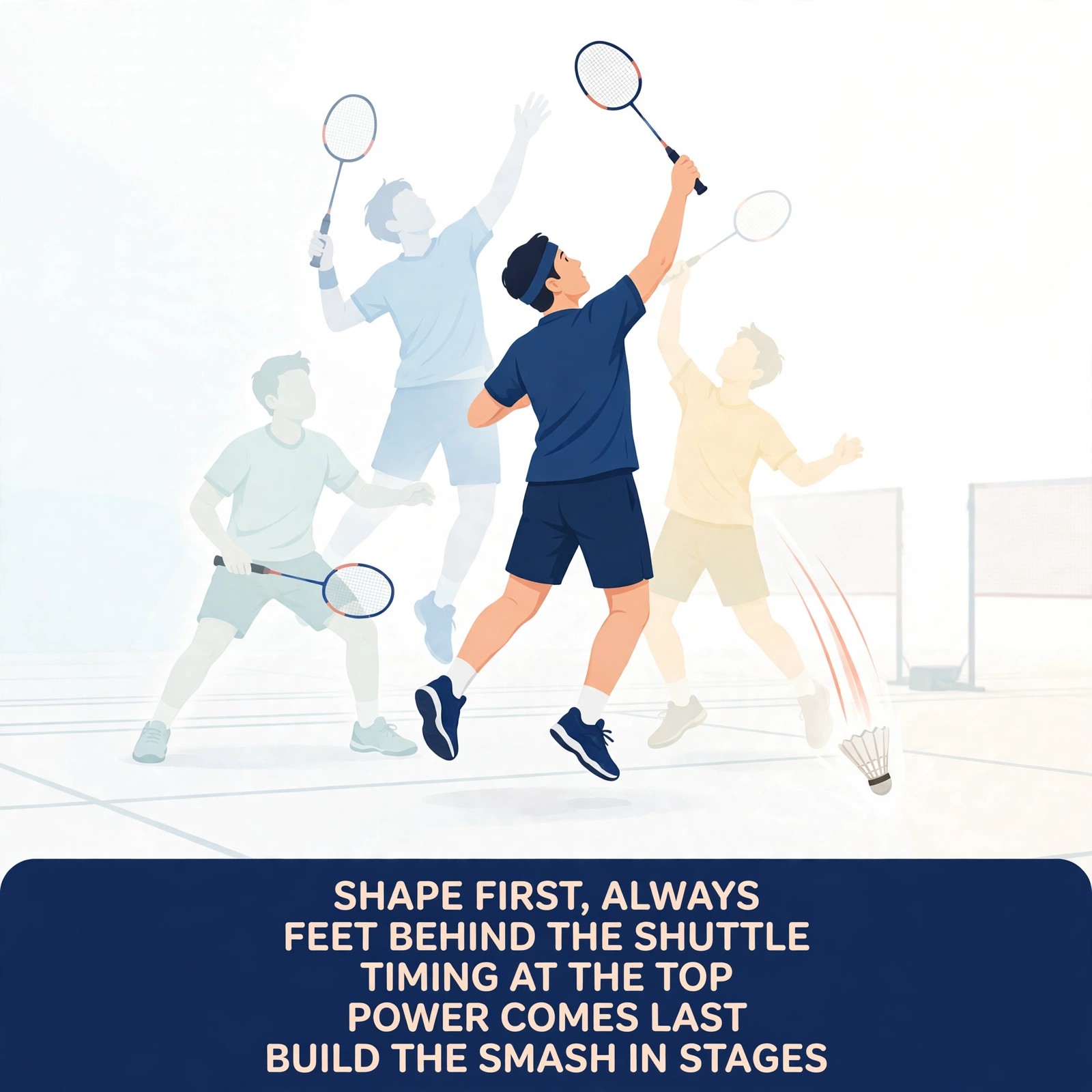
Smash Check #1
Start With the Shape: The Overhead Action
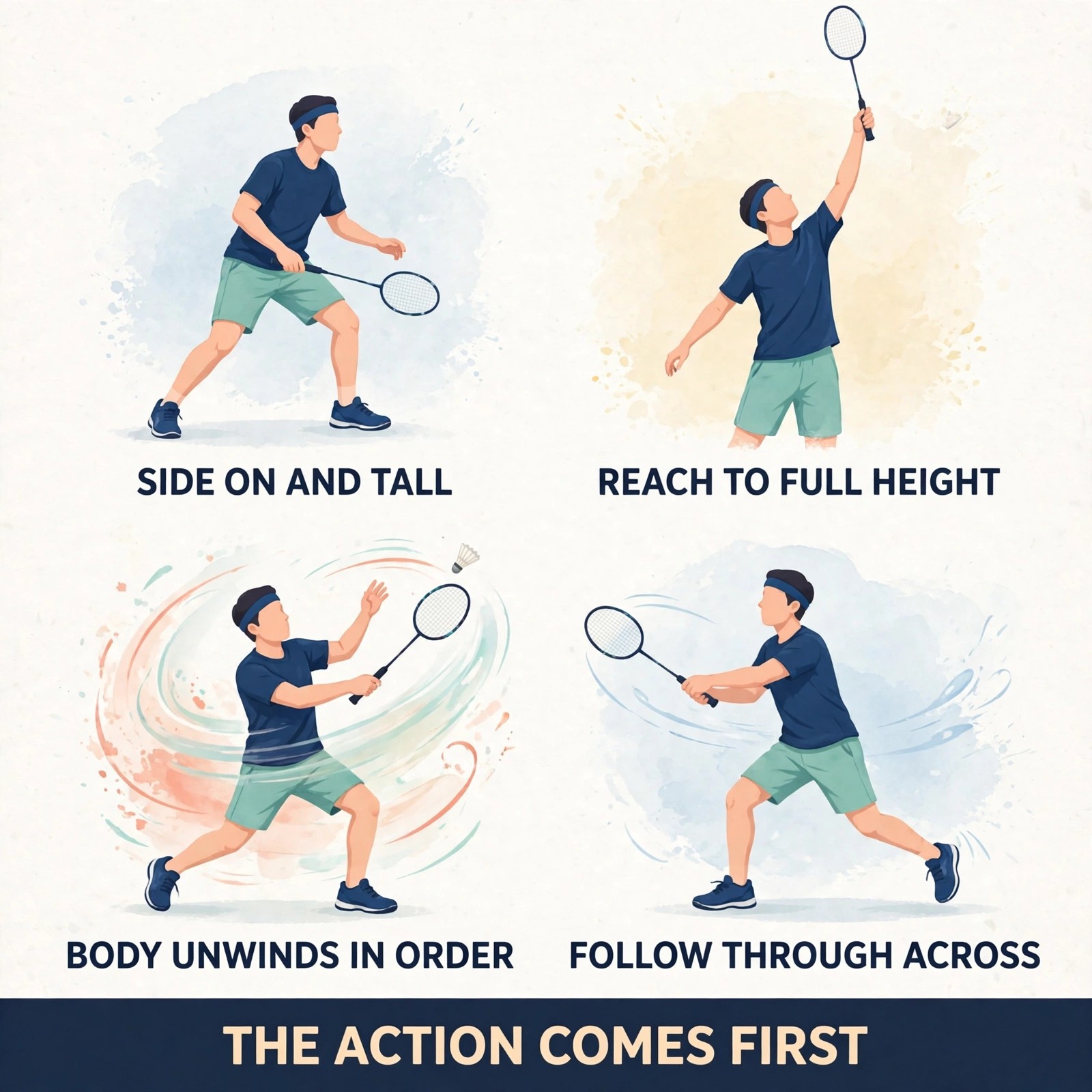
The smash borrows its shape from the clear. Stand side on, reach up tall, and let the body unwind in order: legs drive, hips turn, shoulder follows, arm comes through, and the forearm and fingers finish the shot. When the order holds, power feels almost free. When players swing with the arm alone, the shot tops out early and the shoulder pays for every extra attempt.
Two details decide whether the shape survives. The grip stays relaxed until contact, so the forearm can rotate fast at the top. And the follow through continues across the body instead of stopping dead, which protects the shoulder and sets up your recovery. Groove this action standing still first, with shadow swings and slow feeds, before speed or jumping enters the picture.
Smash Check #2
Feet First: Get Behind the Shuttle
Smashes fail before they are hit, because the feet arrive late. The job is to get behind the shuttle, so it sits slightly in front of you at contact and your weight travels into the shot. Players who take the shuttle beside or behind the head can only push it. Players behind it can choose: smash, drop or clear, from the same shape.
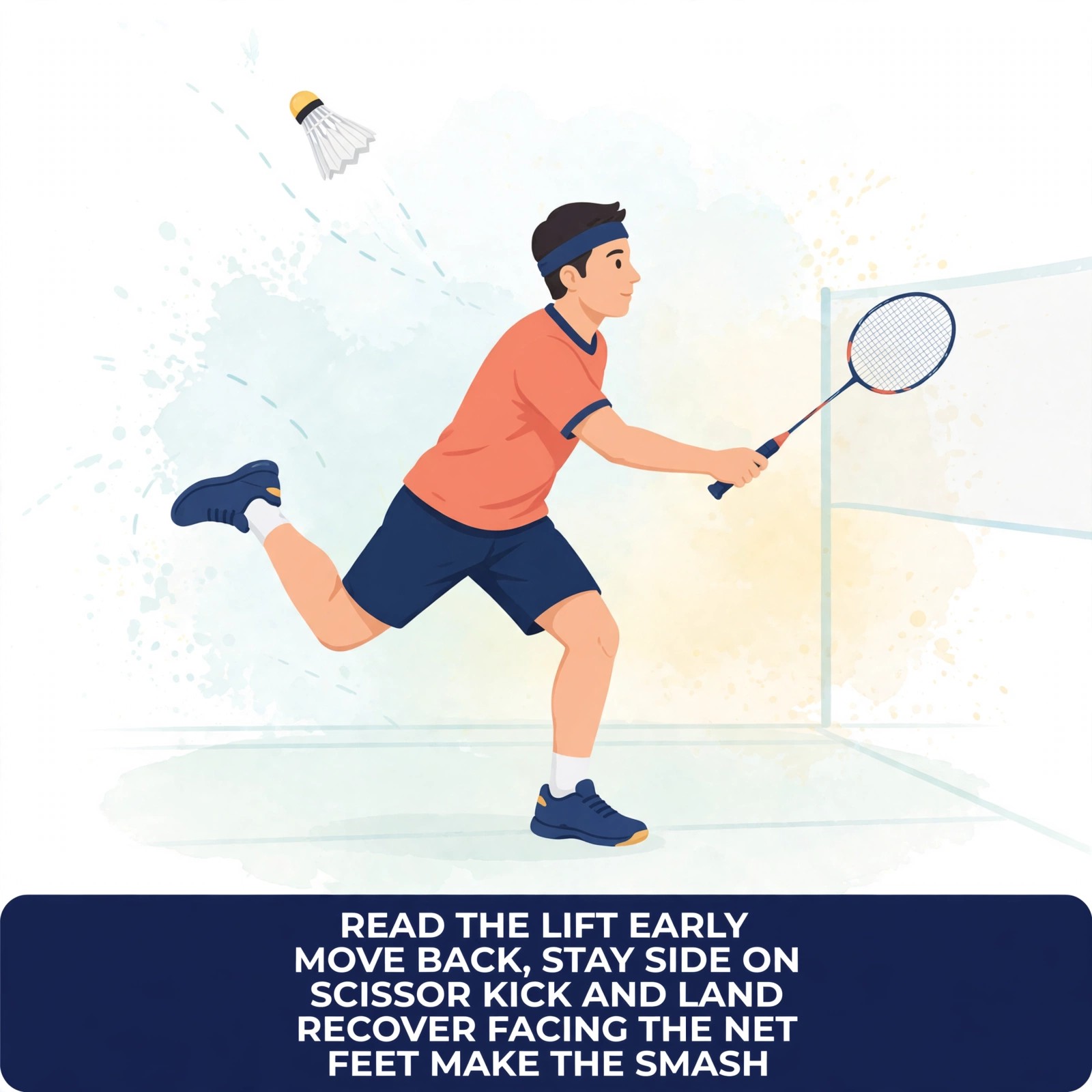
The movement pattern is simple to describe and takes months to own. Read the lift early, move back with quick side steps or a chasse, and for higher shots use a scissor kick: jump, turn in the air, and land with the racket foot forward, already facing back toward the court. The landing is not the end of the shot. It is the start of your recovery to base.
Train the feet separately from the hitting. Shadow the path to the back corner, freeze at the hitting position, and check: behind the shuttle, side on, weight ready to transfer. Then add slow feeds. If your feet cannot put you behind a gentle feed, they will not do it against a match lift that arrives faster and flatter.
Smash Check #3
Timing and Contact: Early, High and Balanced
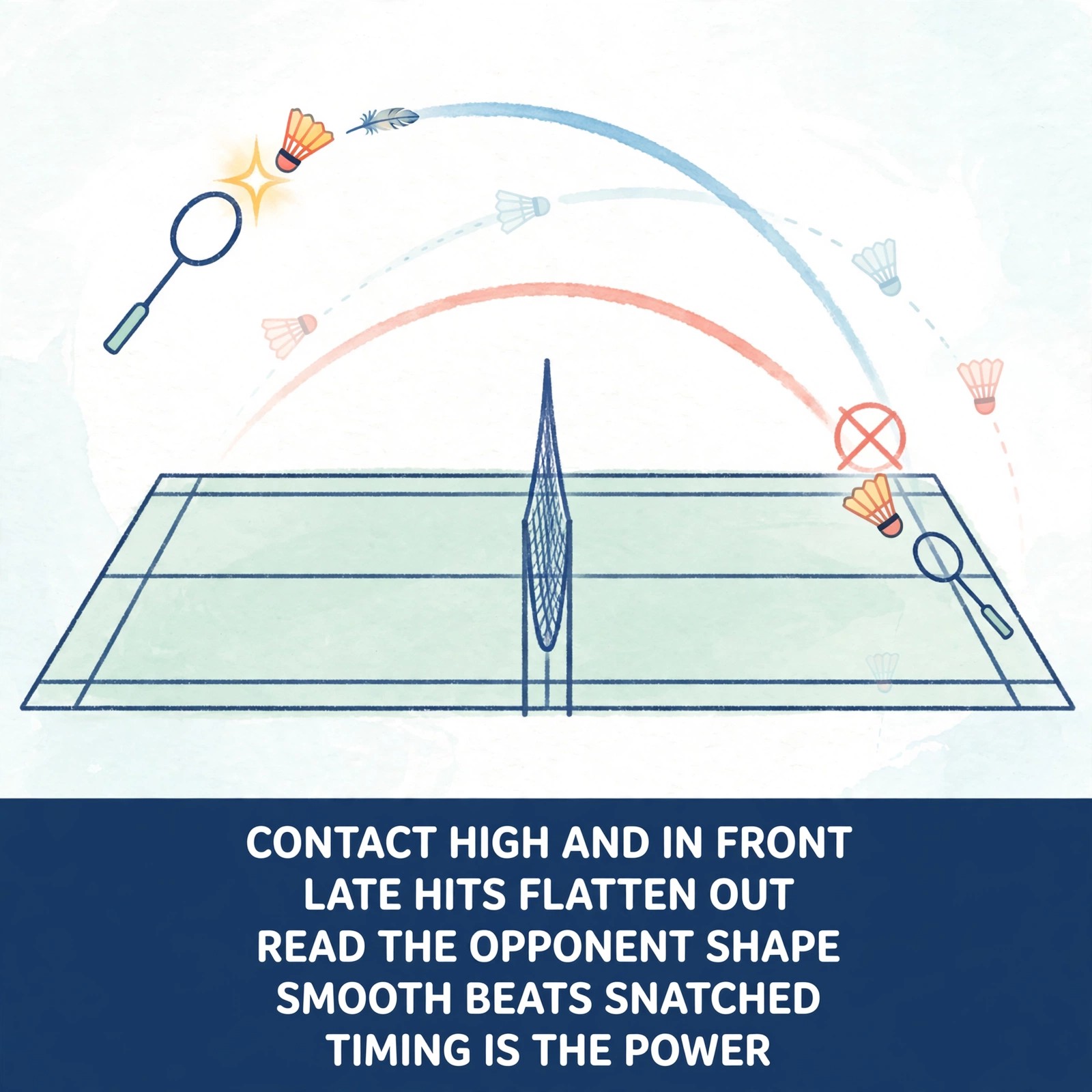
Power leaks away through timing more than through strength. Contact should happen at the highest point you can reach comfortably, with the shuttle slightly in front. Hit late, and the angle flattens until the smash becomes a drive into the net tape or the opponent’s racket. Hit while falling backwards, and even a strong arm produces a weak, floating shot.
Reading the shuttle early is the quiet half of timing. Watch the opponent shape, not just the shuttle: a player stretched low will lift, a player balanced may drive. The earlier your read, the earlier your feet move, and the calmer the contact feels. This is trained with feeds of mixed heights, where you call the shot before it is hit, then with games that reward early movement.
Keep the action honest while timing improves. A common fault is snatching at the shuttle, shortening the swing exactly when it needs to stay long and smooth. If smashes start netting in bunches, do not swing harder. Slow the feed down, restore the full shape at the top, and let clean contacts stack up again. Timing returns through order, not force.
Smash Check #4
Placement Before Power: Angles Win Points
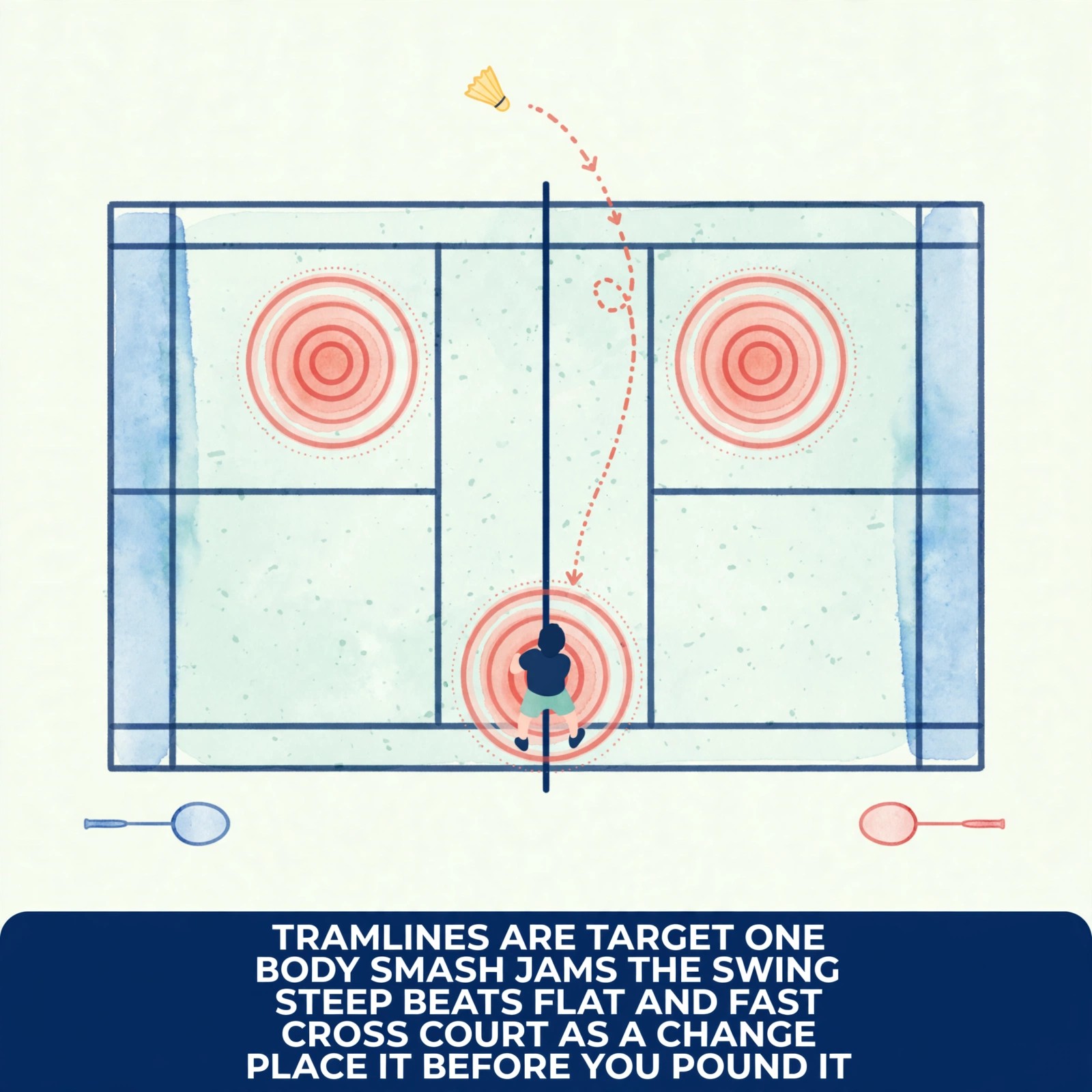
A developed smash is placed before it is pounded. The sidelines are your first targets: a smash along the tramlines forces weak, cramped replies. The body smash is the second weapon, aimed at the racket shoulder, where the defender’s swing gets jammed and the block pops up for your partner or your follow up at the net.
Angles beat speed at most levels. A steep smash that lands mid court can be harder to defend than a faster flat one, because it gives the defender less time and a worse racket angle. Cross court smashes look glorious and carry risk: they travel further and open your own court. Use them as a change, not a habit, and only when you are properly behind the shuttle.
Placement is trained with targets, not wishes. Put markers in the tramlines and count how many smashes land in the scoring zones during a fed set. When eight of ten land where you aimed at comfortable pace, add a little speed and count again. Pace that arrives before placement just makes the errors faster and the net richer.
Smash Check #5
Build in Stages: Progression, Strength and Rest
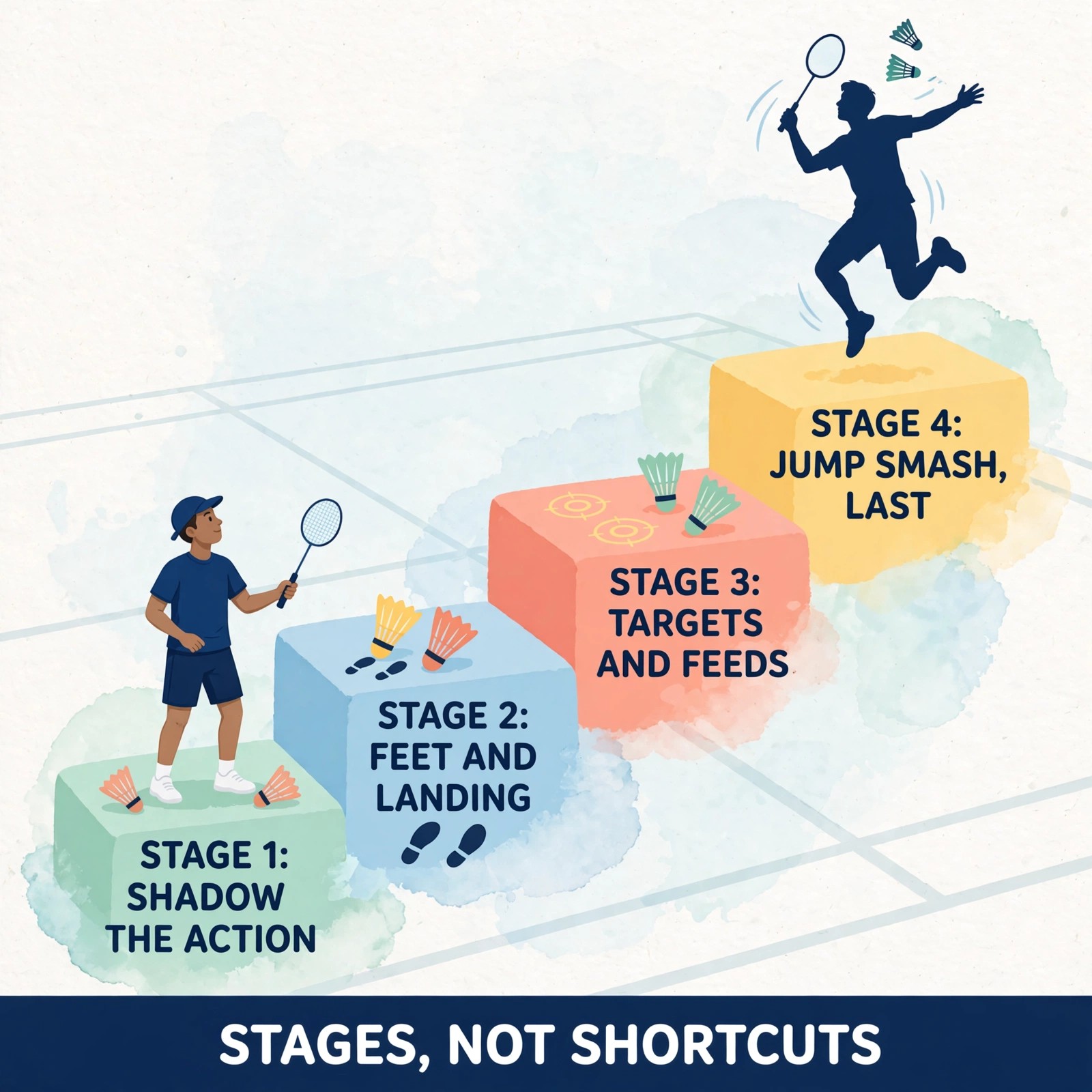
The full programme climbs in stages. Stage one grooves the standing action with shadow swings and slow feeds. Stage two adds footwork patterns and the scissor kick landing. Stage three brings placement targets and mixed feeds. The jump smash belongs at the end of this road, when the standing smash, the timing and the landing are already reliable. Added earlier, it mostly adds noise and sore knees.
Strength work supports the stages but never replaces them. Press ups, core work and sensible bodyweight training build the trunk and legs that the action stands on. Keep it general, progress it slowly, and stop any exercise that hurts a joint. A smash built on court craft lasts for years. A smash built on gym effort alone usually stalls the first time footwork gets hard.
Recovery is part of development, not a break from it. Shoulders complain early when volume jumps, so build smash sets gradually and treat soreness that lingers as information, not weakness. Rest days, sleep and easy sessions are where the body actually absorbs the training. Players who respect that rhythm keep improving. Players who smash through pain tend to stop improving and start managing an injury.
Myth vs Reality
Myths About Developing Your Smash
Myth: smash power comes from a strong arm. Reality: the arm is the last link in a chain that starts at the legs. Players with modest arms and clean body rotation out smash gym strong players whose swing is all shoulder. Build the chain in order and the power follows the technique, not the other way round.
Myth: smash every lift. Reality: a smash costs position, energy and recovery time. Good players smash when the lift is short, high or begged for by the rally shape, and they build the rally first when it is not. Smashing everything makes you predictable, tired and easy to counterattack by the third game.
Myth: a sore shoulder means the training is working. Reality: muscle tiredness fades in a day or two; joint pain that lingers is a warning. Developing a smash is a long project, and shoulders end more projects than opponents do. Back off, rebuild the stage lower, and let clean shape earn the volume back.

Why Choose Us
Why Players Choose ST Badminton Academy
We do not just feed shuttles; we build players. ST Badminton Academy Malaysia is led by head coach Mr Eric Chuar, with over 15 years of coaching experience in Singapore and Malaysia. Smash development is taught in stages in his small groups, so your shape, feet and timing are corrected personally before power is ever chased.
Our small group policy, with a maximum of 4 students, matters most on a shot like this. A smash fault can hide behind effort in a big class. In a group of four, the coach sees whether your contact point drifts, your feet arrive late, or your shoulder starts doing the work your legs should do.
We focus on long term player development. A developed smash is a career asset: chosen well, placed well and still available in the third game. We build it the honest way, stage by stage, with progress you can count in targets hit and rallies finished, not in promises about overnight power.
FAQs: Badminton Smash Development and Training in Malaysia (KL)
Here are answers to common questions from players in Kuala Lumpur about developing a badminton smash, training stages, and how coaching at ST Badminton Academy works.
Can a beginner learn a proper smash in Setapak or Gombak?
Yes, and beginners often build the cleanest action, because the shape is learned before bad habits arrive. Start standing still: side on stance, relaxed grip, high contact and a full follow through. Add feet, timing and placement in stages. Power is the last layer, and it grows on top of the shape.
What is the first smash habit to build in KL?
Groove the overhead shape until it matches your clear: same stance, same reach, same swing path. When the preparation is shared, opponents cannot read the smash early, and your timing has a stable base. Shadow swings in short sets, checked in a mirror or by a coach, build this habit fastest.
Why does my smash keep hitting the net at club level?
Netting smashes usually means contact is late, low or too far under the shuttle, so the angle points down into the tape. Get behind the shuttle earlier, reach to your highest comfortable contact, and aim a little deeper while the fix settles. If nets cluster in bunches, slow the feeding down and rebuild.
My smash feels weak. Should I swing harder or build the stages first?
Build the stages. Swinging harder with a late contact and a still body only makes the fault louder and the shoulder sorer. Check the order instead: behind the shuttle, shape clean, contact high, placement counted. When those hold at easy pace, add speed gradually. Real power is technique arriving faster, not effort arriving bigger.
How can I practise smashing alone without a partner during training?
Shadow work is your main solo tool. Groove the full action without a shuttle: stance, turn, reach, swing and scissor landing, in short sets with freezes at contact. Add a wall for reaction drives to keep the hands honest. Solo work builds shape and feet; fed sessions then add timing against a real shuttle.
Do you coach smash technique near Wangsa Maju?
Yes. ST Badminton Academy is based in Setapak, a short drive from Wangsa Maju, Melati Utama and Danau Kota. Smash development is coached in small groups of no more than four students, and your shape, footwork and contact point are corrected personally by the coach as each stage is built.
Where does ST Badminton Academy teach smash skills in Malaysia?
We teach in Setapak, Kuala Lumpur, and the staged method travels to any court: shape, feet, timing, placement, then power. Players from Gombak, Sentul, Ampang and nearby areas develop their smashes with us each week, in small groups where the coach can see and correct every stage as it is added.
How do I book a trial session to develop my smash in training?
Message us on WhatsApp and tell us your smash is the project. We will place you in a small group session where the coach can check your shape, feet and contact point, then show you the stage you are on and what comes next. One session gives you a clear development plan.
What makes Mr Eric Chuar a suitable coach for smash coaching in badminton?
Mr Eric Chuar has coached in Singapore and Malaysia for over 15 years and teaches the smash as a staged build, not a strength contest. Because he coaches small groups personally, faults in shape, timing and footwork are corrected in the session where they happen, which is how development actually sticks.
Badminton Smash Training in Action


One Standard for Every Session and Every Player
Developing a smash at ST Badminton Academy KL follows one standard: stages in order, small groups and honest progress. Every session builds the stage you are on, with a maximum of 4 students per group, so the coach corrects shape, feet and timing while they are being built, not after faults settle in.
| Factor | Swing Harder | Build in Stages SMASH |
|---|---|---|
| Frequency | 1 or 2 times a week. Mostly for fun and sweat. | The action is grooved standing still first: relaxed grip, high contact and a clean follow through. |
| Drills Focus | Basic static feeding. Minimal footwork pressure. | Feet and timing come next, so the smash is hit balanced, early and moving into the shot. |
| Physical Conditioning | Rarely included. Just playing games on court. | Core, agility, and speed training included in every session to prevent injury and build stamina. |
| Tactical Awareness | "Just hit it over." No real game plan. | Video analysis, point construction, and learning to read the opponent's game. |
| Coach Ratio | Large groups (8-10 kids). Coach barely watches you. | Max 4 students. Mr Eric Chuar personally corrects every stroke and movement detail. |
| Goal Setting | Fun and exercise. | Placement is trained before pace, and power is added last on top of targets that already land. |
| Long Term Result | Good recreational player. | A developed smash: chosen, placed and trusted, with a shoulder that stays healthy for years. |
Badminton Smash Coaching in Kuala Lumpur
This guide gives you the full build: shape first, feet behind the shuttle, timing at the top, placement before power, and stages that respect your shoulder. If you want a smash that still works in the third game, ST Badminton Academy in Setapak can coach the stages in a small group. Message us to book a trial.






