Excel In Badminton Singles With Expert Strategies (Singles Guide)
Singles is the honest version of badminton: one player, the whole court, nobody to cover for you. Players who lose singles matches rarely lose because their shots are weak. They lose because their opponent moved them one corner too far, waited for the short lift, and finished a rally that was planned three shots earlier. Good singles is a thinking game played at full speed.
This guide explains badminton singles strategy: how to build a rally, move your opponent, choose the right shot, serve and return with a plan, and stay calm when the score gets close, the way we coach it at ST Badminton Academy in Setapak, Kuala Lumpur.
Singles Check #1
Why Singles Rewards Patience and Planning?
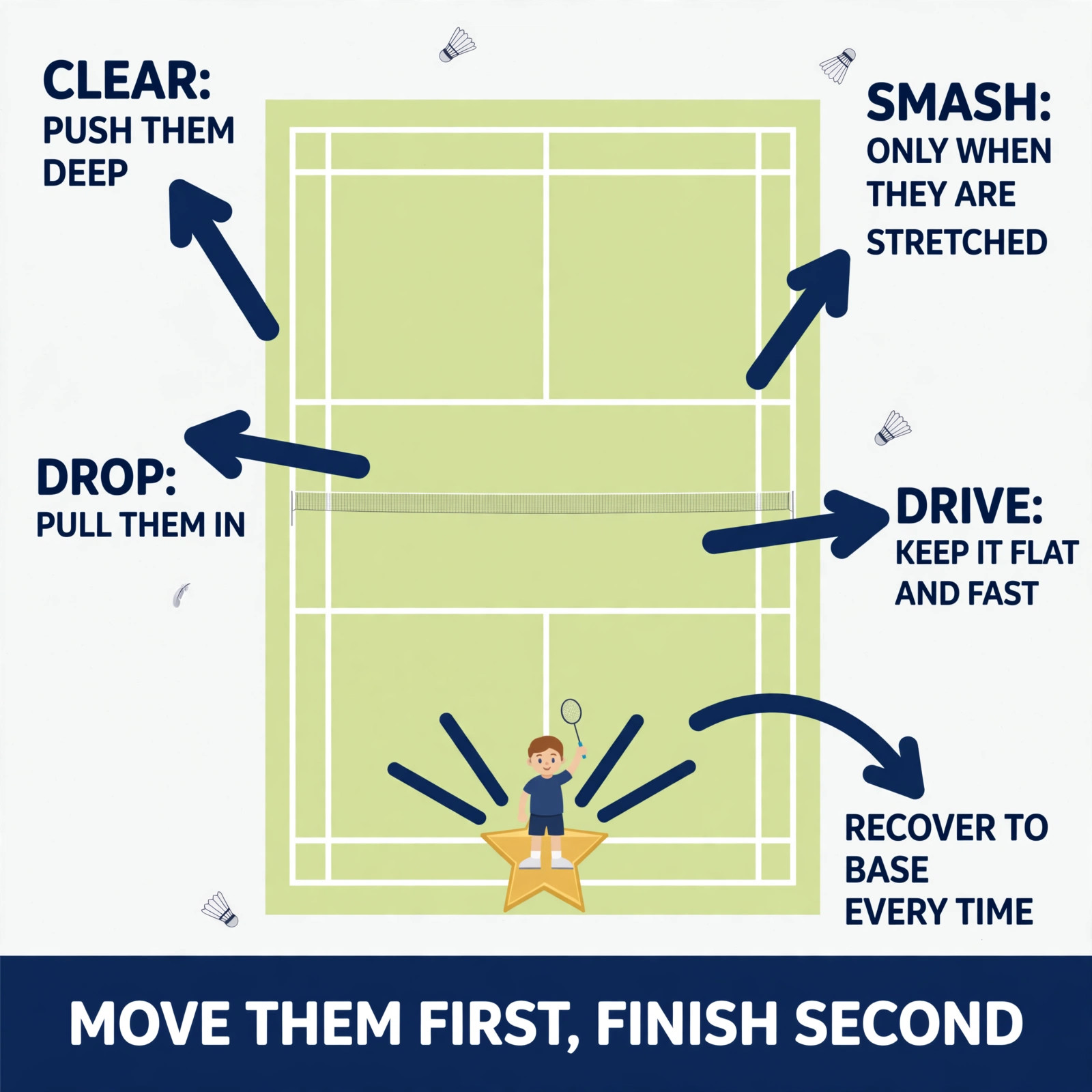
Every rally starts with a simple truth: you cannot out-smash a fresh opponent for a whole match. What you can do is move them. A clear to the back corner, a drop that pulls them forward, a drive past the body: each shot asks their legs a question, and legs that answer enough questions start missing. Rally building means playing shots in an order that opens the court before you try to win the point.
This is why singles rewards patience. The player who attacks a balanced, ready opponent gives away errors; the player who builds first attacks a stretched, late opponent. Watch strong singles players and you will see long stretches of controlled shots, then a sudden finish. The finish looks like talent. It is usually the fifth shot of a plan that started with the serve.

Singles Check #2
Footwork First: Own the Six Corners
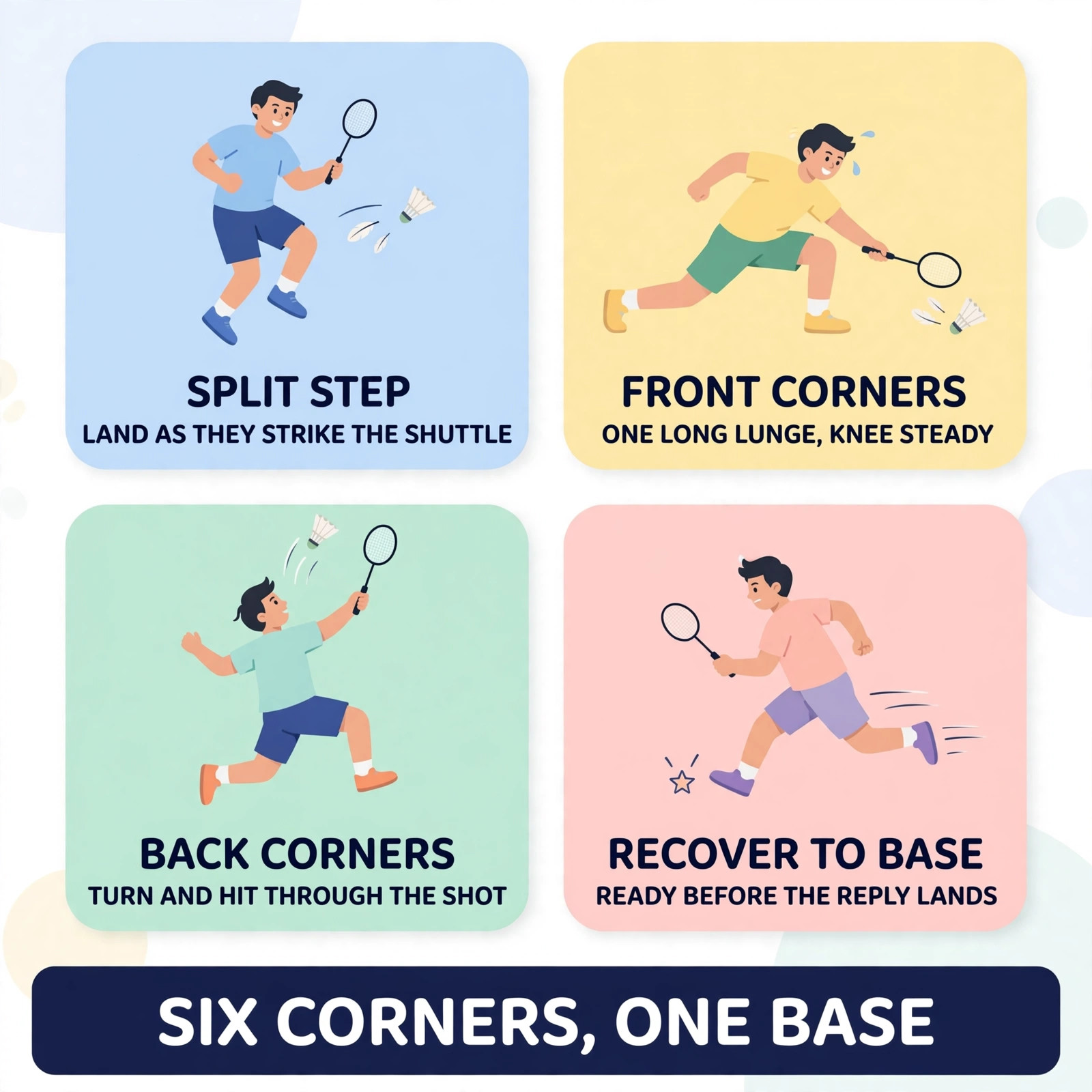
Strategy only works when your feet keep up. Singles footwork is a loop: split step at base as your opponent strikes, move out with the right pattern, hit, then recover towards base before the reply comes. The front corners end in a lunge, the sides use quick running steps, and the back corners use a turn and a scissor kick through the overhead shot. Six corners, one base, hundreds of loops a match.
Arriving balanced matters more than arriving fast. A slightly slower arrival with your body behind the shuttle gives you every shot option; a desperate stretch gives you one, and your opponent knows which one. Train yourself to take two or three early steps rather than five late ones. The split step is what buys that time: a small hop that loads your legs so the first step is quick, whichever way the shuttle goes.
Fitness supports all of it. Singles rallies ask for repeated bursts: push off, lunge, recover, again and again, deep into a third game. Players who tire start skipping the split step and reaching instead of moving, and their strategy falls apart no matter how good their plan was. Short footwork sets, shuttle runs and conditioned games build the exact stamina singles needs, far better than long slow runs alone.
Singles Check #3
Shot Selection: Build, Then Finish
Give every shot a job. The clear pushes your opponent to the back line and buys you time. The drop shot pulls them forward and makes them lift. The drive keeps the shuttle flat and fast, rushing a player who likes time. The smash finishes a rally when the lift is short and you are balanced behind it. The net shot spins tight and forces the next lift. A rally is just these jobs, ordered well.
The classic pattern is push and pull: deep to the backhand corner, then short to the forehand net, making the opponent run the longest diagonals on the court. Play two or three shots to one corner and the whole court tilts: they lean towards that corner, and the space opens on the other side. Targets matter more than power here. A clear within a step of the back line stretches anyone; a drop that barely crosses the tape cannot be attacked.
Deception is the final layer, added only when the basics land where you aim. Clear, drop and smash should leave your racket with the same preparation and the same swing speed, so your opponent cannot read the shot until the shuttle is moving. Hold the shot a fraction longer at the back, keep the racket face hidden, and let your patterns do the lying for you. Players who chase trick shots before their clears reach the back line end up deceiving themselves.

Singles Check #4
Serve and Return: Win the First Three Shots
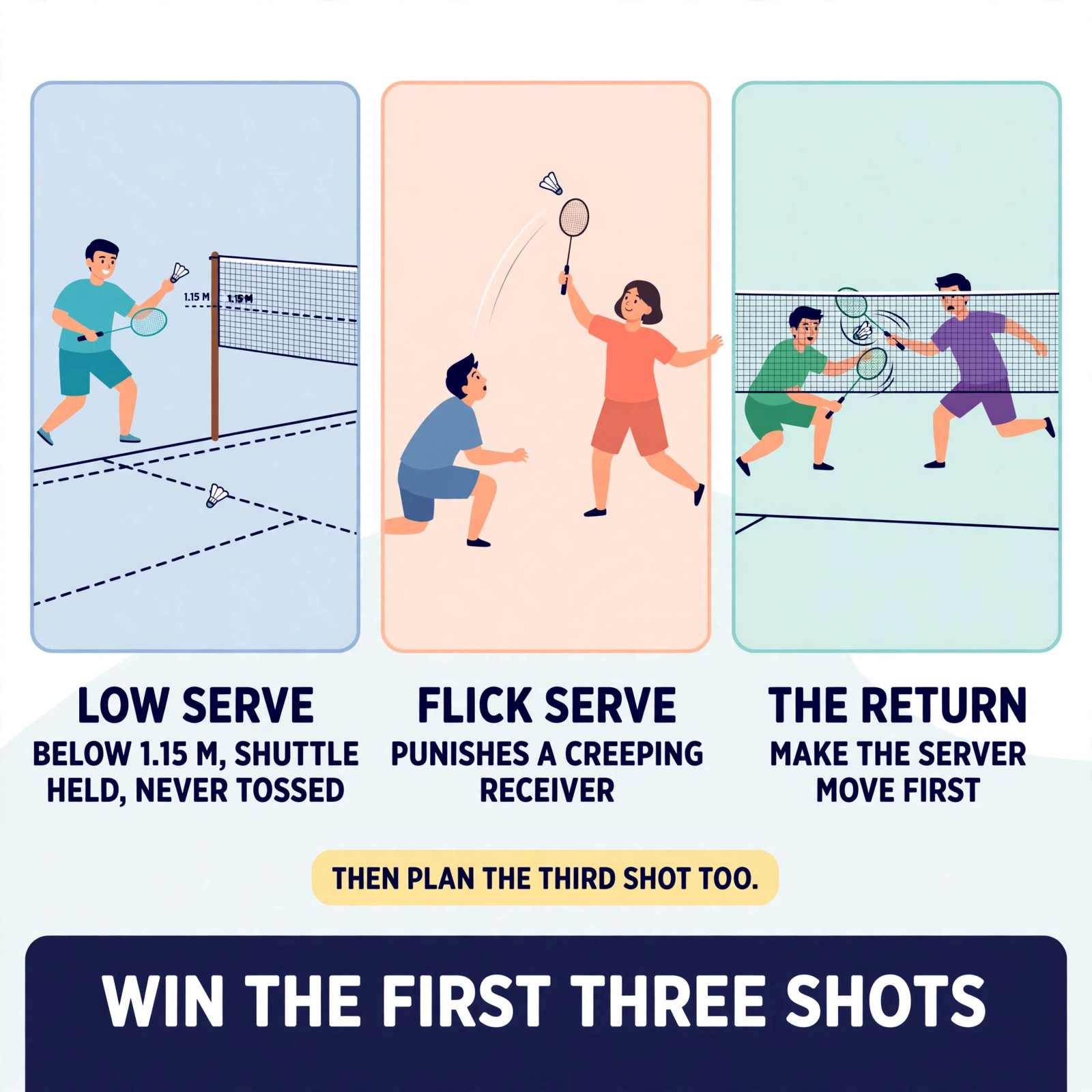
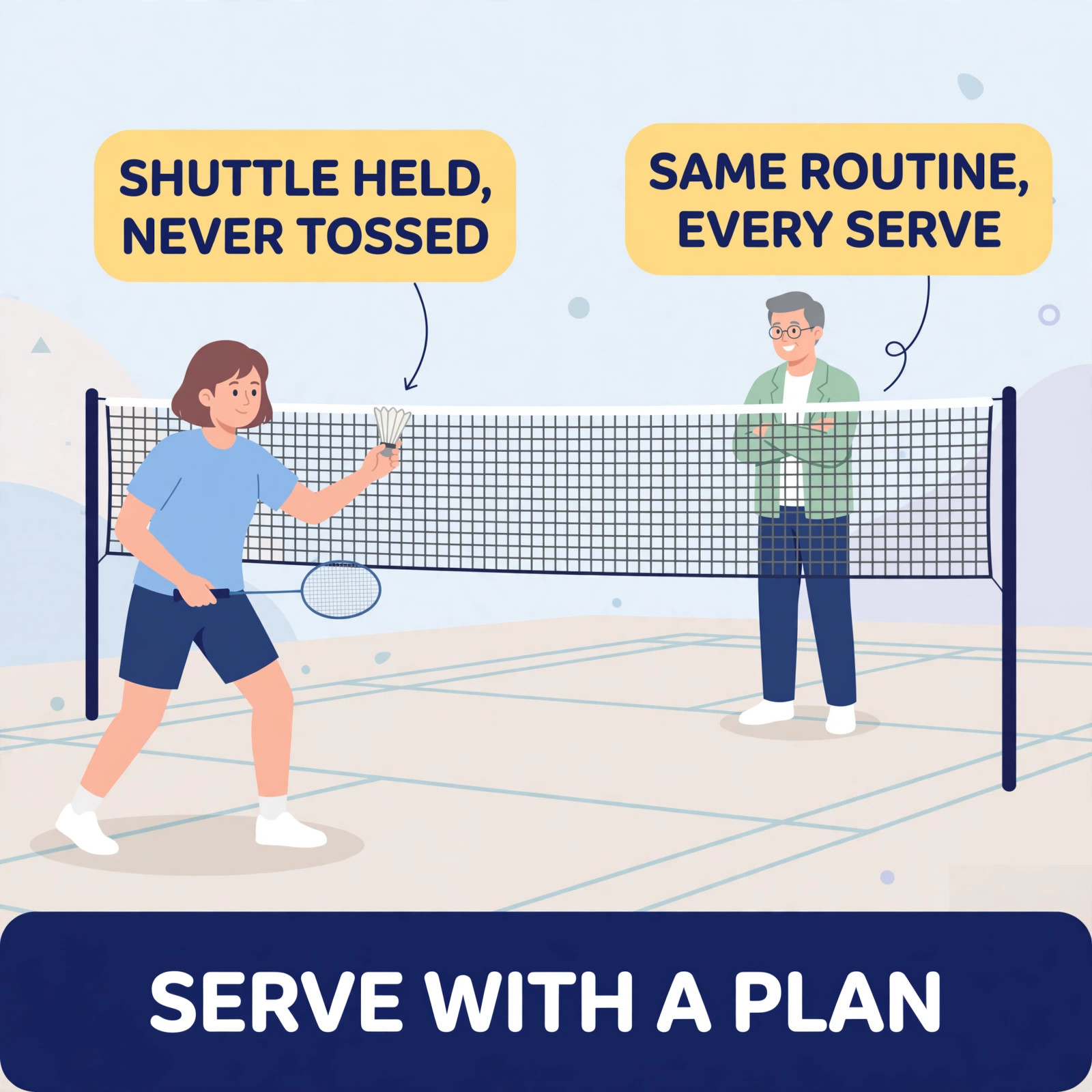
The serve is the one shot you fully control, so treat it like the first move of a plan. The low serve skims the tape and lands in the diagonal box, taking away the attack. The flick serve punishes a receiver who creeps forward. Both are struck below 1.15 metres, in one forward motion, with the shuttle held, never tossed. Mix the two from the same routine and the receiver can never settle.
Returns decide who attacks first. Stand ready to cover the flick, racket up, and answer a low serve with a tight net shot or a push deep to the back corner, not a lazy lift to mid-court. A good return makes the server move first. Then comes the third shot: after your return, recover fast and expect the reply, because singles rallies are often won by the player who planned one shot further than the other.
Read your opponent while you play. Notice which corner they defend late, whether their backhand clear falls short, whether they rush the net after serving. Test one thing at a time, early in the first game, then build your patterns around what you found. Strategy is not a script written before the match; it is a set of answers you update every few rallies, which is why the best singles players think between points as hard as during them.
The Scoreboard Game
Playing the Score: Staying Calm at 19-19
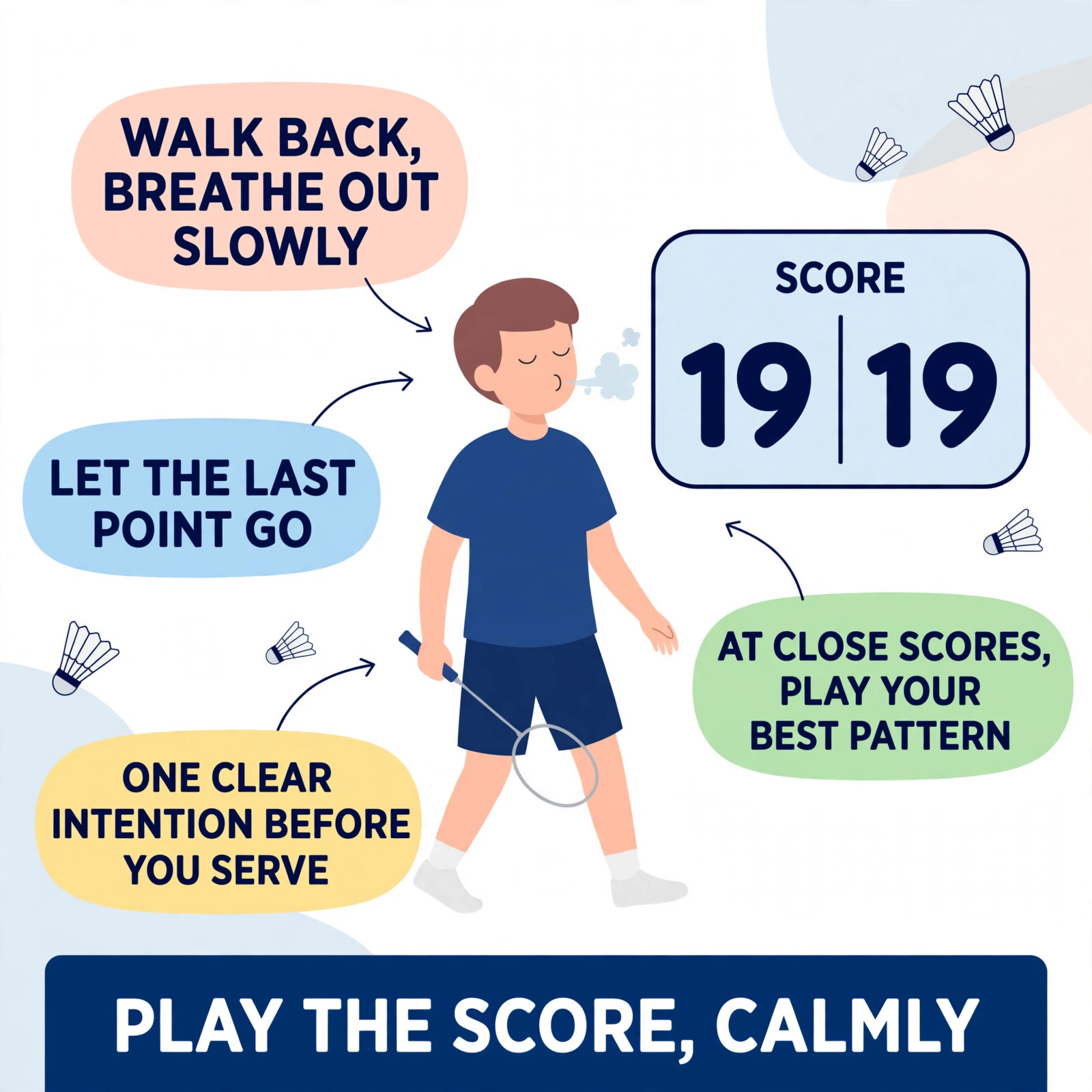
Between rallies, have a routine. Walk back, breathe out slowly, let the last point go, and decide the next pattern before you serve. Players who carry a lost rally into the next one donate points in pairs. Your routine can be short (a breath, a look at your strings, one clear intention) but it should be the same every time, in practice games and match games alike.
Close scores test that routine hardest. At 19-19 the right play is rarely the wild one: it is your best pattern, played with full commitment. Play the shots you trust, serve your most reliable serve, and make your opponent win the point rather than handing it over. And when you lose a tight game, review it honestly afterwards: which patterns scored, where the errors clustered, what you would change in the third game.
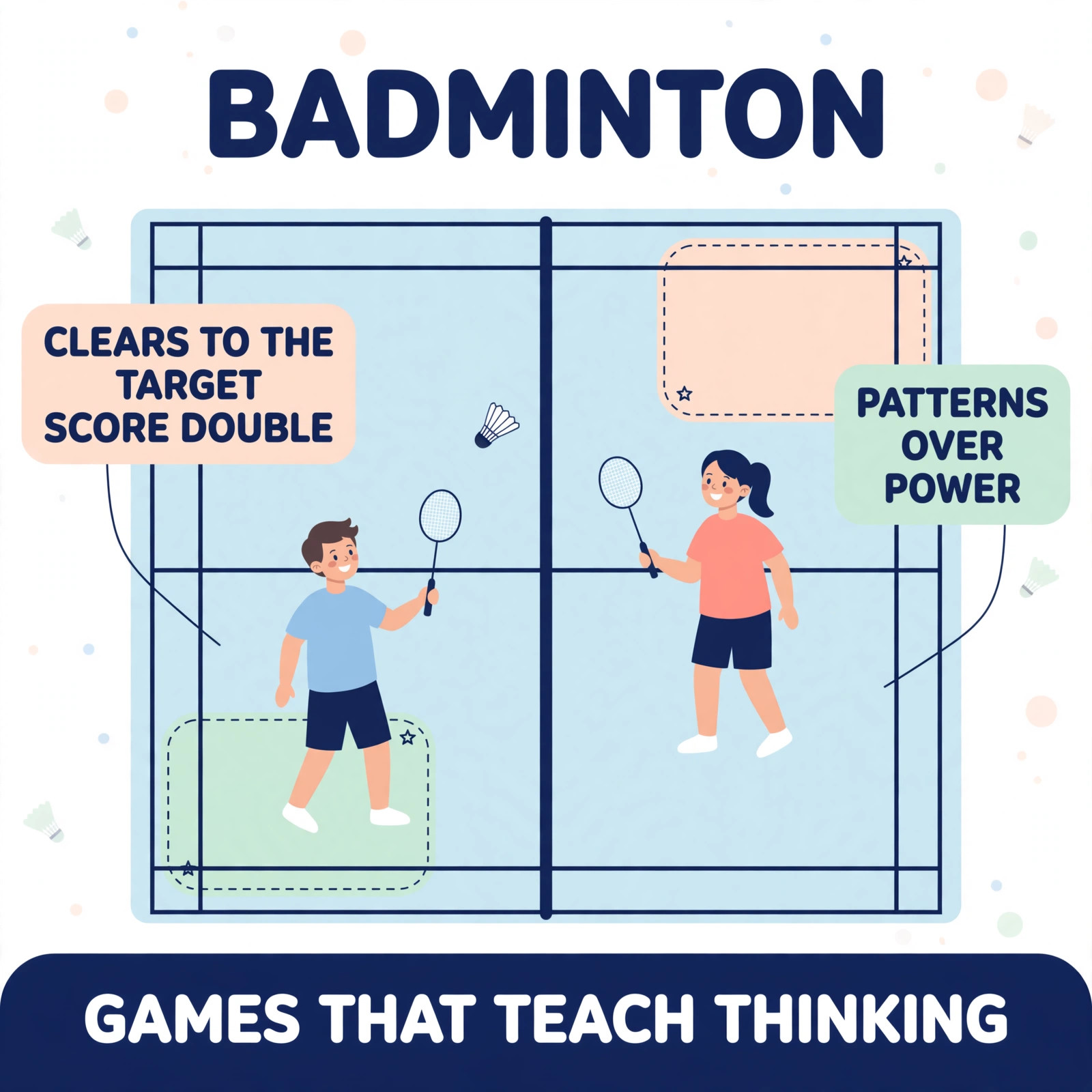
Train the mind the way you train the feet. Conditioned games are the bridge: play rallies where clears to the backhand corner score double, or where you may only smash after four shots, and your match brain practises deciding under rules. Add score pressure in training (start games at 17-17) and close matches stop feeling new. In our singles sessions, coaches set these conditions so strategy is practised, not just discussed.
Myth vs Reality
Myths About Singles Strategy
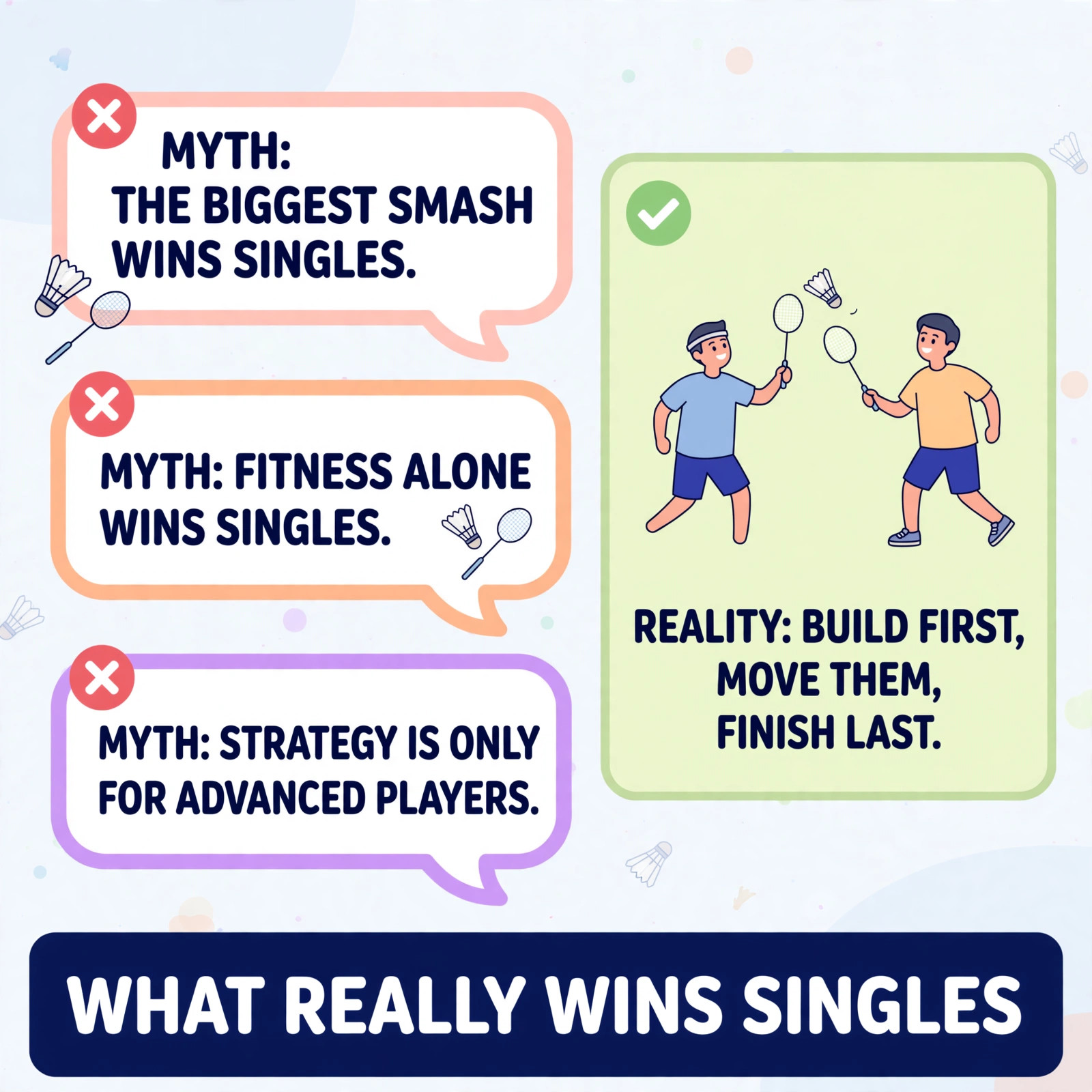
Myth: “The player with the biggest smash wins singles.” Reality: the smash finishes rallies, but it rarely creates them. Against a balanced defender, a smash from the back line is one of the easiest shots to block. The players who win singles use the smash last, after clears and drops have pulled the defence out of shape.
Myth: “Fitness alone wins singles.” Reality: fitness keeps your footwork alive in the third game, but it does not choose your shots. Myth: “Strategy is only for advanced players.” Reality: beginners benefit most, because a simple plan (move them deep, then short) turns random hitting into rallies they can actually win while their technique is still growing.
Myth: “Copy a professional’s game and you will play like one.” Reality: professional patterns sit on professional speed and years of footwork; copying the shots without the feet ends in errors. Build your own game around your strengths instead: if your defence is strong, extend rallies; if your net game is sharp, pull opponents forward. Strategy starts with honest knowledge of your own game.
Why Choose Us
Singles Strategy, Coached in Real Rallies
At ST Badminton Academy KL, singles strategy is coached inside small group classes capped at max 4 students. That size lets the coach play against you, not just feed you: rallies stop, the pattern is named, and you play it again until the decision becomes habit. Students learn to read a rally while they are inside it.
Mr Eric Chuar has over 15 years of coaching experience in Singapore and Malaysia. His singles coaching starts simple: move the opponent first, finish second. He teaches players to keep a mental scorecard during matches, which corner is late, which shot is scoring, and adjusts patterns at the interval instead of letting a losing plan run to the end of the game.
Our academy is based in Setapak, Kuala Lumpur, convenient for players from Wangsa Maju, Melati Utama, Danau Kota and Gombak. If your shots are fine but your results are not, bring your game to a session. A coach watching you play for ten minutes can usually name the strategic leak that is costing you matches.
FAQs: Badminton Singles Strategy in Malaysia (KL)
These are the questions singles players ask us most about strategy and coaching in Malaysia. If your question is not here, message us, tell us your level and how your matches usually slip away, and we will give you a straight answer about what to train first.
How do I improve my singles game if I play in Setapak or Gombak?
Start by building rallies instead of chasing winners: clear deep, drop short, and finish only when your opponent is stretched. In our Setapak classes, singles strategy is coached in groups of max 4 students, with conditioned games that reward good patterns, so your decisions improve every week.
What is the most important skill for singles in KL?
Footwork, because every strategy depends on arriving balanced. A player who reaches the shuttle early with a steady body can play any shot; a player who arrives late can only react. After the feet, shot selection matters most: choosing the clear, drop or drive that moves your opponent, not just the shot you like.
How often should I train singles tactics to improve at a steady level?
Two sessions a week suits most singles players: one weighted towards footwork and patterns, one towards games where the strategy gets tested. Short shadow footwork between sessions keeps the habits warm. Steady weeks build more match sense than one hard session followed by a long break, because decisions need regular practice to become automatic.
Can a school player learn singles strategy while still in school?
Yes, school players take to strategy early, because a simple plan makes their rallies longer and their training clearer. Coaches keep it simple at that stage: move your opponent deep and short, recover to base, and finish only when they are stretched. Habits like these, learned at school level, stay with a player for years.
What should I check about my singles game before a match I enter?
Check your base and your plan. Film or review one recent game and note three things: whether you split step on every shot, which corner your opponent attacked most, and whether your serves stayed tight. Then pick one pattern to open the match with, and let the rest of your strategy grow from what you see.
Do you coach singles strategy in classes near Wangsa Maju?
Yes, singles strategy is coached at our Setapak academy, a short drive from Wangsa Maju, Melati Utama and Danau Kota. Groups are capped at max 4 students, so the coach can rally with you, stop play to name the pattern, and rebuild your decisions rally by rally instead of talking in general terms.
Does your academy teach rally building and shot selection in Malaysia?
Yes, rally building and shot selection sit at the centre of how ST Badminton Academy teaches singles in Malaysia: clears and drops played to targets, conditioned games that reward moving your opponent, and reviews that show which patterns scored. Students learn why each shot was chosen, not just how to hit it.
Where is ST Badminton Academy KL located for singles training?
ST Badminton Academy KL is based in Setapak, Kuala Lumpur, where our classes run in small groups of max 4 students. The academy is convenient for players from Wangsa Maju, Melati Utama, Danau Kota and Gombak. Message us before your first session and we will confirm the venue details and what to bring.
What makes Mr Eric Chuar a suitable coach for singles strategy and badminton?
Mr Eric Chuar has over 15 years of coaching experience in Singapore and Malaysia, and singles is where his eye shows most: he reads rallies quickly, spots the corner an opponent is hiding, and turns it into a simple plan you can actually use. Students get one clear focus at a time, practised in real rallies.
Badminton Singles Coaching in Action


What It Takes to Win Singles Rallies
A singles player meets our standard when five habits hold: the split step starts every movement, rallies are built before they are finished, serves follow the same calm routine, the score is played rather than feared, and every match ends with one honest lesson noted. Our singles standards below are the checkpoints our coaches use.
| Factor | Smashing First | Building the Rally BUILD |
|---|---|---|
| Frequency | 1 or 2 times a week. Mostly for fun and sweat. | Clears and drops move your opponent to every corner before the finish is played. |
| Drills Focus | Basic static feeding. Minimal footwork pressure. | Serves and returns follow a plan, so the third shot is played on your terms. |
| Physical Conditioning | Rarely included. Just playing games on court. | Core, agility, and speed training included in every session to prevent injury and build stamina. |
| Tactical Awareness | "Just hit it over." No real game plan. | Video analysis, point construction, and learning to read the opponent's game. |
| Coach Ratio | Large groups (8-10 kids). Coach barely watches you. | Max 4 students. Mr Eric Chuar personally corrects every stroke and movement detail. |
| Goal Setting | Fun and exercise. | Close scores are played with your best pattern, calmly, one rally at a time. |
| Long Term Result | Good recreational player. | A player who wins the points that matter, because the rally was built before it was finished. |
Badminton Singles Coaching in Kuala Lumpur
This page covered badminton singles strategy: building rallies, footwork and the six corners, shot selection and deception, serving and returning with a plan, and playing close scores calmly. ST Badminton Academy KL coaches singles in small group classes of max 4 students in Setapak. If you are in Wangsa Maju, Gombak, Cheras or nearby, contact us today.






