Prepare For Badminton Matches Like A Pro (Match Preparation Guide)
Professionals do not win matches in the last rally. They win them in the days and hours before the first serve, when nobody is watching. Match preparation is the quiet half of badminton: knowing the rules cold, trusting your equipment, training with a plan, studying your opponent, and arriving with your head and body ready at the same time. This guide covers how to prepare for badminton matches the way we teach it at ST Badminton Academy in Setapak, Kuala Lumpur: the groundwork, the training block, the game plan, the warm-up, the mental side, and the food and drink that carry you through a long match day.
Prep Check #1
What Does Match Preparation Really Cover?
Preparation starts with knowing exactly what game you are playing. Rally scoring runs to 21 points in both singles and doubles, with a two-point gap needed at 20 all and a hard cap at 30. The serve must travel diagonally and pass below 1.15 metres at contact, and the receiver must stand still until it is hit. Players who have to think about the rules during a match spend attention they should be spending on the rally.
Knowing the small print changes decisions. One rule is worth settling now: a shuttle landing on the line is in, on every line, so play the close ones and let the umpire worry. Intervals come at 11 points and between games, and those sixty seconds are part of your preparation too, a planned moment to breathe, towel down, and reset the plan. The player who treats the rules as background knowledge, settled long before match day, walks on court with a clear head and one less thing to carry.

Prep Check #2
Trust Your Kit: Equipment That Is Ready
Equipment is preparation you do once and use every match. Start with the racket you actually know: the one whose weight, balance and grip size your hand has learned over hundreds of rallies. Match day is the worst day to debut a new racket. String tension follows the same rule, a comfortable middle range you trust, because a bed changed the night before a match changes every shot you own on the day it matters most.
Shuttles and shoes deserve the same care. Feather shuttles fly truer and reward touch, which is why tournaments use them; know the speed grade that suits your hall, usually 75 to 78 in our Malaysian conditions, because a shuttle that flies too fast turns every clear into a gift of free metres. Shoes are the safety item as much as the performance one: proper badminton shoes with a non-marking sole, real lateral support and a grip that bites on court mats, not running shoes that roll at the ankle exactly when you lunge hardest.
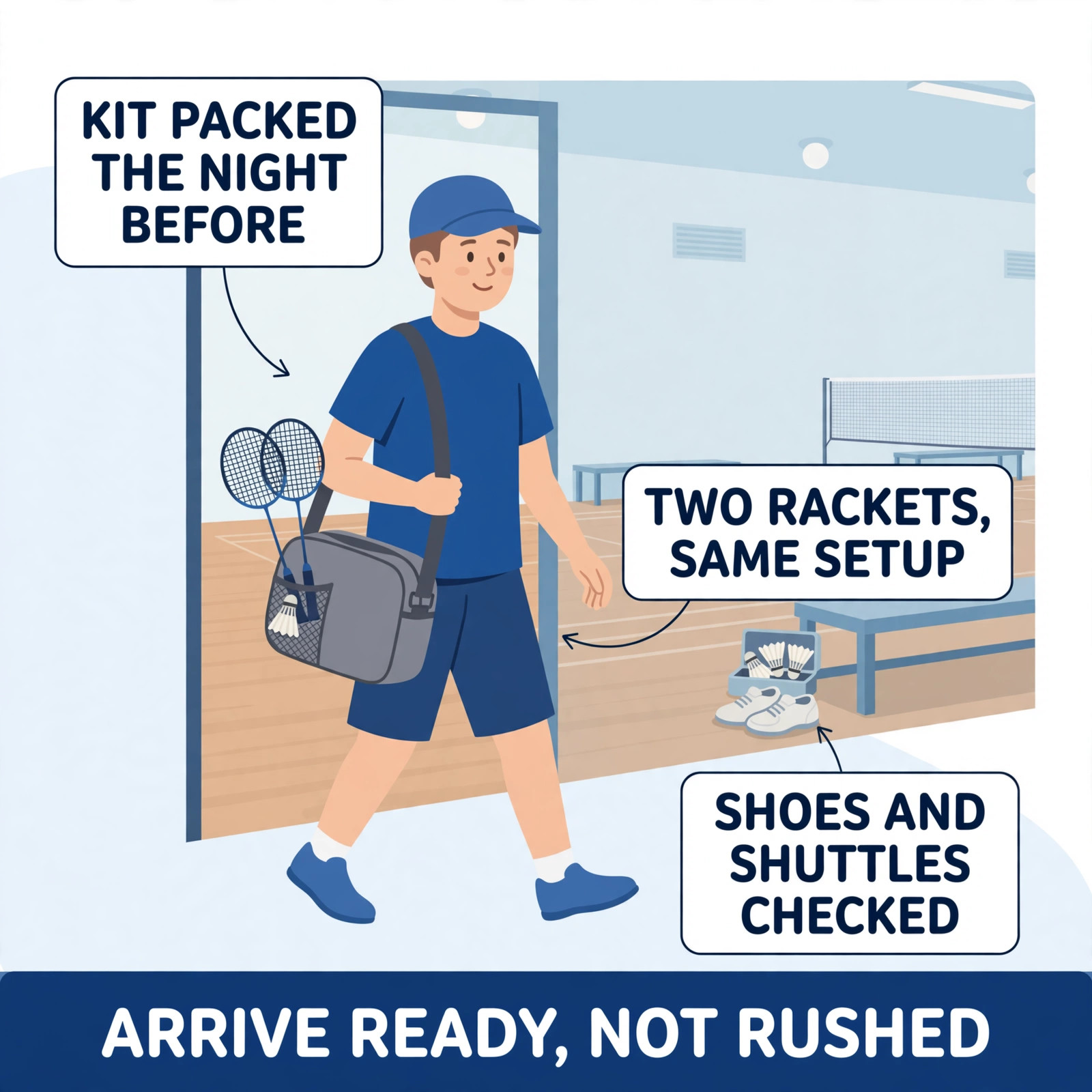
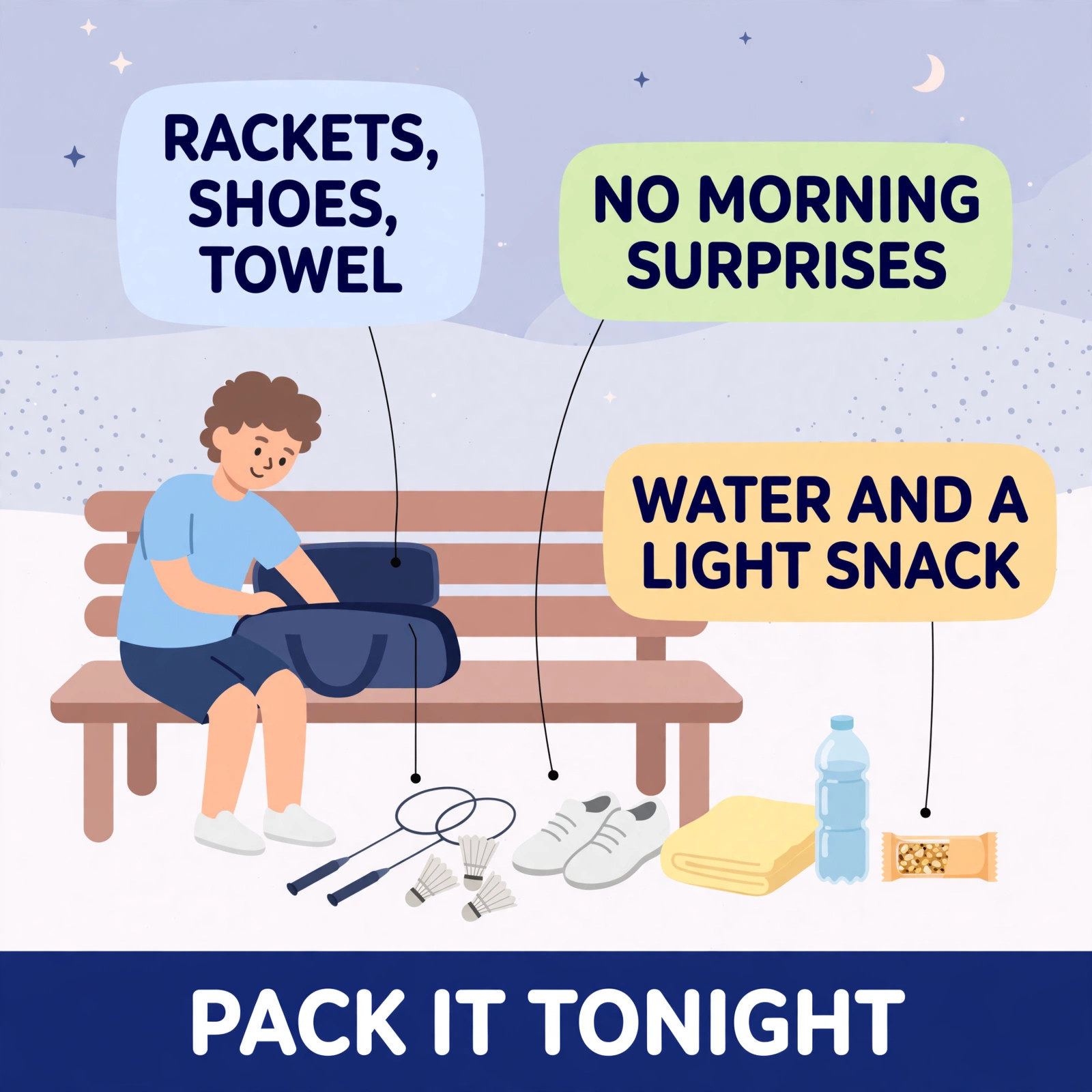
Pack like the day is already planned. Two rackets strung the same way, a towel, a change of shirt, water, a light snack, spare grip tape and your shoes, checked the night before rather than grabbed in a morning rush. Professionals look calm on arrival because the boring decisions are already made. Your kit bag should hold no surprises, so your head is free for the only surprise that counts, the player across the net.

Prep Check #3
Train the Match Before It Happens
A match is trained for in the weeks before it, not the night before. Build the block around the shots and movements your matches actually demand: footwork patterns at match speed, feeding that copies the rallies you struggle with, and conditioned games that force your weak pattern until it stops being weak. Short, sharp sessions through the week hold quality better than one exhausted weekend marathon where tired technique gets the most practice.
Fitness for badminton is specific. Legs that lunge and recover all match, a core that holds your shape while you twist, and lungs that let you think clearly in the third game. Squats, lunges, calf work and simple core exercises support the court work; the court work itself, multi-shuttle feeding and fast games, builds the rally fitness no gym fully copies. Taper honestly in the last days before a match: arrive fresh, not fried. The final session before match day should sharpen, not empty you.
Train the situations, not just the shots. Practise starting a game cold, because real matches begin that way. Practise being 17-19 down, because that score will happen and panic is a habit you can refuse in training before you refuse it in a match. Practise your serve and third shot as one unit, and your defence as a way to win time rather than a way to lose slowly. When match day brings a moment you have already rehearsed, your body answers before your nerves can argue.

Prep Check #4
Scout the Opponent, Write a Small Plan
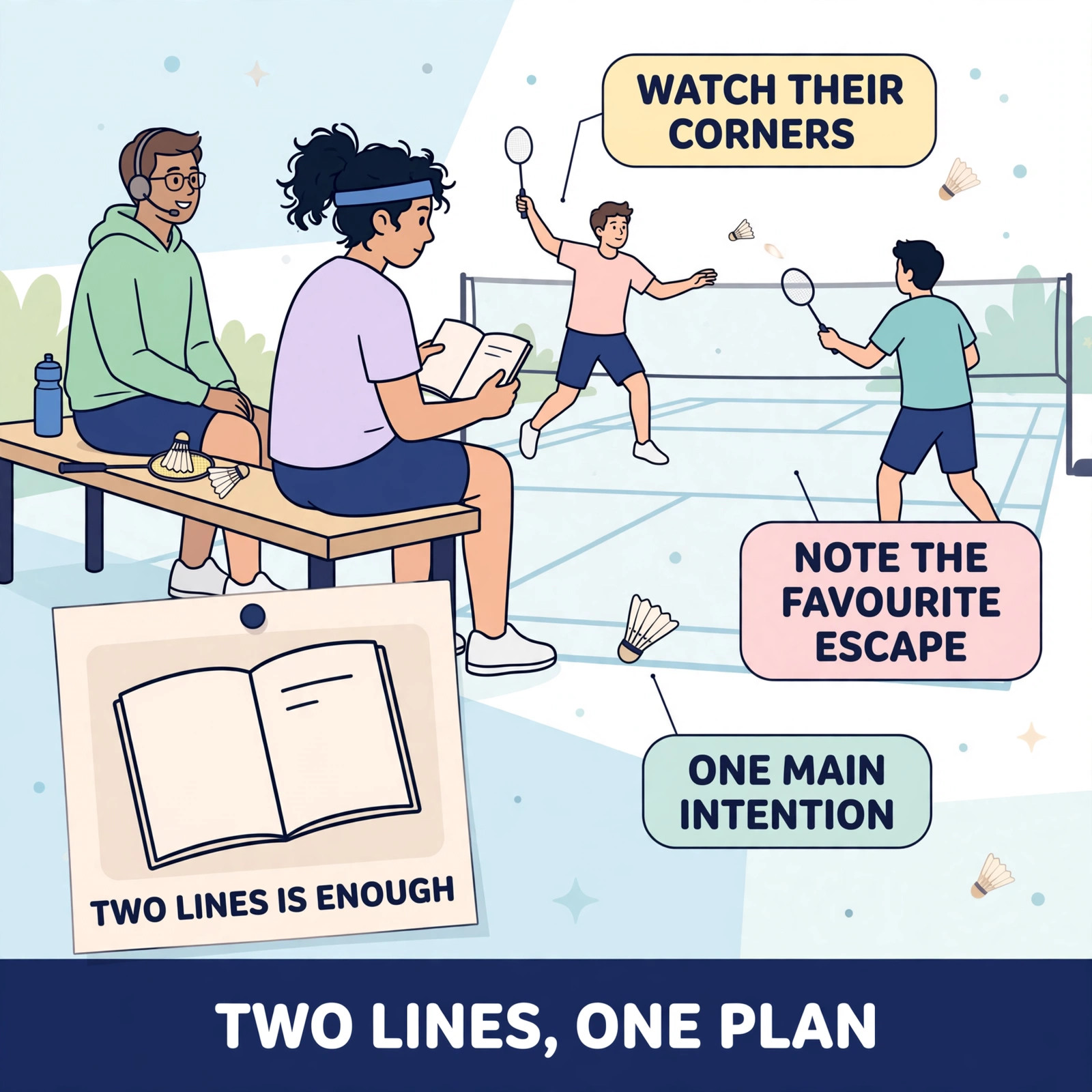
Before the match, learn what you can about the opponent. Watch a game if you can, or ask around: which corner do they defend late, do they favour the cross court under pressure, is the backhand a door you can keep knocking on? You are not building a dossier, just two or three honest observations. Every opponent has a pattern they trust when tired, and tired is exactly when your plan gets to use it.
Turn the scouting into a small, clear game plan. Pick one main intention, such as working the rear backhand corner until the reply shortens, and one serve plan you will start with. Keep the plan short enough to remember at 19 all when your ears are ringing. A plan you cannot recall under pressure is decoration. And hold it loosely: the first five rallies are fresh information, and a pro adjusts the plan to the match that is actually happening, not the one imagined the night before.
Know the hall as well as the opponent. Arrive early enough to feel the drift from the air conditioning, the glare from one end, and the shuttle speed in that room on that day. Play your warm-up rallies with the match shuttles if you can. Courts play differently from each other, and the player who has already solved the room spends the first game playing badminton while the other player is still solving the room.
The Routine
Warm-Up, Food and the Match Day Routine
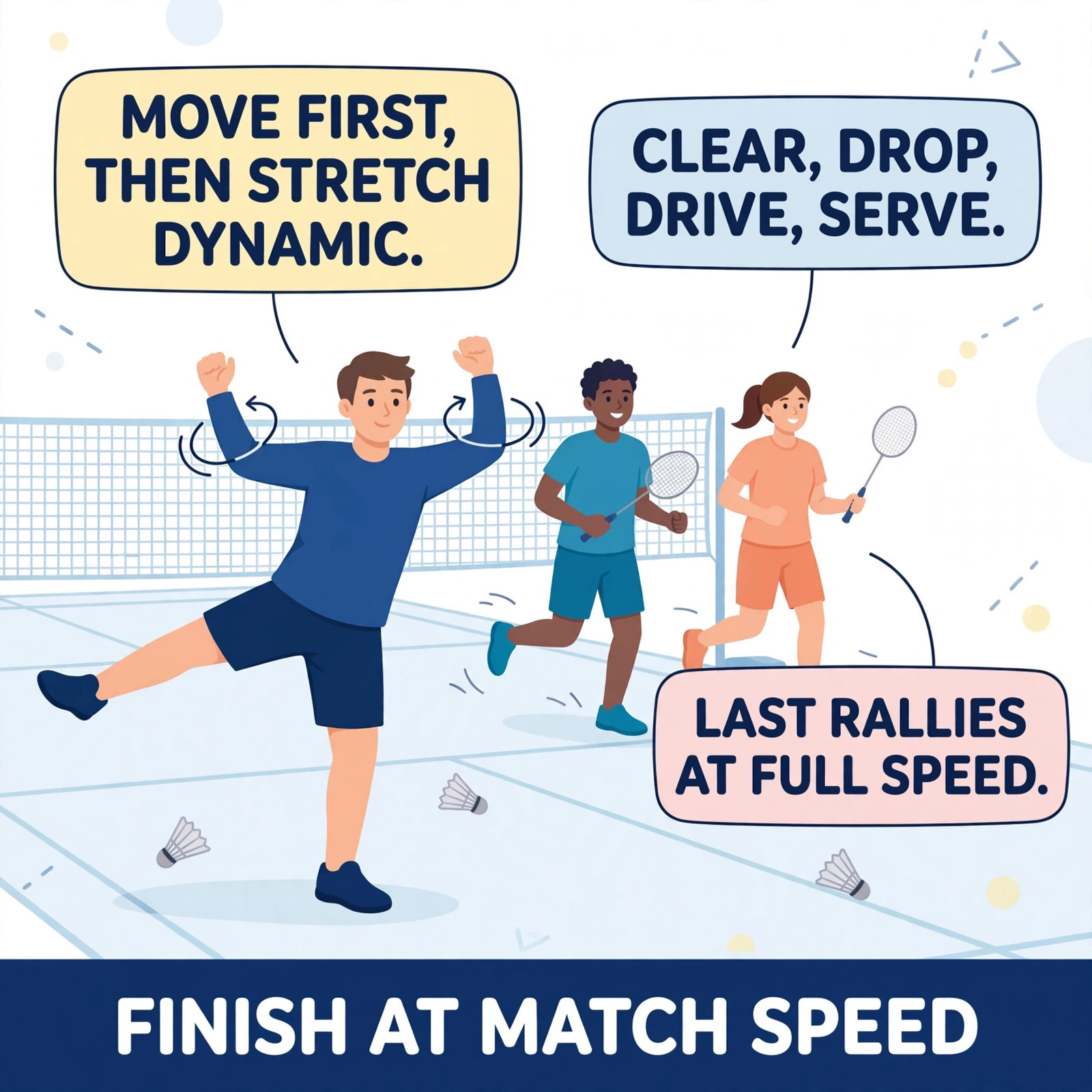
The warm-up is where the match quietly starts. Begin with easy movement to raise your temperature: light jogging, side steps and gentle lunges, then dynamic stretches that take your joints through the ranges the game will demand, arm circles, leg swings and trunk turns. Cold muscles pulled into a full-speed lunge are how match days end early. Ten to fifteen minutes of honest warming up is not a ritual, it is insurance your whole preparation depends on.
Then warm up the game itself. Clear corner to corner to find your length, drop and net exchanges to find your touch, a few drives to wake up your hands, and serves to your match targets, low and tight. Finish with two or three rallies played at near match speed so the first real rally is not your first fast one. After the match, cool down while your body is still warm: easy walking, then gentle static stretches for calves, thighs, shoulders and forearms, so tomorrow’s stiffness is smaller and your next session starts sooner.
Preparation is also how you manage the day around the match. Eat your main meal two to three hours before you play, familiar food with carbohydrates at the centre, and keep it moderate; a heavy meal sitting in your stomach at the first rally is a handicap you chose yourself. A small snack about an hour before is fine if you are hungry. Drink water through the day, before you feel thirsty, and keep sipping during the match; in our heat, waiting for thirst means you are already behind. After the match, eat a proper meal with protein and carbohydrates inside the first hour or so, then rest like it is part of training, because it is.

Myth vs Reality
Myths About Match Preparation
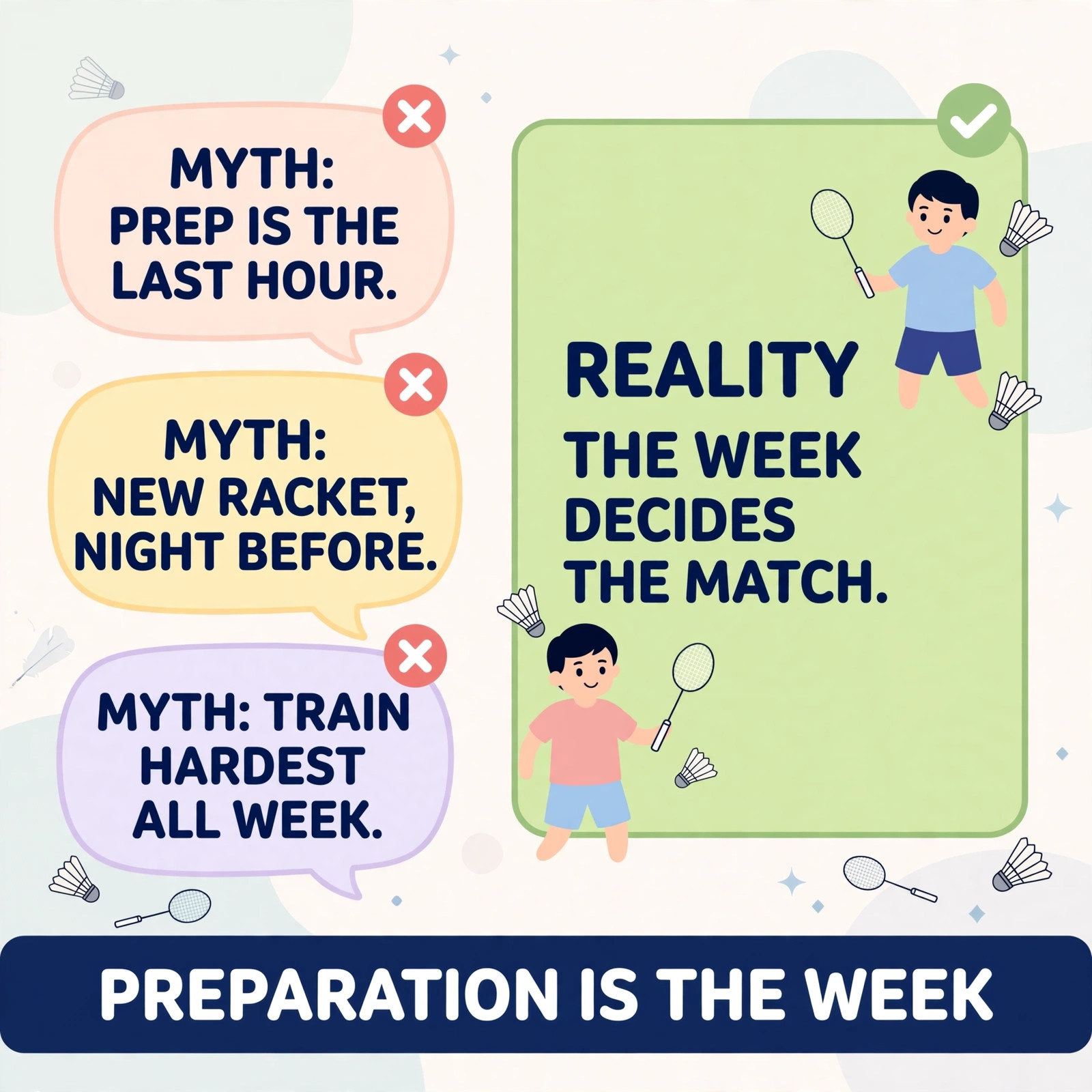
Myth: “Preparation is what happens in the hour before the match.” Reality: the hour before only reveals the preparation. The training block, the trusted equipment, the scouting and the sleep all happened earlier. Match day runs on decisions made days before, which is why calm players look lucky so often.
Myth: “A new racket or fresh strings the night before gives you an edge.” Reality: unfamiliar equipment changes your shots on the one day you cannot afford surprises. Myth: “Watching the opponent does not matter at club level.” Reality: two honest observations, a weak corner and a favourite escape shot, are enough to build a plan that wins rallies at any level.
Myth: “More training in the final week means a better match.” Reality: a hard final week arrives at the match as tired legs. The pros taper: shorter, sharper sessions, then rest. Freshness is a skill input, and it beats fatigue dressed up as dedication every time.
Why Choose Us
Match Preparation, Coached Like a Shot
At ST Badminton Academy KL, match preparation is coached inside small group classes capped at max 4 students. Four students means your coach sees how you actually prepare: your warm-up habits, your serve routine under a score, how you respond at 17-19 down in a practice game. Preparation stops being a poster on the wall and becomes a set of habits trained under watch, against real opponents, at your level.
Mr Eric Chuar has over 15 years of coaching experience in Singapore and Malaysia. His match rule is simple: control the day before you try to control the rally. When he prepares a student for a tournament or a school match, the checklist is plain: rules settled, kit trusted, plan written in two lines, warm-up rehearsed, food timed. Then, and only then, the match gets a say.
Our academy is based in Setapak, Kuala Lumpur, convenient for players from Wangsa Maju, Melati Utama, Danau Kota and Gombak. If your matches keep slipping away in the first game, or your preparation is a hope and a prayer in the car park, bring your next match to us. We will build you a preparation routine that survives contact with a real opponent.
FAQs: Badminton Match Preparation in Malaysia (KL)
These are the questions players ask us most about preparing for badminton matches in Malaysia. If your question is not here, message us, tell us what keeps going wrong on your match days, and we will give you a straight answer about which part of your preparation to fix first.
How can I prepare for matches if I live in Setapak or Gombak?
Start with a routine, not a wish. In our Setapak sessions, preparation is trained like a shot: a rehearsed warm-up, a two-line game plan, serve and third shot as one unit, inside small groups of max 4 students. You will practise match situations, including starting cold and playing from behind, until match day feels familiar instead of frightening.
What matters most when preparing for a badminton match in KL?
The work before the first serve: training that matches your real rallies, equipment you trust completely, two or three honest observations about your opponent, a short plan you can remember at 19 all, food and drink timed properly, and a warm-up that starts the match before it starts. Players call it professionalism; it is really just preparation done on purpose.
When should I eat before a badminton match to play my level?
Your main meal two to three hours before the match, familiar food built on carbohydrates, moderate in size. A small snack about an hour before is fine if you are hungry. Nothing new on match day: new food is the same risk as a new racket. Drink water steadily through the day, not in one desperate litre at the venue.
Is a coach necessary to prepare well, or can I train alone?
It helps more than most players expect, because a coach sees the preparation you cannot see yourself: the warm-up you rush, the score situations you avoid, the plan that falls apart at the first surprise. You can improve alone, but a coach shortens the road by naming your real fault early, inside groups of max 4 students where nothing hides.
Can mental preparation and visualisation really help my match play?
Yes, and it is trained, not wished for. Visualise rallies: your serve routine, your reply to their best shot, yourself calm at 18 all. Set one or two process goals, such as recovering to base after every shot, instead of a result you cannot control. In class we rehearse tight-score situations until your head has a script for them.
Do you coach match preparation for school and social tournaments near Wangsa Maju?
Yes. Match preparation is part of regular group classes at our Setapak base, a short trip from Wangsa Maju. Students heading into school, district or social tournaments train their routines, plans and warm-ups with us, and play practice matches under match conditions so the preparation is tested, not just talked about.
How do I improve my footwork as part of match preparation in Malaysia?
Footwork, because matches are lost by the step you do not have. Train the patterns at match speed: split step on their contact, six corners with recovery, and defence steps that buy you time. Add multi-shuttle feeding and conditioned games, and keep the sessions sharp rather than endless. In our classes, footwork work is matched to the rallies you face.
Where is ST Badminton Academy KL located for match preparation training?
We are based in Setapak, Kuala Lumpur, close to Wangsa Maju, Melati Utama, Danau Kota and Gombak. Sessions run in small groups of max 4 students. Message us for the current class schedule and we will place your match preparation in a group at your level, with a tournament coming up if you have one.
What makes Mr Eric Chuar a suitable coach for match preparation and badminton?
Fifteen years of coaching in Singapore and Malaysia, and a checklist habit: fix the day, then the rally. Eric reads a player’s preparation the way he reads a grip, small causes first. He trains routines, plans and warm-ups inside small groups where every student is actually seen, and sends players into matches knowing exactly what their job is.
Badminton Match Preparation in Action


What It Takes to Arrive Ready
A player meets our match preparation standard when five habits hold: the rules and scoring are automatic, the kit is trusted and packed the night before, training that week matched the coming match, there is a two-line plan built on honest scouting, and the warm-up starts on time and finishes at match speed. When those five hold, match day stops being a gamble.
| Factor | Hope and Rush | Planned Preparation PREP |
|---|---|---|
| Frequency | 1 or 2 times a week. Mostly for fun and sweat. | Before the match, the work is done: training matched the rallies, kit is trusted, the opponent has been watched and the plan is two lines long. |
| Drills Focus | Basic static feeding. Minimal footwork pressure. | During the match, warm-up finished at match speed, serve routine is automatic, and the plan adjusts to fresh information from the first rallies. |
| Physical Conditioning | Rarely included. Just playing games on court. | Core, agility, and speed training included in every session to prevent injury and build stamina. |
| Tactical Awareness | "Just hit it over." No real game plan. | Video analysis, point construction, and learning to read the opponent's game. |
| Coach Ratio | Large groups (8-10 kids). Coach barely watches you. | Max 4 students. Mr Eric Chuar personally corrects every stroke and movement detail. |
| Goal Setting | Fun and exercise. | At tight scores, the player follows a rehearsed script: breathe, towel, one clear intention, best pattern. |
| Long Term Result | Good recreational player. | A calm match played at full level, because nothing on the day was left to luck. |
Badminton Match Preparation Training in Kuala Lumpur
This page covered how to prepare for badminton matches like a pro: rules and equipment settled early, training built around real rallies, a short plan from honest scouting, warm-up and cool-down done properly, the mental script, and food and drink timed to the day. Preparation is not a talent; it is a routine. Bring your next match to Setapak and let us build yours with you.






