Badminton Shoes for Kids: What Parents Should Look For
Your child has started badminton class, and you want to buy them proper shoes. You go to the shop and see a wall of bright trainers, and the ones with the biggest logo look most like the answer. They are not. Badminton is not running. A badminton player moves sideways, lunges low, stops suddenly, and jumps, and the shoes have to support all of that on a smooth indoor floor. Ordinary trainers are built to run straight ahead on rough ground, and on a badminton court their thick soft soles wobble, slip, and roll the ankle. The wrong shoes do not just slow a child down. They make every lunge a small risk. This guide explains what actually matters in badminton shoes for kids, how to check the fit, what the sole should look like, how ankle support works, and when to replace a pair. No brands, no prices, just the fit.

Start Here
Trainers Are Not Court Shoes: Why Badminton Needs Its Own Shoes
Most children start badminton in the trainers they already own, and most parents see nothing wrong with that. The trainers look sporty, they feel comfortable, and they were fine for running around. But badminton is not running around. A badminton player moves sideways more than forwards, lunges low to reach a drop, stops hard after a sprint, and jumps to smash. A running shoe is built for one thing: moving straight ahead on rough ground, with a thick soft sole that absorbs the shock of each step. Put that shoe on a smooth indoor court, ask the child to lunge sideways, and the thick sole wobbles, the foot rolls, and the ankle takes the force. The child feels it as a slip, a twist, or a sore ankle, and the parent sees a child who is suddenly afraid to move.
A badminton shoe is built for the court. Its sole is flatter and firmer, so the foot stays close to the floor and does not wobble on a sideways move. The grip pattern is made for a clean indoor floor, so the shoe holds when the child stops hard. The sides are firmer, so the foot stays in the shoe on a lunge instead of rolling out of it. The heel is snug, so the foot does not slide forward on every stop. None of this is about brands or looks. It is about the shape of the shoe matching the shape of the game. When the shoes fit the game, the child moves with confidence, stops cleanly, and comes back for the next shot. When they do not, the child holds back, and the game slows down.

The Fit
The Fit Check: Toes Free, Heel Held
Fit is the first thing to check, and it takes one minute in the shop. Ask your child to stand in the shoes with their weight even on both feet. The toes should have room to spread, and should not press against the front of the shoe. Press the front gently with your thumb. You should feel a small space between the end of the longest toe and the end of the shoe, and the toes should be able to move. If the toes are cramped, the shoe is too small, and the child will complain, or the nails will hurt, or the child will start to curl the toes without realising it.
Now check the heel. Ask your child to walk a few steps. The heel should stay put in the shoe and not lift with every step. If the heel lifts, the shoe is too big, and the foot will slide forward on every lunge, pushing the toes into the front. That is how blisters and sore toes happen. The middle of the shoe should feel snug without squeezing, like a firm handshake around the foot. Too tight, and the child cannot move freely. Too loose, and the foot swims inside the shoe. Try both feet, because one foot is often slightly bigger, and buy for the bigger foot.
Do the fit check in the socks your child wears for class, not in thin shop socks or bare feet. Thick socks change the fit, and a shoe that fits barefoot may pinch in proper sport socks. Check the fit again at the end of the day if you can, because feet swell a little by then, and a shoe that fits in the morning can feel tight in the evening. And remember that children grow fast. A pair that fitted well a few months ago may be too small now, and the child may not say so. Check the fit every few months, and watch for the signs. Toes pressing the front, heels lifting, or the child asking to take the shoes off after class.

The Grip
The Sole: Grip, Flat, and Kind to the Court
Turn the shoe over before you buy. The sole tells you more than any label. A badminton sole is flat, firm, and slightly sticky to the touch. The pattern is made of small shapes that grip a clean indoor floor, and the sole leaves no marks on the court. Press the sole with your thumb. It should feel firm, not soft and squashy. A soft thick sole belongs on a running shoe, and on a badminton court it makes the child wobble on every sideways move. A sole that is heavily ridged, like a hiking or running shoe, grips rough ground well, and grips a smooth court badly, and it may mark the floor.
Grip is not just about the pattern. It is about the sole being clean and in good shape. Dust on a court kills grip fast, so teach your child to wipe the soles before class, or to stamp the feet gently on a damp towel if the hall provides one. A sole that is worn smooth has no grip left, no matter how good it was when new. Look at the sole under the ball of the foot and under the heel. If the pattern is smooth, the shoe is finished for court, even if the top still looks new. Do not send your child onto court in smooth shoes. A slip on a smooth floor is a fast way to a sprained ankle.
Indoor courts have rules about marking soles, and a good badminton shoe leaves no marks. Black soled shoes that mark the floor are a problem for the hall, and the staff will stop your child from playing. Ask the shop whether the sole is non marking, and check the sole colour yourself. A pale or gum coloured sole is usually safe, and a dark sole may or may not be. The safest test is the shop’s word plus your own eyes. If the shop cannot tell you, or the sole looks like it would mark, choose another pair.

The Ankle
Ankle Support Without Stiffness
Ankle support is the part parents worry about most, and the part they most often get wrong. The fear is real. Badminton is full of sideways lunges and sudden stops, and a weak shoe lets the foot roll. But support does not mean stiffness. A shoe with a very high collar and a rigid upper stops the ankle from moving at all, and a child in that shoe cannot lunge low or move fast, so the child compensates somewhere else, usually in the knee. The right shoe holds the foot in place without locking the ankle. Firm sides, a snug heel cup, and a low to mid collar give the support a child needs, and still let the ankle bend.
Check the sides of the shoe. Squeeze them gently. They should feel firm, not soft and floppy. A shoe with soft sides lets the foot slide sideways inside it, and that is the roll that sprains an ankle. Check the heel cup, the hard part at the back of the shoe. It should hold the heel firmly and not collapse when you press it. A good heel cup keeps the heel centred, and a centred heel is a safe heel. Look at the collar around the ankle. It should be padded and comfortable, without rubbing. If the collar rubs, the child will not want to wear the shoes, and no support helps if the shoes stay in the bag.
Support also comes from how the shoe is laced. Laces that are skipped at the top let the heel slip, and a slipping heel is an unsafe heel. Use the top holes, and tie the laces firmly. A child whose shoes come undone mid rally is a child who stops to tie them, and a child who stops mid rally is a child who risks a fall. If the laces keep coming undone, the shoe may be too loose, or the laces may be too long, or a different fit is worth trying. Ankle support is a system: firm sides, snug heel, proper lacing, and a flat firm sole. Get all four right, and the ankle is as safe as it can be.

What to Avoid
Five Mistakes Parents Make When Buying Kids Shoes
The first mistake is buying for looks. A bright pair with a big logo looks like the answer, and the child wants it. Looks are the last thing that matters on court. A plain pair that fits will always serve your child better than a bright pair that slips. Let the child choose the colour if you like, but only from the pairs that fit. If the bright pair does not fit, say so plainly, and pick the pair that does, even if it is plainer.
The second mistake is buying too big to grow into. A shoe that is far too big is a shoe the foot slides in, and a sliding foot blisters, loses grip, and risks the ankle on every lunge. Growing room is sensible. A lot of room is not. A small space at the toes is enough. If the heel lifts when the child walks, the shoe is too big, and no amount of tight lacing will fix it. Buy the size that fits today, and replace it when the child grows.
The third mistake is buying running shoes for badminton. Running shoes are built for straight ahead movement, and their thick soft soles and high heels are wrong for a court. A child in running shoes wobbles on sideways moves, slips on stops, and cannot feel the floor. The court tells you the truth in the first rally. Buy court shoes, made for indoor court games, and keep the running shoes for running. The fourth mistake is skipping the try on. Buying without the child trying the shoes is a guess, and a guess is usually wrong. Feet differ in width as well as length, and a shoe that fits one child will pinch another. Always try before you buy, and always try both feet. The fifth mistake is ignoring the sole. Parents check the top of the shoe and forget the bottom, and the bottom is where the grip lives. A smooth sole, a thick soft sole, or a heavily ridged sole will all fail on court. Turn the shoe over, every time.

Trying Before Buying
The Shop Test: Walk, Lunge, and Jump
Never buy kids badminton shoes without a proper test in the shop. Walking up and down the aisle tells you almost nothing. Badminton happens in lunges and jumps, so test in lunges and jumps. Ask your child to walk first, and watch the heel. It should stay put. Then ask for a lunge, one big step forward with the knee bent, the way they reach a drop. The foot should stay flat and steady, and the shoe should not wobble or slip. If the child wobbles, the sole is too thick or too soft. If the foot rolls, the sides are too soft. Try the other foot, and try a lunge to the side. Badminton is sideways, so a sideways lunge is the real test.
Then ask for a small jump, up and down on the spot. Land softly and listen. A good court shoe lands quietly and feels steady, and the child can stop and stand without wobbling. A thick running shoe lands with a bounce, and the child sways. Ask the child how it feels. A child who says the shoes feel heavy, or that the feet slide, is telling you the truth. A child who smiles and says they feel fast is telling you the truth too. Trust the child’s feet more than the shop assistant’s words, and trust the lunge test more than the walk test. Take your time, and try more than one pair. A good shop will let your child try several sizes and walk the floor. Compare a court shoe with a trainer, side by side, and feel the difference in the sole and the sides. The difference is obvious the moment you hold both.
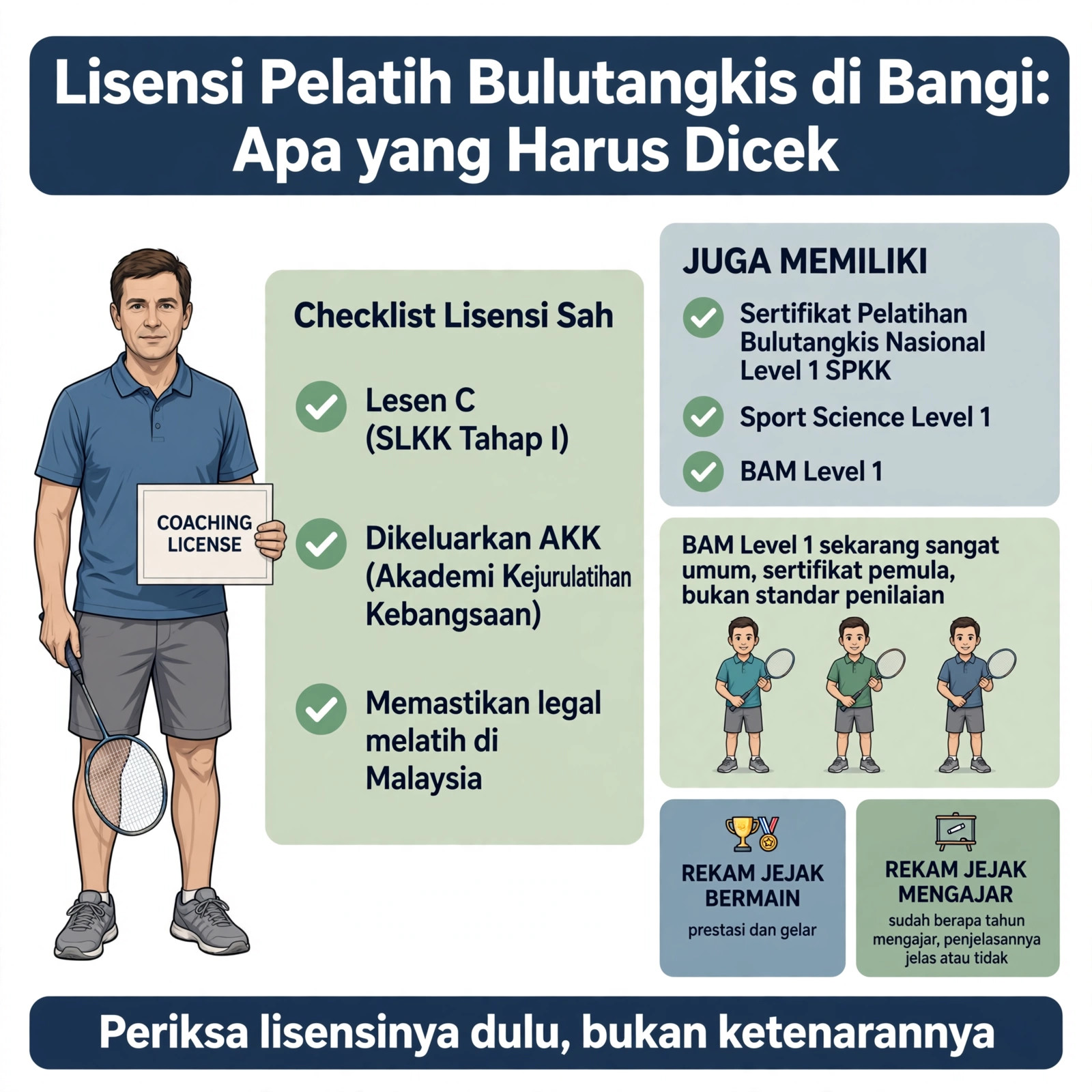
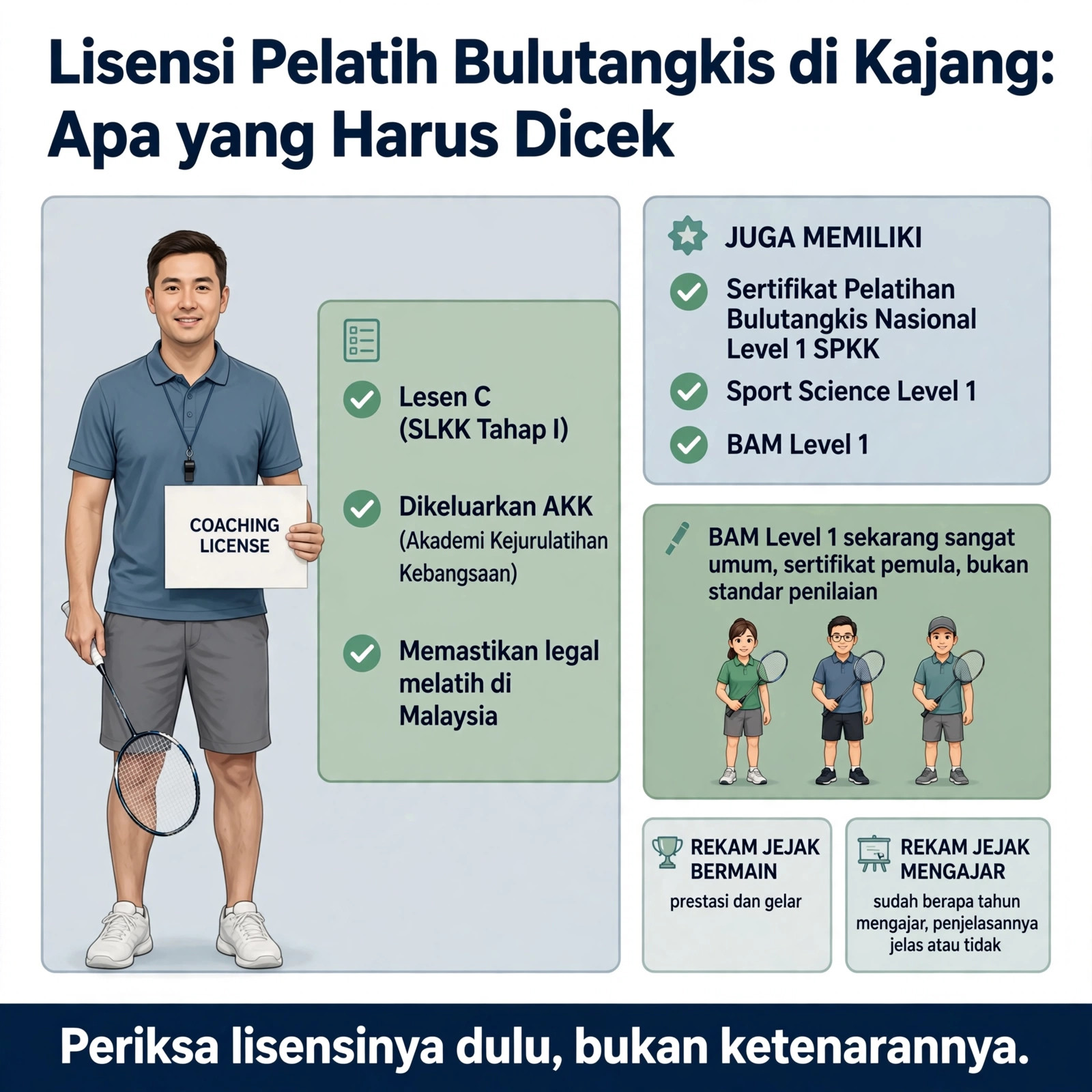
Before you trust any coach with your child’s training and movement, check the credential that matters. The lead check is the National Coaching License, Lesen C, SLKK Tahap I, issued by Akademi Kejurulatihan Kebangsaan, AKK, and verifiable on the MSCR platform. Ask to see it. A coach who holds it has been trained and licensed to coach in Malaysia, and parents should ask to see it before they sign up. Eric Chuar holds the National Coaching License, Lesen C, with SPKK National Level 1, Sport Science Level 1, and BAM Level 1. BAM Level 1 is the entry certificate and now common, so never judge a coach by the BAM ladder alone. The license is the real check, and a licensed coach is the one who can watch your child move and tell you, honestly, whether the shoes help or hurt.

Looking After Them
Looking After Them: Air, Rotation, and Clean Soles
Badminton shoes last longer when they are cared for, and care is simple. Air them after every class. Shoes that stay in a closed bag grow damp, and damp shoes smell, weaken, and lose their shape. Take them out of the bag at home, open the laces, and let them dry in the open air, away from direct sun and heat. Never dry them on a heater or in strong sun, because heat warps the sole and stiffens the upper. A dry shoe keeps its shape, and a shoe that keeps its shape keeps its fit.
Rotate the wear if you can. A second pair, even an older one, lets each pair rest and dry between classes, and two pairs last longer than one pair worn every day. Keep the court shoes for the court only. Outdoor surfaces are rough, and they wear the sole fast, and rough ground ruins the grip that the court needs. If your child walks to the hall in other shoes, the court shoes stay clean and grippy for far longer. Teach your child to wipe the soles before class, and to check the laces. A quick wipe keeps the grip, and a firm tie keeps the heel.
Know when to let a pair go. A worn sole, a collapsed heel cup, or a shoe that pinches is a shoe that is finished. A child who slips, complains of sore feet, or asks to take the shoes off after class is telling you the pair is done. Replace the shoes, run the same checks again, and let the child help choose. And when the pair is done, run the same checks again, and let the child help choose the next pair.
Why Eric Chuar Stands Out
A coach can sound good on paper and still teach badly. The difference shows in the details: how a lesson is planned, how mistakes get corrected, and whether a student actually improves week after week. Eric Chuar has spent over 17 years coaching in Malaysia and Singapore, and his teaching is built on proper training, not guesswork. His certificates are listed below, and parents can ask to see them before signing up.
Coaching licences: National Coaching License Lesen C, SLKK Tahap I, issued by Akademi Kejurulatihan Kebangsaan (AKK). This is the licence that confirms legal coaching status in Malaysia, and it can be checked on the Malaysia Sports Coach Registry (MSCR). He is also a Certified National Level 1 Badminton Coach under SPKK, issued by AKK and Institut Sukan Negara, and a Certified Badminton Coach under BAM Level 1.
Sport science: Sport Science Course Level 1 (AKK), covering basic anatomy and physiology, youth training principles, injury prevention, fitness components, training planning, testing and monitoring, and sport psychology basics.
Data and analytics: Sports Performance Analysis, Sports Performance Analytics Specialization, Prediction Models with Sports Data, Data Collection and Processing with Python, Wearable Technologies and Sports Analytics, Machine Learning in Sports Analytics, and a Test on Moneyball and Beyond.
Athlete development and safety: The Science of Training Young Athletes, Motivating Gen Z Learners, Safe Sport Core, Safe Sport (Coach), and Doping in Sports.
He codes, too. The Python and machine learning certificates are real, and he uses them. He builds his own systems for tracking students and planning lessons, so decisions come from records and data, not just feel. A coach who can read the numbers and read the court is hard to find.
Small groups, close attention. Classes stay at a maximum of four students, so every grip, every footwork step and every swing gets corrected properly. With over 17 years of coaching behind him, he has seen the same beginner mistakes hundreds of times, and he knows how to fix them before they become habits.
Sixteen certificates in total, plus registration on the Malaysia Sports Coach Registry. That is the part other coaches cannot match by talking about it.
FAQs: Badminton Shoes for Kids
Here are the answers to the questions parents in Malaysia ask most often about badminton shoes for kids.
Can my child play badminton in ordinary trainers?
Court shoes, made for indoor court games. Ordinary trainers are built for running straight ahead, and their soles are thick and soft, which makes a child wobble on a sideways lunge. Badminton shoes have a flatter, firmer sole made for side to side movement, quick stops, and lunges. That is the difference that keeps ankles safe.
How do I know whether a badminton shoe fits my child?
By the toe and the heel. The toes should have room to spread when the child stands, and the heel should stay put when the child walks. If the toes press the front, the shoe is too small. If the heel lifts, the shoe is too big, and the child will slide inside it on every lunge.
How do I tell a badminton sole from an ordinary sole?
By the sole. Turn the shoe over. A badminton sole is flat, firm, and slightly sticky to the touch, with a pattern that grips a clean indoor floor. If the sole is thick, soft, or heavily ridged like a running shoe, it will not grip the court the same way, and it may leave marks on the floor.
Do badminton shoes really protect my child’s ankles?
Yes, and this is the main reason to buy proper court shoes. Badminton is full of sideways movement, lunges, and sudden stops, and a shoe with weak sides lets the foot roll. A court shoe with firm sides and a snug heel holds the foot in place, and that is what keeps ankles safe.
Can my child wear badminton shoes outside on the road?
No. A court with a smooth indoor floor is where badminton shoes belong. Outdoor surfaces are rough and wear the sole fast, and rough ground ruins the grip. Keep the court shoes for the court, and let your child wear something else outside.
When should I replace my child’s badminton shoes?
Look at the heel and the sole. The heel cup wears thin, the sole pattern smooths out, and the toes press the front. A child who complains the shoes hurt, or who slips on court, is telling you the shoes are finished. Growing feet outgrow shoes fast, so check the fit every few months.
How tight should I tie my child’s badminton shoes?
Tight. Laces should be snug enough that the heel stays put, and loose enough that the toes can still spread. Use the top holes and tie a firm bow. If the child keeps stopping to retie, the laces are too long, or the shoe is too loose, and a smaller size or a different fit is worth trying.
Are second hand badminton shoes a good idea for a child?
Yes, if they fit. Run the same checks: toes free, heel held, sole gripping, and no worn spots. Second hand court shoes often have worn soles, so look at the sole first. If the pattern is smooth, the grip is gone, and the shoe is not safe for court, no matter how new it looks on top.
Should I ask the coach before buying badminton shoes?
Bring them to class and ask the coach to watch your child move in them. The coach sees the lunges, the stops, and the footwork every session, and can tell in minutes whether the shoes help or hurt. A coach who watches your child play will always give better shoe advice than a shop that has never seen your child move.
Badminton Shoes for Kids: What a Good Fit Looks Like


What Good Coaching Looks Like at ST Badminton Academy
Shoes should be chosen with a coach who watches your child move, not with a guess in a shop. These are the standards we hold ourselves to in every session at ST Badminton Academy in Setapak.
| Factor | Ordinary Trainers | Fitted Badminton Shoes STBA |
|---|---|---|
| The Sole | Thick soft sole, wobbles on a sideways lunge. | Flat firm sole, steady on stops and lunges. |
| The Grip | Built for running straight ahead on rough ground. | Gripping pattern made for a clean indoor floor. |
| The Sides | Soft sides, foot rolls on a sideways move. | Firm sides hold the foot in place on a lunge. |
| The Heel | Loose heel, foot slides forward on every stop. | Snug heel cup keeps the heel centred and safe. |
| The Ankle | High collar or no support, either stiff or sloppy. | Low to mid collar, support without stiffness. |
| The Try | Bought for looks or size, without a court test. | Walk, lunge and jump tested in the shop. |
| The Care | Worn everywhere, sole ruined before class. | Court only, aired after class, soles wiped. |
Fit First, Then Fast Feet Follow
Before you buy, run three final checks. Check 8: has your child walked, lunged and jumped in the shoes, and do the heels stay put and the toes stay free? Check 9: have you looked at the sole and asked the coach whether the grip and support fit badminton? Check 10: are you choosing the fit, not the looks, the popularity or the price, and are you ready to walk away when the shop has nothing that fits? Shoes that fit let your child move the way badminton asks them to move. Quick, low, and safe, and back for the next shot.