The Best Badminton Arm Bands For Sweat Management And Comfort (Arm Band Guide)
Play two hard games in a warm Malaysian hall and the pattern shows itself. Your shots are fine in the first game, then the grip starts to feel soapy, the racket turns a little in your hand, and net shots begin to float. Very often the problem is not your technique. It is sweat, travelling down your arm and arriving at your palm. A badminton arm band is a small, cheap answer to that one problem: worn high on the forearm, it catches the sweat early, before it reaches your hand. This guide covers how it works, band or sleeve, towelling or knit, fit, washing, and when to replace it.
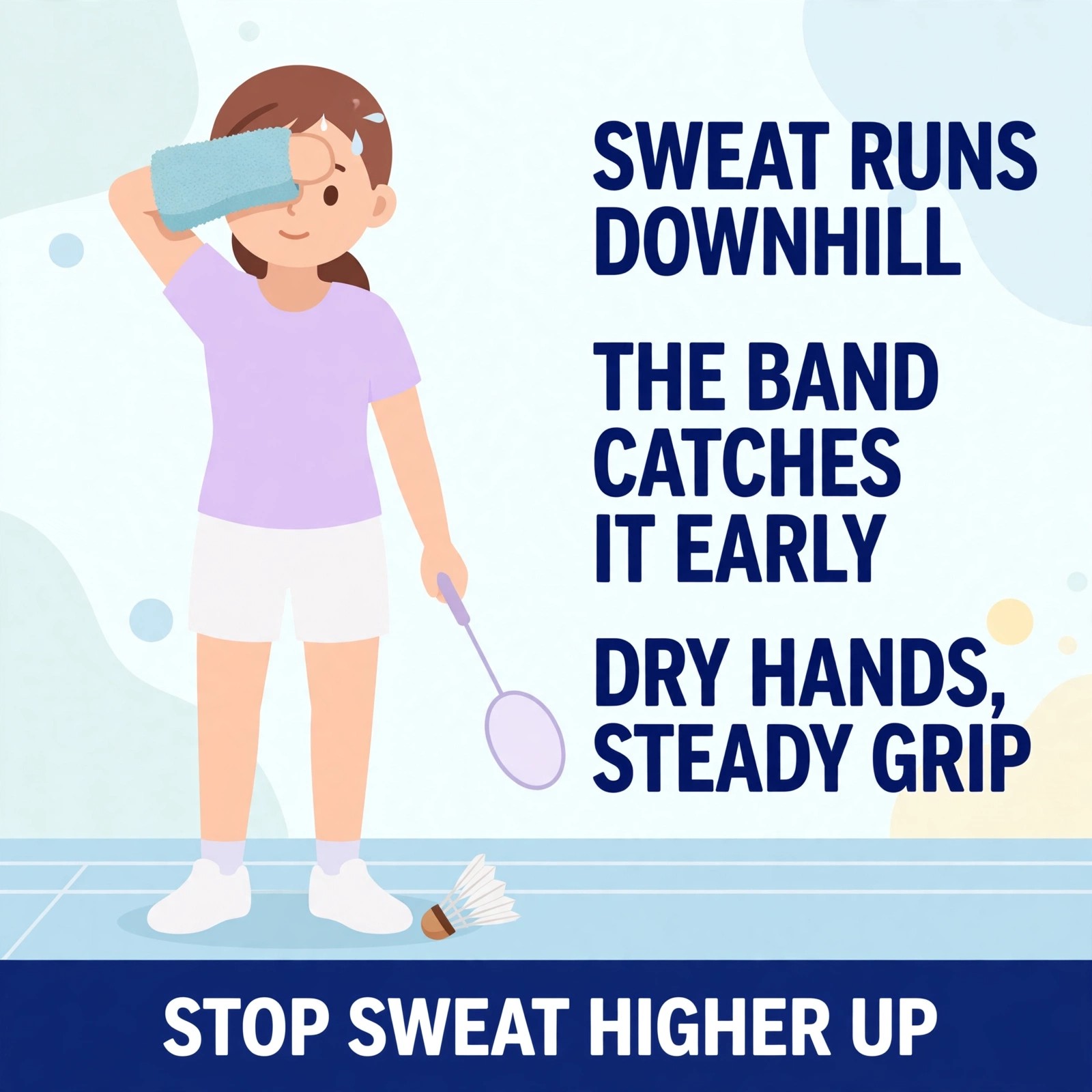
Sweat Check #1
Why Sweat Runs Down the Arm: What an Arm Band Does
Sweat does not start at the hand. It forms on your forehead, your upper arm, and your forearm, and then gravity does the rest. As you run, lunge, and swing, the drops join up and run downhill along the forearm, past the wrist, and into your palm. From the palm they soak straight into the grip. A wet grip changes shots quietly: the racket twists on off centre hits, you squeeze harder to hold on, and your forearm tires early. By the third game, many players are fighting their own handle more than the shuttle.
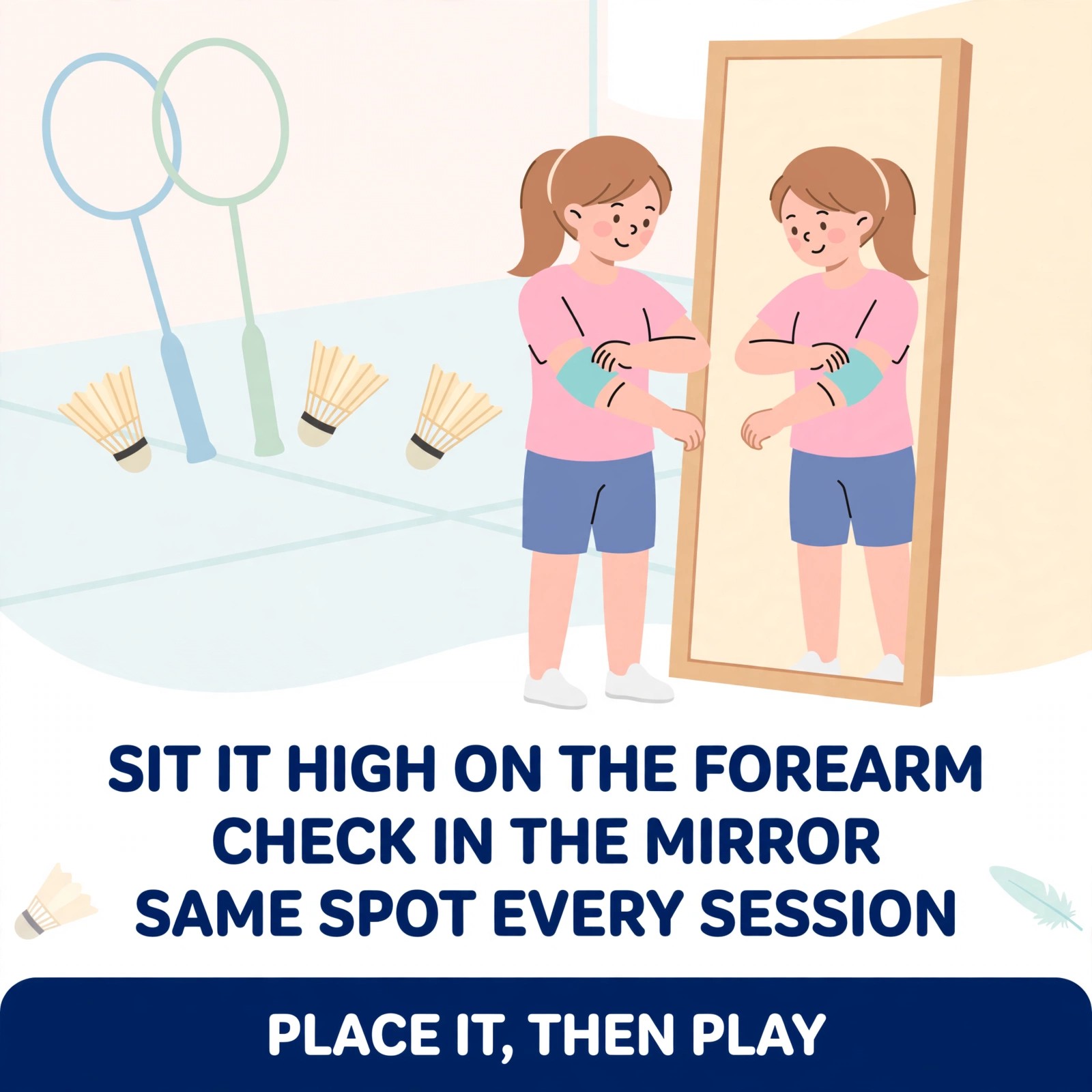
An arm band works like a gate on that road. Worn high on the forearm, just below the elbow, it sits across the path the sweat travels and soaks up much of the flow before it gets any further. It does not stop you sweating, and it does not cool you down. It simply changes where the sweat ends up: in the band, not in your grip. The result is a drier hand for longer, a grip that feels the same in game three as in game one, and less squeezing, which keeps touch shots softer.
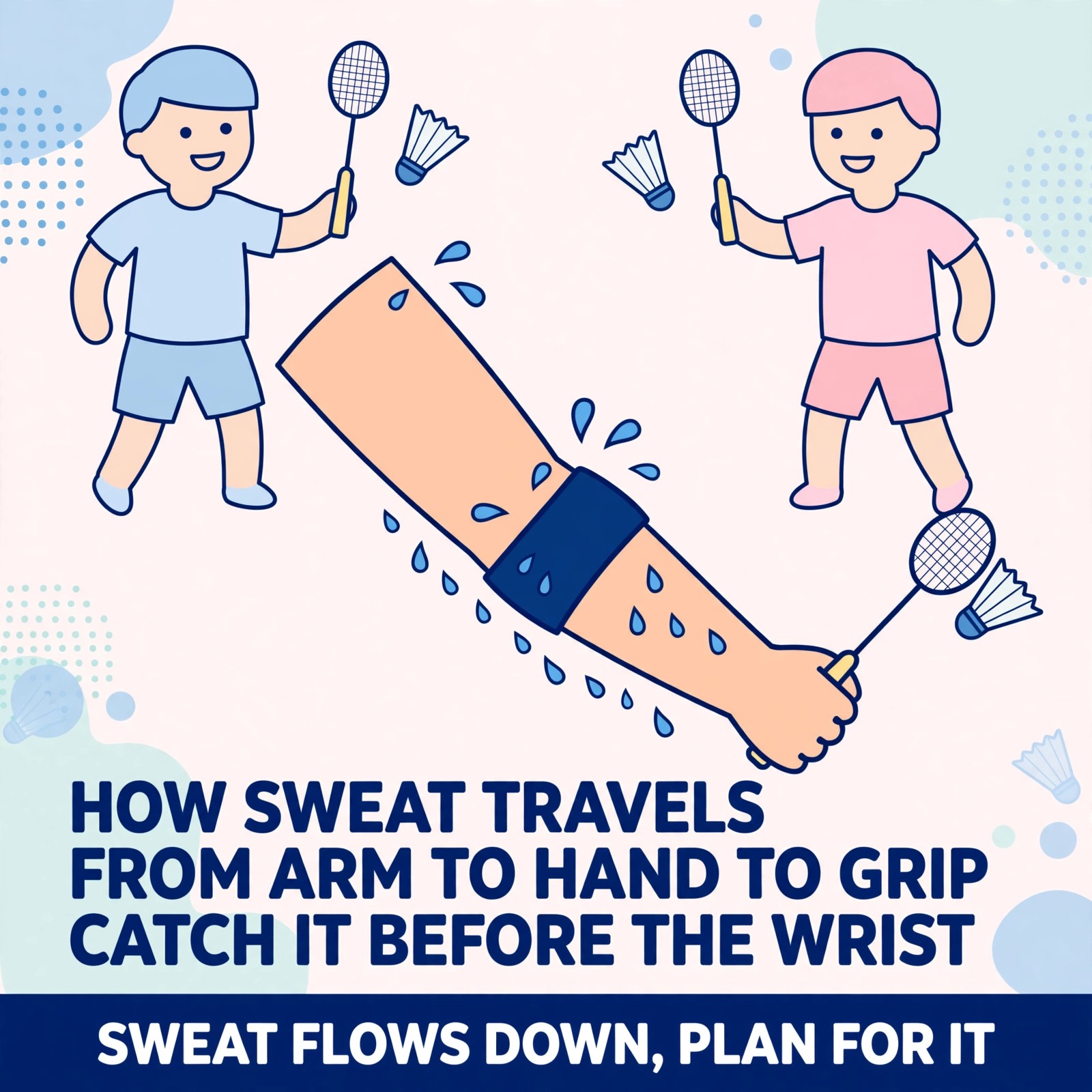
Sweat Check #2
Arm Band or Arm Sleeve: Two Different Jobs
An arm band and an arm sleeve look like cousins, but they do different jobs. The band is short, about a hand wide, and sits high on the forearm. Its whole job is catching sweat. A sleeve is long, covering the arm from wrist to elbow. Players wear sleeves for a covered, supported feeling, for sun cover outdoors, or because they like the look. For sweat control, the long sleeve is more fabric than the job needs, and it puts cloth over the wrist where many players want to feel free.
That does not make sleeves wrong. In a cold, air conditioned hall a sleeve can feel comfortable, and some players returning from an elbow niggle like the gentle squeeze. The honest way to choose is to name the job first. If the job is stopping sweat before it reaches your hand, a short band worn high does it with the least fuss. If the job is warmth or cover, a sleeve earns its place. Buying a sleeve to catch sweat usually ends with a hot arm and a still wet grip.
There is a third item that often gets mixed into this talk: the wristband. A wristband sits at the wrist, much lower than an arm band, so it catches sweat late, after most of the forearm run is done. It shines at a different job, wiping your forehead and face between rallies. Many players pair the two without thinking of it as a system: an arm band high up to catch the flow early, and a wristband for quick wipes. If you only buy one, buy for the job that bothers you most.
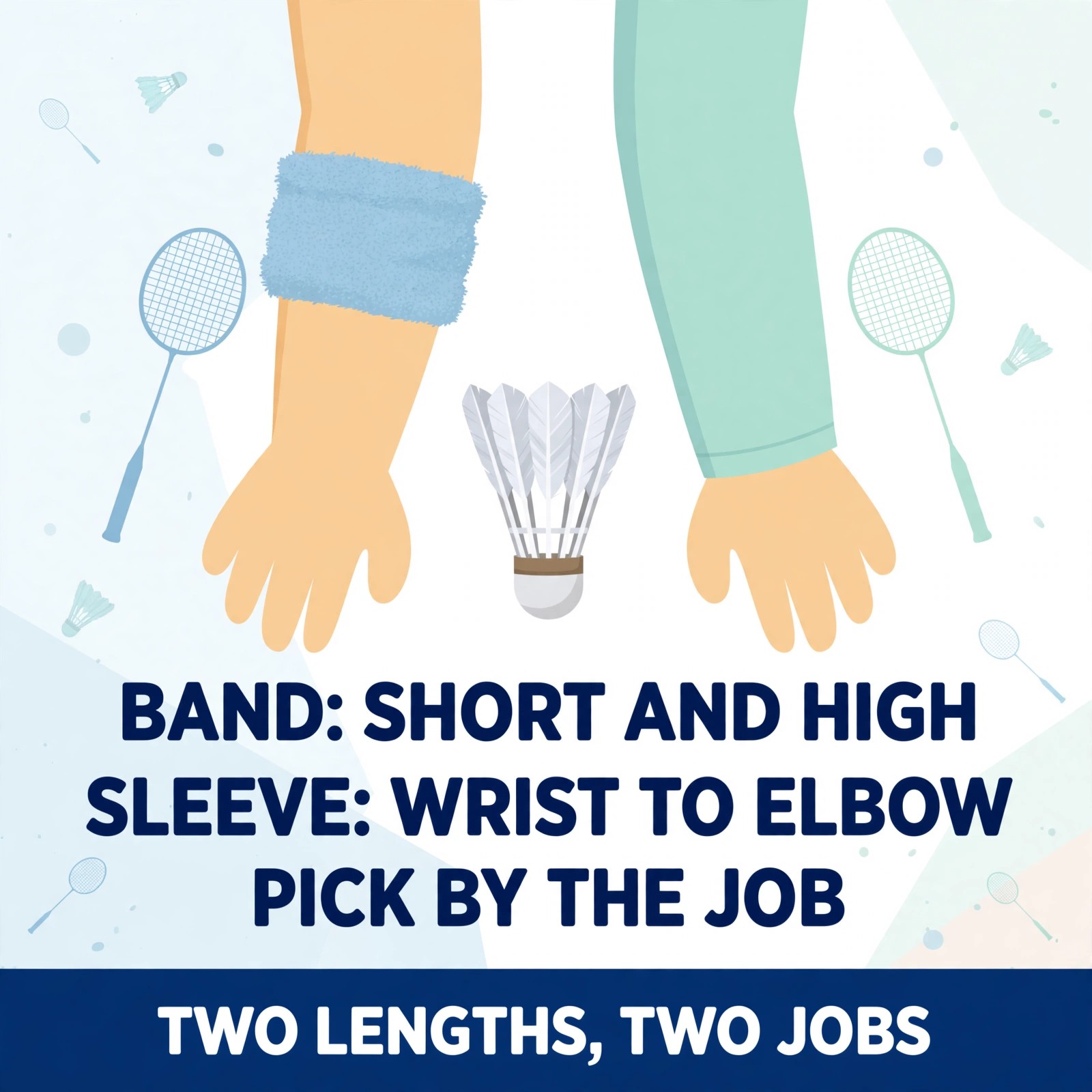
Sweat Check #3
Towelling or Knit: Picking the Material
Towelling is the classic sweat material, and it earns that place. The thick loops give sweat a lot of surface to soak into, so a towelling band drinks fast and holds a good amount before it feels wet. For heavy sweaters and long sessions, it is usually the safer pick. The trade offs are small: towelling feels bulkier on the arm, and it dries slowly after washing, so a player who trains daily may need two in rotation. It also softens with age, which most players find comfortable rather than a problem.
Knit bands are the lighter option. The fabric is thinner and smoother, the band sits flatter on the arm, and it dries quickly after a wash, which suits players who train often and wash often. A knit band may soak through sooner than towelling for a very heavy sweater in a long match, so session length matters. Some knit bands blend in a little stretch fibre, which helps them stay up. If you dislike anything bulky on your arm, knit is the one you are most likely to keep wearing.
Whichever material you pick, one habit decides whether it keeps working: washing. Sweat leaves salt and skin oil in the fibres, and a band that is never washed slowly stops drinking, however good it was when new. Judge materials with a simple test instead of label talk. Wear the band for one full session, note when it starts to feel wet against your skin, and compare that with your usual session length. If it gives up before your games end, you need the thirstier material, or a dry spare to swap into.
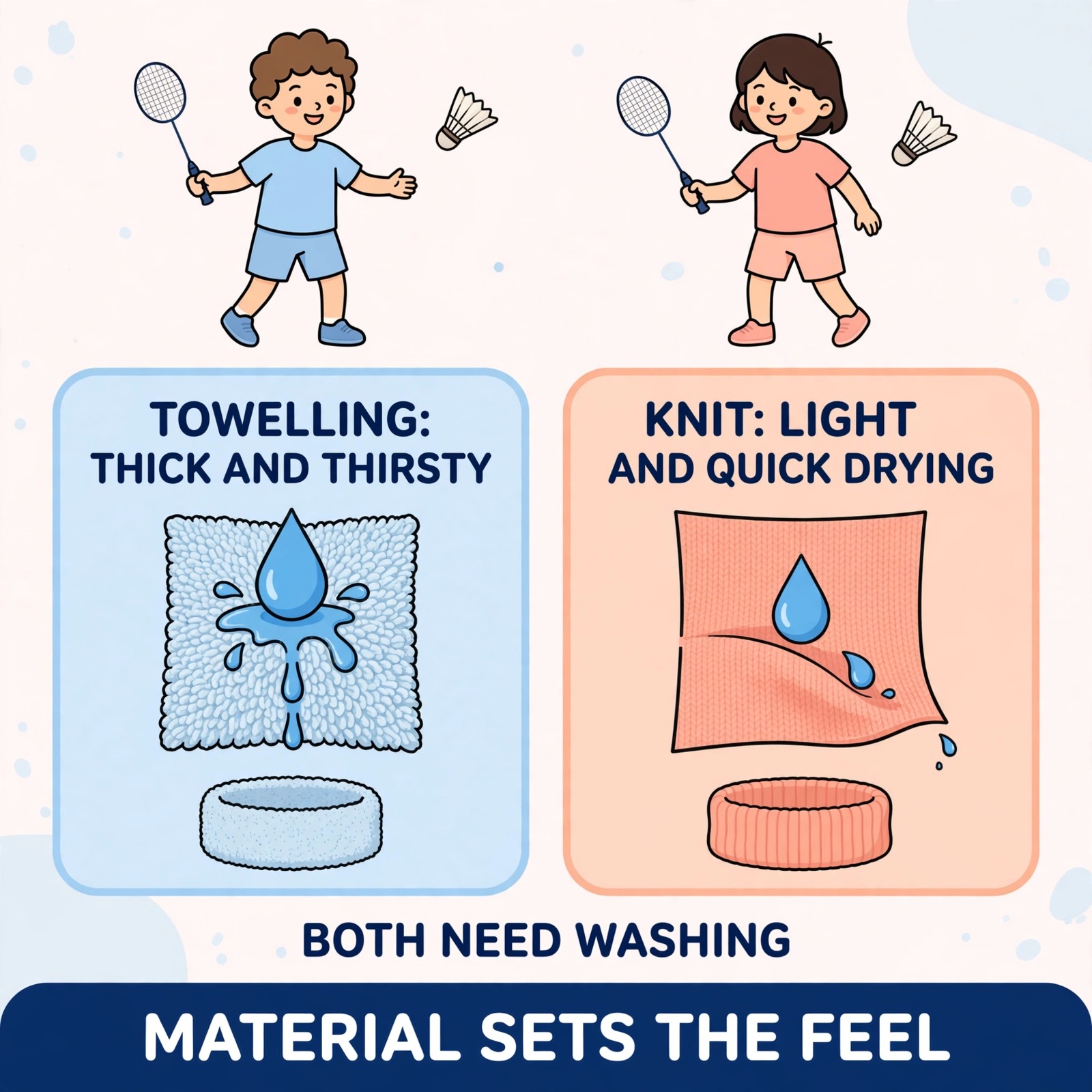
Sweat Check #4
Fit That Stays Up: Snug, Not Strangling
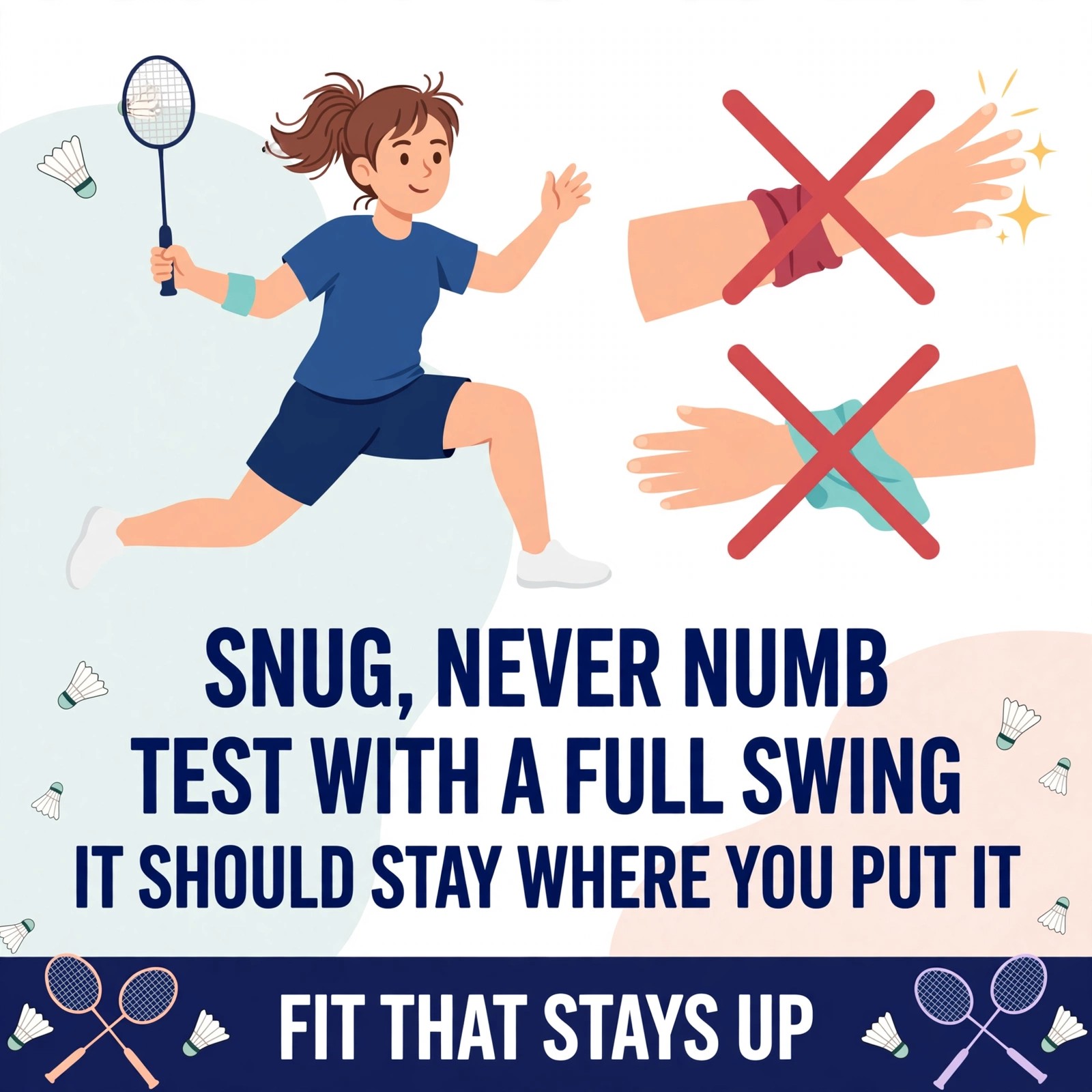
Fit is where arm bands are won or lost. The band must be snug enough to stay where you put it through lunges, jumps, and full smashes, with sweat running under it. Test it properly before you trust it in a match: swing hard, shadow a few overheads, and jump a few times. A good band stays high on the forearm and you forget it is there. If it creeps down in the shop or the warm up, it will live on your wrist by game two, doing the wrong job in the wrong place.
Too tight is worse than too loose. A band that strangles the arm can leave fingers tingling or numb, and deep marks that stay long after you take it off. That is not extra catching power. Absorbency lives in the material, not in the squeeze, and a squeezed arm tires faster and feels worse. The right feel is firm, even contact all the way round, with full feeling in your fingers and no need to pull the band down for a rest mid session. If you keep adjusting it, the fit is wrong.
To size a band, measure your forearm at the exact spot it will sit, just below the elbow, with the arm relaxed. Compare that number with the maker size note rather than guessing from shirt sizes. Between two sizes, heavy sweaters often do better with the snugger one, because a wet band stretches a little as it soaks. Remember that elastic ages: a band that fitted perfectly when new may ride lower after months of washing. That slow change is normal, and it is the first sign that replacement time is coming closer.
Sweat Check #5
Wearing, Washing and Replacing Your Arm Band
Wear the band from the start, not from the first wet rally. Put it on before the warm up, at the same spot every session, while your arm is still dry. A band pulled onto an already wet arm starts the evening half beaten, because the sweat is already past the gate. In long sessions, treat the band like a towel with a limit: once it feels soaked through, swap it for a dry spare at the break. Two bands in rotation will keep most players dry through any normal training night or social session.
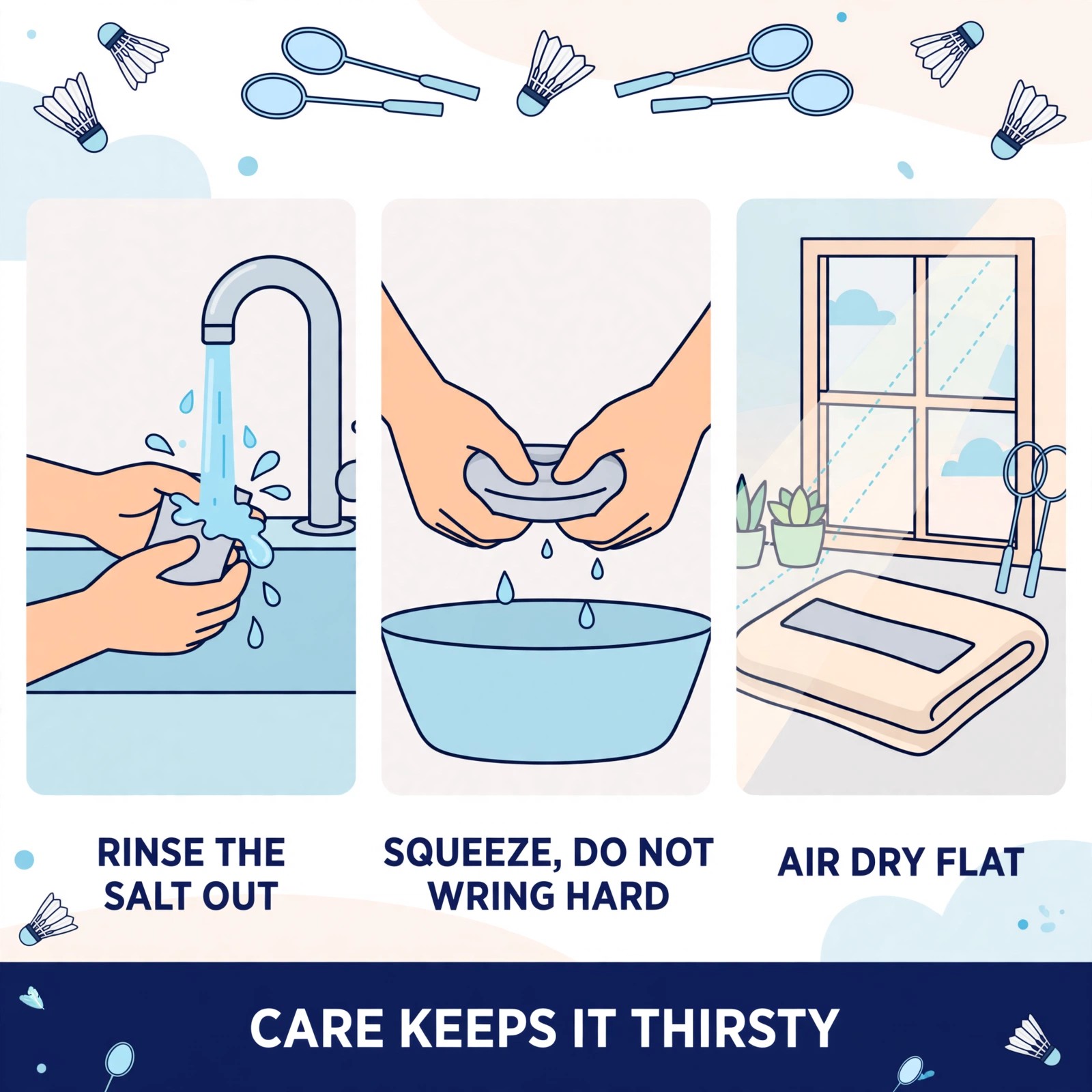
Washing is simple and quick. Rinse the band after sweaty sessions to get the salt out, wash it with mild soap when you do your sports laundry, squeeze it gently rather than wringing it hard, and let it air dry flat. Skip the sealed kit bag while it is damp: a band left wet in a bag comes out smelling of it, and the fibres suffer too. This small routine is the whole secret behind the bands that stay thirsty for a long time, and it costs less than replacing them early.
Replace a band when the signs line up: it slides down even when clean and dry, the edge has gone wavy, or it feels stiff and crusty after washing and never softens again. A short note helps more than memory. Write the month you bought it and how it fits now in your phone or a notebook, and check every few months. Players who log their kit stop guessing, and they notice the slow slide from snug to loose while there is still time to buy a spare calmly, not in a rush before a match.

Myth vs Reality
Myths About Badminton Arm Bands
Myth one: an arm band stops all sweat. It does not, and it is not meant to. It catches much of the flow running down the forearm, which is the part that reaches your grip. Your forehead will still sweat, your shirt will still get wet, and heavy sweaters will still want towel breaks. The band is one part of staying dry, the part guarding the road to your hand. Expect a drier grip, not a dry body, and the band will never disappoint you.
Myth two: tighter catches more. Squeezing the arm adds nothing to how much sweat the fabric can hold. The loops or knit do the drinking; the fit only keeps the band in place. Past snug, extra tightness buys you tingling fingers, early arm tiredness, and a band you want to tear off by the second game. Players who believe this myth often give up on arm bands entirely, blaming the idea when the real problem was a band one size too small worn far too tight.
Myth three: only professionals need one. Professionals in big arenas often play in strong air conditioning, while social players in warm local halls sweat far more. If your grip gets wet mid game, the band is for you, whatever your standard. Coaches see the same scene weekly: a keen social player blaming their smash, when the honest fault is a soaked grip and sweat running freely down the arm. A small band, worn high and washed often, fixes that scene more often than any new racket would.

Why Choose Us
Why Players Choose ST Badminton Academy
At ST Badminton Academy, small gear talk stays honest and short. Coaches do not sell arm bands, and there is no house product to push. Students bring whatever band, sleeve, or wristband they already own, and the coach checks the things that matter: where it sits on the arm, how it fits when the arm is working, and whether it is clean enough to still drink sweat. Most problems turn out to be position and washing, not shopping. That order, habits first and buying second, runs through all our gear advice.
Small groups make that kind of check possible. With a maximum of four students in a class, a coach actually sees your arm during play: the band that has slid to the wrist, the grip soaked through by the second game, the player squeezing the racket harder every rally. These details are easy to miss in a big group and easy to fix in a small one. A two minute adjustment, band higher, grip changed, towel routine set, can change how the rest of the session feels for that student.
We teach three habits that matter more than any single purchase. First, band on high before the warm up, every session, same spot. Second, towel at every break, so sweat never gets a long run at the arm. Third, a dry spare band in the bag, swapped in when the first one soaks through. Around those habits sit simple grip checks: feel the grip before each game, and change an overgrip before it turns shiny and slick. Players who build these habits stop thinking about sweat at all, which is the real goal.
FAQs: Badminton Arm Bands, Sweat, Fit and Washing in Malaysia (KL)
Arm band questions usually come down to position, fit, and washing, so the answers below cover where the band sits, how tight is right, which material suits your sweat, how long a band lasts, and the sweat habits our coaches teach in class.
How can I keep my racket grip dry during long badminton sessions if I live in Setapak or Gombak?
Yes. Warm halls around Setapak and Gombak make grip sweat a real problem, and an arm band worn high on the forearm is the simplest fix. Put it on before the warm up, keep a towel at the bench, and carry a dry spare for long sessions. Most players feel the difference in the first session.
Where should a badminton arm band sit on the arm when I train in KL?
High on the forearm, just below the elbow crease, above the widest part of the forearm so it stays put. That puts the band across the path sweat travels, early enough to catch the flow before your wrist and palm. In class our coaches check the spot, because a few centimetres lower can halve what the band catches.
How tight should an arm band feel when I play at a social or club level?
Firm, even contact all the way round, with full feeling in your fingers and no tingling or numbness. Test it with hard swings and a few jumps: the band should stay where you put it and then be forgotten. If your fingers feel strange, go one size up. Tightness adds nothing to how much sweat the fabric holds.
Is an arm band only for heavy sweaters, or can any player wear one at any level?
Any player, at any standard. Heavy sweaters get the most from a band and may use one every session. Lighter sweaters might only reach for it on hot days or during long matches when the grip starts to turn. If sweat reaches your hand and changes your grip, the band has a job to do for you.
What should I check before buying an arm band for badminton classes?
Check four things. Material: towelling for heavy sweat and long sessions, knit for a lighter feel and quick drying. Size: measure your forearm where the band will sit and match the maker size note. Fit: snug enough to stay up, never tight enough to tingle your fingers. Start with one band, then buy a spare once it suits you.
Do you offer badminton training and honest gear advice near Wangsa Maju?
Yes. Our base is in Setapak, close to Wangsa Maju, and gear advice is part of normal coaching, not a sales talk. Bring your racket and band to class and the coach will check position, fit, and grip condition while you play. We sell no bands, so the advice stays neutral: what you own is checked first.
Does ST Badminton Academy teach sweat and grip habits to players across Malaysia?
Yes. Sweat control is part of normal coaching at the academy, because a dry grip protects technique. Coaches cover where the band sits, towel routines at breaks, spare band habits, and when an overgrip needs changing. Students learn by doing, in small classes, with the coach watching real rallies rather than giving a lecture about equipment.
How long does a good arm band last with regular weekly training?
Many months of weekly training, and often past a year, if it is rinsed, washed gently, and air dried instead of living damp in a kit bag. The honest end of life sign is slipping: a clean, dry band that will not stay high on the forearm has done its work. A purchase note helps you spot the change early.
What sweat habits do the coaches at ST Badminton Academy teach for badminton?
The coaches teach sweat as a routine, not a shopping list. Band high before the warm up, towel at every break, a dry spare ready for long sessions, and a grip check before each game. In small classes the coach watches these habits during real play and corrects them on the spot, the same way footwork is corrected.
Badminton Arm Bands and Dry Grips in Action


One Standard for Every Arm Band and Every Player
One standard runs through every piece of gear advice at ST Badminton Academy: judge by the job, the fit, and the care, never by the logo. An arm band is a small tool with one clear job, catching sweat before it reaches your hand. Chosen by material, worn high, fitted snug, and washed often, it does that job quietly for months. That is the whole promise we make about it, and it is enough.
| Factor | Catching Sweat Early | Fighting a Wet Grip SWEAT |
|---|---|---|
| Frequency | 1 or 2 times a week. Mostly for fun and sweat. | Squeezing harder every rally as the grip soaks through. |
| Drills Focus | Basic static feeding. Minimal footwork pressure. | A band worn high that catches the flow before the hand. |
| Physical Conditioning | Rarely included. Just playing games on court. | Core, agility, and speed training included in every session to prevent injury and build stamina. |
| Tactical Awareness | "Just hit it over." No real game plan. | Video analysis, point construction, and learning to read the opponent's game. |
| Coach Ratio | Large groups (8-10 kids). Coach barely watches you. | Max 4 students. Mr Eric Chuar personally corrects every stroke and movement detail. |
| Goal Setting | Fun and exercise. | Blaming the racket while sweat runs freely down the arm. |
| Long Term Result | Good recreational player. | A player whose grip feels the same in game three as in game one. |
Badminton Coaching and Honest Gear Advice in Kuala Lumpur
An arm band will not fix a weak backhand, and it is not supposed to. What it fixes is the slow slide from a dry, trusted grip to a wet, twisting one as the games add up. Catch the sweat high on the forearm, pick towelling or knit by how much you sweat, fit it snug and never strangling, wash it, rotate a spare, and replace it when it slips. Small habits, honestly kept, keep your hand dry and your shots steady from the first rally to the last.






