How To Find A Badminton Club Or Badminton Academy Near You (Club Search Guide)
Moving to a new area, starting the sport, or outgrowing casual games all lead to the same question: where should I actually play? A badminton club or academy shapes your game more than any racket you can buy, because it decides who corrects you, who you rally against and how often you play. The search itself is easy. Maps, social groups and sports centres will give you a list in minutes. Judging the names on that list is the real skill. This guide shows you how to search, how to shortlist, what to watch on a visit, and which red flags should send you somewhere else.
Club Check #1
Start the Search: Maps, Groups and Sports Centres
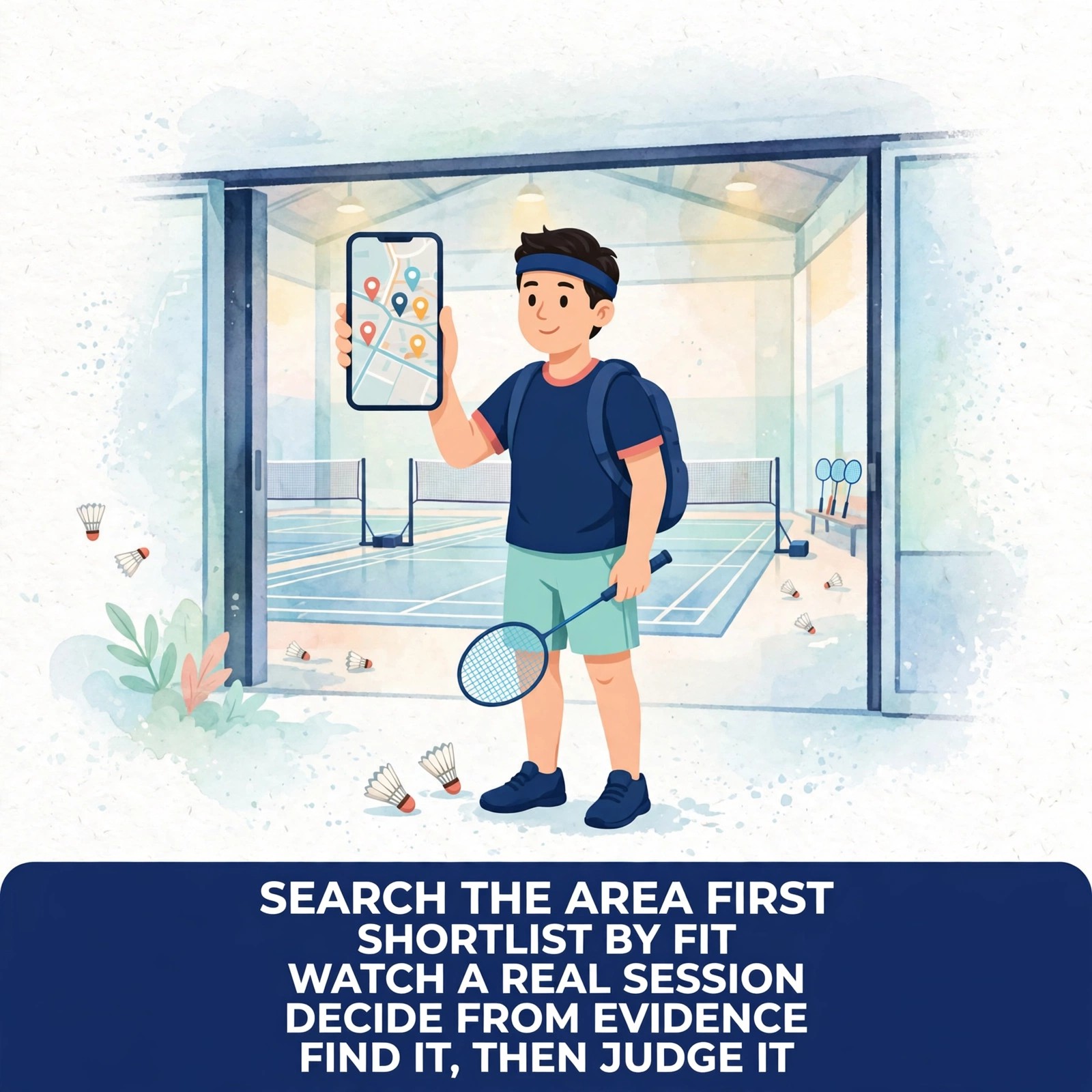
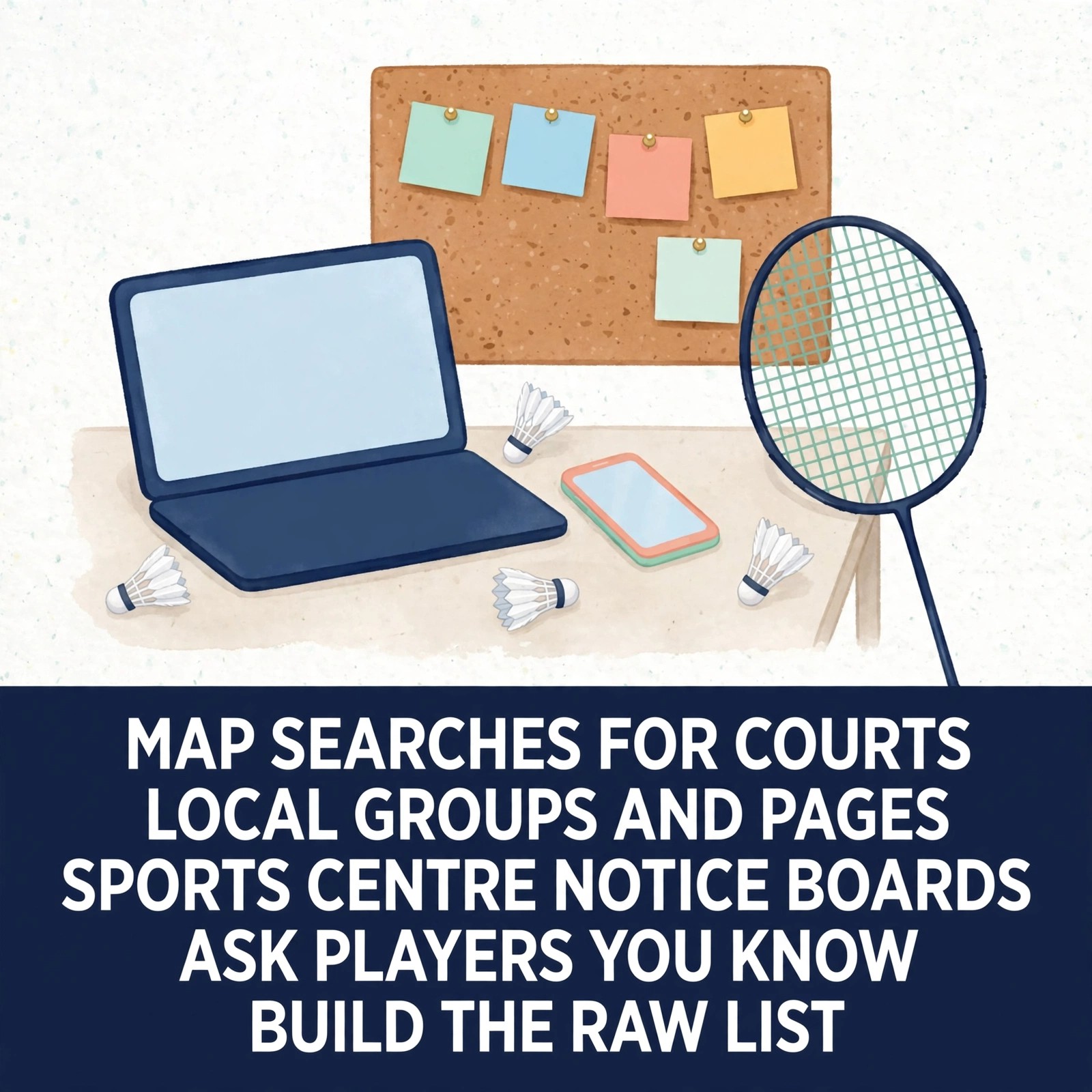
Begin online. Map searches for badminton courts and academies near you will surface halls, sports centres and school gyms that host clubs. Social media groups for your town or neighbourhood often carry club nights, open sessions and academy announcements that never reach a website. Community boards at sports centres are worth a photograph too, because smaller clubs still recruit the offline way.
Ask players as well. Anyone you have rallied with at a public court can tell you which clubs welcome newcomers and which are closed circles. Racket shops hear the same talk. The goal of this stage is not to choose. It is to build a raw list of every realistic option within a travel distance you will honestly keep up on a tired weekday evening.
Club Check #2
Build a Shortlist: Match the Club to Your Level
Turn the raw list into a shortlist by fit. First decide what you are looking for. Social clubs offer games, rotating partners and a friendly night out. Academies offer coached sessions, a plan and correction. Leagues offer regular competitive matches. Many players need a mix, but knowing your main goal stops you judging a social club by academy standards, or the other way round.
Next match the level. A beginner joining a strong league night spends the evening fetching shuttles and apologising. A strong player in a gentle social group gets bored and drifts away. Ask how the club grades or splits its players, and be honest about your own standard. The right room is one where your rallies last and your mistakes get seen.
Finally check the practical fit. Session times you can reach after work or school, a venue you can get to in bad traffic, and a group that meets often enough to matter. A perfect club that you attend twice a year helps less than a good club you reach every week. Shortlist two or three names and visit each one before deciding.

Club Check #3
Judge the Session: Watch a Real Class First
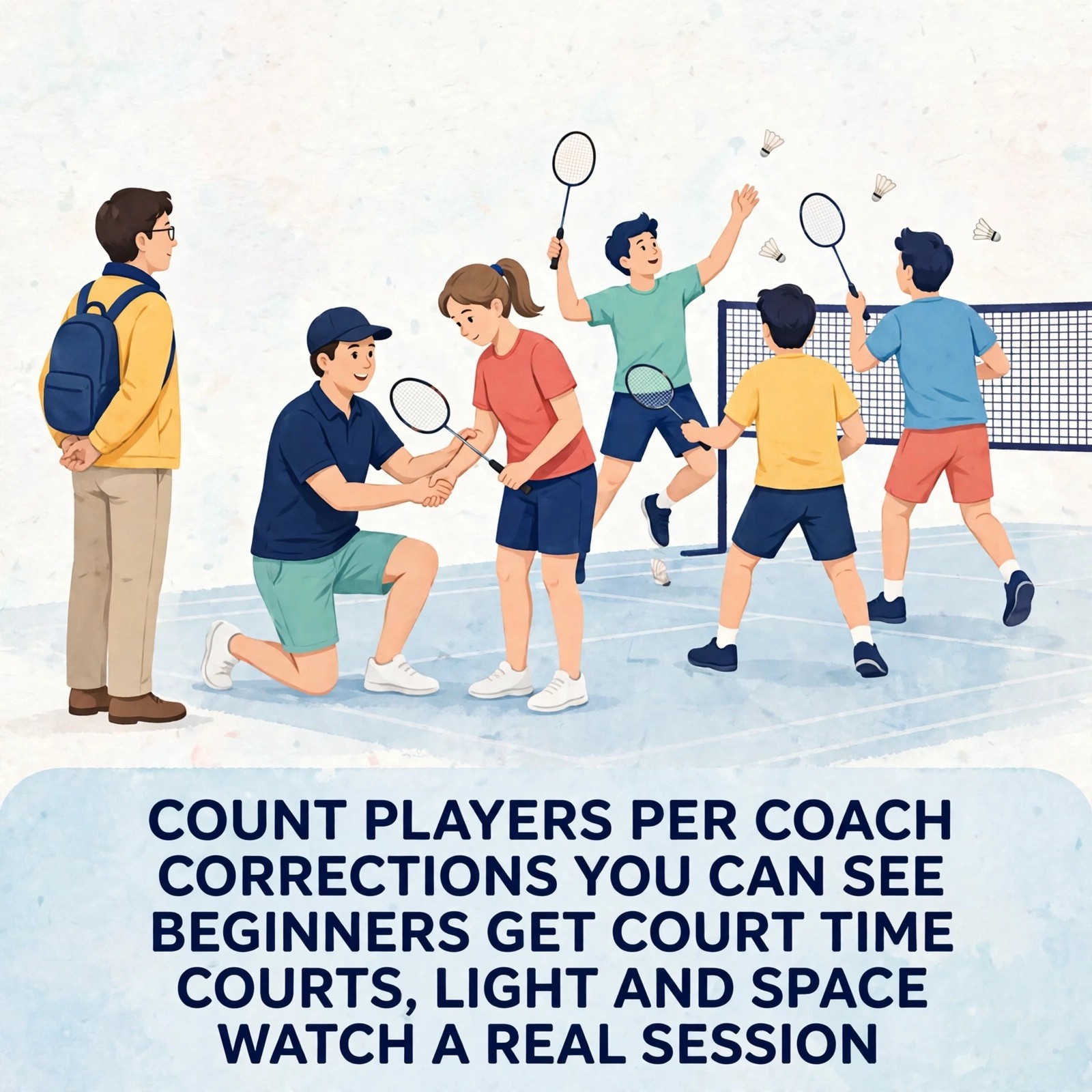
Visit before you join, and watch a real session rather than a sales talk. Start with the simplest number on court: how many players share one coach. A coach correcting a group of four sees every fault. A coach standing in front of thirty players is running crowd control, and your technique will wait months for attention.
Watch what the coach actually does. Good coaching corrects: a grip adjusted here, a footwork path shown there, feedback given while the rally memory is fresh. If the session is only feeding and games, with nobody told what to change, improvement will be slow no matter how nice the hall looks. Watch also whether beginners get time, or whether the strongest players take every court.
Check the playing conditions with your feet and eyes. The surface should grip without grabbing, the lighting should let you see a fast shuttle against the ceiling, and there should be safe space behind the back lines for lunges and jump landings. Feather or good quality shuttles for match play tell you the club takes the game seriously.
Club Check #4
Ask Before You Join: Questions That Reveal Quality
Questions reveal what a visit cannot. Ask if you can take a trial session before any longer commitment, and play your normal game in it. Ask who coaches your group each week, not who owns the academy or whose photo is on the wall. The famous name may never meet beginners. Your coach is the person standing on your court.
Ask how groups are split and how you move between them. A healthy club can explain its levels and what progress looks like. Ask what happens when you miss a week, whether sessions run on public holidays, and how fees are charged, in plain terms, before you start. Honest clubs answer these questions easily because they hear them every week.
Ask one or two members as well. How long have they stayed? Do beginners get corrected or left alone? Would they join again? Members have no script, and their answers line up with what you watched. If the answers and the session tell the same story, you have found a club worth trialling properly.

Club Check #5
Red Flags: When to Walk Away
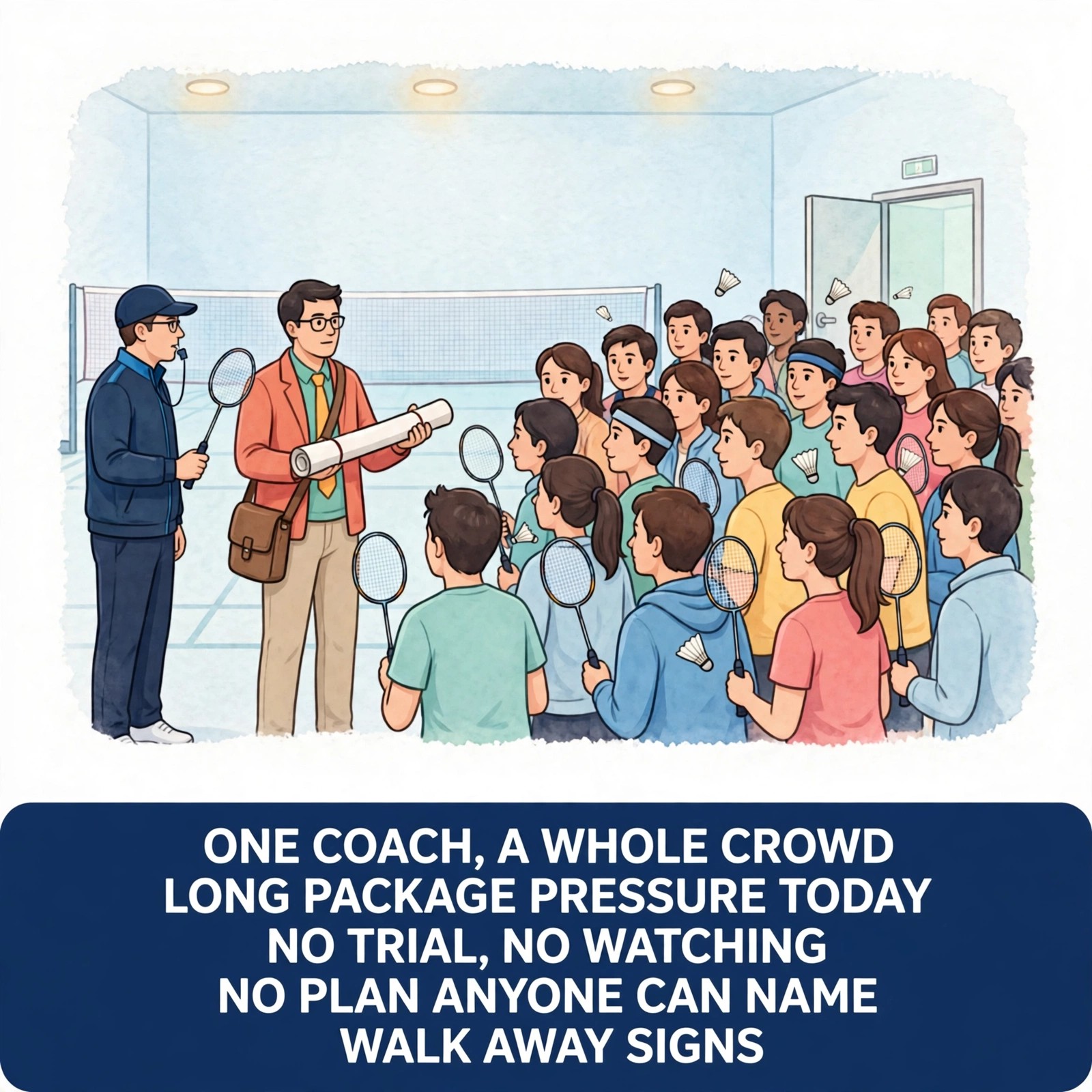
Some signs should end the visit early. Pressure to sign a long package on your first night, with the discount ending today, is a sales tactic, not coaching. A club that refuses any trial or observation before payment is asking you to buy blind. Walk away politely and keep your options open.
On court, the clearest red flag is one coach in charge of a very large group, with no assistant and no corrections happening. Add worn or slippery courts, broken lighting, and sessions that start late and finish early as a habit. Each one alone might be forgiven once. Together they describe a club that takes fees more seriously than players.
The quieter red flag is a missing plan. If nobody can say what a beginner works on this month, or how a player improves here, training is probably just supervised games. Supervised games are fine as social badminton, as long as they are priced and promised as that. Pay for coaching only where coaching clearly happens.
Myth vs Reality
Myths About Finding a Good Club
Myth: the biggest club is the best club. Reality: size mostly decides how many courts and strangers there are. Your improvement depends on group size, coaching attention and level fit, and small clubs often win on all three. Judge the session you will actually attend, not the brand on the building.
Myth: a famous coach name means you will be coached by that coach. Reality: well known names often run the top group, teach teachers, or appear mainly in photos. Always ask who stands on your court each week. That person, their eye and their patience, is the coaching you are buying.
Myth: the cheapest option is the best value. Reality: value is what changes in your game per month, not the lowest fee. A slightly higher fee for a group of four with real correction usually buys more progress than cheap sessions in a crowd where nobody ever fixes your grip.

Why Choose Us
Why Players Choose ST Badminton Academy
We do not just feed shuttles; we build players. ST Badminton Academy Malaysia is led by head coach Mr Eric Chuar, who has over 15 years of coaching experience in Singapore and Malaysia and still coaches groups personally. When you visit us, the trial is a real session, and the coaching you see is the coaching you get.
Our small group policy, with a maximum of 4 students, is the standard we invite you to judge us by. Ask who coaches your group and the answer is the coach himself. Ask how levels are split and we will show you. We would rather be checked carefully and chosen on evidence than joined on a promise.
We focus on long term player development for adults and juniors across Kuala Lumpur and nearby areas. Whether you arrive from a social club, a school team or complete beginner lessons elsewhere, the first job is placing you at the right level in the right group, then building from there with honest, checked progress.
FAQs: Finding a Badminton Club or Academy in Malaysia (KL)
Here are answers to common questions from players in Kuala Lumpur about finding a badminton club or academy, judging a session, and how trials at ST Badminton Academy work.
Can a complete beginner join a badminton academy in Setapak or Gombak?
Yes, as long as the club or academy runs a group at your level. Tell them honestly that you are a beginner and ask to trial that group. A good academy expects new players, places them carefully, and corrects the basics early, when habits are cheapest to build and easiest to fix.
What should I check first when choosing a badminton club in KL?
Check the coaching before the price. Count the players per coach, watch whether anyone gets corrected, and ask who teaches your group each week. Fees vary widely between clubs, so ask for them in plain terms once the coaching passes your check. Cheap sessions with no correction are rarely a bargain.
How many players should share one coach at club level?
For coached sessions, four players per coach is a strong standard, and six is a workable maximum for simple drills. Beyond that, correction thins out fast. Social game nights can run bigger because nobody is being taught. If you are paying for coaching, count the group before you count the discount.
I found a club online. Should I pay for a long package straight away or trial first?
Trial first, every time. One real session tells you the level, the coaching and the feel of the group, and it protects you from paying months ahead for a poor fit. Any honest club welcomes a trial or at least an observation visit. Pressure to commit long term on day one is a red flag.
How can I judge a club if I have just moved to a new area?
Use the same checklist a local would use. Search online, visit two or three clubs, watch real sessions, count group sizes and ask members how long they have stayed. Locals judge by reputation; you can judge by evidence. A week of visits gives you a clearer picture than months of guessing.
Do you run badminton classes for adults and juniors near Wangsa Maju?
Yes. ST Badminton Academy is based in Setapak, a short drive from Wangsa Maju, Melati Utama and Danau Kota, and runs small group classes for adults and juniors. Groups are capped at four students, and the head coach teaches personally, so a trial visit shows you exactly the coaching on offer.
Where does ST Badminton Academy run badminton training in Malaysia?
We are based in Setapak, Kuala Lumpur, with players coming from Gombak, Sentul, Ampang and nearby areas. If you are comparing academies, judge us by the same checklist in this guide: watch a session, count the group, ask your questions, then decide from evidence rather than from our advertising.
How do I book a trial session to visit the academy before joining training?
Message us on WhatsApp and tell us your level and what you are looking for: social games, coaching, or junior classes. We will place you in a suitable small group session so you can judge the coaching, the level and the feel for yourself before deciding anything longer term.
What makes Mr Eric Chuar a suitable coach for new players joining club badminton?
Mr Eric Chuar has coached in Singapore and Malaysia for over 15 years and still teaches groups personally, including beginners. New players get their grip, footwork and basics corrected from the first sessions, in groups of no more than four. That is the coaching standard this guide tells you to look for.
Badminton Club Training in Action



One Standard for Every Session and Every Player
Finding the right club at ST Badminton Academy KL follows one standard: be judged by evidence. Our groups hold a maximum of 4 students, the head coach teaches personally, and trials are real sessions. We invite the same checks this guide describes, because a club that welcomes checking is usually a club worth joining.
| Factor | Joining Blind | Checking First CLUB |
|---|---|---|
| Frequency | 1 or 2 times a week. Mostly for fun and sweat. | The club is visited and watched first: group size, coaching corrections and court condition. |
| Drills Focus | Basic static feeding. Minimal footwork pressure. | A trial session comes before any long commitment, so the fit is tested with your own game. |
| Physical Conditioning | Rarely included. Just playing games on court. | Core, agility, and speed training included in every session to prevent injury and build stamina. |
| Tactical Awareness | "Just hit it over." No real game plan. | Video analysis, point construction, and learning to read the opponent's game. |
| Coach Ratio | Large groups (8-10 kids). Coach barely watches you. | Max 4 students. Mr Eric Chuar personally corrects every stroke and movement detail. |
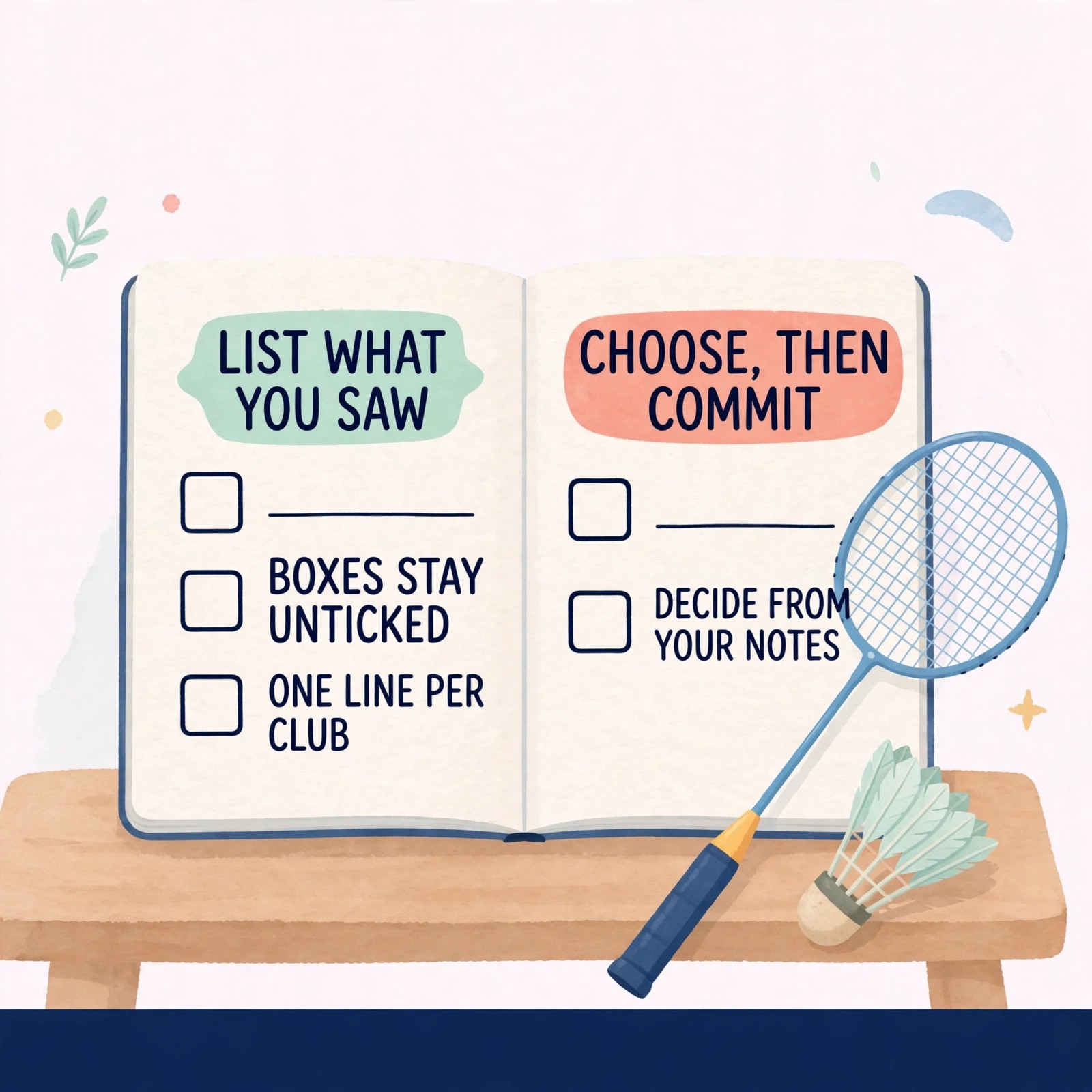
| Goal Setting | Fun and exercise. | Questions are asked and compared across two or three clubs, with notes taken at each visit. |
| Long Term Result | Good recreational player. | A player in the right club: coached in a small group, at the right level, keen for every session. |
Badminton Academy Training in Kuala Lumpur
This guide gives you the full method: search widely, shortlist by fit, watch a real session, ask direct questions and walk away from red flags. If you are looking around Setapak and Kuala Lumpur, come and put ST Badminton Academy through the same test. Message us to book a trial session.






