Boost Your Badminton Performance With Fitness & Conditioning (Fitness Guide)
Badminton looks gentle from the seats. On court it is a repeat-sprint sport: a short, violent rally, a few seconds of rest, then another one, for an hour or more. Players do not lose long matches because their shots disappear. They lose because their legs stop arriving on time, and the shots break down with them.
This guide explains the fitness and conditioning that actually boost badminton performance: interval work that copies rallies, leg strength and jumping power, a strong core, flexible joints, honest food and sleep, and the warm-up and cool-down habits that keep you playing. It is the same approach we use at ST Badminton Academy in Setapak, Kuala Lumpur.
Fitness Check #1
Why Does Court Fitness Change Your Game?
Badminton fitness is specific. A player must lunge deep and recover, change direction in a step, jump and land balanced, and do it again twenty seconds later, then stay calm enough to play a soft net shot with a pounding heart. Steady jogging builds a base, but it does not train any of that. Conditioning for badminton has to look like badminton: short hard efforts, short rests, lots of direction changes.
The good news is that court fitness responds fast. Students who add two short conditioning blocks a week to their classes usually feel the change inside a month: rallies hold together longer, the backhand corner stops being an emergency, and the third game stops feeling like a different sport. Your technique does not change, it just survives longer, which is the same thing in a match.

Fitness Check #2
How Do Intervals Build Real Match Endurance?
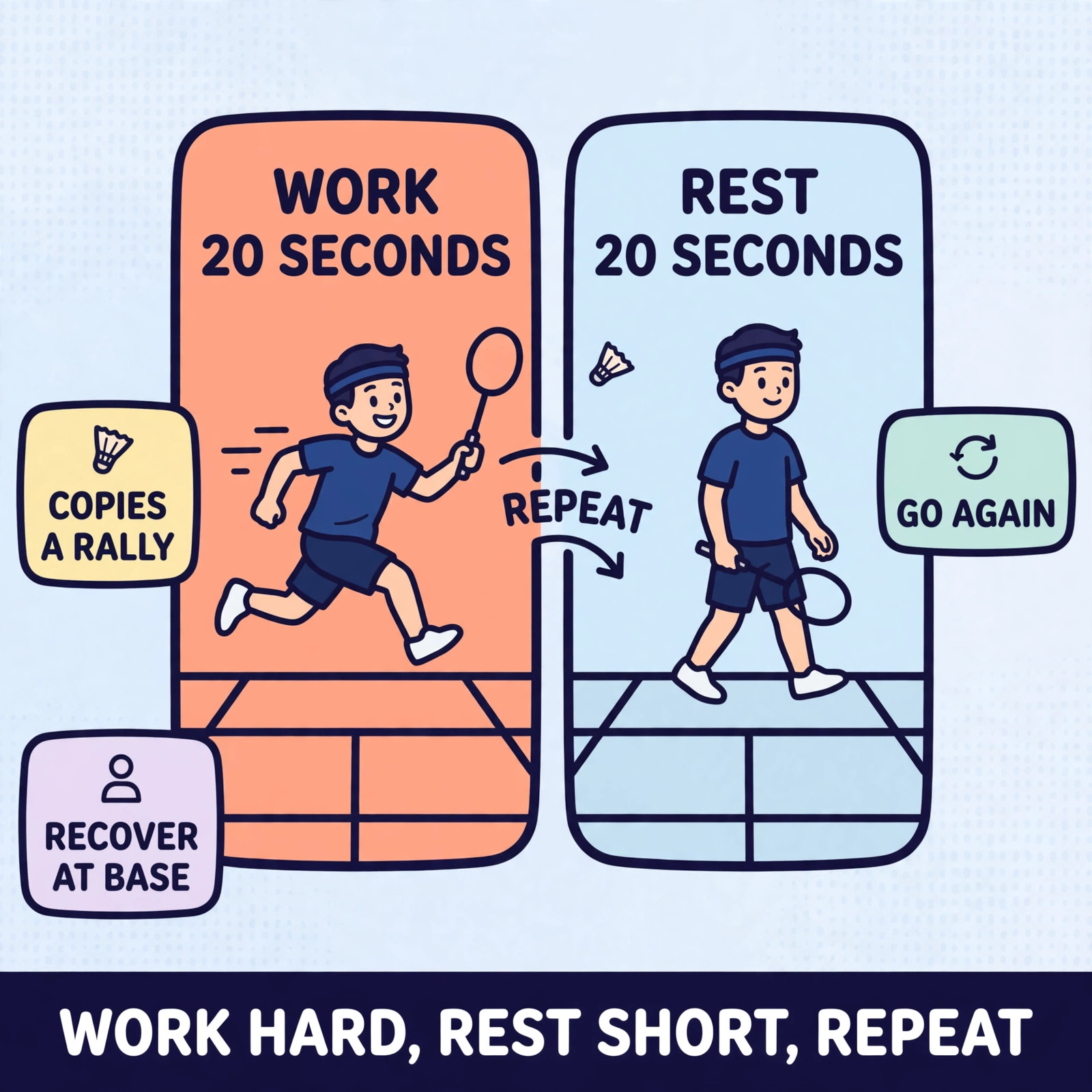
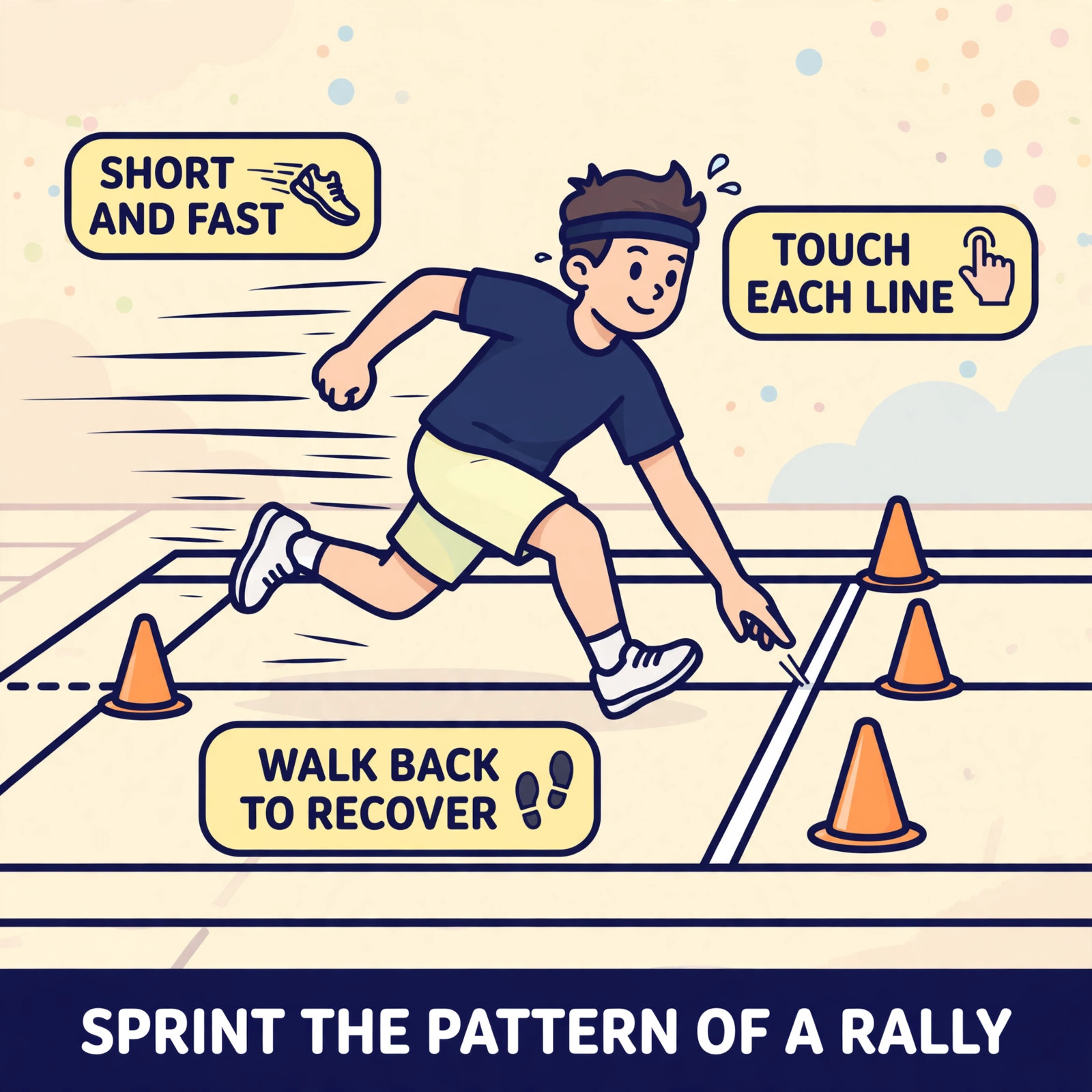
Interval training is the engine of badminton conditioning because it copies the shape of a rally. Work hard for ten to thirty seconds, a shuttle run, a set of six-corner footwork, a hard multi-shuttle feed, then rest for a similar short period, and repeat. That work-rest rhythm trains the body to produce power, recover quickly while walking back to base, and go again.
Build it honestly. Start with efforts you can finish with good form: six to eight rounds of short footwork intervals at a strong but controlled pace. As the weeks pass, the rests feel shorter because your recovery improves, that is the fitness arriving. Court sprints and changing-direction runs belong here too, on a proper court surface in proper court shoes, never on slippery floors.
Keep some steady cardio in the week as well, an easy run, cycling or swimming at a pace where you can still talk. It builds the base that everything else stands on and helps you recover between hard days. But it is the base, not the building: a player who only jogs slowly will be fit for jogging and still gasp in the third game.
Fitness Check #3
How Does Strength Build Real Smash Power?
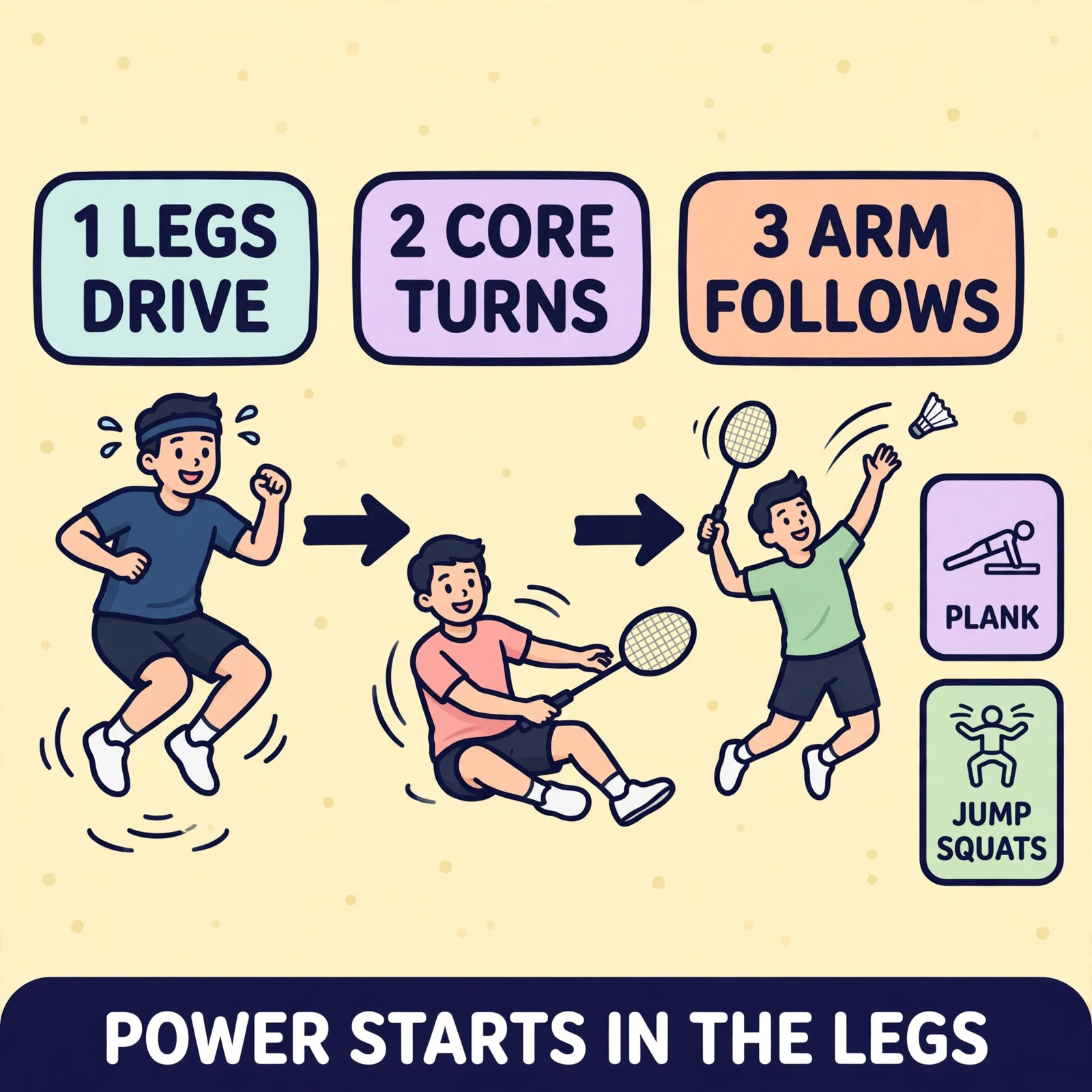
Smash power and lunge strength come from the legs and the middle of the body, not from the arm. Squats and lunges, bodyweight first, load later, build the legs that drive you out of the corners and back to base. Split squats and single-leg work matter because badminton is played one leg at a time, deep in a lunge, far more often than on two feet.
Jumping work, called plyometrics, turns that strength into speed: jump squats, small box jumps and landing practice teach the legs to produce force quickly and land without wobbling. Keep the volume low and the landings clean, knees tracking over toes, soft and quiet. Tired, sloppy jumping teaches injuries, not power, so this work belongs early in a session, not at the end.
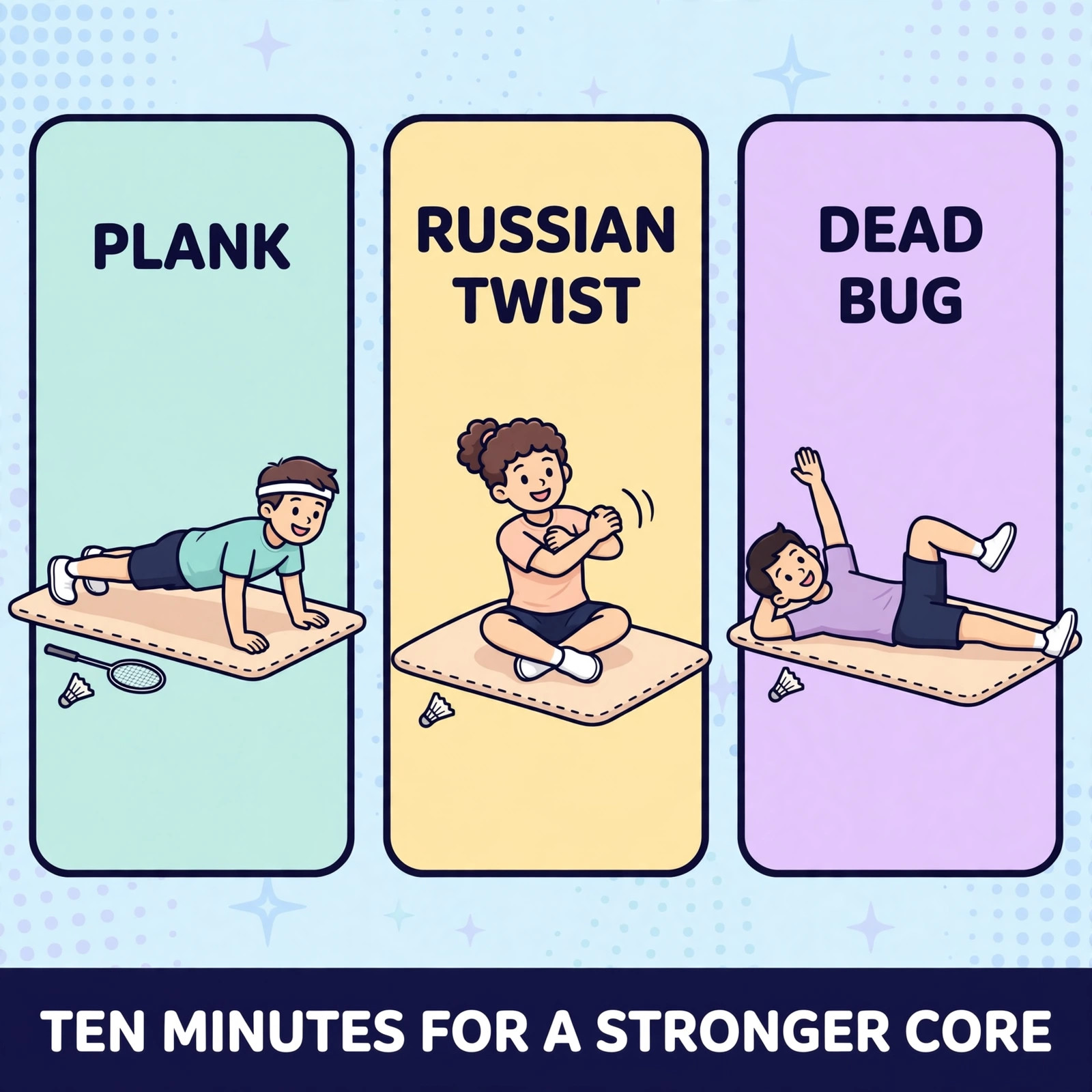
The core ties it together. Every smash is a chain: legs drive, hips and trunk turn, the arm follows. Planks, side planks, Russian twists and dead bugs build the trunk that transfers that power and protects your back when you twist under pressure. Ten honest minutes, two or three times a week, is enough for most class players to feel the difference in their overhead shots.
Fitness Check #4
How Does Flexibility Keep Your Joints Safe?
Flexibility in badminton is working range, not party tricks. You need ankles and hips that allow a deep lunge, a shoulder that reaches high and back for clears, and a trunk that can twist without complaint. Mobility work, controlled movements through the range you actually use, keeps those joints available as training loads rise.
Timing matters more than the stretches themselves. Before play, warm up dynamically: light jogging, side steps, lunges that grow deeper, arm circles and leg swings, finishing with a few shadow swings. Save long static stretches for after the session, when muscles are warm, stretching cold muscles hard before a game is an old habit that does players no favours.
Foam rollers and a simple massage ball help release the tight spots that training creates, calves, thighs, glutes, upper back. A few minutes after sessions, on the areas that feel loaded, keeps small tightness from becoming the ache that changes how you move. Mobility is maintenance: boring, brief and done often.

Fuel and Rest
What Should Players Eat and How Should They Rest?
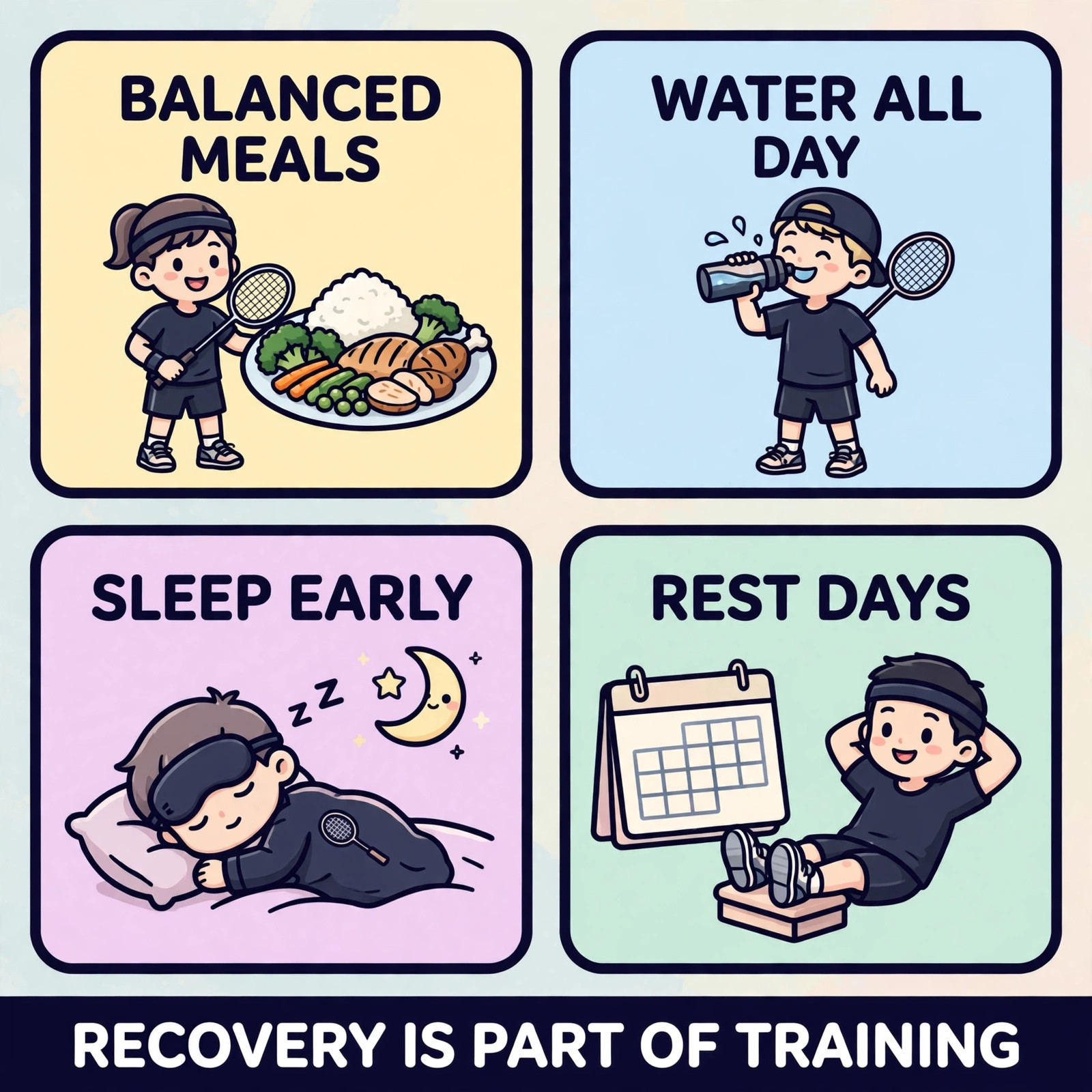
Food for badminton is ordinary good sense, not a supplement catalogue. Eat balanced meals with enough carbohydrate to fuel training, protein across the day to rebuild muscle, and plenty of vegetables and fruit. Eat a normal meal two to three hours before a hard session; a small snack closer to start time is fine if you are hungry. In Malaysia’s heat, hydration is half the programme: drink water before, during and after play, and take the session seriously when you have barely drunk all day.
Sleep is the cheapest performance tool there is. Muscles rebuild and skills settle during sleep, and a player who sleeps badly trains badly the next day no matter what the plan says. School, work and family make perfect sleep rare, so guard what you can: a regular bedtime, screens down before bed, and no heavy late-night training right before important match days.
Recovery also means easy days. Soreness after a hard session is normal; sharp joint pain is not, stop, rest it, and get it checked if it does not settle. Rest days are when the body actually banks the fitness you trained for, so a week with no rest day is a week half wasted. Stretch gently, walk, eat and sleep: that is a recovery day, and it is part of training, not a break from it.
Myth vs Reality
Myths About Badminton Fitness
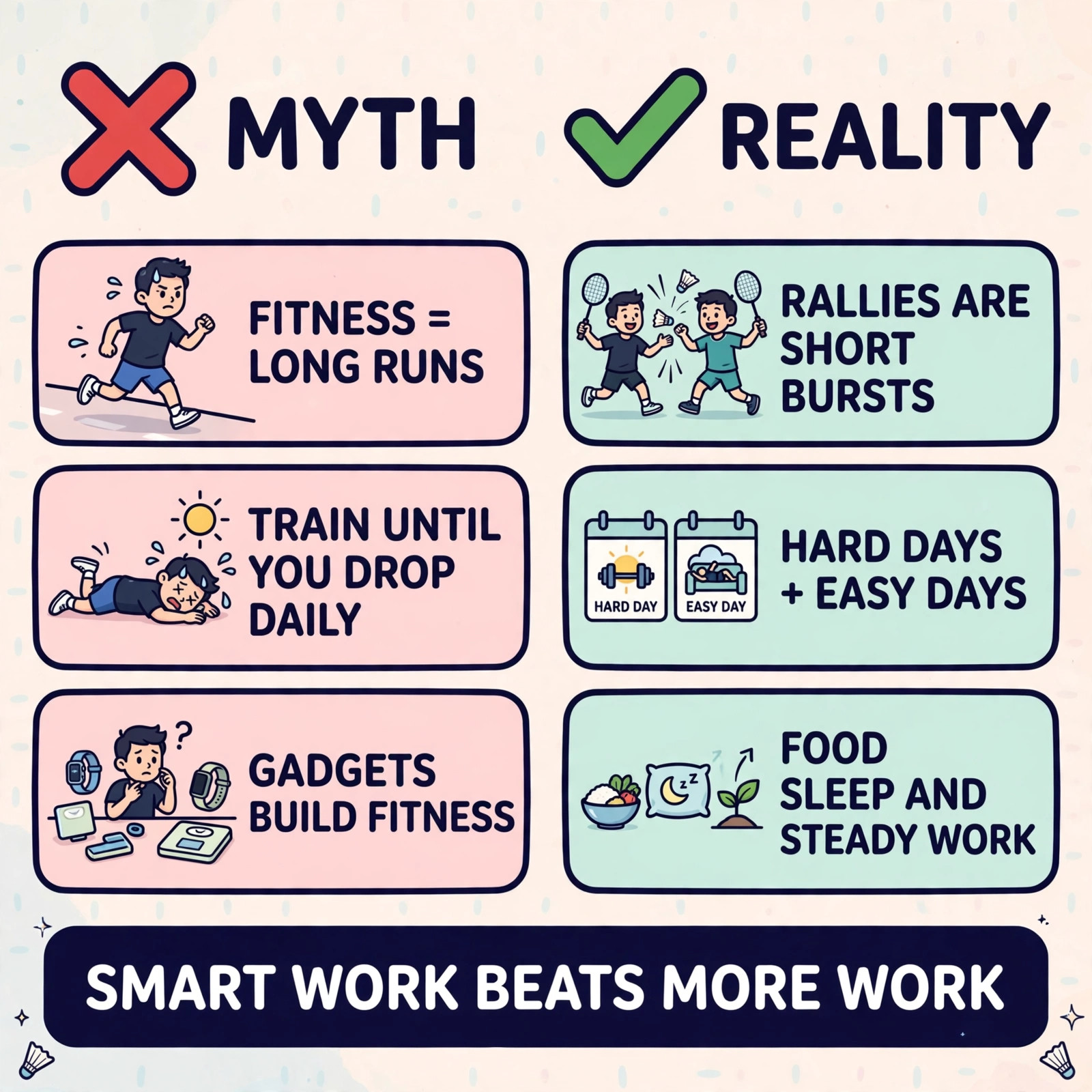
Myth: “Badminton fitness means running long distances.” Reality: distance running builds a base, but matches are won in repeated short bursts. A player who only jogs will still fade in the third game, intervals that copy rallies are what change match fitness.
Myth: “A good session is one that destroys you.” Reality: training to collapse every day leaves nothing for technique work and invites injury; the best weeks mix hard days, moderate days and rest. Myth: “Stretch hard before playing to prevent injuries.” Reality: cold, hard static stretching before play does not prepare muscles, a dynamic warm-up does. Save the long stretches for afterwards.
Myth: “Supplements, ice baths and gadgets are where fitness comes from.” Reality: fitness comes from the unglamorous four, train in rally patterns, eat normal balanced food, sleep properly and repeat for months. Extras can sit on top of those habits, but they cannot replace a single one of them.
Why Choose Us
How Conditioning Fits Our Coaching Sessions
At ST Badminton Academy KL, conditioning is built into classes rather than bolted on. Warm-ups are dynamic, footwork blocks double as interval training, and cool-downs are part of the session, not an optional extra. Groups are capped at max 4 students, so the coach sees who is moving well and who is surviving on willpower, and adjusts the load on the spot.
Mr Eric Chuar has over 15 years of coaching experience in Singapore and Malaysia. His rule for fitness is simple: conditioning must serve the shots. Every exercise in his sessions exists because it makes a lunge safer, a rally longer or a smash heavier, and he will happily explain which one, if you ask.
Our academy is based in Setapak, Kuala Lumpur, convenient for players from Wangsa Maju, Melati Utama, Danau Kota and Gombak. If your games keep slipping away in the third set, tell us honestly how you train now, we will show you how fitness work fits inside real badminton classes, without a gym membership or a miracle plan.
FAQs: Badminton Fitness and Conditioning in Malaysia (KL)
These are the questions players and parents ask us most about badminton fitness and conditioning in Kuala Lumpur. If your question is not here, message us, tell us your level and how your matches usually end, and we will give you a straight answer about the fitness work that would help you most.
How does fitness training help my badminton if I live in Setapak or Gombak?
It helps in the ways you feel late in matches: you reach the back corners without stumbling, recover to base faster, and keep technique together in the third game. Students around Setapak and Gombak notice it first in rallies that used to break down, the shots were always there; now the legs arrive in time.
What fitness matters most for badminton players in KL?
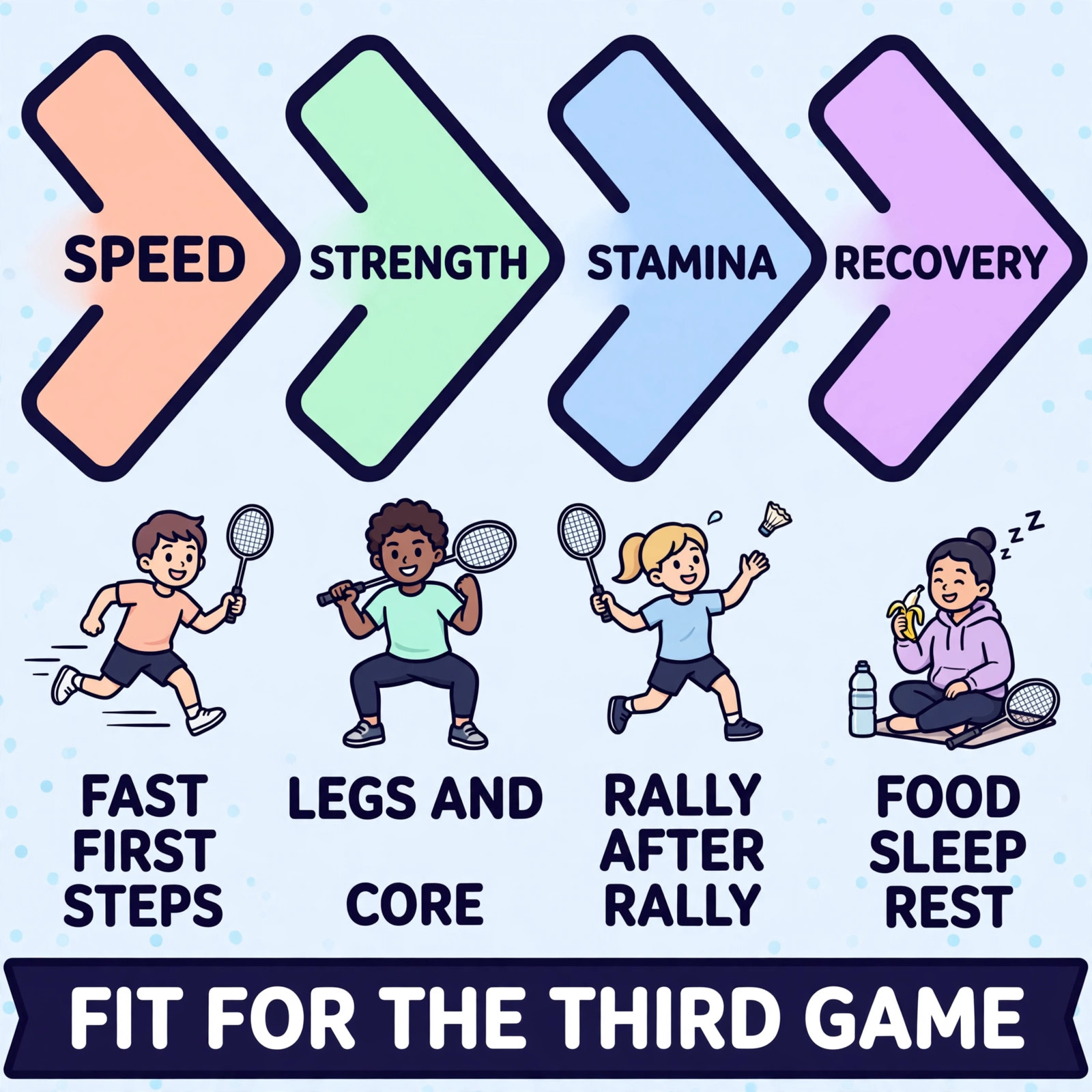
Four things, in this order: interval fitness that copies rally patterns, leg strength for lunges and recovery, jumping power for smashes and fast first steps, and a core that links them together. Flexibility and recovery sit underneath all four. A player in KL who trains those, in badminton shapes, gets fitter for badminton, not just fitter in general.
How many conditioning sessions a week suit a player at club level?
For most players, two short conditioning blocks a week alongside classes is enough to move match fitness within a month or two. The blocks can live inside footwork and feeding drills, so no extra gym days are needed. More is not automatically better: steady, repeatable work at club level beats one heroic session followed by a week of soreness.
Can a junior start fitness work safely when he or she is 13 or 14?
Yes, with the right load and supervision. Bodyweight strength work, landing practice and intervals suit teenagers well when the volume is sensible, the form is coached and rest days are kept. Growing bodies should skip maximal heavy lifting; the gains at thirteen or fourteen come from movement quality and consistency, not from chasing the heaviest weight in the room.
How should players warm up before tournaments they enter?
Warm up the way the game will move you: a few minutes of light jogging and side steps, lunges that deepen gradually, arm circles and leg swings, then shadow swings and a few easy rallies. Ten honest minutes, building in intensity. That prepares muscles and joints far better than standing still and pulling on cold legs.
Do you build fitness and conditioning into classes near Wangsa Maju?
Yes. Conditioning sits inside our classes at the Setapak academy, a short drive from Wangsa Maju, Melati Utama and Danau Kota: dynamic warm-ups, footwork intervals, feeding under controlled fatigue and proper cool-downs. You do not need a separate gym programme to get badminton-fit, you need sessions built the right way, with a coach watching the load.
Does your academy include conditioning work in Malaysia?
Yes, fitness and conditioning are built into ST Badminton Academy classes in Malaysia: rally-shaped intervals, leg and core strength, jump work and mobility, all inside normal sessions. Parents of juniors see it in longer rallies and fewer breakdowns; adult students feel it in third games that finally stay competitive instead of slipping away.
Where is ST Badminton Academy KL located for fitness-based training?
ST Badminton Academy KL is based in Setapak, Kuala Lumpur, where our fitness-based training runs in small groups of max 4 students. The academy is convenient for players from Wangsa Maju, Melati Utama, Danau Kota and Gombak. Message us before your first session and we will confirm the venue details and what your first month of work would look like.
What makes Mr Eric Chuar a suitable coach for conditioning in badminton?
Mr Eric Chuar has over 15 years of coaching experience in Singapore and Malaysia, and conditioning is one of his trademarks: every exercise must serve a shot, a lunge or a rally. He watches how students move when they are tired, that is when coaching matters most, and builds fitness work around what he sees.
Badminton Fitness and Conditioning in Action

What It Takes to Get Match Fit
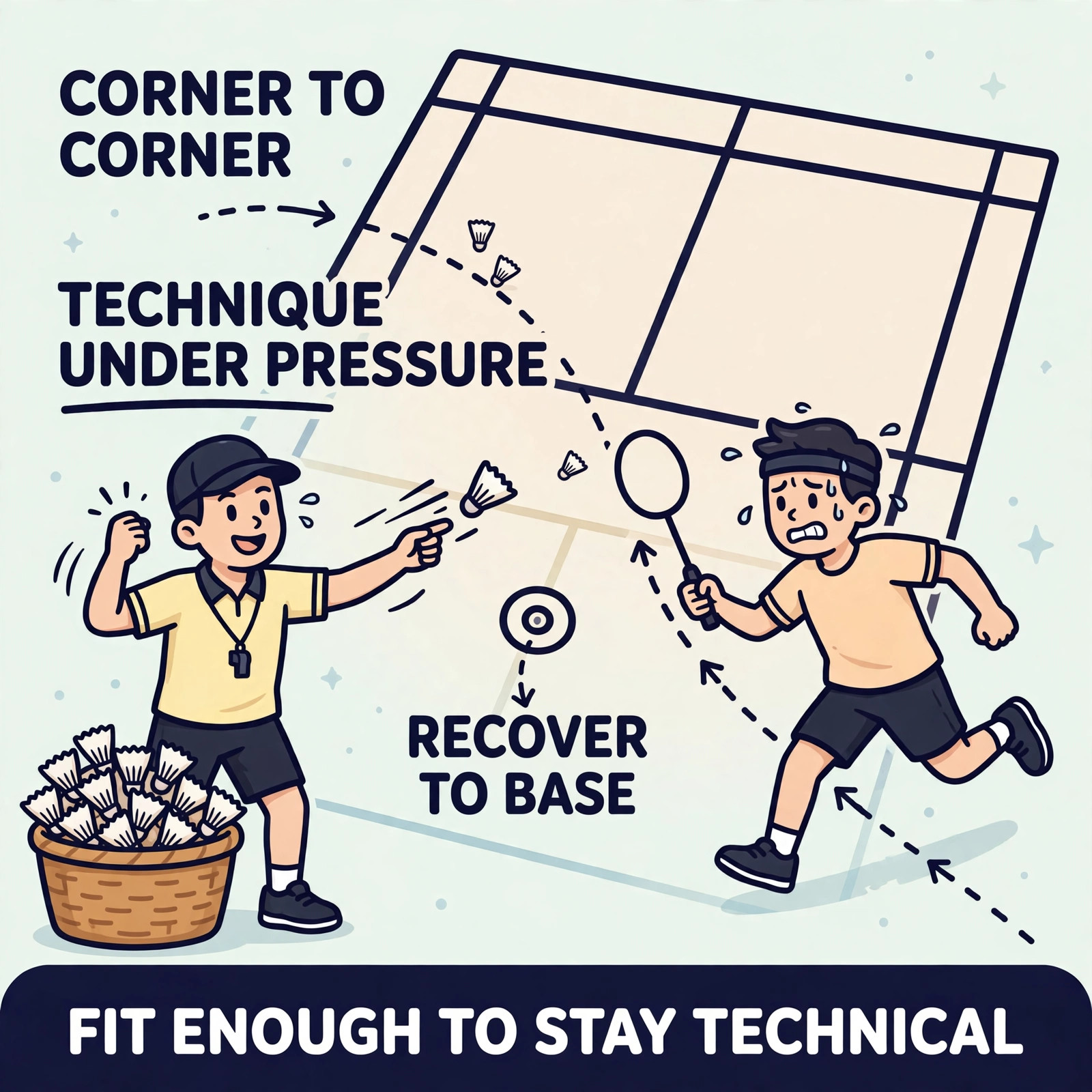
A student meets our fitness standard when the game stops breaking down late: footwork still reaches all six corners in the third game, landings stay balanced under pressure, the smash keeps its shape when tired, and warm-ups and cool-downs happen without being reminded. Our fitness standards below are the checkpoints our coaches use to judge conditioning honestly.
| Factor | Random Workouts | Badminton-Shape Training FIT |
|---|---|---|
| Frequency | 1 or 2 times a week. Mostly for fun and sweat. | Intervals that copy rally patterns: short hard efforts with short rests. |
| Drills Focus | Basic static feeding. Minimal footwork pressure. | Leg strength, jumps and core work that feed the smash and the lunge. |
| Physical Conditioning | Rarely included. Just playing games on court. | Core, agility, and speed training included in every session to prevent injury and build stamina. |
| Tactical Awareness | "Just hit it over." No real game plan. | Video analysis, point construction, and learning to read the opponent's game. |
| Coach Ratio | Large groups (8-10 kids). Coach barely watches you. | Max 4 students. Mr Eric Chuar personally corrects every stroke and movement detail. |
| Goal Setting | Fun and exercise. | Dynamic warm-ups before play and slow stretching after, every session. |
| Long Term Result | Good recreational player. | A player still moving fast and thinking clearly in the third game. |
Badminton Fitness and Conditioning in Kuala Lumpur
This page covered badminton fitness and conditioning: rally-shaped intervals, leg strength, jumping power, core work, mobility, food, sleep and recovery. ST Badminton Academy KL builds all of it into small group classes of max 4 students in Setapak. If you are in Wangsa Maju, Gombak, Cheras or nearby, contact us today.






