5 Common Badminton Mistakes And How To Fix Them (Mistake Fix Guide)
Every player has a shot they blame: the smash that misses, the net shot that clips the tape. Watch closely, though, and the point was usually lost earlier, by a habit so familiar the player no longer notices it. This page covers the five mistakes we correct most often in club and school players: the frying pan grip, standing flat between shots, clearing to the middle, watching your own shot, and rushing the serve. Each one is common, each one is fixable, and each fix comes with a simple drill you can start this week.

Mistake Check #1
Mistake 1: The Frying Pan Grip
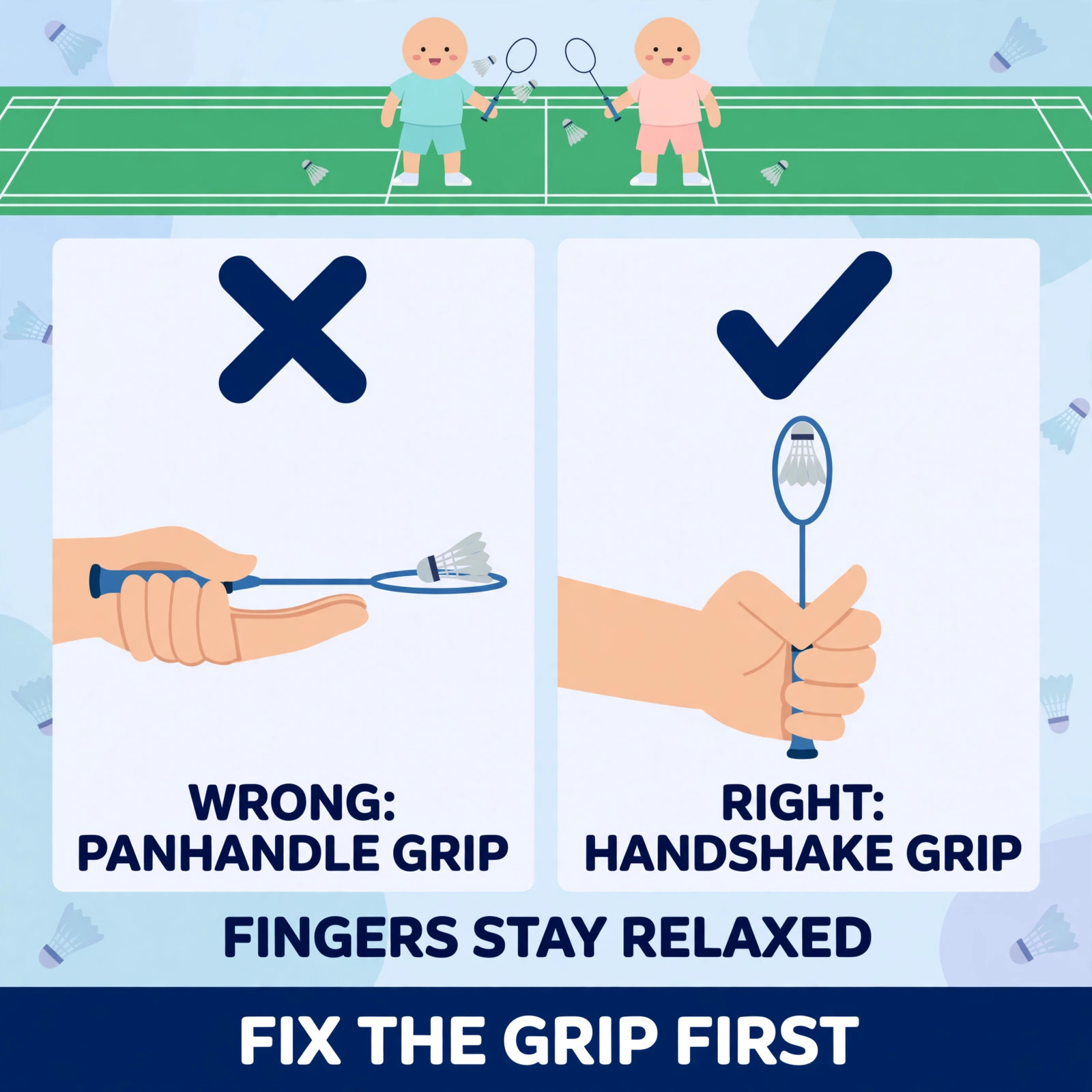
The grip decides what your racket can do, and the most common error we see is the panhandle grip: the racket held like a frying pan, thumb and fingers wrapped around the front of the handle, palm facing up. It feels natural because it is how you would hold a pan or a fly swat. The problem shows on the second shot. With the pan grip locked in, the wrist cannot turn properly, backhand shots become pushes, and net shots lose all touch because the racket face cannot adjust.
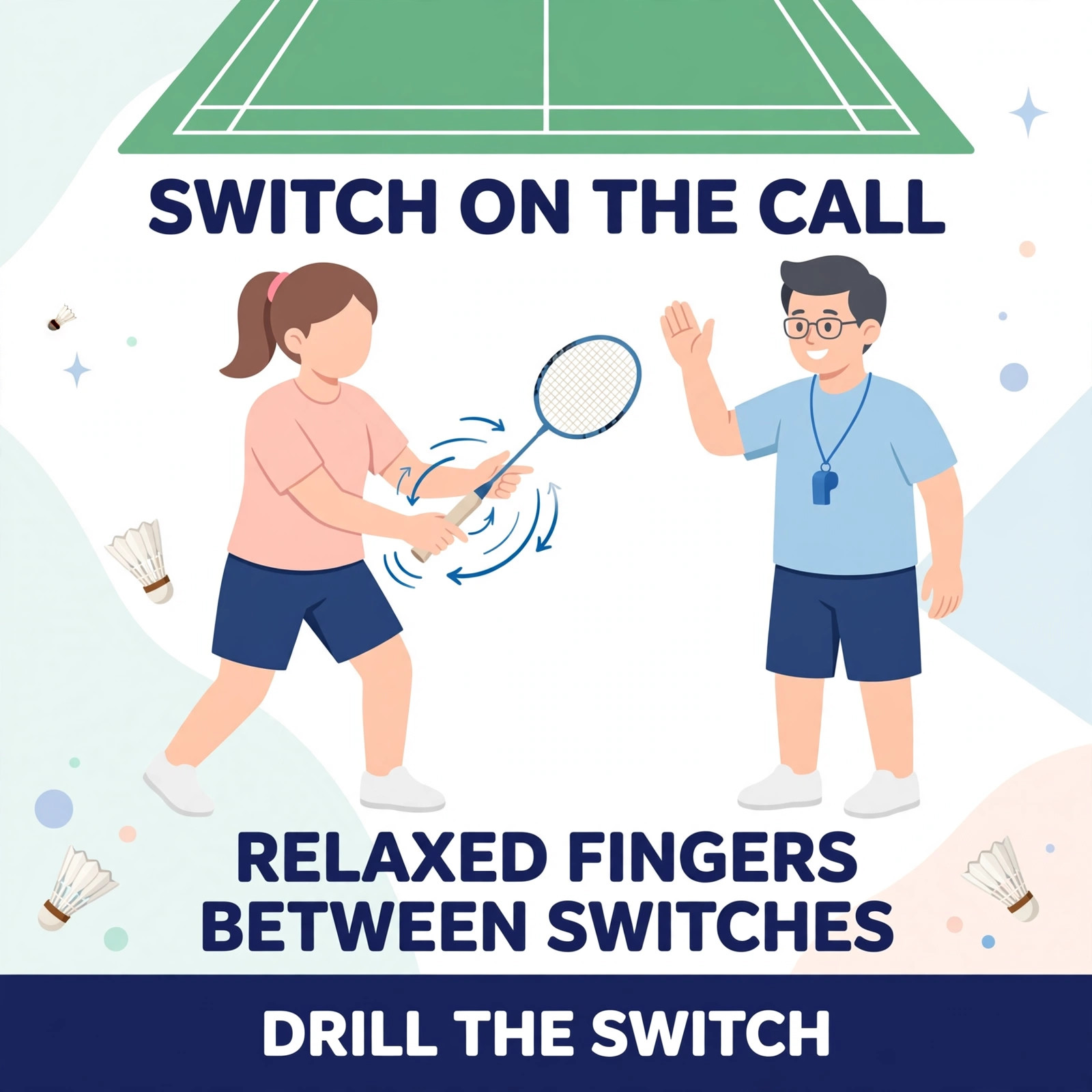
The fix is the handshake grip you will see in any coached session: shake hands with the handle, V of thumb and index on top, fingers relaxed, and switch to a thumb grip for backhands. The drill is simple and takes two minutes. Hold the racket lightly and switch between forehand and backhand grips on a coach’s call, or on a timer, twenty switches at a time. You are not training strength. You are teaching your fingers to find the right grip without your eyes checking.
Mistake Check #2
Mistake 2: Standing Flat Between Shots
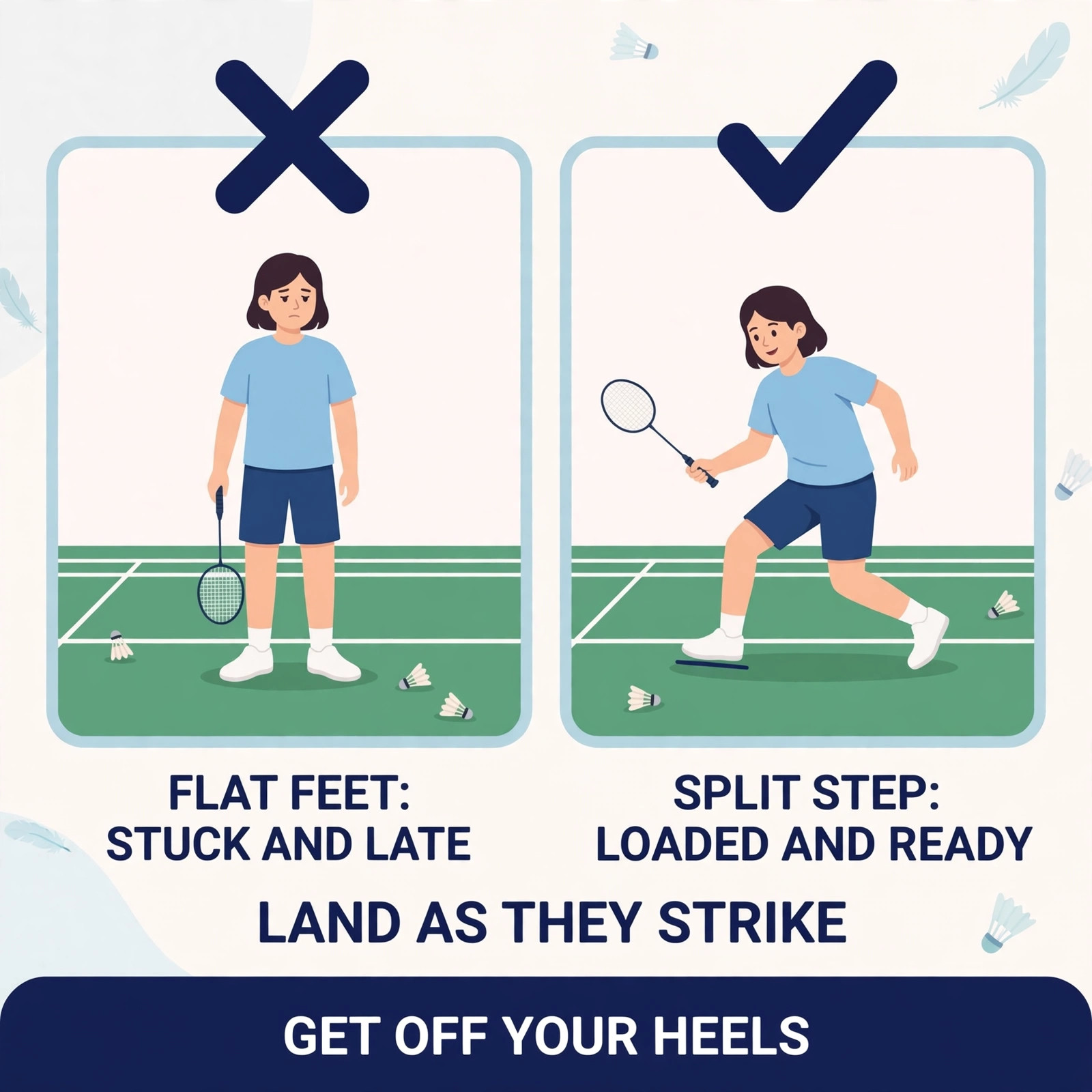
Watch a rally from the side and you can spot this mistake without seeing a single shot: between strokes, one player bounces lightly, ready, while the other stands tall and flat, heels down, weight back, watching. Flat standing feels restful. It is actually the slowest starting position in the sport, because the first step has to begin with a weight shift and a rock forward before the legs can push. Against a fast opponent, that small delay is the whole rally.
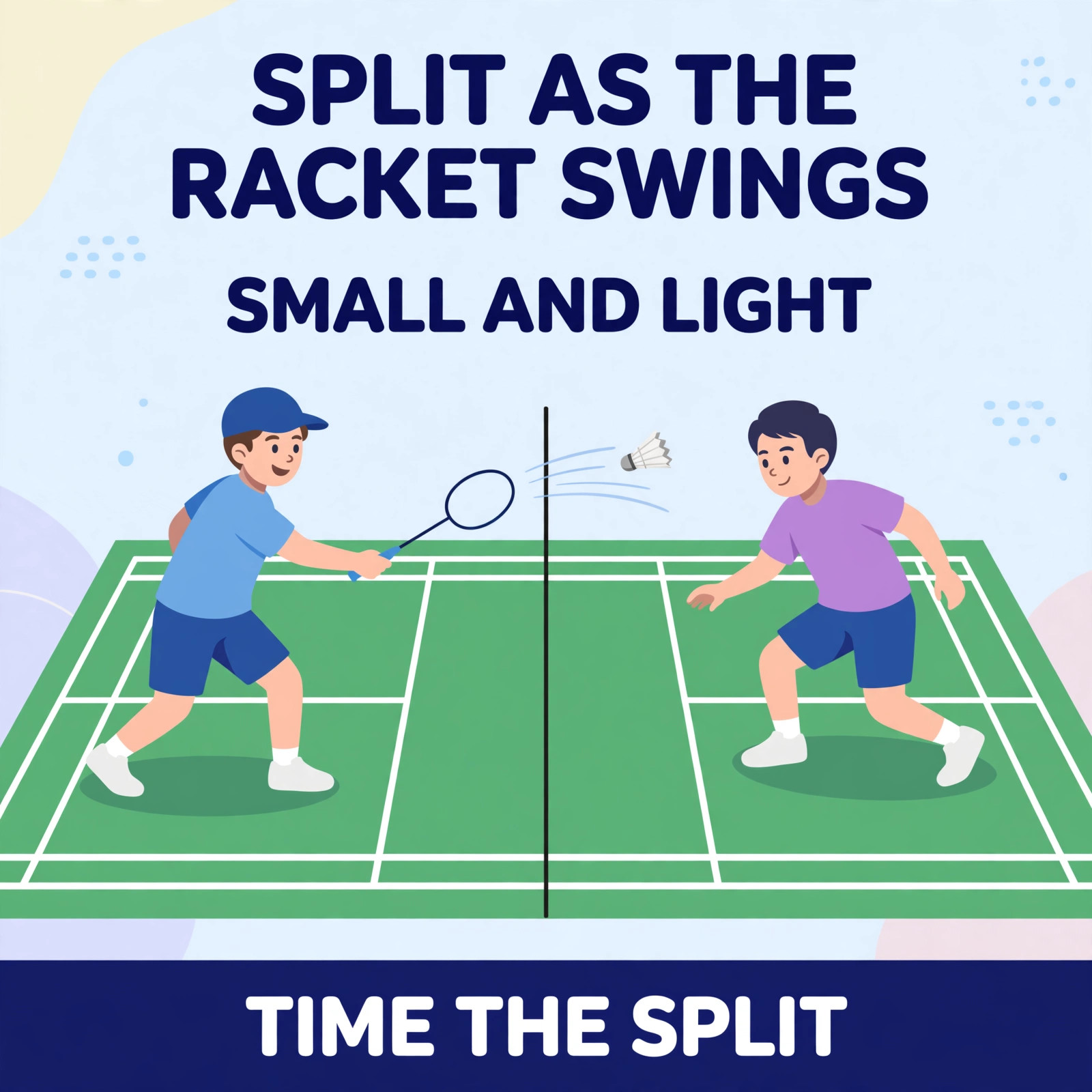
The missing piece is the split step: a small, light landing on both feet, taken just as your opponent strikes the shuttle, which loads your legs like springs at the exact moment the direction becomes clear. Standing flat is usually not laziness. Most players were never taught that the ready position is an action rather than a pose, something you repeat before every single shot your opponent plays, in every rally, all match long.
Fix it with a timing drill. A partner or coach feeds shuttles gently, or simply swings a racket, and you practise landing your split step on their strike, then pushing off one step in a called direction. Ten minutes, a few times a week, rewires the habit faster than match play does, because matches give you no time to think about your feet. Judge the drill by your landings: light, balanced, and silent beats big and loud every time.
Mistake Check #3
Mistake 3: Clearing to the Middle
A clear is meant to do a job: push your opponent to the back of the court, deny them an easy attack, and buy you time to recover. A clear aimed at the middle of the rear court does none of that. It arrives where your opponent is already standing balanced, it offers them both cross court and straight replies at full stretch of your court, and worst of all it often comes down short of real depth, because middle feels safer and safer reads as shorter.
Singles players pay for this mistake most, but doubles pairs pay too, handing the rear player a comfortable smash platform. The odd part is that most players who clear to the middle can clear to a corner when asked. The habit is not technical. It is a comfort choice made under pressure: the middle feels like the biggest target, so tired or rushed players aim there without deciding to. Mistakes that are really decisions get fixed by changing the decision, then drilling it.
The drill is target work. Place two boxes, towels or cone markers in the back corners of the court and clear at them from a feed, counting only clears that land in or near a target. Twenty clears, three times a week, and the corners start to feel like the natural address for the shot. In matches, give yourself one clear instruction: if you are clearing under pressure, pick the corner away from the stronger overhead player and commit to it.

Mistake Check #4
Mistake 4: Watching Your Own Shot
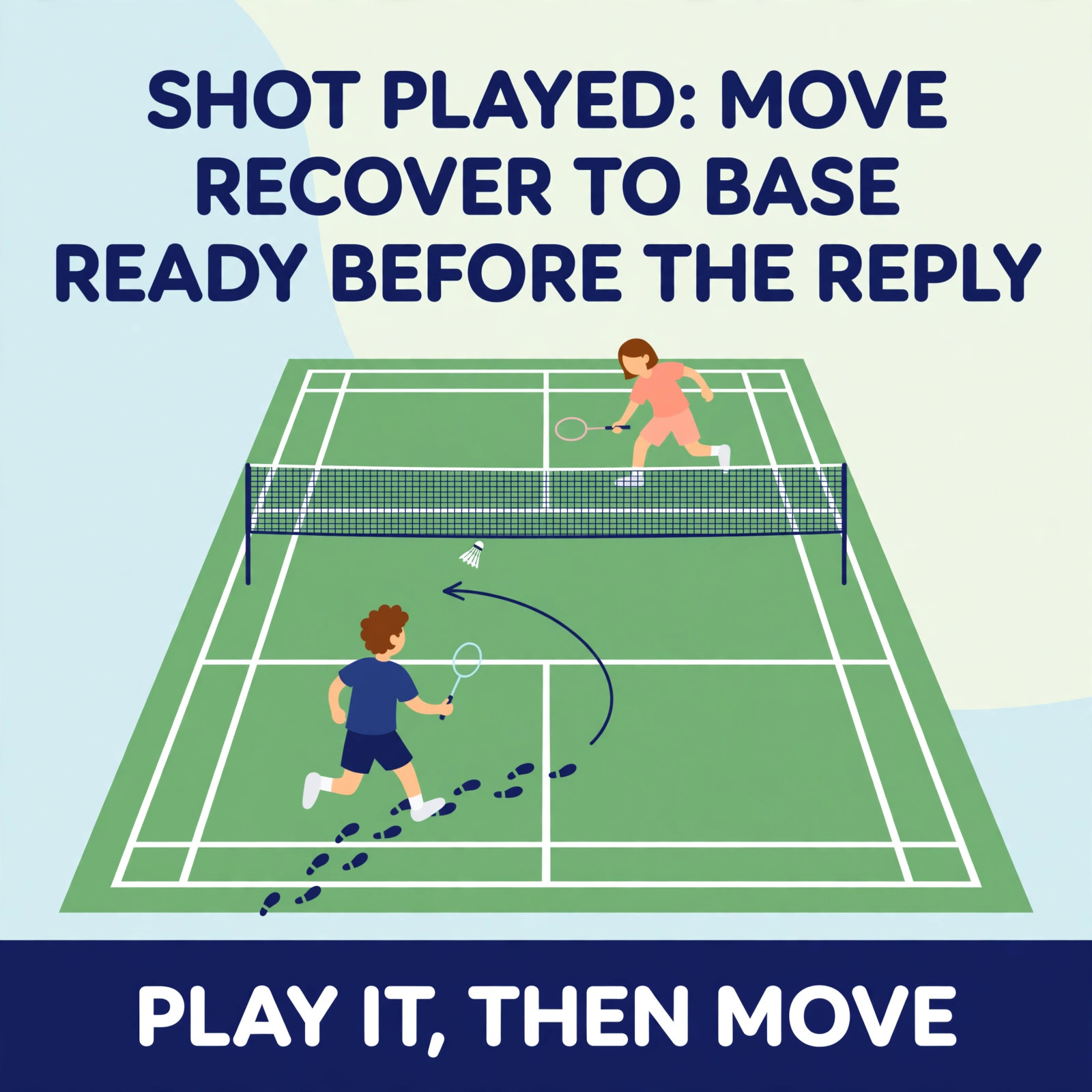
You have just played the best drop shot of your month. It crosses the net beautifully, and you stand there enjoying it while it travels. Meanwhile your opponent, who is not admiring anything, steps in and flicks the shuttle past you. Watching your own shot is the most human mistake on this page and one of the most costly: every second spent appreciating a shot is a second not spent recovering to base and preparing for the reply that is definitely coming.
The habit hides inside good intentions. Players watch because they want to know if the shot worked, and beginners watch because they were taught to follow the shuttle with their eyes. The eyes are fine. It is the feet that stop. Recovery should begin the moment the shuttle leaves your racket, before you know whether the shot was good. By the time its quality is clear, you should already be back near base, split stepping for whatever comes next.
Train it with a play and move rule. In shadow work, every imaginary shot is followed instantly by the recovery steps to base, no pause allowed. In feeding drills, the feeder sends the next shuttle early, before you have settled, so admiring costs you a point in practice where it is cheap. Within a few weeks the sequence rewires itself: play, recover, split, ready. The shot can be appreciated later, on the score that it helped you win.
Mistake Check #5
Mistake 5: Rushing the Serve
The serve is the only shot in badminton where nobody is rushing you, and yet rushed serves are everywhere: a player walks to the line, glances up, and swings in one hurried motion, as if the shuttle might escape. Rushed serves float high, land short, or catch the tape, and they come from a missing routine rather than a missing technique. The same player, given ten practice serves with time to breathe, usually serves noticeably better within one session.
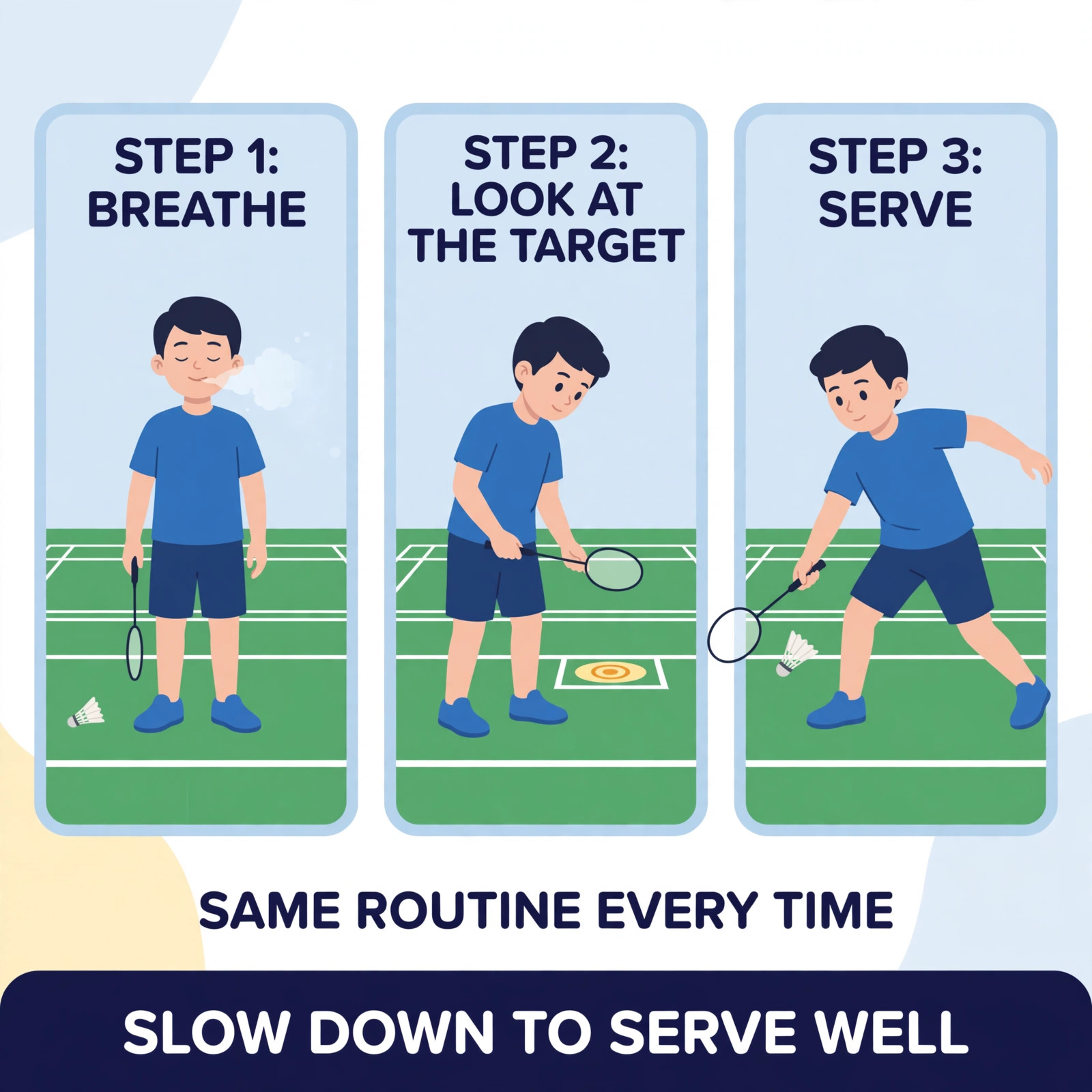
Build a routine with three beats and use it every single time. Beat one: settle your feet and take one slow breath. Beat two: look at your target, the exact patch of service box you intend to land on. Beat three: serve with the same calm, underarm action you practise, struck below 1.15 metres as the rules require. A routine makes the serve feel the same in a final as it does in training, because your body recognises the sequence and stops improvising.
Practise the routine under a small amount of pressure so it survives matches. The drill: ten serves at a target in the service box, counting only those that land in and were preceded by the full routine, breath included. Skip the routine and the serve does not count, however good it was. That one rule teaches the lesson faster than any lecture: the routine is not decoration around the serve. The routine is the serve.
Myth vs Reality
Myths About Fixing Mistakes
Myth one: making these mistakes means you have no talent for badminton. Every player on this page’s list, including strong school and club players, has owned at least two of these habits. They are not talent problems. They are untaught or unpractised details, and they respond to exactly the same coaching as any other part of the game. The players who look naturally clean are usually just the players whose mistakes were corrected early, before the habits had years to harden.
Myth two: you should fix all five mistakes at once, starting Monday. Habits change one at a time. A player trying to fix their grip, their feet, their clear targets, their recovery and their serve in the same week usually fixes none of them, because attention is the real training resource and it does not split five ways. Pick the mistake that costs you the most points, drill it for two or three weeks, and let it settle before moving to the next.
Myth three: more power hides technical mistakes. Power amplifies whatever it touches. A stronger swing with a pan grip produces a faster mishit, and a stronger clear aimed at the middle gives a better platform to the opponent, sooner. This is why coaches correct shape before they chase power, and why fixing a small mistake often looks like a power upgrade a month later: the shuttle finally goes where the swing was always trying to send it.

Why Choose Us
Why Players Choose ST Badminton Academy
At ST Badminton Academy, mistake fixing is coached in groups of no more than four students. That size is the whole method: a coach can watch your grip change mid rally, see your feet stop after a good shot, and hear your serve routine disappear under pressure, because there are only four players to watch. In a big class, these habits survive for months simply because nobody with the knowledge to fix them ever sees them happen.
Coach Eric Chuar has spent more than 15 years coaching players in Singapore and Malaysia, and his correction work follows a plain order: spot the mistake in real rallies, name it in one sentence, drill it in isolation, then test it back inside games. Players keep a short note of the fix they are working on, one at a time, and progress is checked against the same drills, so a fixed habit is verified rather than assumed.
The academy is based in Setapak, Kuala Lumpur. If your game feels stuck at the same level despite regular play, a trial session is the quickest way to find out why: play your normal game, and we will tell you honestly which of your mistakes is costing you the most points. No hype and no long list of faults, just the first fix, coached closely, in a group of four or fewer.
FAQs: Common Badminton Mistakes and Fixes in Malaysia (KL)
Players ask the same fair questions before starting correction work on their game. Here are straight answers, with no hype and no promises we cannot keep.
Where can I get my badminton mistakes fixed if I live in Setapak or Gombak?
With us, in Setapak. ST Badminton Academy is based in Setapak, Kuala Lumpur, and players travel in from Gombak, Wangsa Maju and nearby areas. Mistakes are corrected inside small group sessions of no more than four students, so a coach actually sees your habits in real rallies instead of guessing from your description.
What is the most damaging common mistake in KL?
For most club players, standing flat between shots. It quietly slows every first step you take, all match long, so it taxes every rally rather than one type of shot. The frying pan grip runs it close, because a locked grip limits your backhand and net play from the first minute to the last.
How long does it take to fix a bad habit and reach a cleaner level?
Most single habits take two to four weeks of focused work to stop showing up in matches: a week of drills to learn the replacement, then games where the old habit is caught and corrected until the new one holds under pressure. Older habits take longer, which is why we fix one at a time.
Can I fix these mistakes by practising alone at home?
Partly. Grip switches, shadow recovery patterns and split step timing can all be practised in a small space at home, and short daily touches help habits change faster. What home practice cannot do is show you the mistake as it really looks, so pair it with coached sessions where someone watches you play.
Which mistake should I fix first when several happen together?
The one costing you the most points, which a coach can usually spot inside one session of real rallies. For many players that is the grip or the flat feet, because both quietly tax every shot. Fix that one first, let it settle over two or three weeks, then move to the next on your list.
Do you offer mistake fixing coaching near Wangsa Maju?
Yes. Our base is in Setapak, a short drive from Wangsa Maju, and correction work runs inside our regular small group sessions rather than as a separate course. With groups capped at four students, your grip, feet and serve routine are watched closely enough that a coach can catch a habit the moment it reappears.
Do these common mistakes affect young players in Malaysia?
Yes, and usually faster than it affects adults, because young players have fewer years of the habit to undo. Kids make the same five mistakes, especially the pan grip and watching their good shots. Small groups matter here: a coach who sees the habit in the first month can save a year of unlearning later.
Where does ST Badminton Academy run its mistake fixing coaching?
At our home base in Setapak, Kuala Lumpur. Correction work runs inside regular small group training with no more than four students per group, so habits are spotted in live rallies and fixed on the spot. Players come in from Gombak, Wangsa Maju and across the Klang Valley, and trials can be arranged through the academy.
What does a coach check first in a new player playing badminton?
Your grip and your feet, in that order. A coach watches how the racket sits in your hand during real rallies, then whether you split step and recover or stand and watch. Those two checks explain most of what follows: if the grip and the feet are right, most other mistakes are quick to correct.
Badminton Mistake Fixing Training in Action


One Standard for Every Player and Every Session
Mistake fixing is tested, not assumed. A player working on a fix repeats the same checks every few weeks: twenty grip switches without looking down, split steps timed against a feed, ten routine serves at a target, twenty clears counted into the back corners. The standard is that the new habit survives a full game, not just a drill. When it holds under match pressure twice in a row, we call it fixed and move to the next one.
| Factor | Repeating Mistakes | Coached Fixes MISTAKES |
|---|---|---|
| Frequency | 1 or 2 times a week. Mostly for fun and sweat. | Two or three coached sessions a week, one fix at a time. |
| Drills Focus | Basic static feeding. Minimal footwork pressure. | Grip, split step, clear targets, recovery and serve routine checked by a coach. |
| Physical Conditioning | Rarely included. Just playing games on court. | Core, agility, and speed training included in every session to prevent injury and build stamina. |
| Tactical Awareness | "Just hit it over." No real game plan. | Video analysis, point construction, and learning to read the opponent's game. |
| Coach Ratio | Large groups (8-10 kids). Coach barely watches you. | Max 4 students. Mr Eric Chuar personally corrects every stroke and movement detail. |
| Goal Setting | Fun and exercise. | The same error spotted early instead of hardened over months. |
| Long Term Result | Good recreational player. | A player who loses fewer rallies to their own habits. |
Badminton Technique Coaching in Kuala Lumpur
This page covered the five mistakes that cost club players the most rallies: the frying pan grip, standing flat between shots, clearing to the middle, watching your own shot, and rushing the serve. ST Badminton Academy fixes them in small groups of no more than four students in Setapak, Kuala Lumpur. If you play in Wangsa Maju, Gombak or nearby and want your costliest mistake found and fixed, contact us today.






