Buy The Best Badminton Shuttlecock Online (Buying Guide)
In the fast-moving game of badminton, the right shuttlecock can make the difference between a rally you control and one that controls you. Every clear, drop and net shot depends on how the shuttle flies. This guide, written for players in Malaysia and Singapore, covers the types of shuttlecock on sale, how to judge quality, and how to buy online with confidence.
At ST Badminton Academy and our KL stringing shop, we handle these shuttles every day, in training baskets, in matches, and in the tubes players bring us. What follows is the same advice we give across the counter.

Shuttle Check #1
Does Shuttle Quality Really Change Your Game?
A good shuttlecock flies the same way every time you hit it: same height, same distance, same gentle drop near the net. A poor one wobbles, speeds up without warning, or falls apart after a few hard smashes. That inconsistency quietly ruins training, because you end up blaming your own technique for the shuttle’s faults.
It also hits your wallet. A shuttle that falls apart in half a game costs more per rally than a decent tube that lasts a full match. Buying well is not about paying the most, it is about knowing what to check before you pay: the feathers, the cork, the speed marking, and the seller behind the tube.

Shuttle Check #2
What Is a Shuttlecock Actually Made Of?
A feather shuttlecock carries 16 feathers set into a rounded cork base covered with a thin layer of leather. The feathers, goose feathers for top grades, duck feathers for training tubes, create drag that steadies the flight and gives feather shuttles their true, floating feel. Nylon shuttles copy the same shape with a moulded skirt: tougher and cheaper to run, but a slightly different touch at the net.
The cork matters as much as the feathers. Natural cork gives a clean, springy contact and keeps its shape rally after rally. Cheaper composite corks can feel dead on the strings or crack early. When you buy a tube, you are really buying feathers, cork and careful assembly, and that is where the price difference between tubes mostly lives.
Speed markings sit on the tube rather than the shuttle: 75, 76 and 77 are the common speeds sold in Malaysia. The number describes how fast the shuttle travels. A higher number flies faster and further. The right speed for you depends on your hall, hot, airy halls slow a shuttle down, cool air-conditioned halls let it fly, which the buying section below explains in plain steps.

Shuttle Check #3
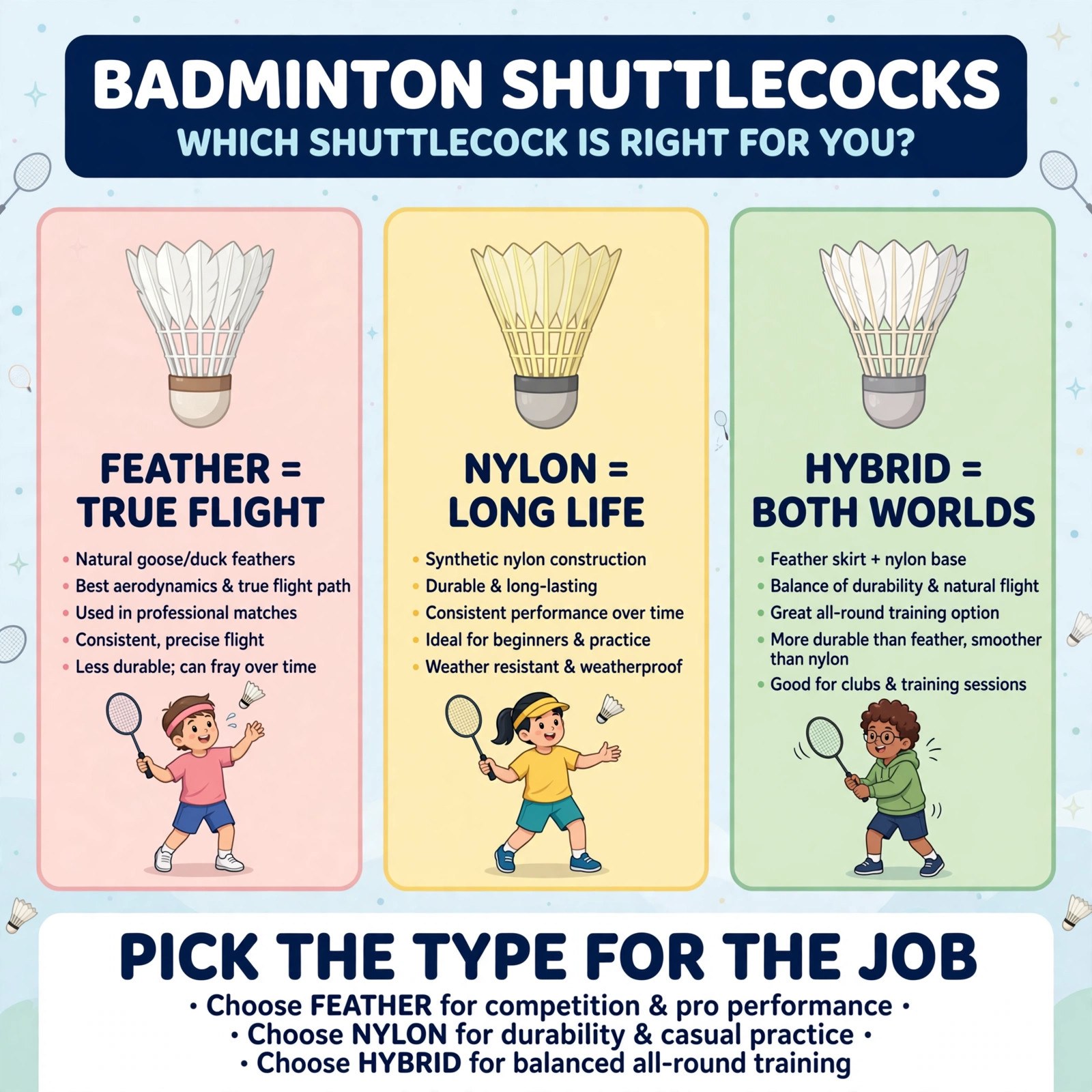
Feather, Nylon or Hybrid: Which Type Suits You?
Feather shuttles are the match standard: the best flight, the best touch, and the shortest life. Nylon shuttles survive school halls, group training and outdoor play far longer. Synthetic and hybrid shuttles sit between the two, copying feather flight with tougher materials. Most club players in Malaysia train on nylon or hybrids and keep their feather tubes for matches.
You will also see graphite and carbon-composite shuttles online. Treat the fancy names with a little care. What decides your game is still flight stability, durability and the right speed for your hall, not the label printed on the tube.
For schools and group training, durability wins most arguments, so nylon rules there. For league matches and serious social games, feather still rules. Hybrids are growing fast in Malaysia because they split the difference: a flight close to feather with a skirt that survives far more mishits.
Shuttle Check #4
How Do You Judge Speed, Grade and Flight?
Start with material and grade. Goose feather flies truest; duck feather trains well for less money. Then match the shuttle speed, commonly marked 75, 76 or 77, to your hall: hot, airy halls in Malaysia usually suit a slower shuttle, while cool air-conditioned halls may need one step faster. Last of all, check flight stability in reviews and, better still, with one test tube before you commit to a carton.
Weight and size are standard across brands, so a shuttle that feels far heavier or lighter than usual is a warning sign. Brand reputation helps, but batch consistency is the real test, ask players at your own hall which tubes flew well this month, because they are testing the same stock you would buy.
One more check costs nothing: the seller. Established Malaysian sports shops and official brand stores on platforms like Shopee and Lazada Malaysia store their stock properly and honour returns. Unknown sellers pricing far below the market often carry old, dry stock that flies badly from the very first hit.

The Testing
How We Test Every Shuttle Batch?
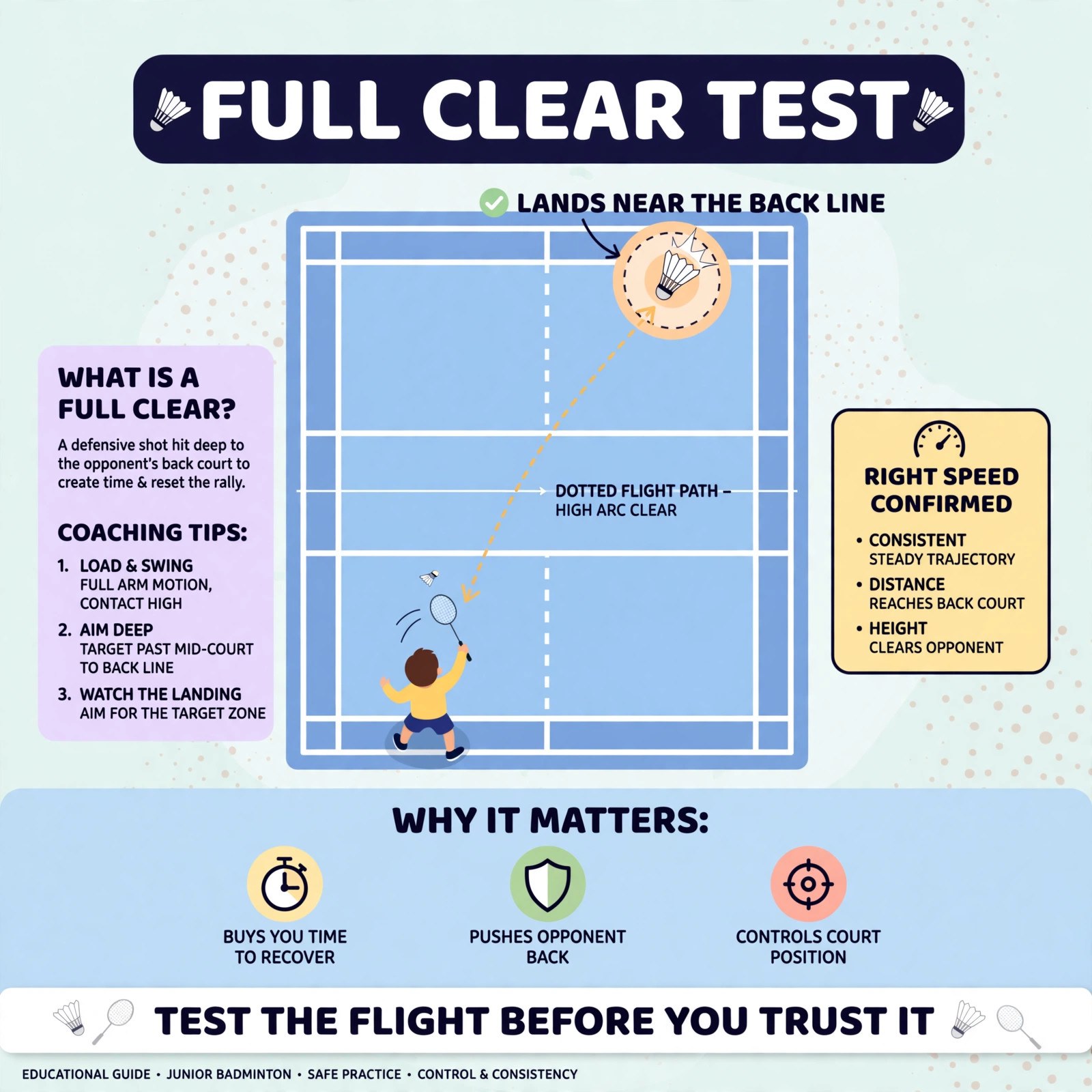
Test like a coach. First, look closely: feathers even, cork firm, no loose threads around the base. Then hit a full clear from the back line, a shuttle of the right speed lands close to the back line at the other end, not metres short or long. Finally, play a run of net shots: a stable shuttle spins and settles instead of wobbling sideways.
Our own team checks new stock the same way, and our coach even carries a small scale for weight checks, because two tubes with the same label can hide different batches. If a tube fails the flight test, it does not go into our training baskets, simple as that.
Do the same at home with every new tube: one shuttle, one clear test, a few net shots. Two minutes of testing tells you whether the whole tube suits your hall, before twelve shuttles go into your kit bag and the receipt goes into the bin.

Myth vs Reality
Myths About Buying Shuttlecocks
Myth: “The cheapest tube saves you money.” Reality: A shuttle that dies in half a game costs more per rally than a mid-range tube that lasts a full match. Cheap tubes also wobble, so the rallies you practise with are not the rallies you will play in a real game.
Myth: “The most expensive shuttle always flies best.” Reality: A tournament-grade feather shuttle with the wrong speed for your hall still lands long or short all night. The table below sums up the two ways players buy, by price tag, or by type, speed and flight, and why the second habit wins more rallies.
Price is a clue, never a verdict. Read the tube, test one shuttle, and let the flight make the final call.

Why Choose Us
Honest Shuttle Advice for Everyday Players
We string rackets and watch these shuttles in play every day. When a batch flies oddly, we hear about it from players within the week, so the tubes we recommend are tubes our own players train and compete with, week in and week out. That feedback loop is something a warehouse listing can never give you.
Bring your usual shuttle, or just tell us your regular hall. We will compare speed and feel with you, explain the difference between feather grades in plain words, and help you pick a tube you can reorder with confidence next month.
Start with one tube, test it in your own hall, then stock up once the flight suits you. That simple order, test first, bulk later, saves most players the most money, and it is the same order we use for our own academy stock.
FAQs: Buying Badminton Shuttlecocks Online in Malaysia (KL)
Here are answers to common questions from players in Malaysia about choosing, testing and storing shuttlecocks bought online.
What makes a badminton shuttlecock different from other shuttlecocks in Malaysia?
A badminton shuttlecock is built for badminton’s speed and touch. Feather models carry 16 feathers on a cork base, far more than the 8 on casual garden shuttles, which gives a steadier flight, a cleaner feel on the strings, and shots that land where you aim them.
How long does a good shuttlecock last for players in KL?
It depends on the shuttle’s quality, how hard you hit, and how well you care for it. A feather shuttle may last one hard match, while a nylon shuttle can serve many training sessions. Storing tubes properly and straightening feathers between games stretches every shuttle’s life.
Which shuttlecock speed should you pick for your hall and level?
Start from your hall. Hot, high or airy halls slow a shuttle down, so players often pick a faster speed; cool air-conditioned halls suit a slower one. Test one shuttle with a full clear from the back line, it should land near the back line at the other end.
Which type of shuttlecock is most popular, feather or nylon?
Feather shuttlecocks are the most popular for matches because their flight and touch feel the most natural. Nylon shuttles are the common choice for training, schools and group sessions because they last much longer. Many club players use both: nylon for drills, feather for game night.
Are there safety points to keep in mind before we play?
Yes. Never hit a shuttle towards someone’s face, and take damaged shuttles out of play, a cracked cork or broken feather can fly unpredictably. Store tubes where young children cannot reach the feathers, and on court, stop play if a shuttle from another court lands near your feet.
Does the weather change how shuttlecocks fly near Wangsa Maju?
Yes. Humidity can warp feathers, cold air makes them stiff and brittle, and heat speeds a shuttle up. Players adjust by choosing the right speed for the hall and keeping tubes in a cool, dry place. For outdoor play, tougher plastic shuttles handle wind and weather better.
Should beginners train with feather or nylon shuttlecocks in Malaysia?
Most beginners start on nylon. The shuttle survives mishits, lasts through many sessions and keeps costs sensible while technique is still rough. Once a player’s strokes are clean enough to feel the difference, feather shuttles reward them with better touch and a truer flight in matches.
Can I return shuttlecocks bought online in Malaysia?
That depends on the platform and the seller’s policy, so read the returns section before ordering and keep tubes sealed until you are ready to test. Order through tracked delivery, and if a tube arrives damaged, report it with photos inside the stated window for the smoothest refund process.
Why do two tubes of the same shuttlecock feel different in matches?
Feathers are a natural material, so batches vary slightly, and storage conditions change them too. A tube kept in a hot car or a dry storeroom flies differently from a fresh one. Buying from sellers who store stock properly, and testing one shuttle from every new tube, keeps surprises small.
Shuttlecock Testing and Buying in Action


What It Takes to Choose the Right Shuttle
Choosing shuttlecocks is a small decision you make every week, and it quietly shapes every rally you play. Our standards below are the same checks we run on stock before it reaches our own training baskets in Kuala Lumpur.
| Factor | Buying by Price Tag | Choosing by Specs SMART |
|---|---|---|
| Frequency | 1 or 2 times a week. Mostly for fun and sweat. | Speed, material and feather grade checked against your hall and level before you pay. |
| Drills Focus | Basic static feeding. Minimal footwork pressure. | Flight tested shuttle by shuttle, clears, drops and net shots all land where they should. |
| Physical Conditioning | Rarely included. Just playing games on court. | Core, agility, and speed training included in every session to prevent injury and build stamina. |
| Tactical Awareness | "Just hit it over." No real game plan. | Video analysis, point construction, and learning to read the opponent's game. |
| Coach Ratio | Large groups (8-10 kids). Coach barely watches you. | Max 4 students. Mr Eric Chuar personally corrects every stroke and movement detail. |
| Goal Setting | Fun and exercise. | Clear targets: training tubes for drills, the best tubes kept fresh for matches. |
| Long Term Result | Good recreational player. | Consistent rallies every session, and a kit bag you can trust on match day. |
Buy the Best Badminton Shuttlecock Online in Kuala Lumpur
This guide covers how to buy the best badminton shuttlecock online: the types, the speeds, the flight tests and the storage habits that keep tubes fresh. If you want a hand matching a tube to your hall, ask our KL team, we test the same stock our players train with, and we are happy to point you at the right speed before you spend.






