How To Play Badminton With Power And Precision: Techniques And Strategies (Strategy Guide)
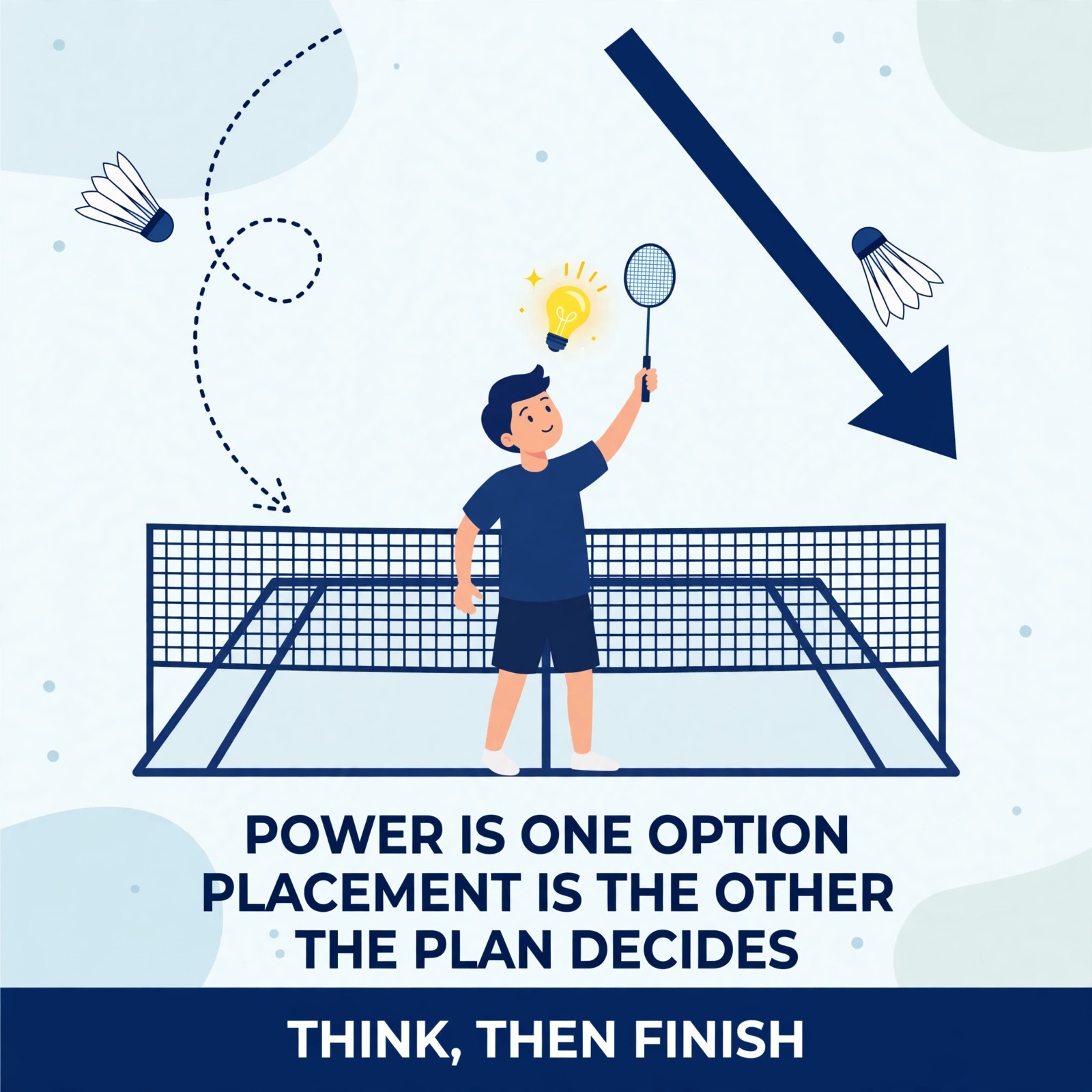
Power and precision sound like opposites. One is about hitting hard, the other about hitting exactly where you want. Strong players know they are really the same skill viewed from two sides, and the thing that joins them is strategy: the choices you make before the racket even swings. A smash played from the wrong position is just a fast gift to a waiting defender. A gentle drop played at the right moment can be worth more than any smash, because it lands where nobody is standing. This guide is about the thinking side of power and precision. It covers how to choose between attacking and placing, how to build a rally so the finish becomes easy, how to read the player across the net, and how to keep your targets sensible when the score gets tight. None of it needs special talent. It needs a clear head, a few simple rules, and practice that trains the decision together with the shot.
Strategy Check #1
Power or Precision: Choosing the Right Shot at the Right Time
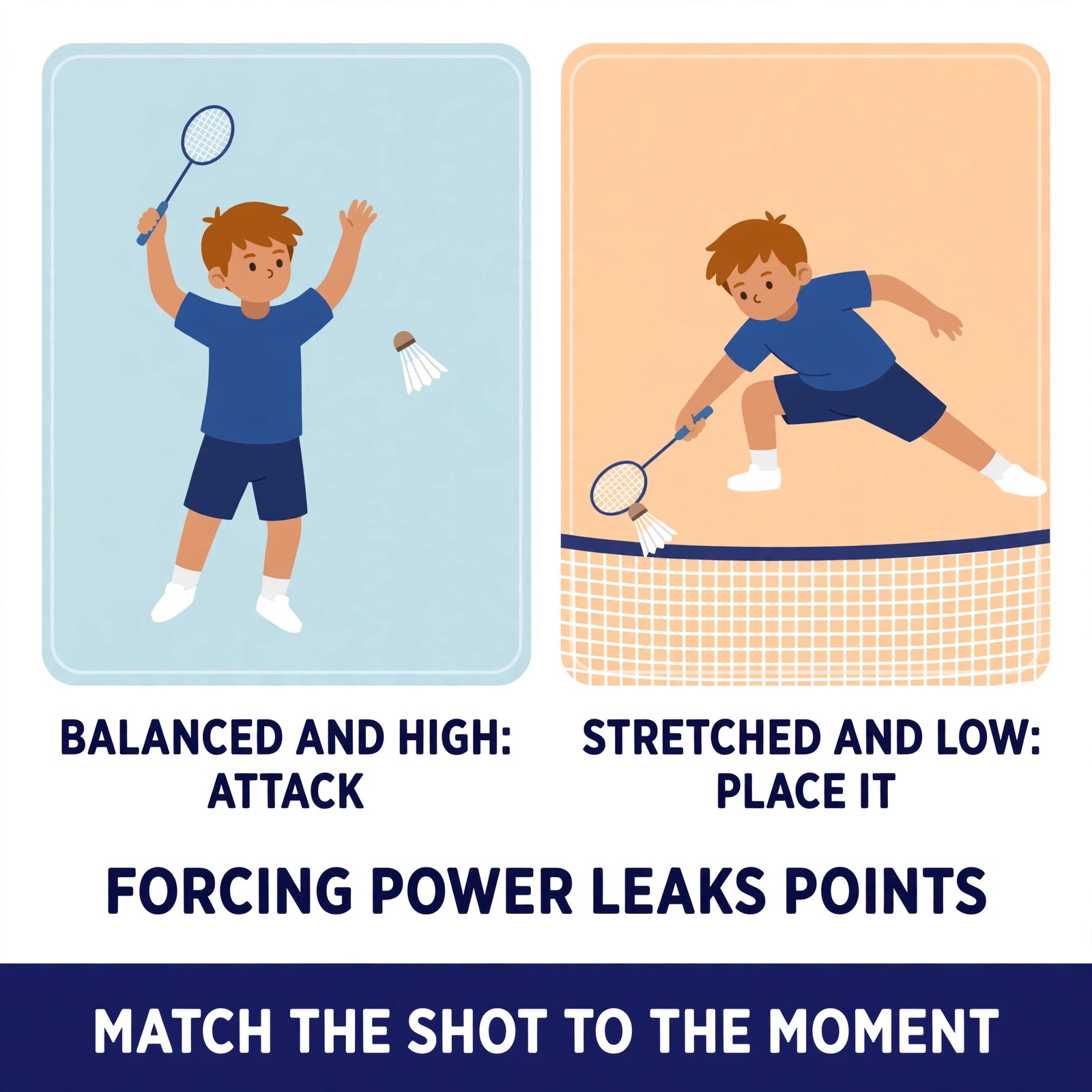
Every shot you play is a choice, and the honest way to make it is to read your own body first. Two questions decide almost everything: am I balanced, and is the shuttle high enough to hit down? When the answer to both is yes, attack. That is the moment power pays: you are behind the shuttle, your weight is set, and the smash or drive can travel steeply into open court. When either answer is no, precision is the better weapon. A soft block, a tight net shot or a deep clear played from a stretched position keeps you in the rally and often wins the point two shots later, when the situation has turned in your favour.
The mistake to avoid is forcing power from bad positions. Players fall in love with the smash and try it from everywhere: off balance, late, reaching up from below the tape. Those smashes come back, because a defender who is set can block almost any shot that is hit from a poor base. Worse, the forced smash leaves you stranded where you hit it, and the block passes you while you recover. Placing the shuttle instead is not playing safe or scared. It is buying time and moving the problem to the other side of the net. Power feels good for one shot. Good choices feel good for the whole match, and they are what precision really means at match speed.
Strategy Check #2
Build the Rally First: Pressure Before the Smash
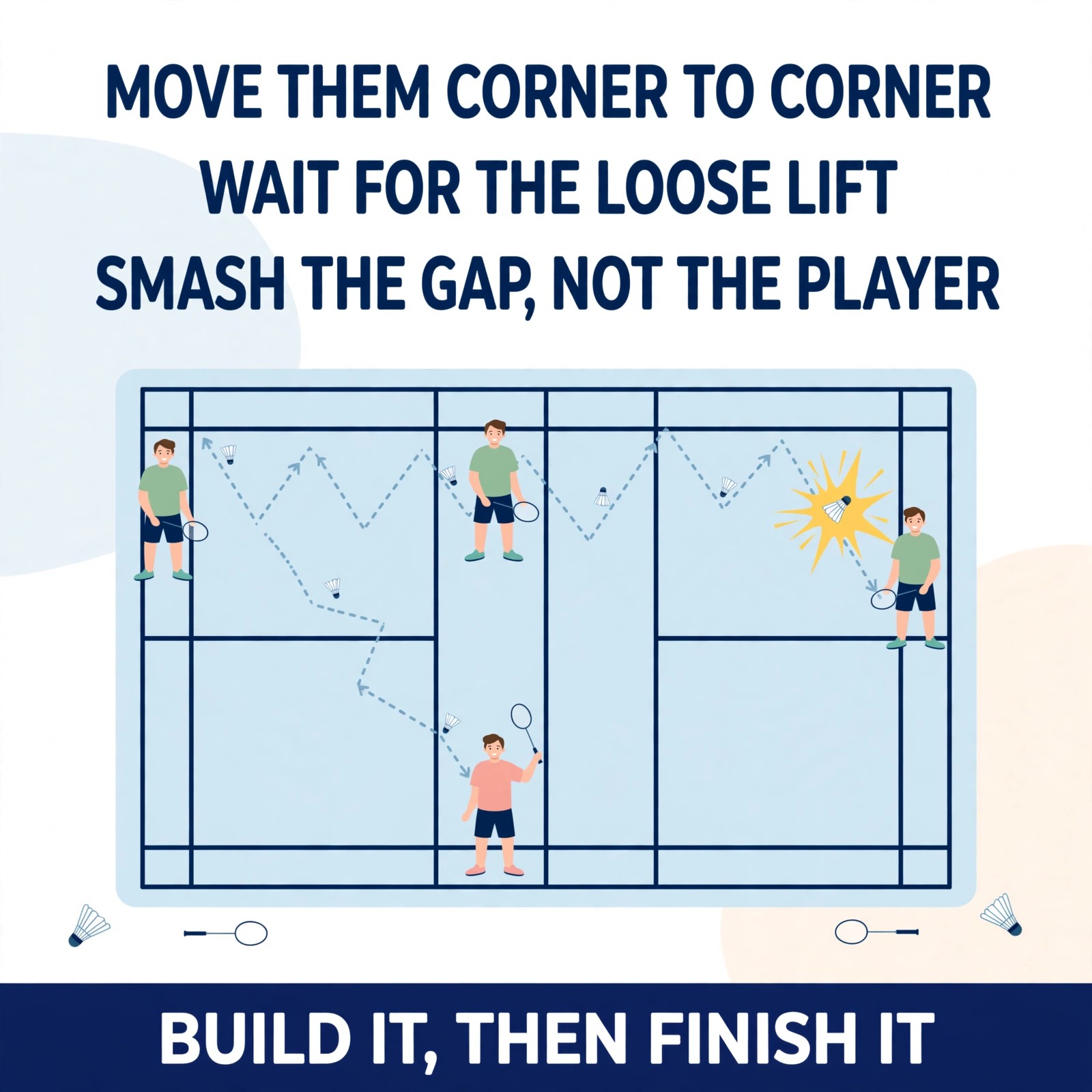
Watch a strong player and you will notice something that surprises many club players: they do not smash very often. Most of their shots are clears, drops, drives and net shots, played with a purpose that is not obvious at first. They are building. A rally is like a savings account: every good shot deposits pressure, and the smash is only the withdrawal at the end. If you try to withdraw before you have saved anything, the account is empty. The defender stands ready, your smash is blocked, and the point you wanted ends up going the other way. Building first is not slow or passive. It is how the finish is earned.
Pressure is built by making the opponent move and guess. Push the shuttle deep to one back corner, then play soft to the front and make them lunge. Next time, send it deep to the other corner. Changes of depth are tiring to cover, and changes of pace are tiring to read: a slow, high clear followed by a flat, fast drive forces the legs and the brain to work at different speeds. You are looking for one thing: a reply that is a little shorter, a little higher, a little later than the opponent wanted. That loose lift is the signal. It means the building worked, and the rally has reached the moment where power finally belongs.
When the finish comes, aim at the space, not at the player. A smash aimed at a body that is ready will be blocked by reflex. A smash aimed into the gap beside them, or at the floor between their reach and the line, ends the rally because it lands where a racket is not. Finish with commitment: full swing, contact high and in front, and then recover at once, because even good finishes get blocked sometimes and the next shot decides whether your plan survives. Notice how little of this is about arm strength. The smash itself is the easiest part. Everything before it, the patience, the placement, the reading, is the strategy that makes power and precision the same point.
Strategy Check #3
Read the Opponent: Habits, Weak Corners and Tells
No opponent plays randomly. Every player at every level has habits: a favourite corner when they are in trouble, a cross court they trust, a backhand they protect, a net shot they play whenever they are late. The first few rallies of a match are free scouting. Use them. Watch where the shuttle goes when your opponent is under pressure, because that is the shot they trust most, and later you can stand ready for it. Watch how they answer a shot to their backhand corner, and whether their clear from there reaches the back line or falls short. You are not looking for a weakness to mock. You are building a simple map of what this player does, so your choices stop being guesses.
Tells are the small clues that arrive before the shot itself. Many players show the shot with their preparation: the racket drops early for a clear, the elbow lifts for a smash, the whole body turns square for a cross court. Some players look at their target before they hit, the way beginners glance at the corner they want. None of these clues is certain, and better players hide them on purpose, but at club level they are honest information. Reading tells buys you a fraction of a second, which is often the difference between reaching the shuttle balanced or reaching it late. Start by watching just one thing, the racket, during the first game. Add the shoulders later. Reading is a skill like any other, and it sharpens with deliberate practice.
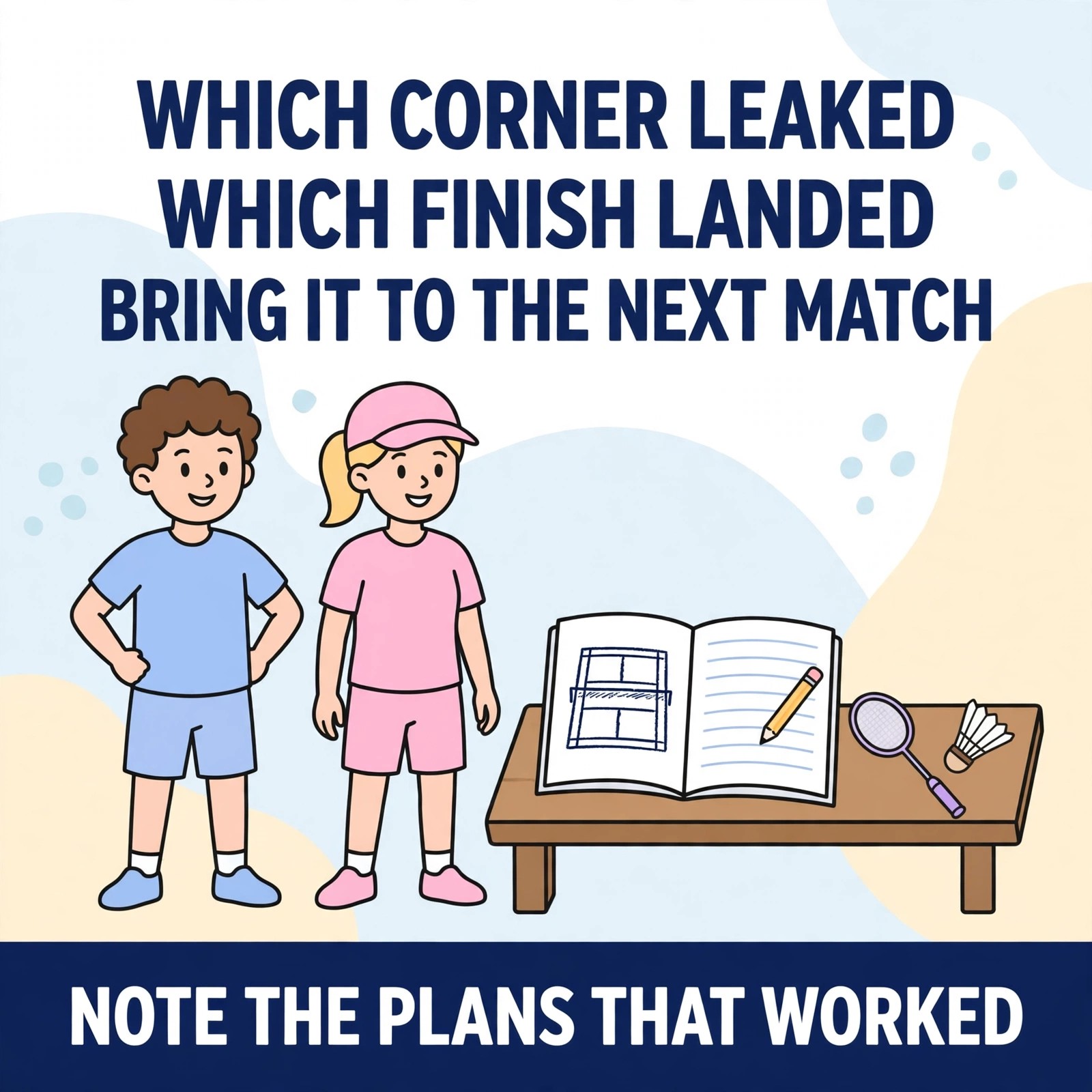
Testing turns watching into a plan. Early in a match, visit each area on purpose: the backhand corner, the body, the front corners, the deep forehand side. Note what comes back. A clear that falls short from the backhand side tells you where your attacking lifts should go. A player who is slow coming forward tells you the drop shot will pay. Keep the tests cheap: play normal, sensible shots into those areas as part of your usual rally building, and simply remember the answers. By the second game you should know two or three things this opponent does not like. Build your rallies toward those things, keep your own habits varied so you are harder to read, and the match starts to tilt your way without any single spectacular shot.

Strategy Check #4
Targets Under Pressure: Safe Margins When It Matters
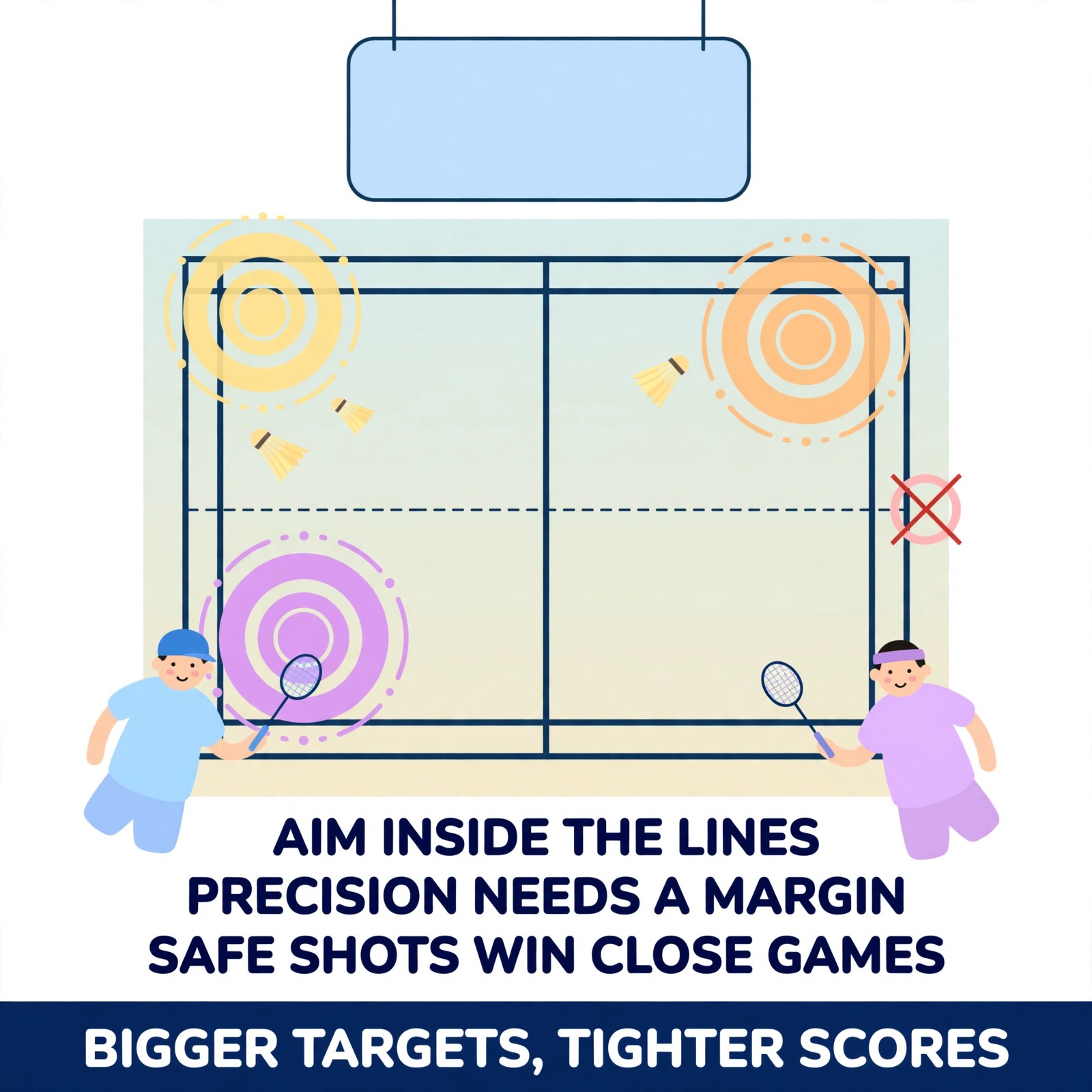
Precision has a hidden trap: the lines. Aiming exactly at the line produces beautiful winners in practice and a steady drip of errors in matches, because a target with no margin punishes every small mistake in contact. Under pressure, smart players quietly move their targets. They aim a hand span inside the back line for clears, inside the side line for drives, and they accept a slightly higher net shot rather than clipping the tape. The shots look a little less spectacular and land in far more often. A point won by an ugly shot inside the court counts exactly the same as a point won by a beauty on the line, and the scoreboard does not grade style.
The score should change your targets, and good players let it. When you are well ahead, keep normal pressure: your patterns are working, so there is no reason to invent anything. When the score is tight late in a game, shrink the risk first and the target second: choose the shots you own most completely, give them generous margins, and make the opponent win the point rather than handing it over with a forced error. When you are behind, the answer is rarely to gamble on bigger shots. It is to steady the rally building, take the easy points that come from patience, and let one good run rebuild your confidence. Chasing miracle winners from behind is how small deficits become big ones.
Choosing under pressure is easier when you decide your rules before the match. Many players carry two or three percentage shots: the shots they can land nine times out of ten even when tired. A high clear to the backhand corner, a straight drive at the body, a safe lift when stretched. In calm moments these shots look plain. In tight moments they are priceless, because they let you keep playing your game while the scoreboard shouts. Build your own short list in training, practise those shots until they are boring, and trust them when it matters. Strategy is not a speech you give yourself at match point. It is a set of decisions you made early, practised often, and can reach for without thinking.
Strategy Check #5
Serve and Return Plans: Starting Every Rally on Your Terms
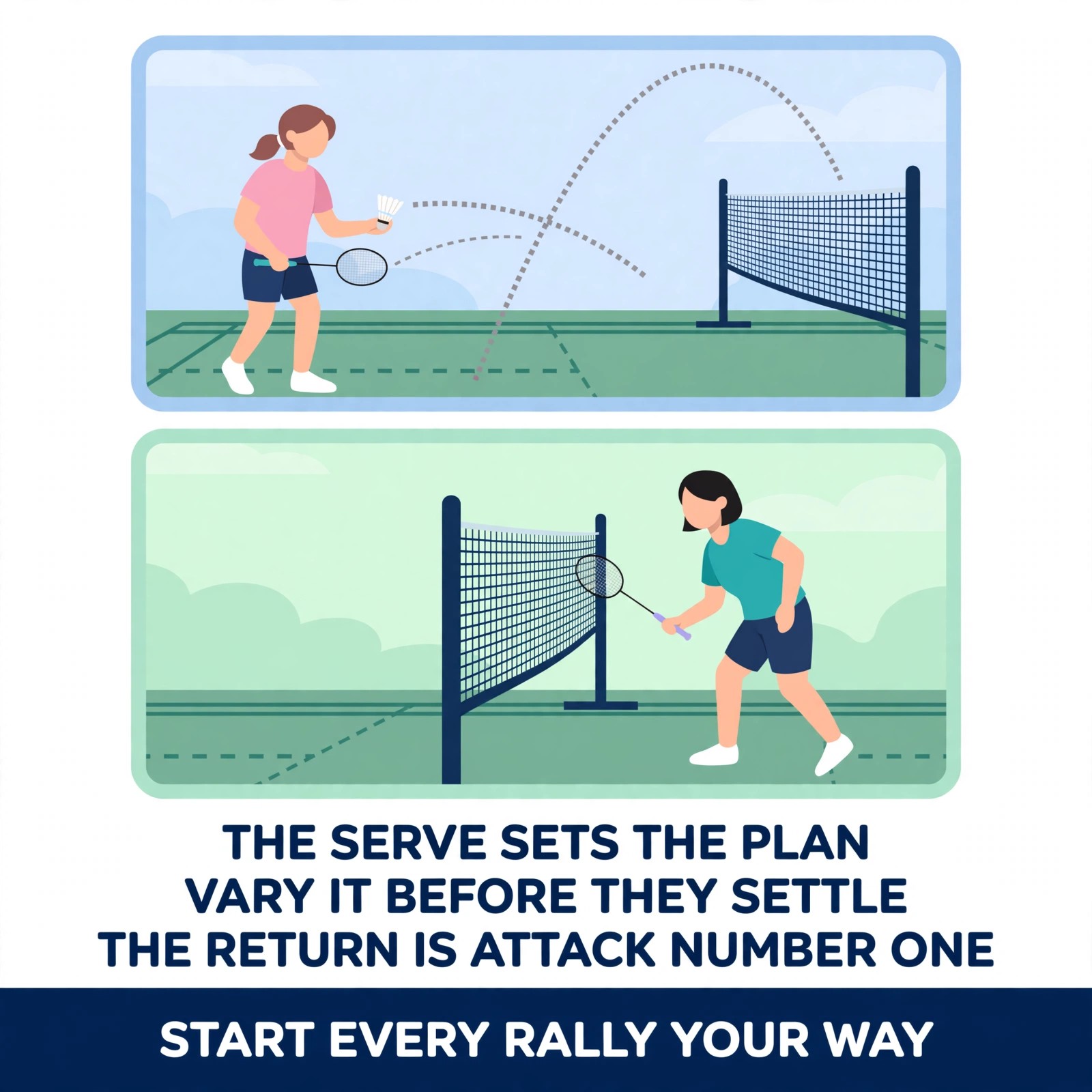
The rally starts before the first shot, at the serve. A serve is not a formality for starting play; it is the first attacking decision of the point. Serving low and tight in doubles invites a weak reply you can attack. Serving deep in singles pushes the receiver back and opens the front court for the next shot. What matters most is variety with the same preparation: if your flick serve and your low serve look identical until the last moment, the receiver must wait, and a waiting receiver is a slow one. Decide what each serve is for before you play it. A serve hit on autopilot is a small gift, and good opponents collect those gifts all match long.
The return deserves the same respect. Where you stand tells the server what you expect, so stand like a player with a plan: weight forward, racket up, ready to step in. Against a low serve, your choices set the tone: a tight net shot keeps the pressure on, a fast push to the back corner turns defence into attack, and a lift is sometimes the honest answer when the serve is too good to attack. Against a deep serve, treat the return like the start of your rally building, not a swing at glory. The players who return well share one habit: they choose early and commit. A half-hearted return, neither attack nor safety, is the worst option on the menu.
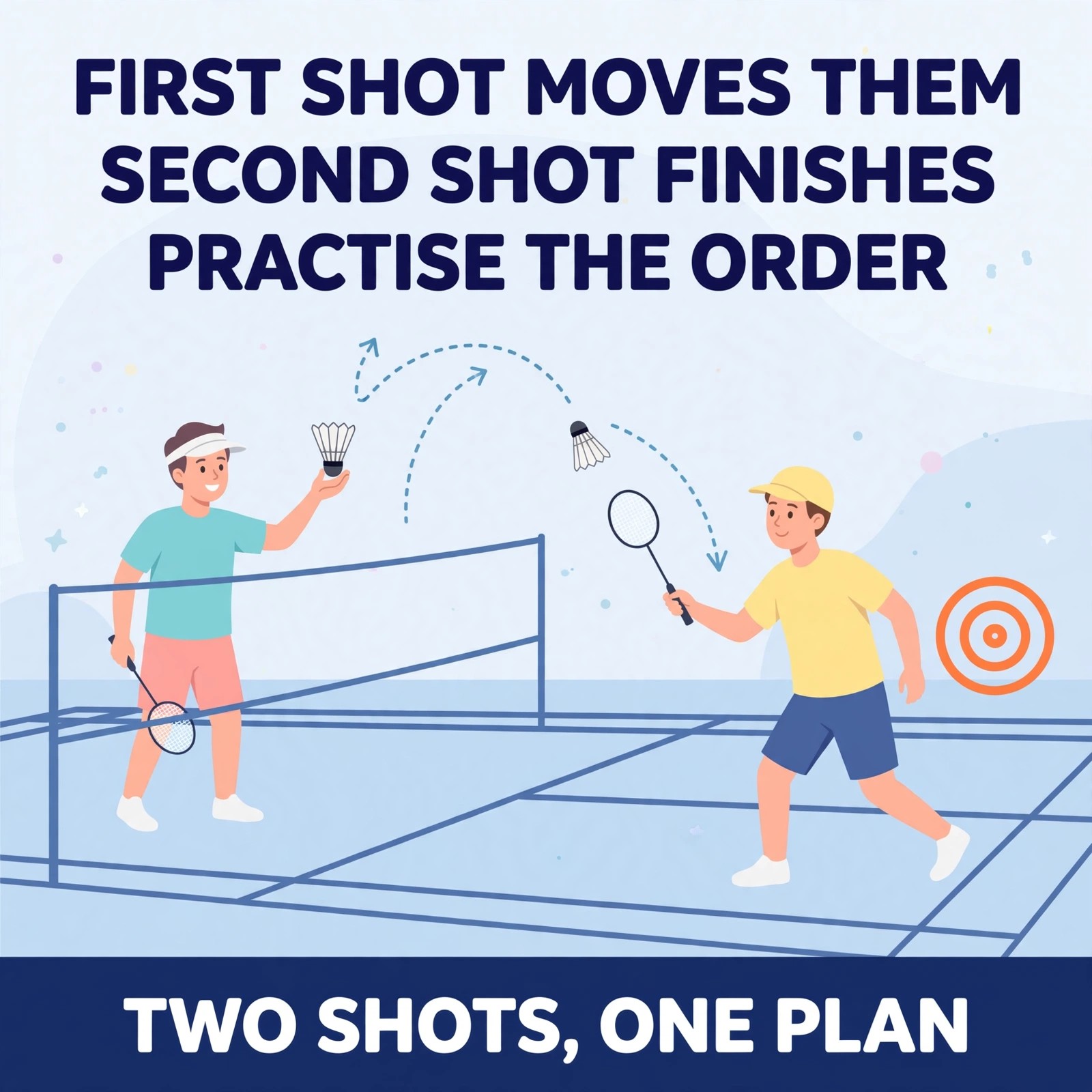
Thinking one shot ahead is enough to change everything. Before you play a shot, know what you want the reply to be. Your drop shot is played to draw a short lift. Your clear to the backhand is played to earn a weak clear back. This is the quiet engine of strategy: shots chosen in pairs, cause and effect. It also protects you, because a player with a plan for the next shot recovers toward the right place automatically, instead of admiring the shot just played. Start small. In practice games, quietly name the reply you want before each shot. Soon the naming stops and the thinking stays, and your power shots begin arriving at moments you created, which is the whole secret of this guide in one sentence.
Myth vs Reality
Myths About Power and Precision Strategy
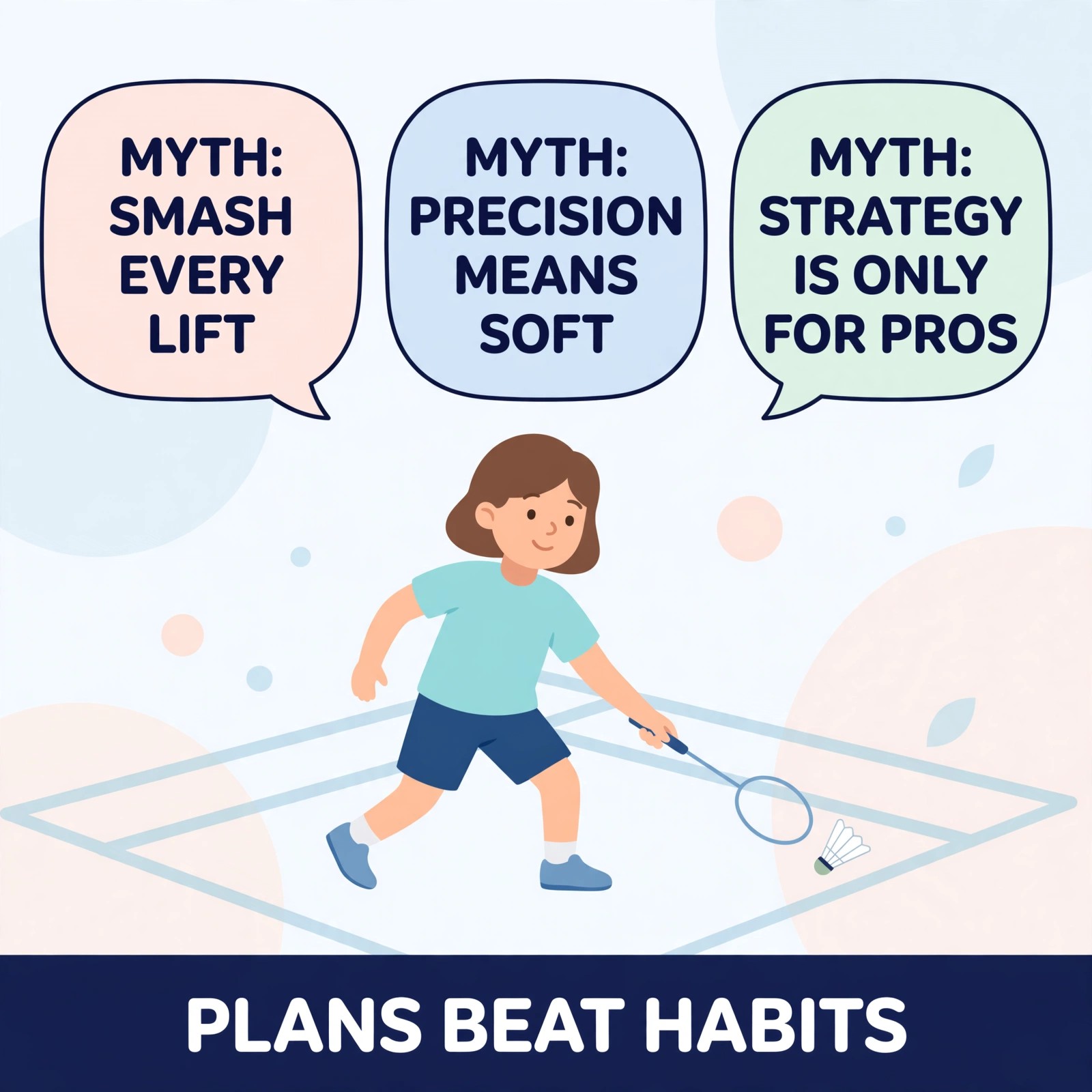
The first myth says a powerful player smashes every lift. Watch what actually happens when someone tries it: the first few smashes land, the defender adjusts, steps back, softens the grip, and starts blocking them into the front corners. Now the smasher is doing all the running, recovering from the back to cover blocks at the net, and the power that was meant to win points is quietly spending their legs. Strong attackers are picky. They smash when the rally has been built, the defender is off balance or moving, and the shuttle sits up kindly. Being selective does not make the smash rarer in the points that matter. It makes it decisive there.
The second myth says precision means playing soft, as if placing the shuttle were the opposite of attacking. A drive played flat and fast into the body is a precision shot. A smash aimed at the hip of a turning defender is a precision shot. Precision simply means the shuttle goes where you chose, at the pace you chose. Soft shots are only one corner of that map. Players who understand this stop apologising for their placement game and start combining: hard shots placed exactly, soft shots placed cruelly. The opponent cannot settle, because nothing about your game announces whether the next shuttle arrives like a hammer or lands like a feather an inch past their reach.
The third myth says strategy is for professionals, and club players should just hit their shots and hope. The truth runs the other way. At higher levels, everyone is fast, fit and technically clean, so small edges are hard to find. At club level, habits are bigger, corners are weaker, and simple plans pay quickly. A beginner who returns to base, tests the backhand corner and aims inside the lines will beat a stronger hitter who plays on instinct, and will beat them more easily every month as the thinking becomes automatic. Strategy is not a layer added after technique. For most players reading this, it is the fastest improvement available, and it costs nothing but attention.
Why Choose Us
Why Players Choose ST Badminton Academy
At ST Badminton Academy, strategy is coached on court, not in a classroom. Classes stay small, with a maximum of 4 students, so the coach can stop a rally and ask the question that matters: why that shot, why now? Players learn to see their own choices the way an opponent sees them. A smash that felt brave gets reviewed honestly if it was played from a stretched position, and a quiet drop that won the rally two shots later gets the credit it deserves. That habit of reviewing decisions, not just swings, is what turns a collection of shots into a game.
Training sessions mix explanation with conditioned games. A game might award double points for a rally won after three or more shots, which forces players to build instead of blasting. Another might ban smashing for a game, so placement and patience have to carry the load. These games feel like play, because they are play, but every rule is quietly teaching a strategy lesson: patience, target choice, reading, and finishing at the right moment. Players in Setapak and across Kuala Lumpur use the same patterns in their social games between sessions, and the lessons transfer because they were learned inside rallies, not from a whiteboard.
Honesty matters in strategy coaching. We will tell you when a plan failed because the idea was wrong, and when the idea was right but the shot let it down, because those two problems have different fixes. We will not promise that tactics make you unbeatable, and we will not sell you a system that only works against players who cooperate. What we teach is a way of seeing the rally: position, balance, habits, margins. Players who learn to see those four things keep improving long after any single course ends, because every match they ever play becomes another lesson they know how to read.
FAQs: Badminton Power, Precision and Strategy in Malaysia (KL)
Below are the questions players ask us most about power, precision and strategy at ST Badminton Academy. If your question is not here, bring it to a trial session and ask the coach while a rally is still fresh in your mind.
Can I play with power and precision if I am a beginner in Setapak or Gombak?
Yes. Power and precision are not advanced extras, they are habits that start with your first lessons. Beginners learn where to stand, when a shuttle is high enough to attack, and how to place simple shots into open space. Small classes keep the corrections personal, so your decisions improve together with your strokes from the very start.
What is the first strategy a new player should learn in KL?
Start with court position. Most points at club level are lost by players who are out of place, not outhit. Learn to return to a good base after every shot, watch where the open space is, and hit toward it. That one habit makes your power shots possible and your placement shots far more dangerous.
How do I know when to smash and when to place the shuttle at club level?
Look at two things: your balance and the height of the shuttle. If you are behind it, balanced, and it sits high enough to hit downward, attack. If you are stretched, late, or reaching up from below net height, place the shuttle somewhere safe and rebuild. Deciding early, before you swing, is the whole skill.
My smashes keep getting blocked. Should I hit harder or aim differently?
Aim differently first. A blocked smash usually means the defender read you early or stood in the right place, not that your smash is weak. Move them with clears and drops, attack their backhand side, vary the angle, and smash the reply instead. Extra power is the last fix, and often the one you never need.
How do I stay calm and choose good shots at match point in close games?
Shrink the game. At match point, pick bigger targets inside the lines, play your most reliable shots, and use your pre point routine exactly as you did at the start. Pressure makes players invent new shots. The players who hold their level are the ones who keep making the same calm decisions they trust.
Do you coach attacking and placement strategy near Wangsa Maju?
Yes. Strategy is coached on court in our Setapak base and nearby areas, including Wangsa Maju. Players work on rally building, target choice and attacking patterns in small groups, with drills set to match realistic rallies. You practise the decision and the shot together, so the plan you learn in training is the plan you use in games.
Where does ST Badminton Academy teach power and precision strategy in Malaysia?
Our base is in Setapak, Kuala Lumpur, and players join us from across the city and from Singapore. Strategy coaching runs inside normal training sessions rather than as a separate theory class: short talks, clear examples on court, then the same patterns repeated in conditioned games until choosing the right shot starts to feel automatic.
How do I book a trial session to test my attacking strategy?
Send us a message on WhatsApp or through the website and tell us your level and what you want to test. We will arrange a trial session in a small group, watch how you build rallies and finish points, and give you honest feedback on your attacking choices before you decide on regular training with us.
What makes Mr Eric Chuar a suitable coach for power and precision badminton?
Mr Eric Chuar coaches strategy the way it is played: on court, in rallies, with the decision explained in plain words. His classes stay small, with a maximum of four students, so he can watch your choices shot by shot and correct the plan, not just the swing. That personal attention is what turns tactics into habits.
Power and Precision Strategy in Action

One Standard for Every Session and Every Player
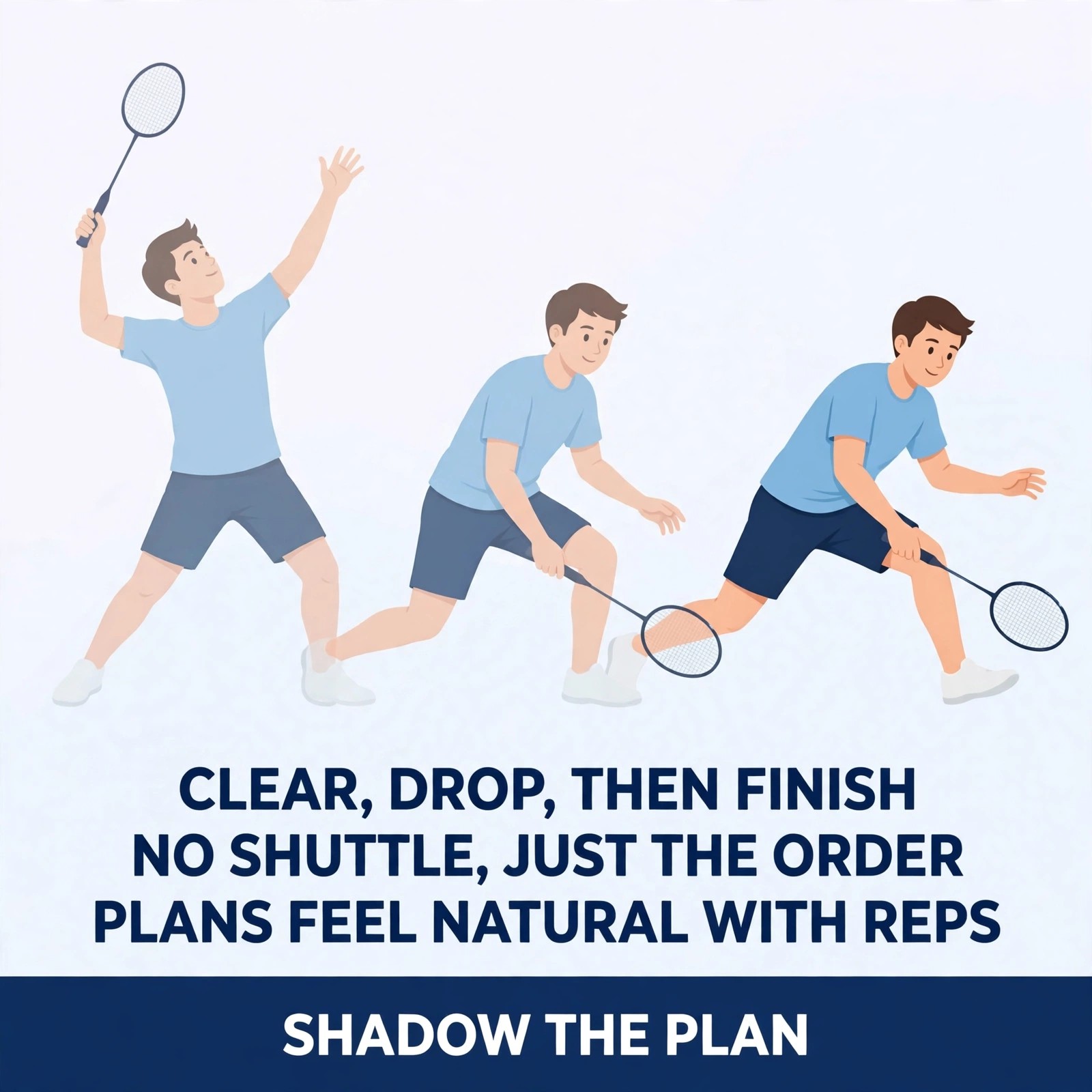
Every strategy session at ST Badminton Academy follows the same coaching standards. Decisions are reviewed honestly, conditioned games always serve a clear teaching point, and no player is promised wins that tactics alone cannot deliver. Feeding and game rules are set to each player level, so beginners learn simple choices first and stronger players are tested with faster, less predictable rallies. Coaches explain the reason behind every pattern, because a player who understands why a plan works can rebuild it alone in any match, against any opponent, long after the session has ended.
| Factor | Smash Everything | Build Then Finish PLAN |
|---|---|---|
| Frequency | 1 or 2 times a week. Mostly for fun and sweat. | Points are built first: clears, drops and drives move the opponent until a gap opens for the finisher. |
| Drills Focus | Basic static feeding. Minimal footwork pressure. | The smash is a finish, not a habit: full power is saved for shuttles met high and in front. |
| Physical Conditioning | Rarely included. Just playing games on court. | Core, agility, and speed training included in every session to prevent injury and build stamina. |
| Tactical Awareness | "Just hit it over." No real game plan. | Video analysis, point construction, and learning to read the opponent's game. |
| Coach Ratio | Large groups (8-10 kids). Coach barely watches you. | Max 4 students. Mr Eric Chuar personally corrects every stroke and movement detail. |
| Goal Setting | Fun and exercise. | Targets grow safer as the score tightens, so precision protects the points that matter most. |
| Long Term Result | Good recreational player. | A player who wins points with plans: pressure first, power on time, and few gifts handed over. |
Badminton Strategy Coaching in Kuala Lumpur
Your next rally already contains a better decision. Come to ST Badminton Academy in Kuala Lumpur and learn to see the court the way strong players do: build the point, read the habits, aim with a margin, and finish on your terms. Small classes, honest coaching, and plans you will actually use in your very next game.






