Top-Rated Badminton Classes To Improve Your Game (Class Guide)
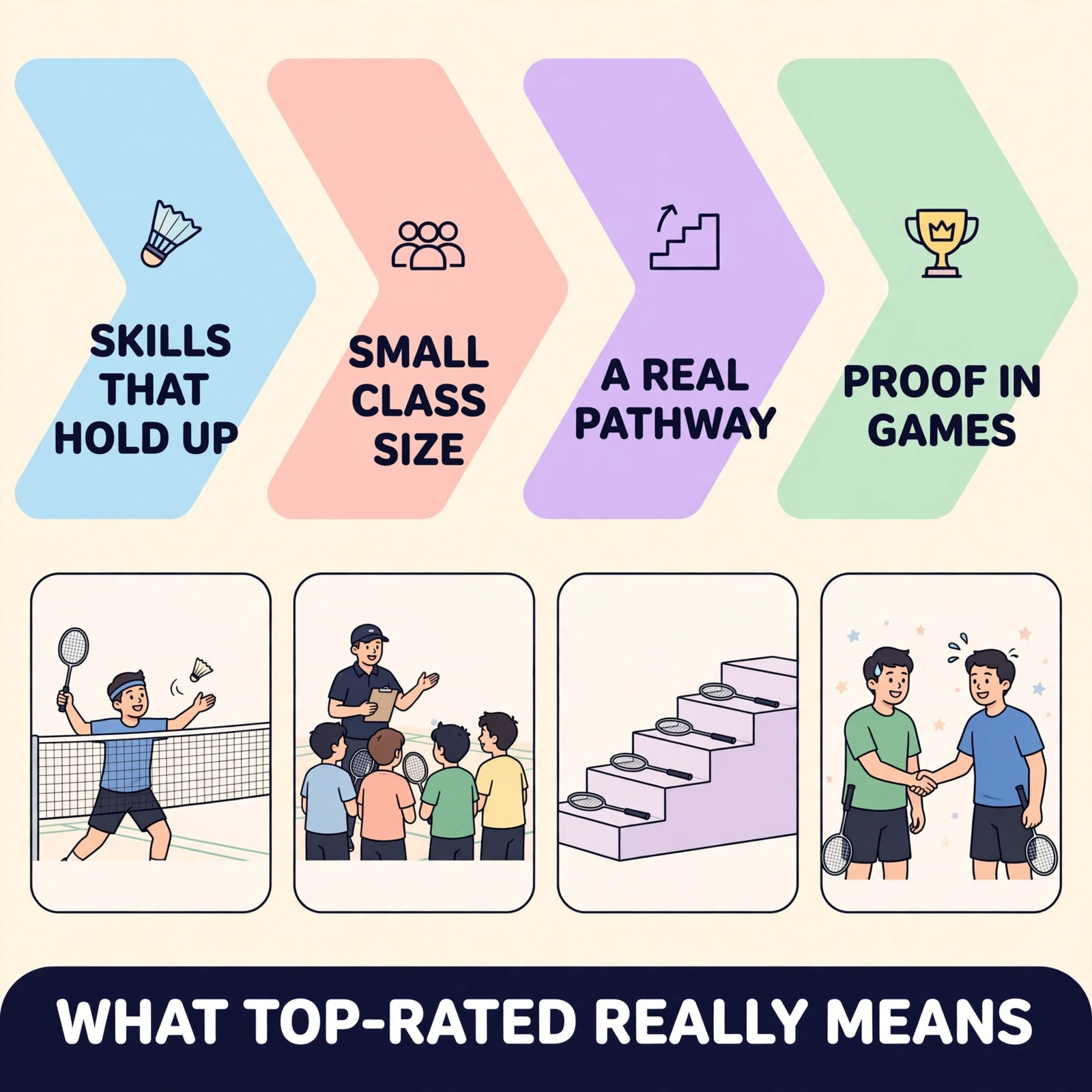
Everyone searching for badminton classes has seen the same claim: top-rated, best in town, number one. Ratings are easy to print and hard to check. What actually makes a class worth your evenings is simpler, a coach who corrects you, a group at your level, sessions with a plan, and progress you can point to.
This page explains how to judge a badminton class by evidence instead of adjectives: what happens inside a well-run session, how levels are organised, what your practice time should look like, and the questions that separate a serious academy from a good poster. We write it from ST Badminton Academy in Setapak, Kuala Lumpur, where groups are capped at max 4 students.
Quality Check #1
What Makes a Badminton Class Worth Joining?
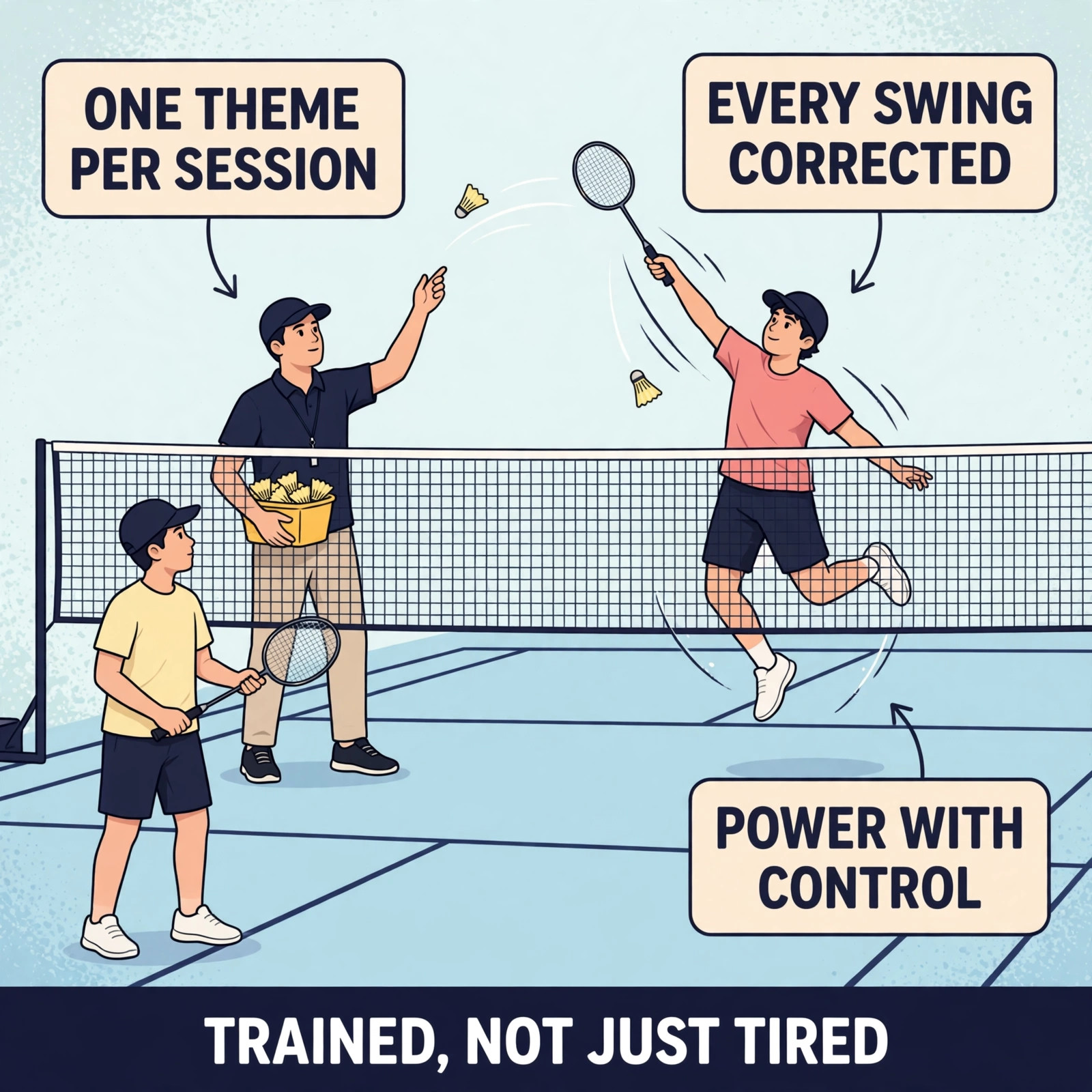
Judge a class by its coaching, not its claims. In a strong class the coach feeds, watches and corrects through the whole session: grips adjusted in week one, footwork patterns repeated until they hold, weak corners found and trained instead of avoided. If the coach mostly organises games and blows a whistle, you are paying for court time, not coaching.
The second test is structure. Well-run classes follow a level system, beginner, intermediate, advanced, with a theme each session and a review point each month. Ask what you would be working on in week six. A real programme has an answer. A casual hit-around has a shrug, and your game after three months will show the difference.
Quality Check #2
Beginner, Intermediate or Advanced: How Levels Work
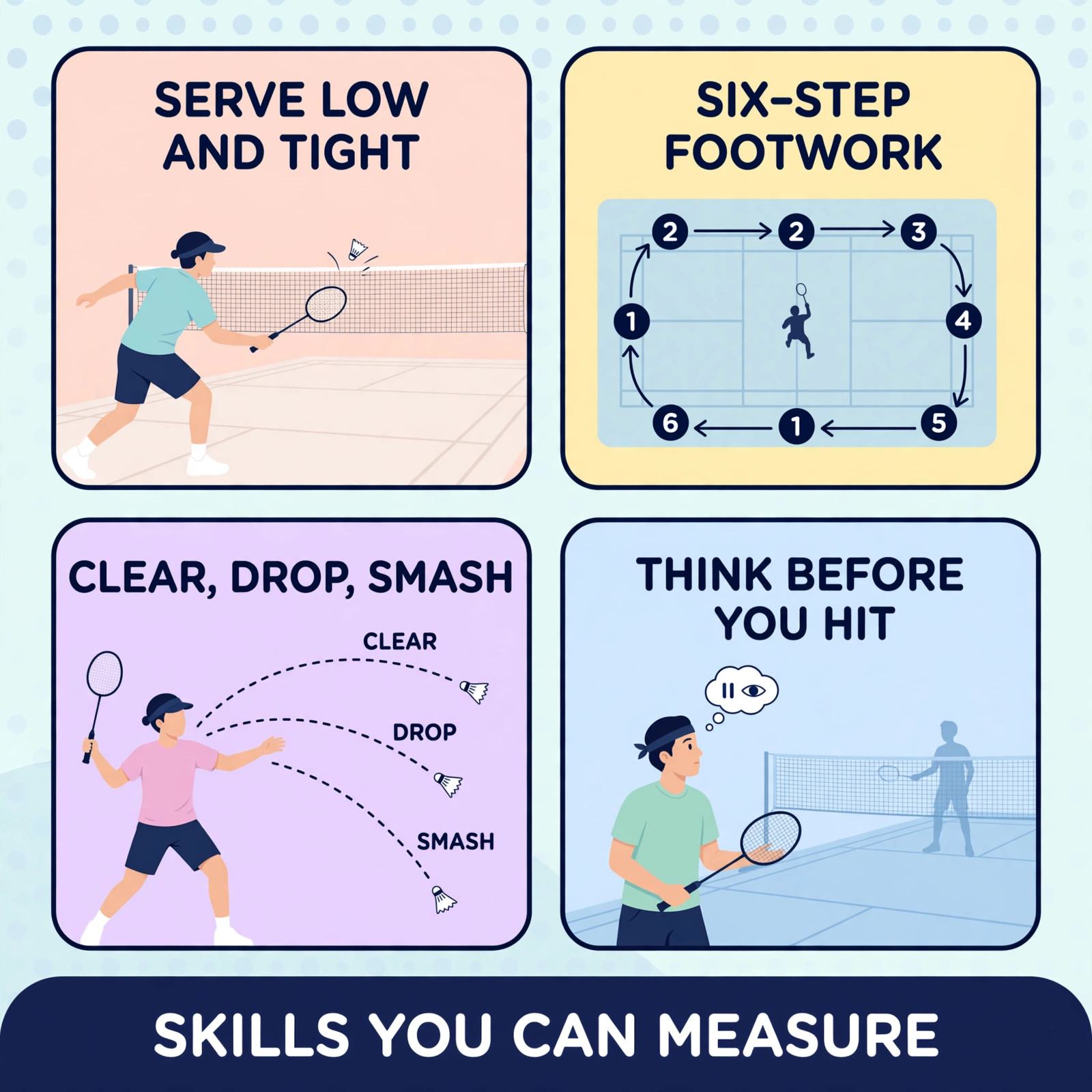
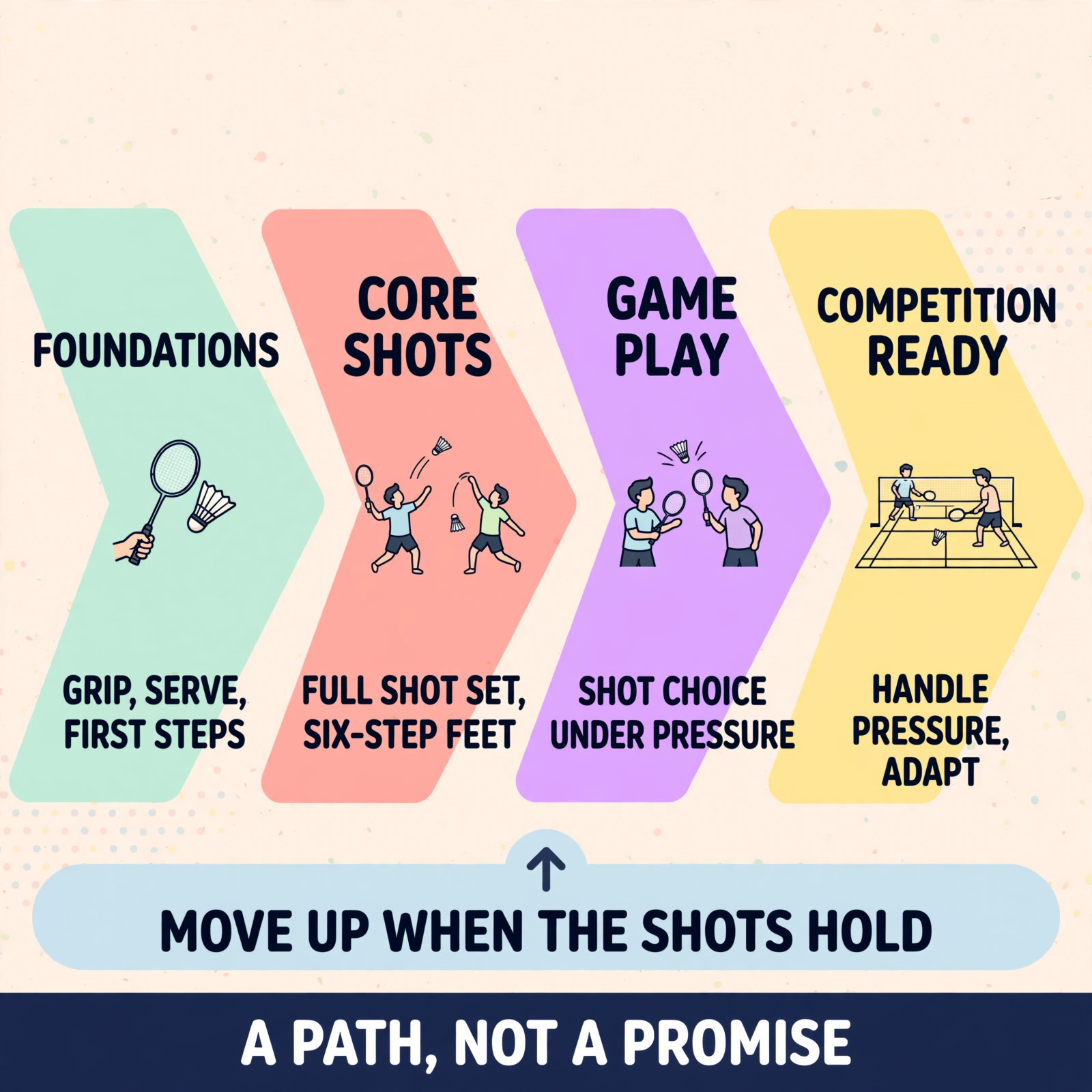
Levels exist so that rallies hold together. Beginner classes build the handshake grip, ready position, the six footwork corners, a legal serve and the basic strokes. Nothing fancy, everything in the right order, because clean basics are what every later skill stands on. Students who rush this stage spend years unlearning it.
Intermediate classes connect the shots into a game: clears that buy time, drops that pull opponents forward, drives and blocks that hold the mid-court, defence that turns into counter-attack. Tactics enter here, where to stand, what to expect, how to build a rally instead of just surviving one.
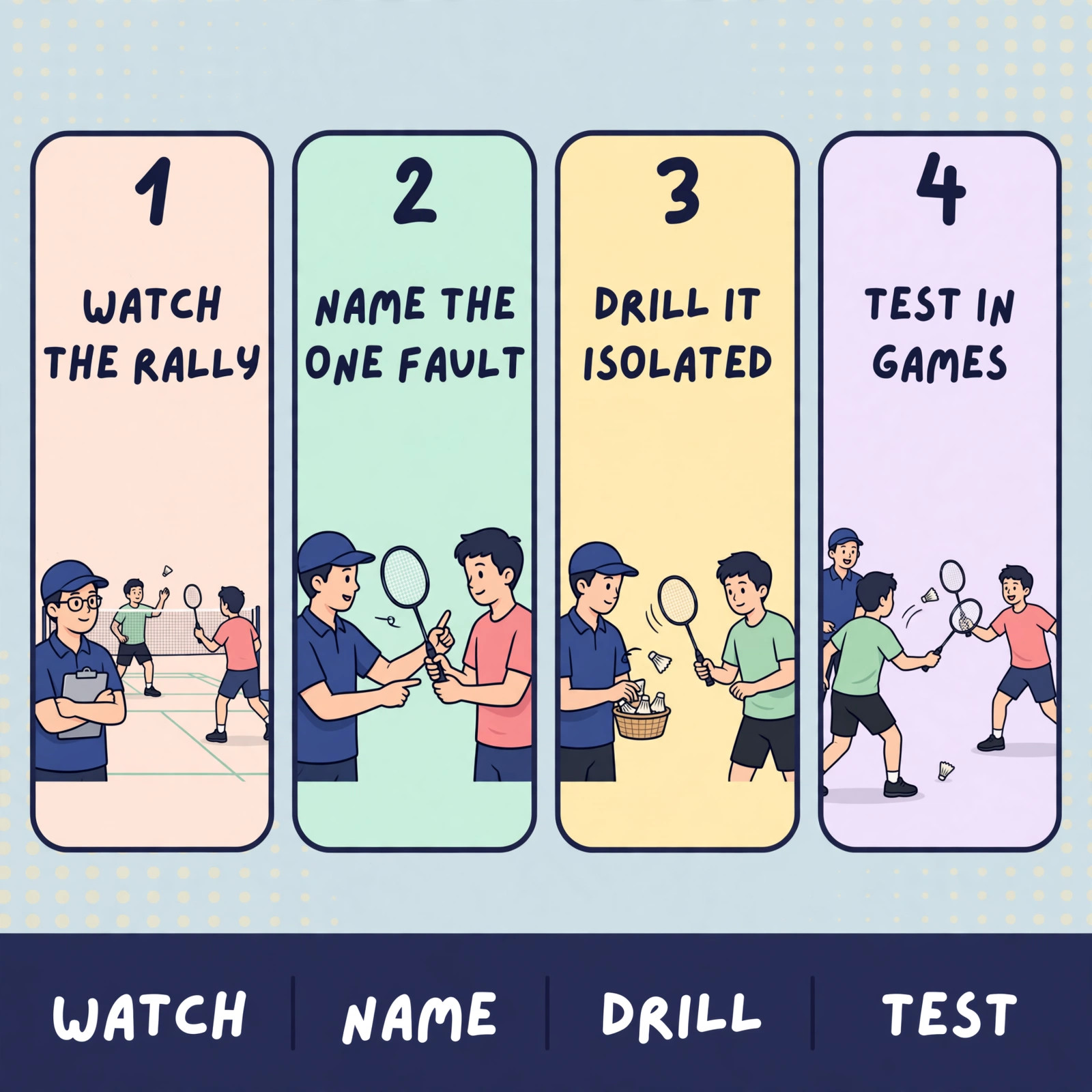
Advanced classes add pressure and decisions: conditioned games, patterns played against stronger opponents, deception from one preparation, and match plans reviewed afterwards. At every level the pattern is the same, learn the skill, drill it with targets, test it in games. A class missing the third step produces drillers, not players.
Quality Check #3
How Do You Find a Coach Who Actually Coaches?
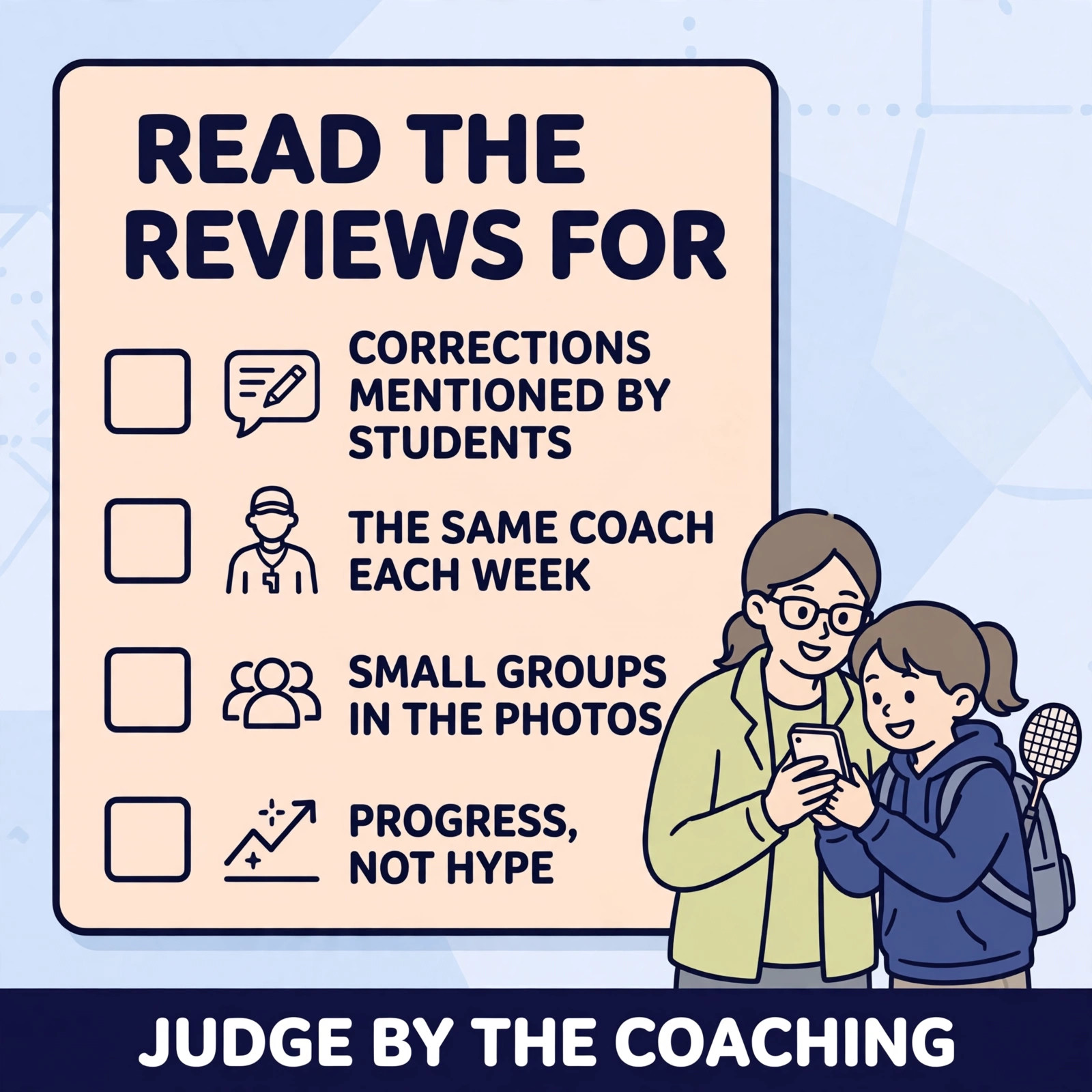
Finding the right coach is the highest-value research you will do. Look for playing and coaching experience, yes, but test it directly: watch a session and count the corrections. A good coach corrects early, in plain words, one fix at a time, and can explain why a drill exists. Ask how they would handle your specific weakness; a coach with a method describes a process, not a promise.
Mr Eric Chuar leads coaching at our academy, with over 15 years of coaching experience in Singapore and Malaysia. His students, juniors aiming at school and state pathways, and adults rebuilding their games, get the same treatment: an honest assessment, targets in plain language, and reviews against those targets. No guarantees of trophies; a guarantee of being watched properly.
Be careful with borrowed glory. A famous name on a poster, a celebrity visit, a wall of other people’s medals, none of it corrects your backhand. What improves you is a coach who knows your game because he watches it every week. Small classes make that possible; it is why our groups stop at max 4 students.
Quality Check #4
How Should You Practise Between Classes?
Once the basics sit correctly, improvement comes from how you practise, not how long. Every strong session repeats the same rhythm: warm up and move, drill one theme with a target, then play games where that theme is worth points. Consistency first, speed second, power last, power built on a broken shape just breaks faster.
Short, regular practice beats rare marathons. For most students, one or two coached sessions a week plus one social game moves the game steadily: the coached sessions install the correction, the game shows whether it survives real rallies. Between sessions, ten minutes of shadow footwork at home does more than an extra hour of random hitting.
Measure progress by shots, not feelings. A clear that now reaches the back tramlines under pressure. A serve that lands tight nine times out of ten. A backhand corner that stops bleeding points. When a class sets targets like these and reviews them with you, you never have to wonder whether you are improving, you can see it, rally by rally.
The Match Mindset
How Players Handle Nerves and Keep Improving
Nerves are part of competing, even in class games. The fix is not pretending to be calm; it is shrinking the moment. Breathe out before the serve. Play one rally at a time. Run the routine you practised, same grip check, same ready position, because routines give the mind a job while the body does its work.
Visualisation helps more than adults expect: before a match, picture the first three shots going well, the serve tight, the feet moving, the return pushed deep. Players who rehearse the start rarely donate the first five points. And when a rally goes wrong, the reset is a skill too: turn away, breathe, next point. Coaches teach it like a stroke, because it is one.
Clubs and leagues add the last ingredient: real opponents. Class games teach patterns; league nights test them against players who do not feed you kindly. Join both if you can, train where you are corrected, compete where you are tested, and bring what the matches expose back into your classes as the next target.
Myth vs Reality
Myths About Top-Rated Badminton Classes
Myth: “A top-rated class must be the biggest and most famous one.” Reality: ratings and fame do not correct your footwork. A small class where the coach knows your weak side will improve you faster than a famous hall where you are one of thirty.
Myth: “More hours automatically means more improvement.” Reality: one focused session with targets beats three hours of random hitting, because random hitting practises your mistakes. Myth: “Online videos can replace a coach.” Reality: videos can support your practice, but nobody on a screen watches your grip, correction needs eyes on you.
Myth: “You must start young or forget about becoming a good player.” Reality: juniors have a pathway to school, district and state teams, and it takes years of structured work, but adults improve enormously too, at their own targets. What both need is the same: the right level, a watching coach, and steady weeks.

Why Choose Us
Coaching Standards Behind Our Classes
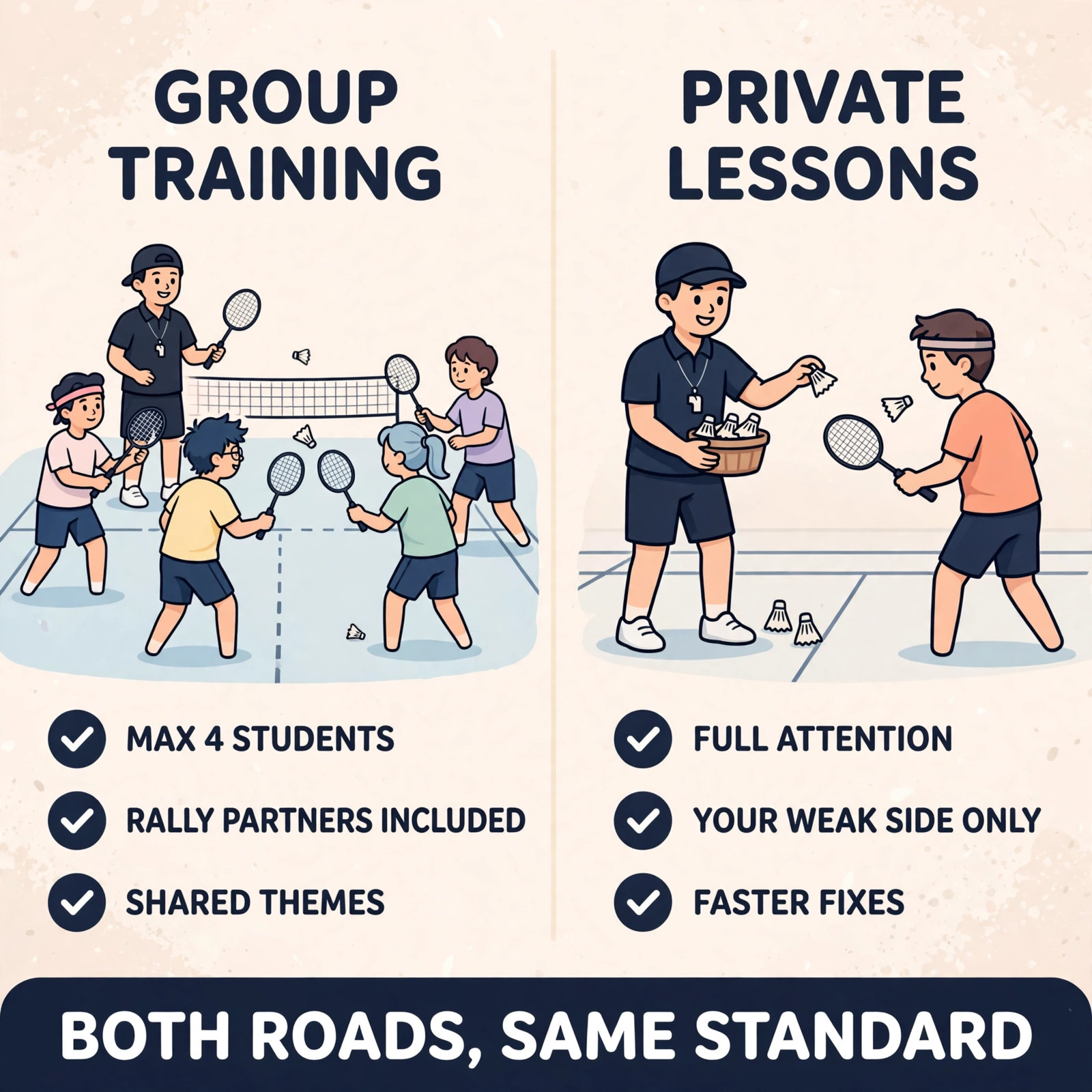
At ST Badminton Academy KL, we would rather be judged by a session than by a slogan. Our classes run in small groups of max 4 students, grouped by level, each with a theme, targets and reviews. Juniors follow a structured path from school team towards district and state selection; adults train to clear targets of their own.
Mr Eric Chuar has over 15 years of coaching experience in Singapore and Malaysia, and he coaches our classes personally. Students describe the same experience: he finds the habit that is holding the whole game back, explains it simply, and builds the drill that fixes it. That is what coaching is supposed to feel like.
Our academy is based in Setapak, Kuala Lumpur, convenient for players from Wangsa Maju, Melati Utama, Danau Kota and Gombak. If you are comparing classes, come with questions and judge the answers, or message us your level and goal first, and we will tell you honestly which group fits, and what your first month would look like.
FAQs: Choosing a Badminton Class in Malaysia (KL)
These are the questions players and parents ask us most when comparing badminton classes in Kuala Lumpur. If your question is not here, message us, tell us your level and your goal, and we will give you a straight answer about whether our classes fit you.
What should I look for in a badminton class if I live in Setapak or Gombak?
Look for three things: a coach who corrects technique by watching every student, easiest in small groups like ours, capped at max 4 students; a clear level system with session themes and monthly reviews; and communication you can test before joining, by asking what your first month would cover. Experience matters, but correction is the proof.
Should I join a badminton club or take classes in KL?
Both can work, and most serious students use both over time. Group classes give you partners, rallies, match decisions and coaching at a steady rhythm. Private lessons give you the coach alone to rebuild one shot or prepare for a specific event. Most players build their base in a group, then add private blocks when a problem needs them.
How long should I practise each day to improve at a steady level?
Home practice supports class work well: shadow footwork in a clear space, serves against a wall, and reviewing your own phone video to spot one habit. It cannot replace rallies against real opponents or a coach’s eyes on your technique. Treat online material as a supplement, ten honest minutes beats an hour of copying professionals.
Can a player start late and still become good, or must they begin at any age?
There is no single right number, but a pattern works: beginners improve on short, regular sessions, twenty to thirty focused minutes of drills a few times a week, while class students build through weekly sessions plus one game. Rest days are part of the plan; tired legs learn slowly. Steady weeks beat heroic ones.
Is there a real difference between playing recreationally and classes?
Yes, and the difference shows in the training. Recreational play is about enjoyment and exercise, with looser rallies and less correction. Competitive training adds targets, conditioned games, match plans and reviews, every drill has a score attached. Many of our students do both: classes for the competitive work, social games for the fun that keeps them playing.
Do you offer badminton classes near Wangsa Maju?
Message us with your playing background, your goal and the days you are free. We will recommend the group at your level, describe what your first month would cover, and arrange a first session at our Setapak academy. If a private block suits your goal better, we will say so. Straight answers first; the decision stays yours.
What should I bring to a badminton class in Malaysia?
Bring proper non-marking court shoes, light sportswear, a water bottle and a small towel. Bring your own racket if you have one; if you are still choosing, ask us before buying, grip size and balance matter more than brand. A spare shirt helps in warm halls, and a notebook is useful if you like tracking your targets.
How long does it take to see improvement from badminton lessons?
Most students feel a clear difference within the first month of weekly classes: rallies last longer, the drilled shots start appearing in games, and the weak corner leaks less. Bigger changes, rebuilding a stroke, or preparing for selection and tournaments, take a few months of steady sessions and honest practice between them.
What makes Mr Eric Chuar a suitable coach for serious badminton?
Mr Eric Chuar has over 15 years of coaching experience in Singapore and Malaysia, and he leads our coaching personally at the Setapak academy. Students value his method: watch first, explain plainly, set a target, review it. If you want a coach who knows your game by name and weak side, that is his standard.
Badminton Classes and Coaching Standards in Action


What It Takes to Make Real Progress
A student here is progressing well when the trained shots survive real games: the grip stays correct under pressure, footwork recovers to base without thinking, the serve stays legal and tight, and each month's target gets reviewed and replaced. Our coaching standards below are the checkpoints our coaches use to judge whether a target is truly met.
| Factor | Poster Promises | Coaching That Delivers PROOF |
|---|---|---|
| Frequency | 1 or 2 times a week. Mostly for fun and sweat. | A coach feeding and correcting through the whole session, not organising games from a chair. |
| Drills Focus | Basic static feeding. Minimal footwork pressure. | Small level-based groups: max 4 students, matched so rallies hold and drills fit. |
| Physical Conditioning | Rarely included. Just playing games on court. | Core, agility, and speed training included in every session to prevent injury and build stamina. |
| Tactical Awareness | "Just hit it over." No real game plan. | Video analysis, point construction, and learning to read the opponent's game. |
| Coach Ratio | Large groups (8-10 kids). Coach barely watches you. | Max 4 students. Mr Eric Chuar personally corrects every stroke and movement detail. |
| Goal Setting | Fun and exercise. | Set targets reviewed monthly: clears to the back line, serves on target, corners without stumbling. |
| Long Term Result | Good recreational player. | A player fixed week by week, whose weak shots get trained instead of avoided. |
Badminton Classes in Kuala Lumpur
This page covered how to judge a badminton class by what matters: correction, structure, levels, practice quality and honest targets, not slogans. ST Badminton Academy KL runs small group classes of max 4 students in Setapak, for juniors on the school-to-state pathway and adults with targets of their own. If you are in Wangsa Maju, Gombak, Cheras or nearby, contact us today.






