Chinese Taipei Men’s Singles Badminton Star
Su Li Yang

Chinese Taipei
Player Event: Men’s singles
Born 27 December 2001
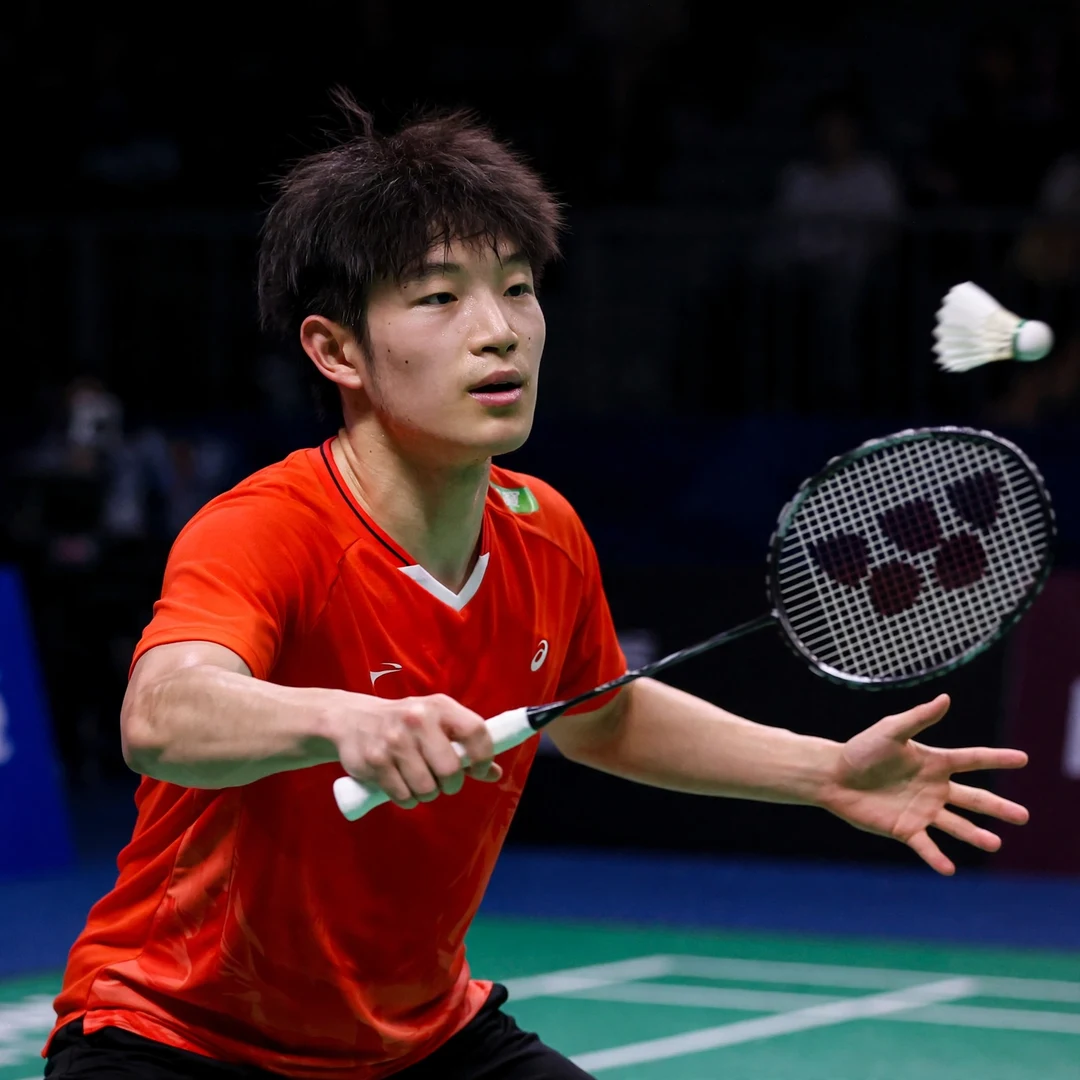
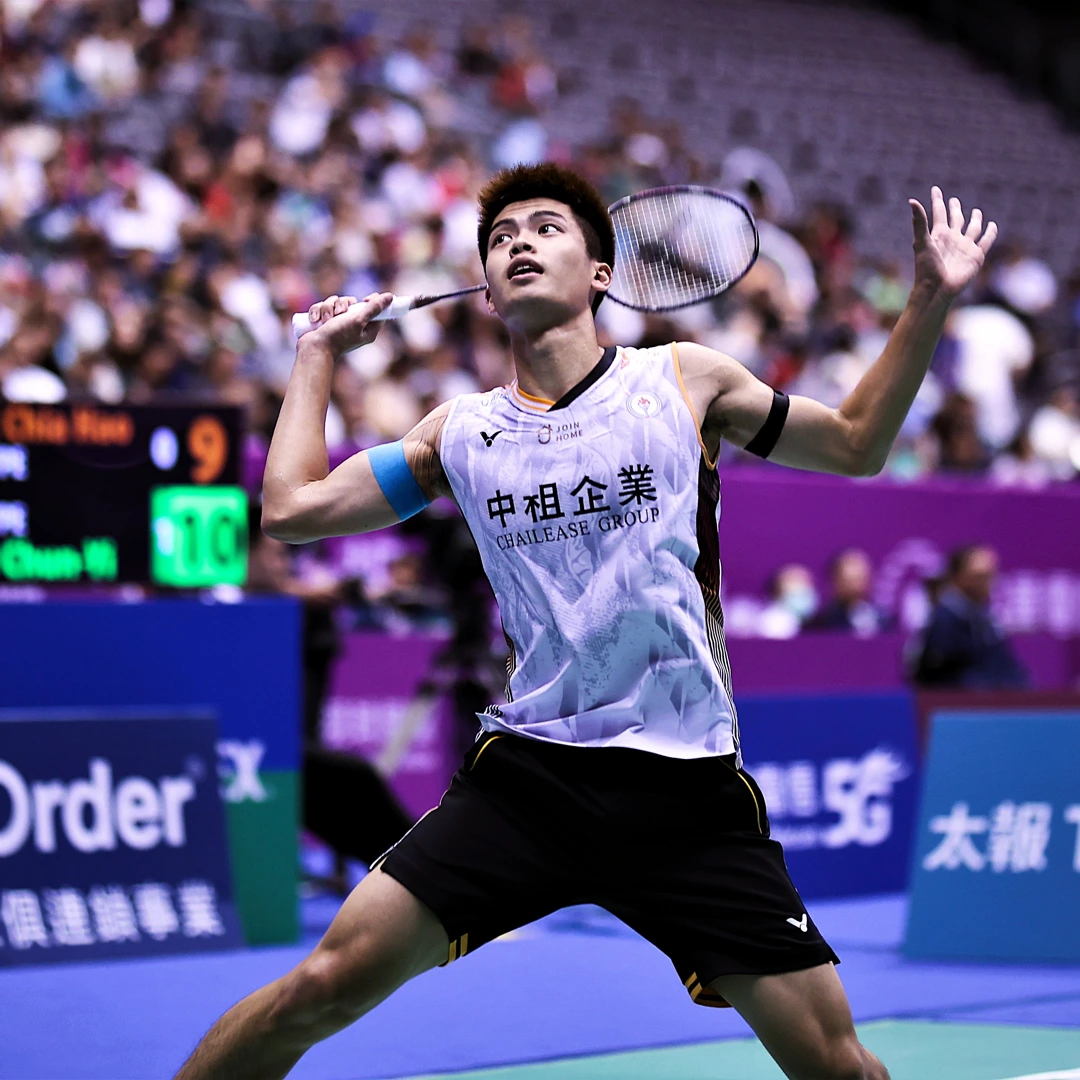
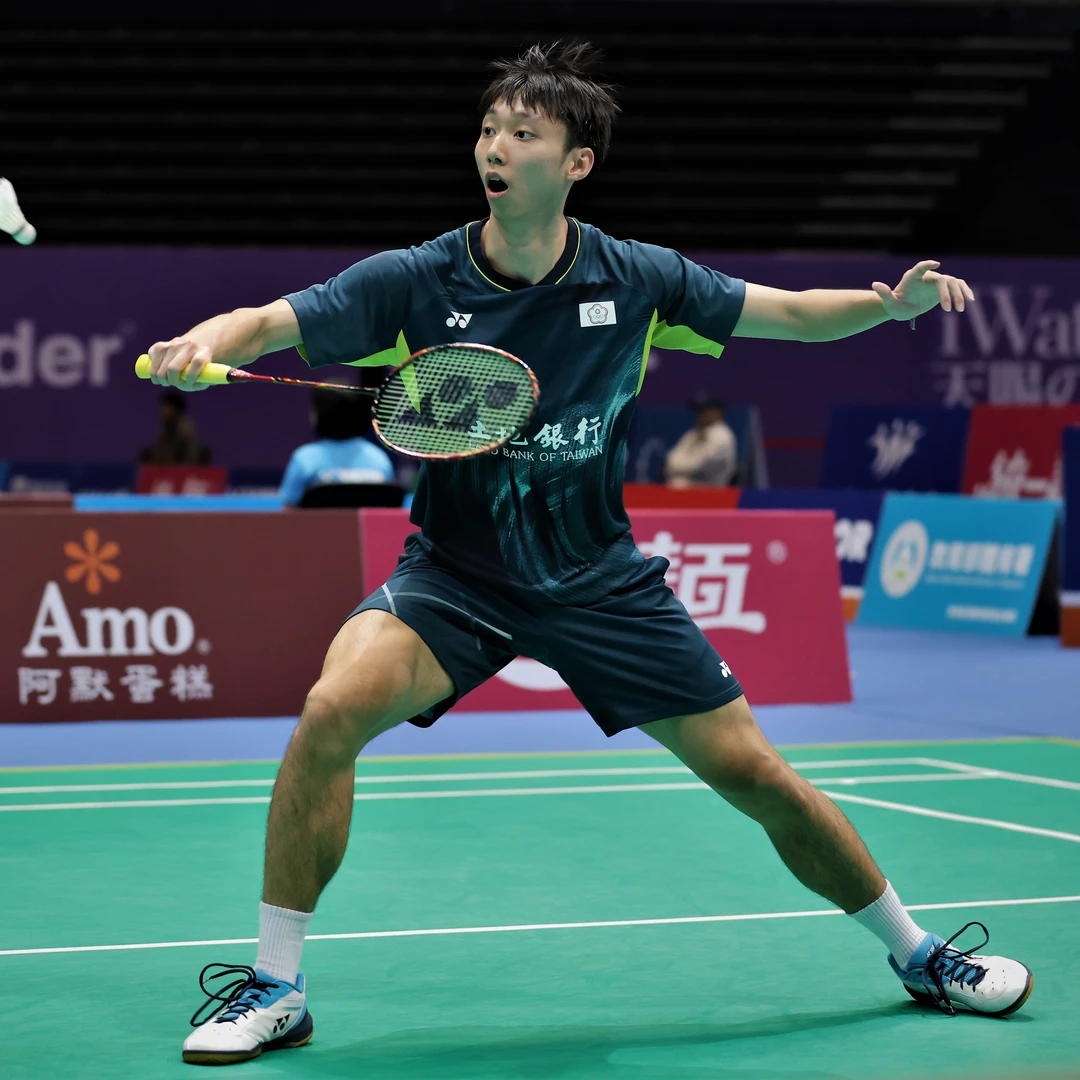
Playing Style: Right-handed all-court player, known for his fast hands, sharp attacking game and – the hard-learned lesson of his career – the patience to control the pace of a rally
Understanding Su Li Yang (Chinese Taipei Badminton Star)
Su Li Yang is a Chinese Taipei men’s singles badminton player who spent years collecting silver medals before finally turning them into gold. Born on 27 December 2001, he is 1.82 metres tall and holds the racket in his right hand. In June 2026, ranked only No. 46 in the world, he won the US Open in Fullerton, California for his first BWF World Tour title, beating former world No. 1 Kidambi Srikanth in the final. In the Week 43 BWF world rankings of 20 October 2026 he stands at No. 40 with 36,750 points.
Early Life in Taipei and a Badminton Family
Su Li Yang was born into badminton: his father, Su Chih-ming, was also a badminton player, and Su picked up a racket in the first grade of elementary school. He was educated at Datong High School in Taipei, where his talent showed early, and later studied at the University of Taipei. In 2017, at the age of 16, he was already reaching the semi-finals of a senior international tournament, the Sydney International in Australia.
First International Title at 16
His junior years brought finals almost everywhere he played. In 2017 he finished runner-up at three BWF junior international events – the Australian Junior International, where he lost the final to his compatriot Lee Chia Hao, and the French and Slovak junior internationals, where he lost twice to Chen Shiau-cheng. A year later came the breakthrough: at the 2018 Italian Junior International he beat Yu Sheng-po 21-18, 21-17 to win his first international title, at 16 years old.
Home Final at the Taipei Open
In 2019 he added a second junior crown, beating Yu Sheng-po again, 21-16, 21-18, to win the Mongolia Junior International. The same year, at the Asian Junior Championships in Suzhou, China, he reached the semi-finals before losing 9-21, 17-21 to China’s Liu Liang – taking home the bronze medal and proof that he belonged among Asia’s best juniors.
US Open Champion 2026
The senior tour, though, taught him how hard finals are to win. In 2022, at the age of 20, Su reached three BWF International finals in a single season – and lost all three: the Bonn International in Germany, where he fell 19-21, 17-21 to Malaysia’s Justin Hoh, and the Mongolia and Bendigo internationals in Australia, where he lost both finals to his compatriot Lin Chun-yi. In 2023 he added a fourth silver medal at the Slovenia Open, losing the final to India’s Sameer Verma.
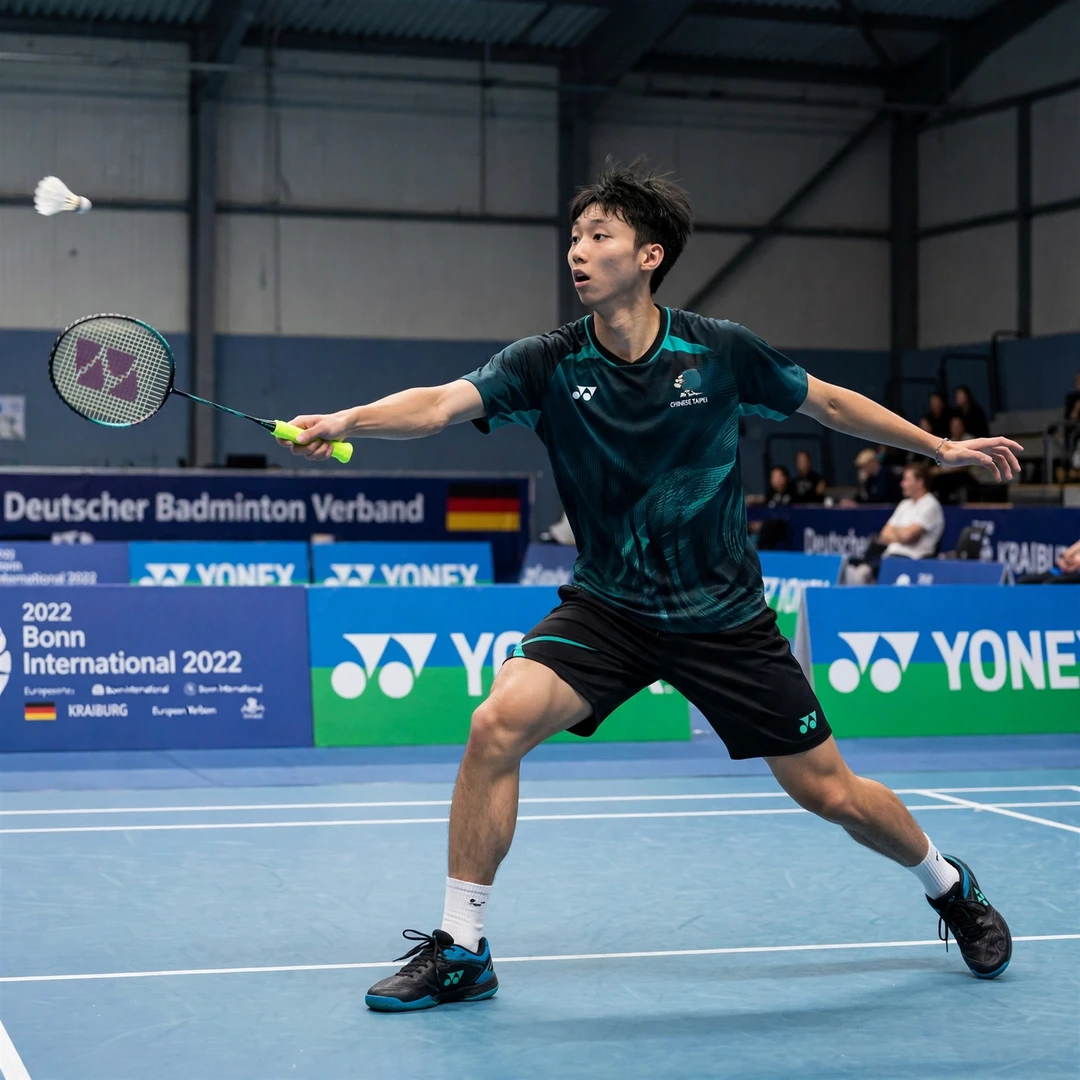
Career Milestone #1
Junior Titles and a First World Tour Final at Home
Then came the chance every Taiwanese player dreams of: a World Tour final at home. At the 2023 Taipei Open, a Super 300 event at Taipei Arena, Su reached the first BWF World Tour final of his career in front of his home crowd. He pushed Indonesia’s Chico Aura Dwi Wardoyo to 21-23 in the first game before losing 21-23, 15-21 – another silver medal, but now on the big stage, at 21 years old.
The ranking kept climbing even while the trophies stayed away. In May 2024 Su reached a career-high world No. 29 – inside the top 30 without a single senior title to his name. For a player who had been winning junior events since he was 16, the wait for a first professional title was becoming the story of his career.
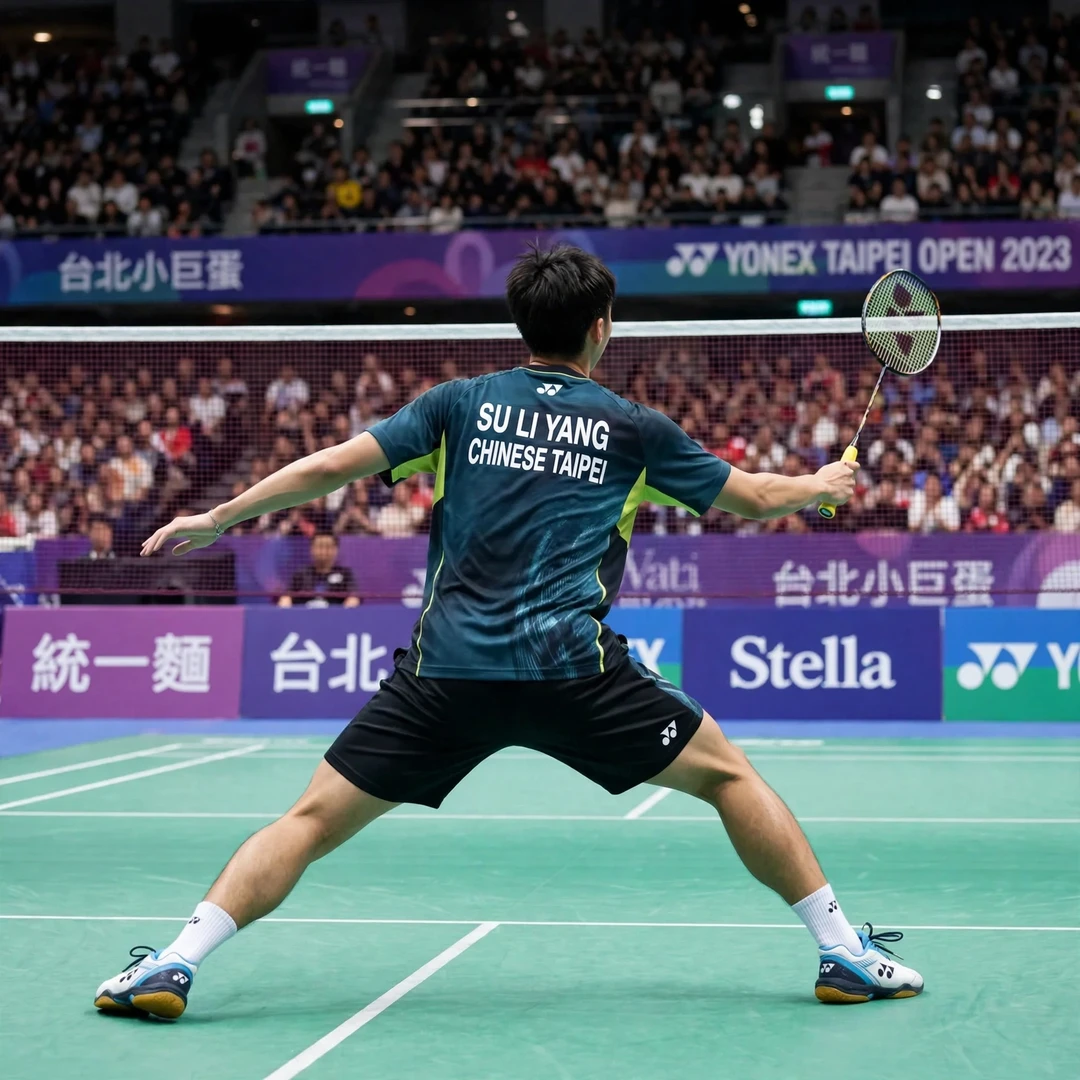
Career Milestone #2
Team Silver in Germany and the Confidence Battle
Team badminton gave him a different kind of medal while he waited. At the 2025 World University Games in the Rhine-Ruhr region of Germany, Su helped Chinese Taipei to the silver medal in the mixed team event – a major international honour, earned as a student-athlete with the University of Taipei squad, and a reminder that his game still delivered when it mattered.
By then, though, his singles results had stalled, and his coach Lee Sung-yuan later explained why. Su had a habit of playing very hastily, trying to beat opponents quickly and prove himself; each failure to capture gold fed the next one, he fell into a vicious cycle, and his confidence drained away. The ranking that had touched No. 29 drifted back into the forties.
The rebuild was built on one word: patience. Instead of trying to finish every rally early, Su worked on controlling the pace – constructing points, defending one more shot, and choosing the moment to attack. It is the hardest change for a naturally fast, attacking player to make, because it asks him to distrust his first instinct and trust the rally instead.
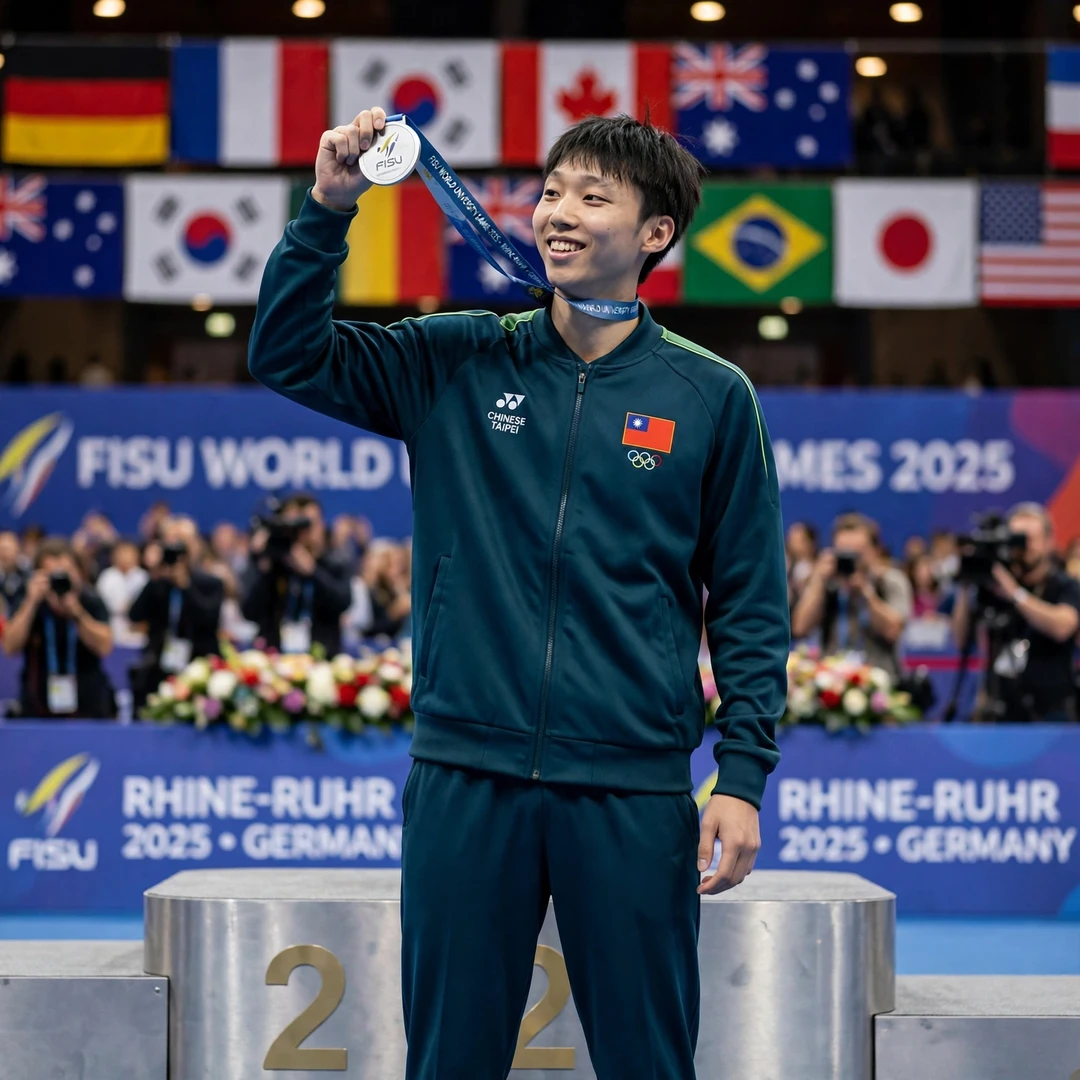
Career Milestone #3
US Open Champion: The First World Tour Title
The first proof that the new approach worked came in May 2026 at the Thailand Open, where Su beat Kidambi Srikanth – the former world No. 1 from India – in the round of 16 in three games. Beating a player of that class, with patience rather than haste, told Su and his coach that the years of silver medals had finally taught him how to win.
Six weeks later, in Fullerton, California, everything came together at the US Open, a Super 300 tournament. Su arrived as the eighth seed and the world No. 46. In the semi-finals he ended the dream run of India’s young Rounak Chouhan, winning 21-17, 21-19 to reach his second World Tour final – and this time, he was determined the story would end differently.
The final, on 28 June 2026, was a classic of youth against experience. Su took the first game 21-15 against Kidambi Srikanth, lost the second 16-21, and then, with both men tired, played the calmest badminton of his life: at 9-7 in the decider he won eight straight points and closed the match 21-9 after 69 minutes. ‘I can’t believe I did it,’ he said. ‘I’m just happy and excited. I really wanted to win a World Tour title. This is my first World Tour title. I believe I can win more.’
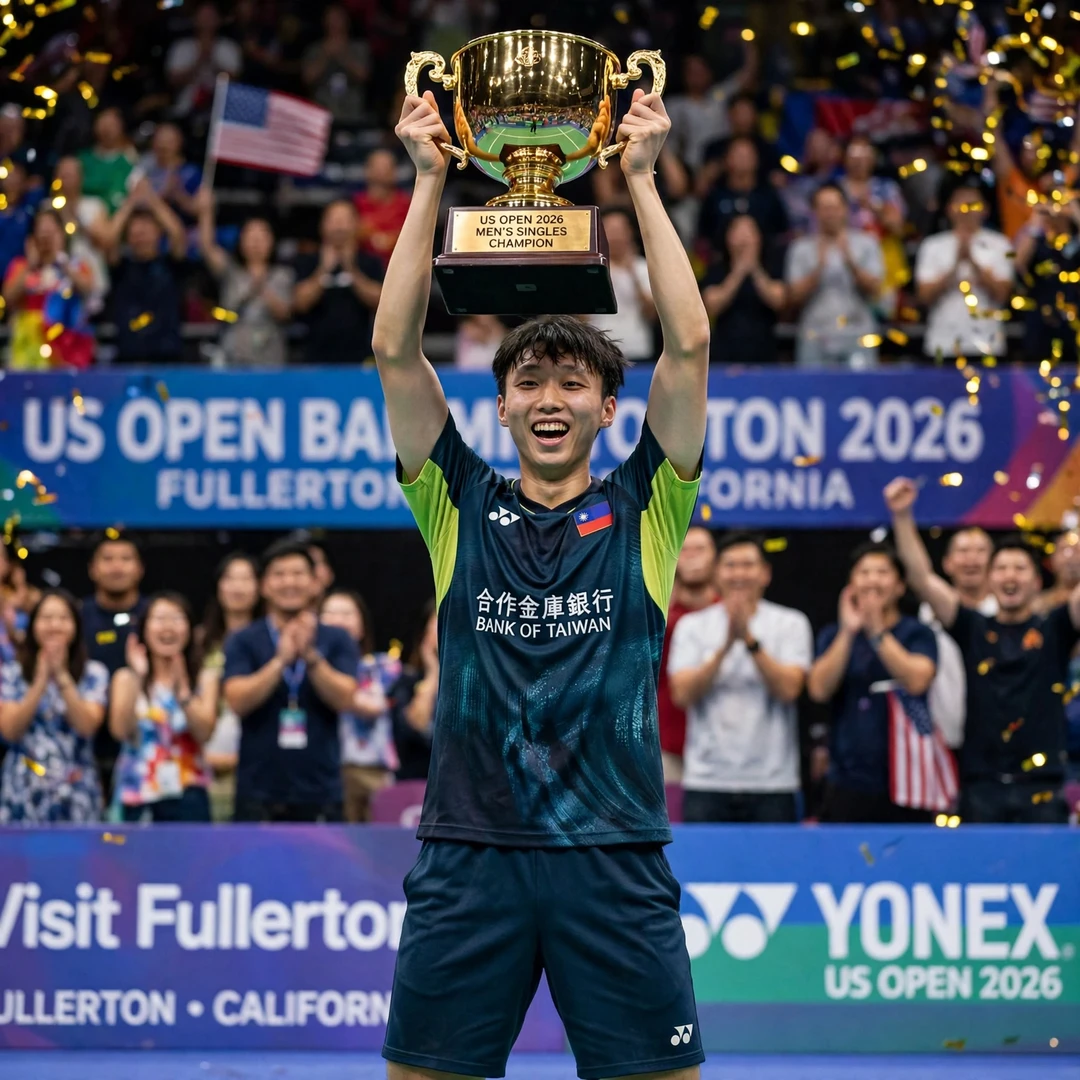
Career Milestone #4
World No. 40 and a Second Title in Europe
The title changed how his whole career reads. The junior gold medals of 2018 and 2019, the four lost International finals, the home final lost in Taipei, the career-high ranking with no title attached – all of it became one story: a talented player who had to learn patience before his talent could win. At 24, Su Li Yang was finally a World Tour champion.
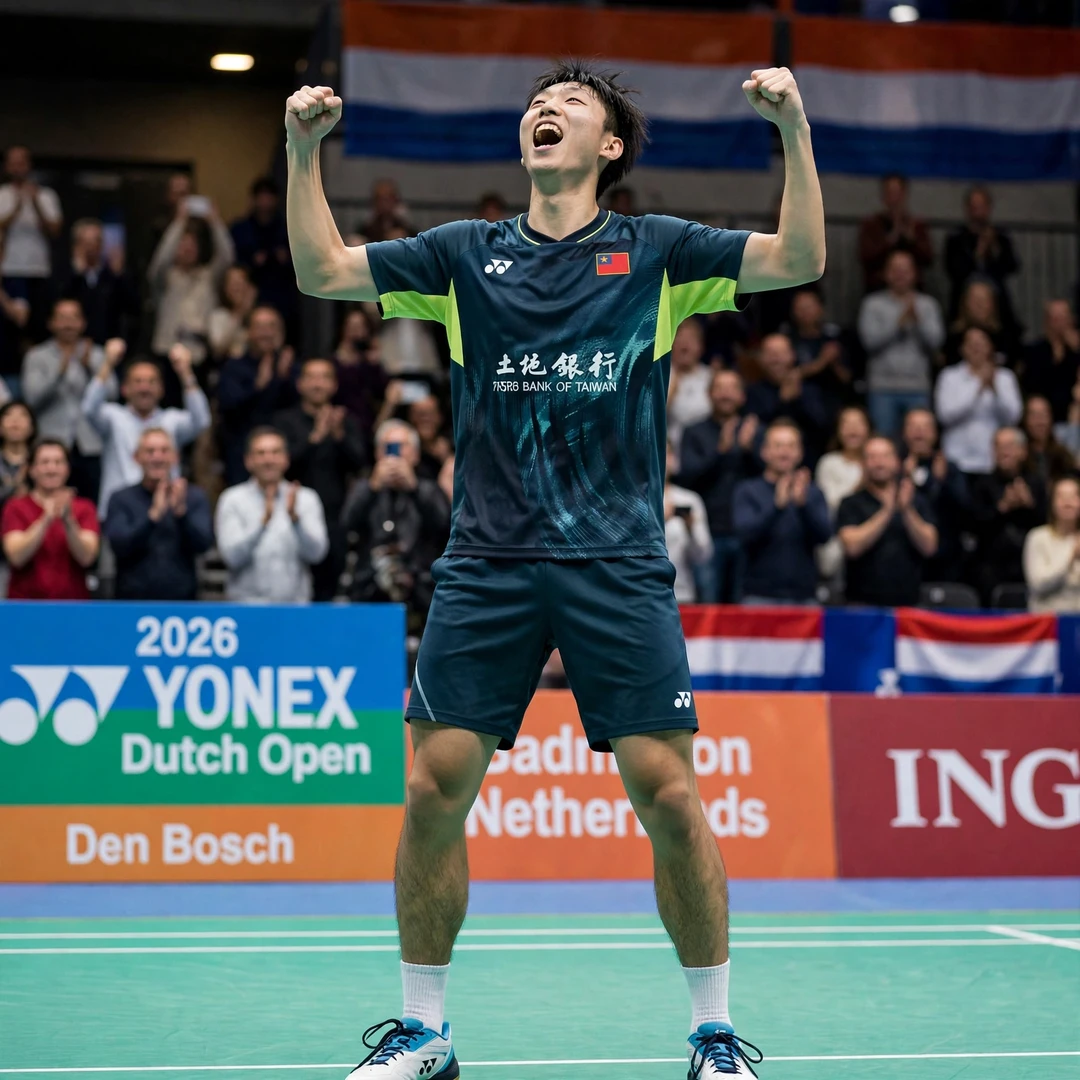
And he was right that he could win more. In October 2026, as top seed at the Dutch Open, an International Challenge event in Den Bosch, Su beat Belgium’s Julien Carraggi 21-17, 21-12 in the semi-finals and Israel’s Daniil Dubovenko 21-17, 16-21, 21-17 in another three-game final. Days later at the Arctic Open, a Super 500 event in Finland, he beat his compatriot Lin Chun-yi in straight games before losing to Malaysia’s Lee Zii Jia. His reward: a rise from No. 46 to No. 40 in the Week 43 world rankings, with 36,750 points.
Playing Style
The Fast, All-Court Attacking Style
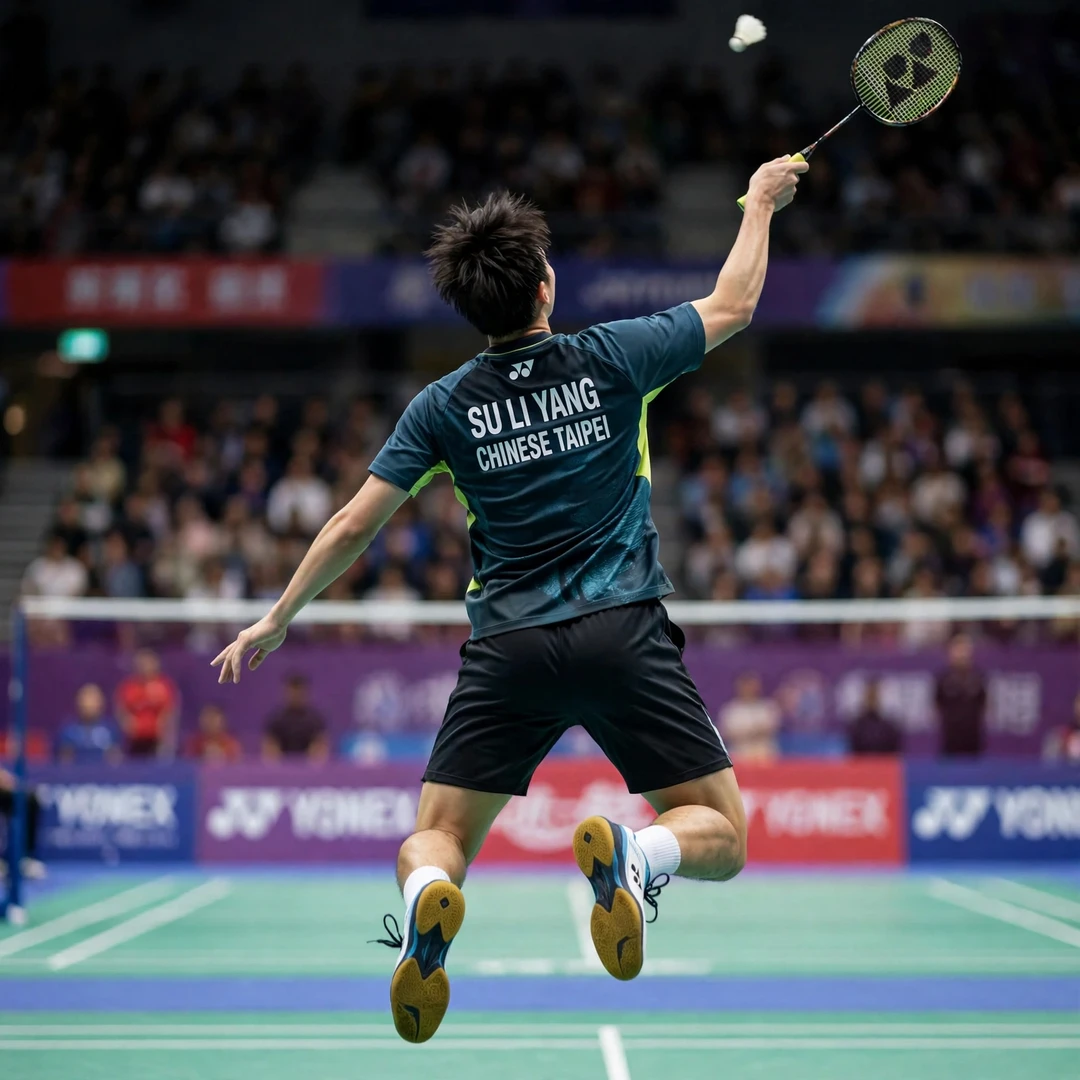
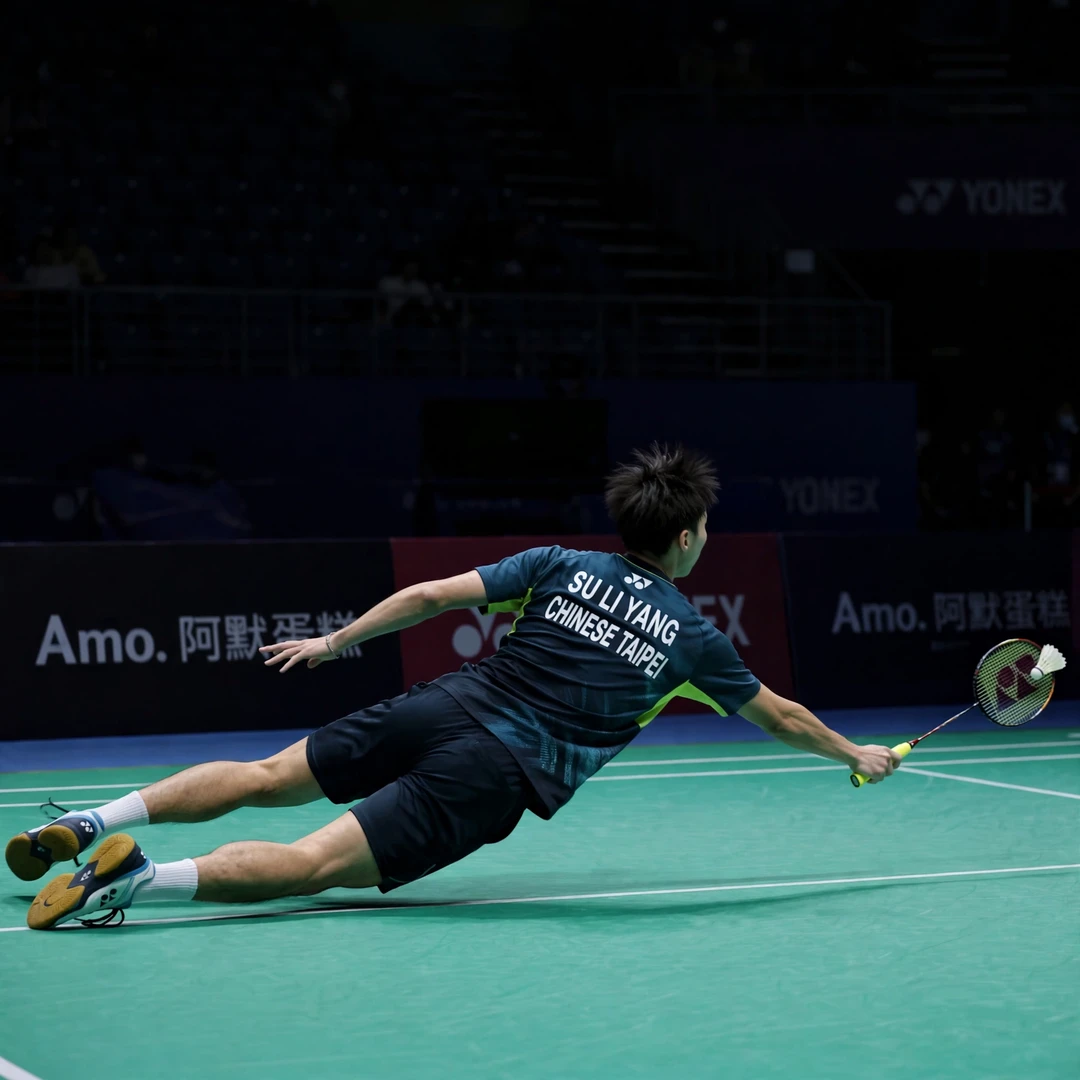
Su’s natural game is speed. At 1.82 metres, with fast hands and a sharp forehand attack, he likes to take the shuttle early, press the net and finish rallies with flat drives and smashes. Opponents who let him dictate the pace feel rushed from the first rally – the style that made him a junior champion and a top-30 player while still a teenager.
What he added later is what makes him dangerous now: control. The mature Su Li Yang varies the pace, lifts patiently out of trouble, defends one more shot than the old Su would have attempted, and saves his speed for the moment the rally opens. Both of his 2026 titles were won in deciding games – stamina and nerve, as much as speed, are now his weapons.
Young players who study Su learn that style is not a fixed identity. The fast junior who tried to win every rally in three shots became the senior who could win a 69-minute final. Keep your strengths, coaches tell our students, but be honest about the weakness that keeps beating you – and train that, patiently, until it becomes a strength too.

Mental Strength
Patience Wins Finals: The Lesson from Su Li Yang
Su’s career is a lesson in what to do with lost finals. Between 2022 and 2023 he lost four International finals and a World Tour final at home. Many players would have decided the story was written: talented, but a runner-up. Su and his coach Lee Sung-yuan decided instead to find the real problem – the haste that crept in whenever a title was close – and fix it.
His own words after the US Open final show the change: ‘In the final game, we both were tired, so I told myself to keep the focus and keep pushing myself, and to trust myself.’ Focus, patience, trust – the opposite of the hurried player his coach described. The first title did not come when his talent peaked; it came when his temperament caught up with his talent.
For our students, the practical lessons from Su are clear: a lost final is information, not a verdict; if the same mistake keeps costing you matches, name it and train it; learn to control the pace of a rally before you try to control the scoreboard; and remember that a ranking in the forties can still win a World Tour title when the preparation is right.
Learning Reference
ST Badminton Academy Connection
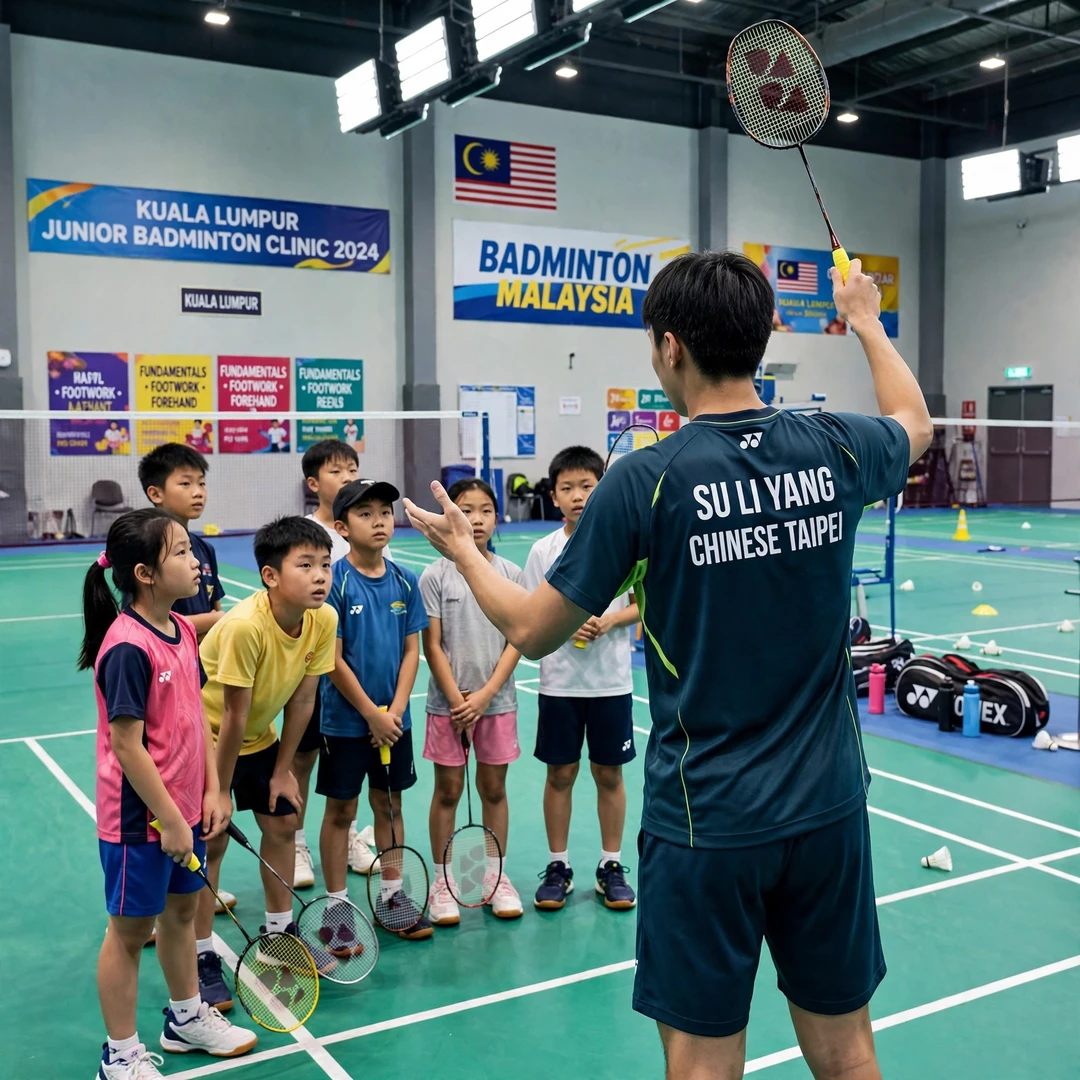
ST Badminton Academy has no official partnership or endorsement arrangement with Su Li Yang, Datong High School, the University of Taipei or the Chinese Taipei Badminton Association. This page is an educational profile created so Malaysian juniors and parents can learn from his career, his playing style and his journey.
Our students study Su’s US Open final: a lost second game, a tired third game, and then eight straight points built on patience. His path also shows families a realistic Taiwanese development route – school badminton at Datong High School, a university place alongside elite training, junior titles, senior finals, and only then a World Tour title at 24.
We encourage our players to watch Su the way his coach taught him to play: patiently. Copy his fast hands and early timing, but also copy the calm that finally won him titles – and your own breakthrough, like his, becomes a question of preparation meeting self-belief.
FAQs: Su Li Yang Chinese Taipei Badminton Player
Here are the questions Malaysian parents and junior players ask most often about Su Li Yang, answered with the key facts from his career.
Who is Su Li Yang and which country does he represent in badminton?
Su Li Yang is a Chinese Taipei men’s singles badminton player, born on 27 December 2001. He is 1.82 metres tall, plays right-handed, and competes on the BWF World Tour. His father Su Chih-ming was also a badminton player. He reached a career-high world No. 29 in 2024 and won his first World Tour title at the US Open in 2026.
What are Su Li Yang’s biggest badminton achievements?
His biggest achievements are his first BWF World Tour title at the US Open 2026 in Fullerton, where he beat Kidambi Srikanth in the final; the Dutch Open title in 2026; a runner-up finish at his home Taipei Open in 2023; the mixed team silver medal at the 2025 World University Games; and the boys’ singles bronze medal at the 2019 Asian Junior Championships. He also won two BWF junior international titles, in Italy in 2018 and Mongolia in 2019.
What is Su Li Yang’s playing style?
Su plays a right-handed all-court style built on speed: fast hands, early timing at the net and a sharp forehand attack. The change that won him titles was patience – his coach Lee Sung-yuan taught him to control the pace of rallies instead of rushing to finish them, and both of his 2026 titles were won in three games.
How did Su Li Yang win his first BWF World Tour title?
Su won his first BWF World Tour title at the US Open 2026, a Super 300 event in Fullerton, California. Ranked No. 46 in the world and seeded eighth, he beat India’s Rounak Chouhan in the semi-finals and then defeated former world No. 1 Kidambi Srikanth 21-15, 16-21, 21-9 in a 69-minute final, winning eight straight points in the deciding game.
How can my child learn from Su Li Yang’s training approach?
Children can learn from Su’s pathway: school badminton at Datong High School, a university place at the University of Taipei alongside elite training, junior titles at 16 and 17, and senior finals from the age of 20. At ST Badminton Academy we use the same structure: strong fundamentals and pace control first, so juniors learn to win rallies before they try to win trophies.
Did Su Li Yang win any junior titles?
Yes. Su won the Italian Junior International in 2018, beating Yu Sheng-po in the final, and the Mongolia Junior International in 2019, beating Yu Sheng-po again. He also took the bronze medal at the 2019 Asian Junior Championships in Suzhou, and in 2017 he reached three junior international finals and the semi-finals of a senior event, the Sydney International, at 16.
How many BWF World Tour titles has Su Li Yang won?
Su has won one BWF World Tour title: the US Open 2026. He has reached two World Tour finals in total – he was runner-up at the Taipei Open in 2023. He also won the Dutch Open in 2026, an International Challenge title, after finishing runner-up at four International events in 2022 and 2023.
What playing style should young players learn from Su Li Yang?
Young players should learn Su’s pace control: the fast hands and early timing, combined with the patience to build a rally and attack only when the opening is real. His career shows the difference – the rushed version of Su lost five senior finals; the patient version won two titles in four months in 2026.
Does ST Badminton Academy have any connection with Su Li Yang?
No. ST Badminton Academy has no official connection, partnership or endorsement with Su Li Yang. This profile is published for education only, so our students and parents in Malaysia can study his career achievements, playing style and journey.
Su Li Yang Career Highlights


Career Statistics and Rankings
Su Li Yang's career is a masterclass in turning silver into gold. From a badminton family in Taipei and junior titles at 16, through four lost senior finals and a home final that slipped away, to a World Tour title won with patience against a former world No. 1 - every step was built on the one before it.
| Development Area | Common Misconception | What Su Li Yang's Career Shows REALITY |
|---|---|---|
| Junior Foundation | Talent alone decides who becomes a champion. | Su came through Datong High School and the University of Taipei while climbing the junior and International circuits: junior titles at 16 and 17, senior finals at 20, a World Tour title at 24. Education and elite badminton grew together, not against each other. |
| Playing Style Priority | Kids should copy the flashiest attacking shots. | Su built a complete all-court game before he built a trophy cabinet. His first World Tour title was won in three games against a former world No. 1 - with pace control, not just pace. A complete game includes knowing when NOT to attack. |
| Fitness Importance | Juniors can out-train everyone without rest. | Between 2022 and 2023 Su lost four International finals and then a World Tour final in front of his home crowd - and kept entering, kept training, kept improving. In 2026 the same player won two titles in four months. Lost finals are tuition, not verdicts. |
| Mental Approach | Top players never get nervous or upset. | His biggest team honour came in the middle of his hardest singles years: a World University Games mixed team silver medal with Chinese Taipei in 2025. Team events reward the reliable players, and they keep a player's belief and match sharpness alive. |
| Attacking Training | Smashing harder is always the answer. | His signature win was a lesson in composure: in the US Open final he lost the second game to Kidambi Srikanth, then won eight straight points in the decider. Championship matches reward the player who controls the pace instead of rushing it. |
| National Milestones | Only world titles matter. | Su was ranked No. 46 in the world when he won the US Open in June 2026 - and No. 40 by October. A ranking is a snapshot, not a ceiling, for a player whose game is still developing and whose best years are ahead of him. |
| Career Timeline | Champions peak once and fade fast. | From junior champion to four lost senior finals to World Tour champion at 24, Su shows that the breakthrough usually belongs to the player who fixes the real problem - in his case, patience - instead of just training harder at the same mistakes. |
Study Su Li Yang's Work Ethic and Professional Approach
For Malaysian juniors, his message is the one every developing player needs to hear: losing finals does not make you a runner-up for life. Name the weakness, train it patiently, trust yourself when the third game comes - and one day, like Su Li Yang in Fullerton, the week arrives when all of it pays off at once.