모든 언어
 중국어 간체
 중국어 번체
 영어
 인도네시아어
 일어
 한국어
 Malay
 태국어
 베트남어


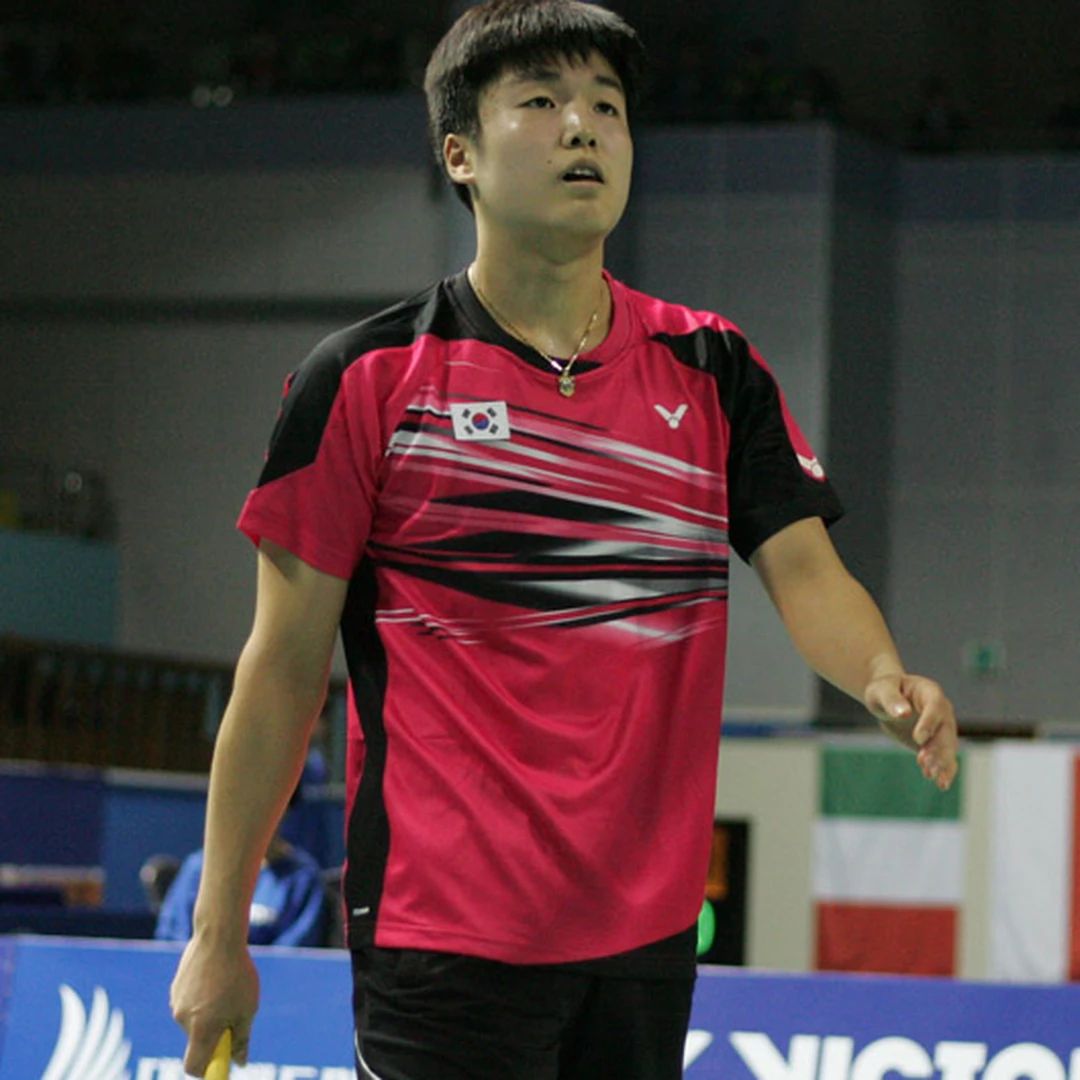
South Korean Men’s Singles Badminton Star
Jeon Hyeok Jin

South Korea
Player Event: Men’s singles
Born on 13 June 1995 in Ulsan
Right-handed counter-punching all-court player · Sudirman Cup champion, Asian Games team gold medallist and two-time Korea Masters winner
Understanding Jeon Hyeok Jin (South Korean Badminton Star)
Jeon Hyeok Jin is a South Korean men’s singles player whose career spans two eras of the world tour — and one of the great comebacks of modern badminton. Asian junior runner-up in 2013, he won men’s team gold at the 2014 Asian Games in Incheon and Universiade singles gold in 2015, beating Chou Tien-chen and Son Wan-ho on the way. Grand Prix titles in Macau and at the Korea Masters, a Superseries final in Sydney and Sudirman Cup gold followed, and in February 2018 he stood at a career-high world No. 18. Then a knee problem took more than three prime years from him. He returned unranked at the 2021 Sudirman Cup, won the Korea Masters again in 2022, made his Olympic debut at Paris 2024 — and at 31 he beat Li Shifeng at the 2026 Asian Games and reached the Malaysia Super 100 semi-finals in October 2026. In the BWF Week 43 rankings of 20 October 2026 he sits at world No. 53, with 31,440 points.
Ulsan Roots and a Junior Career of Silver and Team Gold
Jeon Hyeok Jin was born on 13 June 1995 in Ulsan, on South Korea’s south-east coast, and rose through one of the most demanding junior systems in world badminton. The medals came early and in bunches: mixed team bronze at both the Asian Junior Championships in Gimcheon and the World Junior Championships in Chiba in 2012, then a golden 2013. At the Asian Junior Championships in Kota Kinabalu he reached the boys’ singles final before losing a three-game classic to Malaysia’s Soo Teck Zhi, 17–21, 21–13, 15–21, and took mixed team silver as well. Weeks later Korea won the World Junior mixed team title in Bangkok. Still only 18, he added a men’s singles bronze at the 2013 East Asian Games in Tianjin, losing his semi-final to China’s Du Pengyu — a senior-level medal while still a junior.
Asian Games Team Gold at Home, Then Universiade Glory in Gwangju
His first great team triumph came at home. At the 2014 Asian Games in Incheon, the 19-year-old Jeon was part of the Korean squad that won the men’s team gold medal in front of its own crowd — the foundation of a team career that would define him. A year later came his biggest individual title of the era. At the 2015 Summer Universiade, played in Hwasun near the host city of Gwangju, Jeon beat Chou Tien-chen in the semi-finals and then defeated compatriot Son Wan-ho in an all-Korean final, 22–20, 13–21, 21–17. Yonhap’s report tells the decider’s story: level at 14–14, Jeon took charge at 17–15 and sealed gold when Son’s return went wide. He also collected mixed team gold at the same Games — a 20-year-old leaving a home Universiade with two gold medals.
First Senior Titles: Osaka, Macau and a Malaysia Masters Final
The senior titles arrived in the same year. In 2015 Jeon won the Osaka International in Japan, fighting back to beat Kazumasa Sakai 15–21, 21–17, 21–14, and reached the Malaysia Masters final, where veteran compatriot Lee Hyun-il beat him in three games. The breakthrough came at the Macau Open, a Grand Prix Gold event: Jeon beat China’s Tian Houwei 21–11, 13–21, 23–21 in a final that swung on the tightest of deciding finishes. He also finished runner-up at the Indonesia International, losing to the former world No. 1 Sony Dwi Kuncoro. Three finals and two titles in a single season marked him out as Korea’s next singles leader — the attacking right-hander with the defender’s heart, built for the long matches his country’s system produces.
A Superseries Final in Sydney and Sudirman Cup Gold
The peak years confirmed it. Korea took men’s team bronze at the 2016 Thomas Cup in Kunshan, and at the 2016 Australian Open in Sydney Jeon reached a Superseries final, losing to Denmark’s Hans-Kristian Vittinghus 16–21, 21–19, 11–21 after taking the middle game. Then came the week Korean fans still talk about. At the 2017 Sudirman Cup on Australia’s Gold Coast, Korea benched world No. 1 Son Wan-ho for the final against China and trusted the 21-year-old Jeon with the men’s singles against Olympic champion Chen Long. Jeon lost 10–21, 10–21 — and Korea still won the tie 3–2, lifting the Sudirman Cup for the first time since 2003 and ending China’s 14-year grip on it. He had carried the hardest assignment of the final so that his teammates could finish the job.
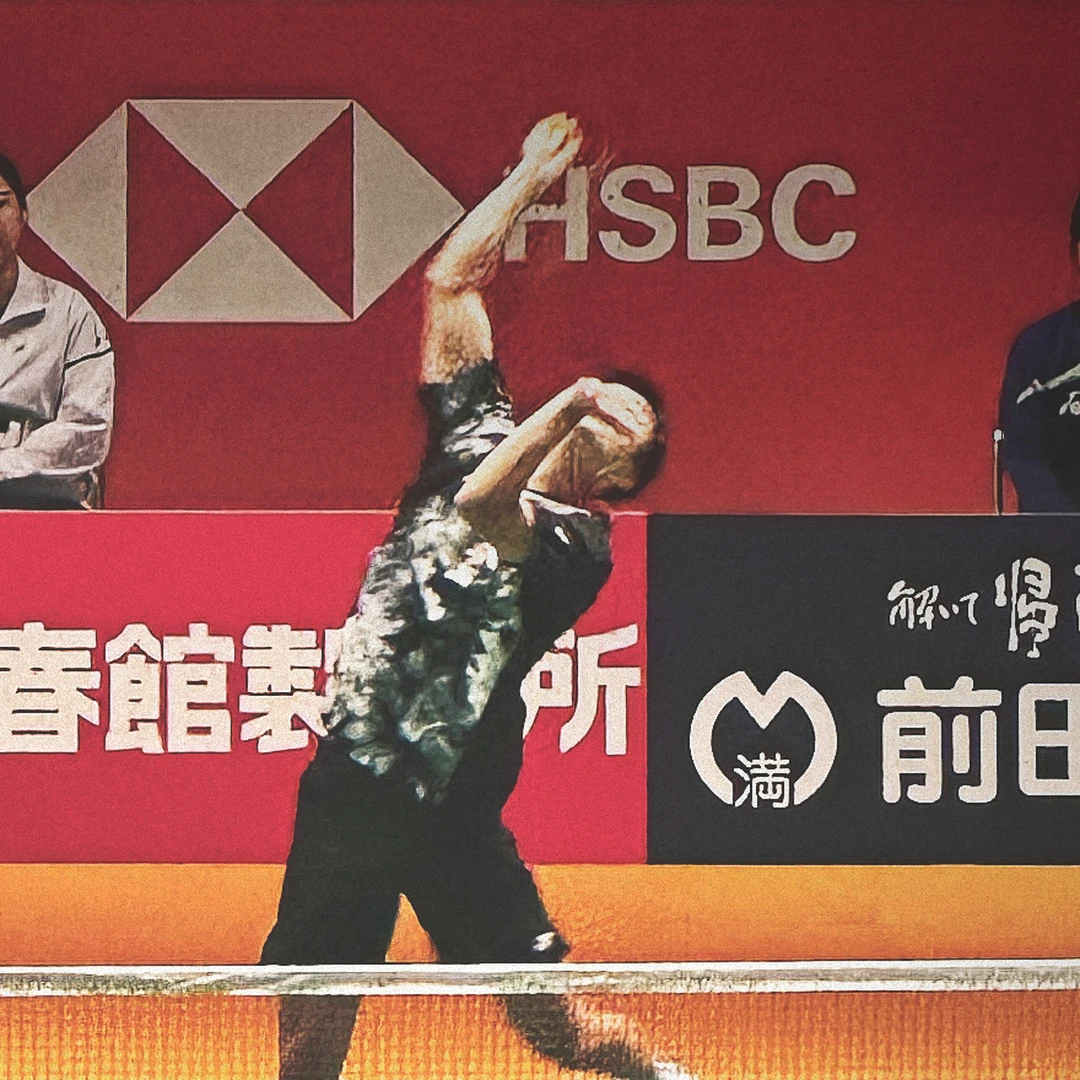
Career Milestone #1
Korea Masters Champion and World No. 18 — Then the Knee Gave Way
In December 2017 Jeon won the Korea Masters, beating compatriot Kim Min-ki 21–17, 19–21, 21–12, and on 8 February 2018 he reached his career-high world ranking of No. 18. Korea added Asia Team Championships bronze in Alor Setar that February. But a knee problem had begun to trouble him, and it shadowed his whole 2018 season. His last international event was the All England in March 2018. Contemporary Korean badminton reporting records that he did not play even domestically after that spring’s team championships, that he stayed away from the 2019 national team trials, and that he remained on the Yonex Korea pro team roster while the knee was managed. The tour moved on without him; a top-20 career simply stopped.
For more than three years, one of Korea’s brightest singles talents was invisible to the world game. What he did in those years was unglamorous: rehabilitate, train away from the spotlight, and wait for a knee to trust again. The return, when it came, was at a team event — of course. At the 2021 Sudirman Cup in Vantaa, Finland, Jeon Hyeok Jin appeared in Korea’s squad with no world ranking at all beside his name. He won his group match against Tahiti’s Heiva Yvonet 21–1, 21–3, and Korea finished with the bronze medal. A former world No. 18, starting again from zero at 26 years old, in the cold of a Finnish autumn: that is where the second career of Jeon Hyeok Jin begins.
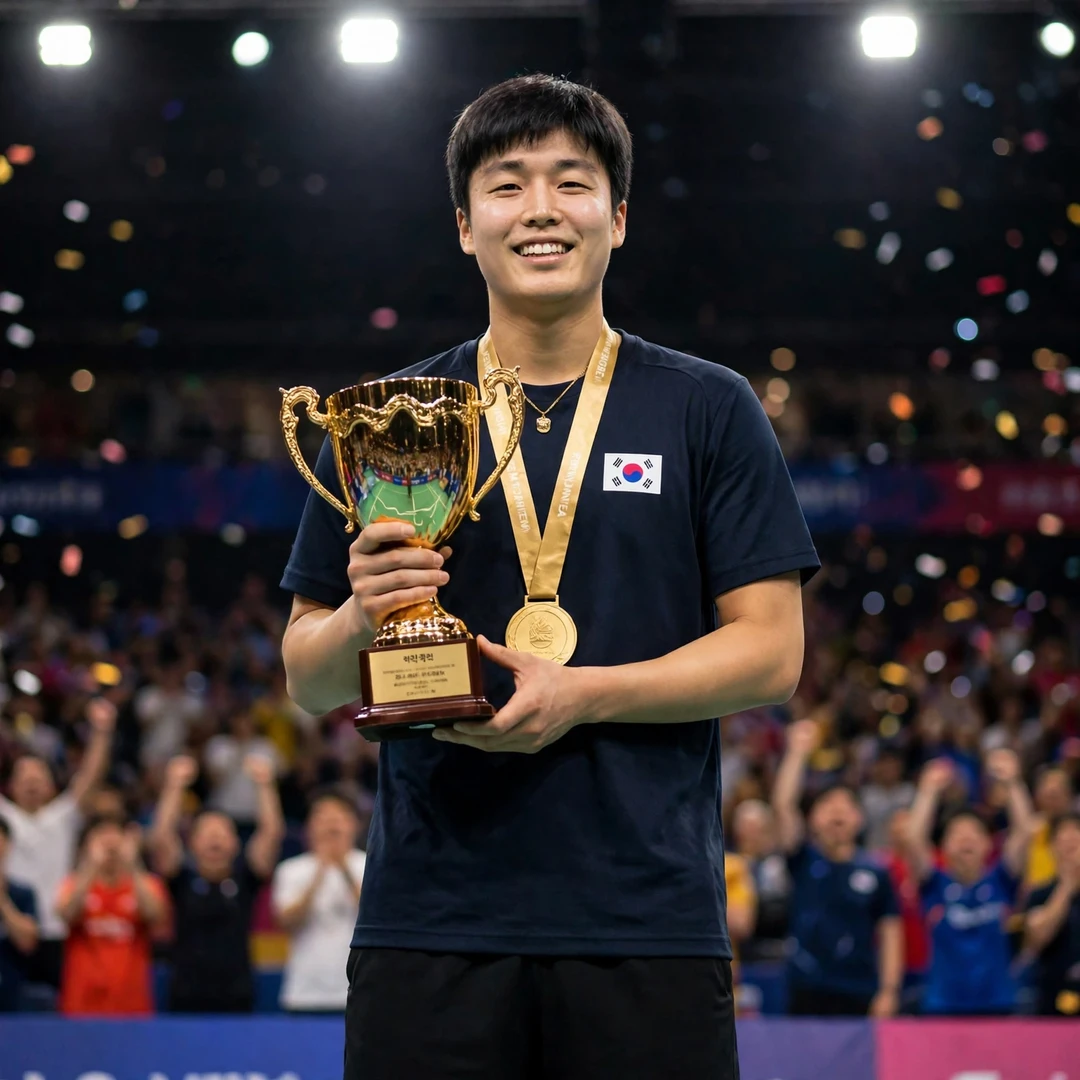
Career Milestone #2
The Comeback: Korea Masters Champion Again, Five Years On
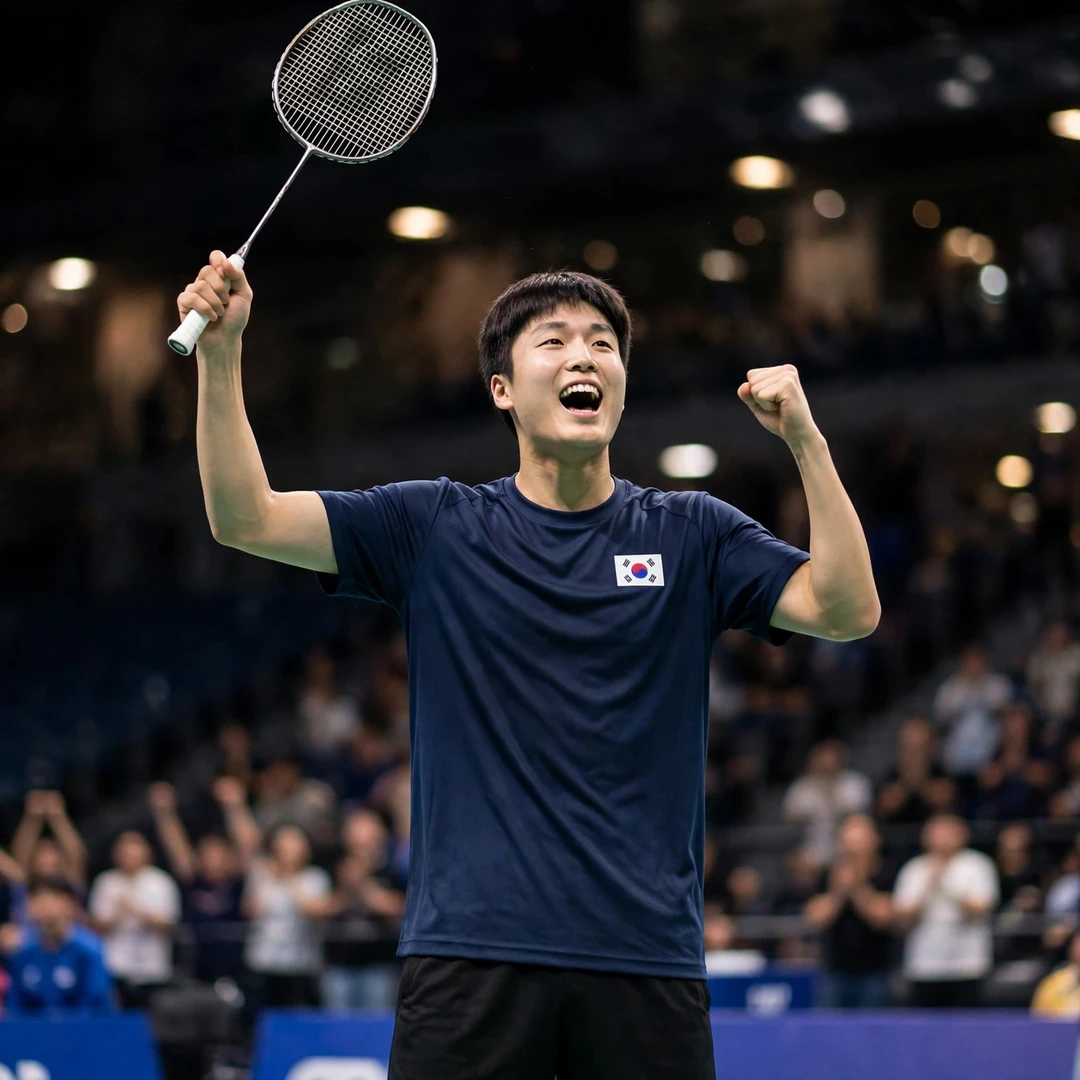
The second career announced itself at home. At the Korea Masters in Gwangju in April 2022 — a Super 300 event he entered with his ranking still in ruins — Jeon produced the run of his life. He beat Malaysia’s Cheam June Wei 21–11, 21–11, edged Kim Dong-hun 23–21, 21–19, then demolished his old rival Son Wan-ho 21–3, 21–16 in the quarter-finals. In the semi-finals he outlasted Thailand’s Sitthikom Thammasin, another heavy smasher, 21–18, 21–15; contemporary analysis noted both men hit huge shots, but the Korean had the better defence and the greater doggedness. In the final he beat Japan’s rising Kodai Naraoka 21–17, 21–16. Five years after his first Korea Masters title, and four years after his career had stopped, Jeon Hyeok Jin was a BWF World Tour champion.
The comeback kept delivering. Weeks later at the Thomas Cup in Bangkok he beat Singapore’s Jason Teh in the group stage and then defeated Denmark’s Anders Antonsen 21–19, 21–12 in the quarter-final tie. In 2023 Korea reached the Sudirman Cup final in Suzhou — silver this time — and Jeon reached two International Challenge finals in the Pacific, at the Northern Marianas Open and the Saipan International. With Korea he also took men’s team bronze at the Hangzhou Asian Games. None of it was the straight-line rise of a protected talent; it was a veteran rebuilding a ranking the hard way, event by event, on a knee that had already cost him three years — and winning matches against the best players in the world while he did it.
The team medals kept coming, because Jeon is the player Korean captains trust when a tie turns tense. His collection is remarkable for a singles specialist: Sudirman Cup gold in 2017, silver in 2023 and 2025, bronze in 2021; Asian Games team gold in 2014 and bronze in 2022; Thomas Cup bronze in 2016; Asia Mixed Team silver in 2017; and four Badminton Asia Team Championships bronzes — 2016, 2018, 2022 and 2024. Across a decade, through injury and comeback, he has been a constant in Korea’s team rooms. Coaches value what the statistics only hint at: a man who has faced Chen Long in a Sudirman final and Li Shifeng in an Asian Games quarter-final does not frighten easily, and he transmits that calm to the players around him.
Career Milestone #3
Olympic Debut in Paris and the Working Veteran Years
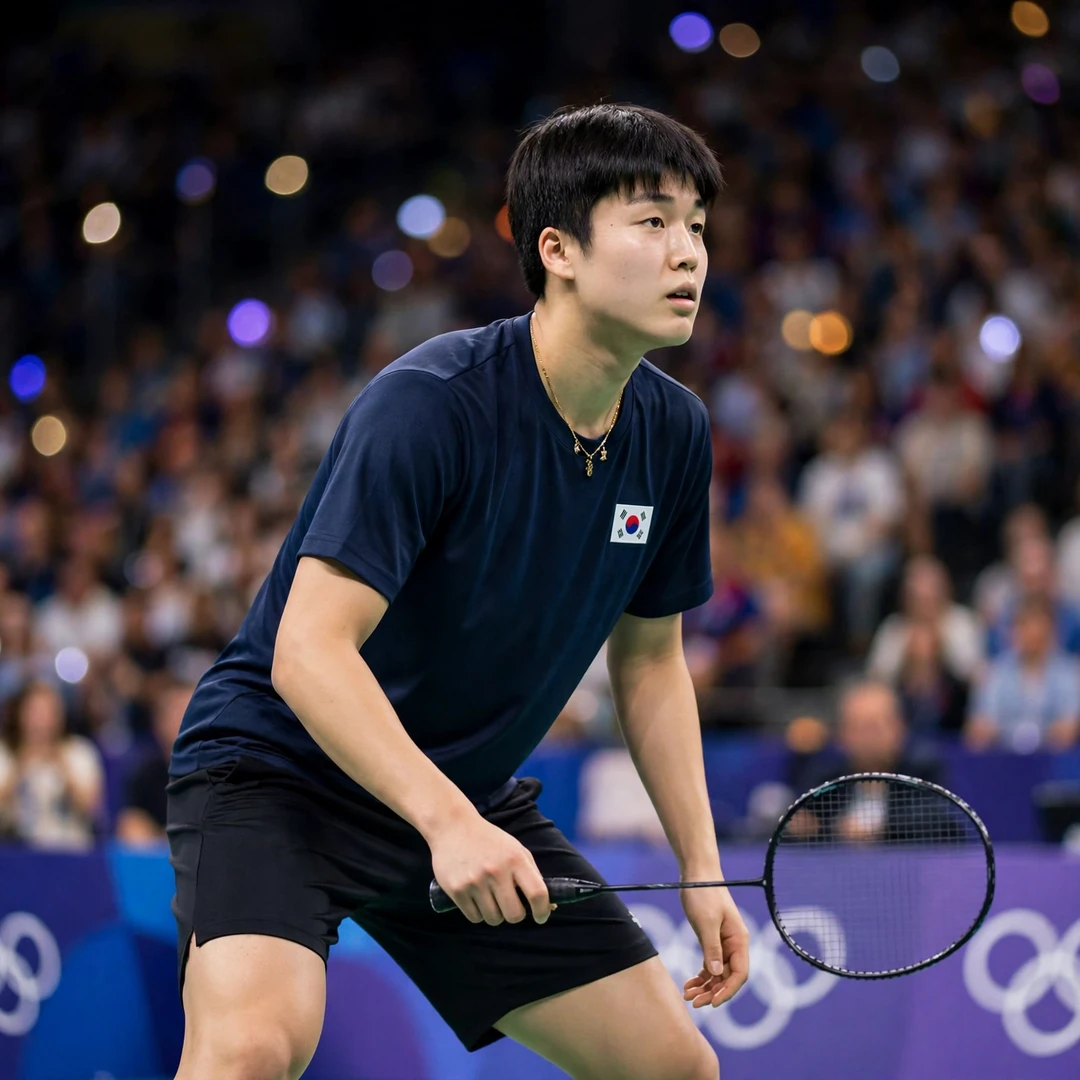
In 2024 the rebuild reached the Olympic Games. Jeon first reached the German Open semi-finals in March — beating Ng Ka Long Angus, Lucas Claerbout and Nhat Nguyen before losing a three-game semi-final to Christo Popov — and won two International Challenge titles, the Azerbaijan International and the Thailand International. Then, at 29, he made his Olympic debut at Paris 2024. Drawn in a group with Kodai Naraoka, he beat Brazil’s Ygor Coelho 21–12, 21–19, but lost the deciding group match to Naraoka 10–21, 16–21 — the same Japanese star he had beaten in the 2022 Korea Masters final. An Olympic campaign that ends in the group stage still made him an Olympian for life, a title the knee injury had once threatened to take off the table entirely.
The veteran years have been busy and productive. In 2025 Korea took Sudirman Cup silver again, this time in Xiamen, and Jeon reached the Thailand Open quarter-finals and the round of 16 at the World Championships in Paris. In September 2025, at the Indonesia Masters Super 100 in Pekanbaru, he reached a BWF World Tour final for the first time since his comeback title — winning the first game before Indonesia’s Chico Aura Dwi Wardoyo turned the final 21–13, 9–21, 17–21. He added a Korea Masters quarter-final in Iksan and a Northern Marianas Open semi-final. For a player whose ranking had to be rebuilt from nothing in his late twenties, a top-40 level rebuilt on craft and fitness is its own kind of victory.
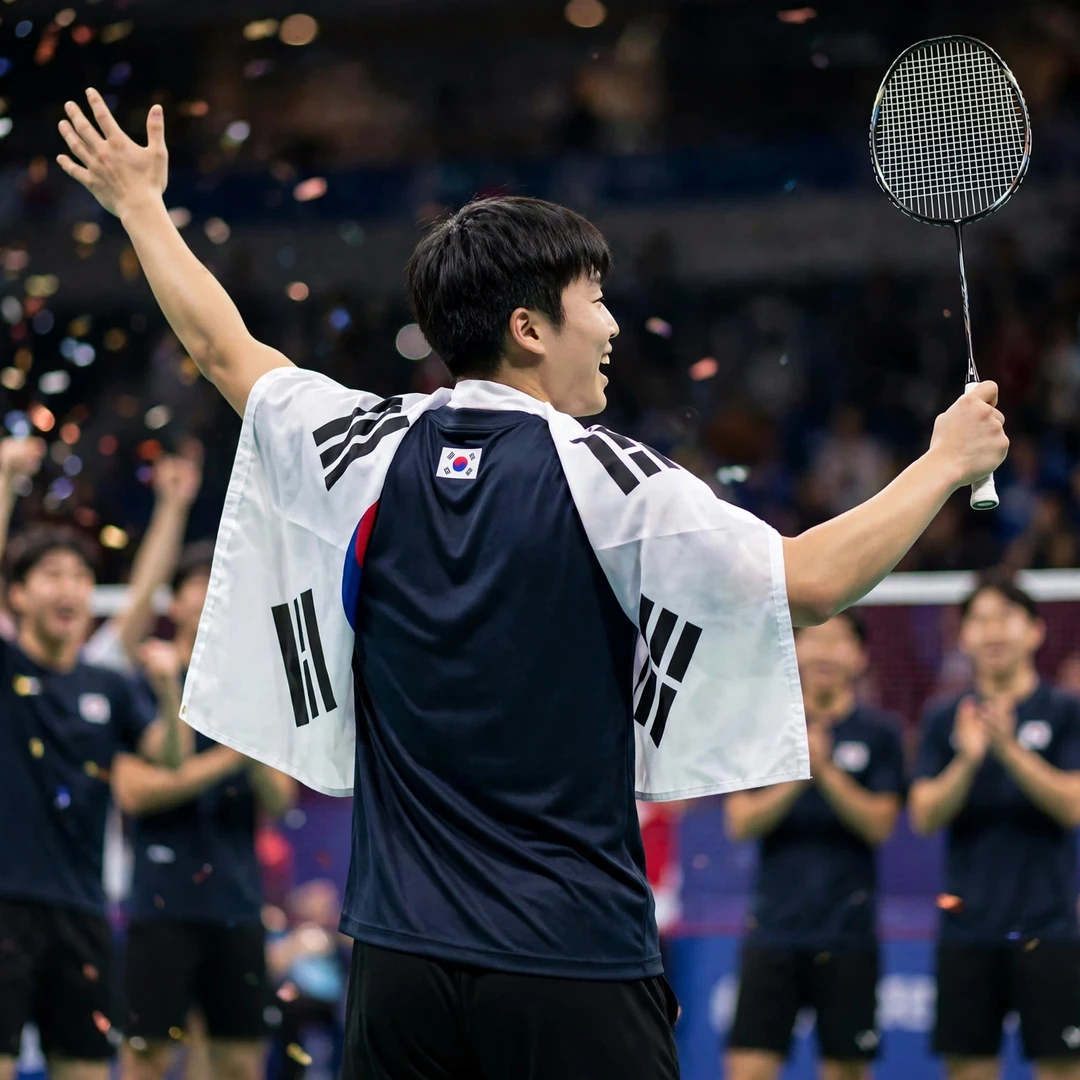
Then, in September 2026, came the match that reminded everyone what he is. At the Aichi-Nagoya Asian Games, Korea’s men had survived a draining 3–1 win over Hong Kong just 24 hours before their team quarter-final against China. With the tie balanced, 31-year-old Jeon Hyeok Jin walked out against Li Shifeng — China’s former world No. 3 and the defending Asian Games singles champion — and lost the first game 12–21. He rebuilt the match rally by rally and won 12–21, 21–17, 21–16, levelling the tie at 2–2 before China edged the deciding match. China Daily recorded the comeback plainly; Li Shifeng himself said afterwards that he was determined to respond after losing to Jeon. A veteran with a rebuilt knee, beating a star a generation younger, on the second day of back-to-back ties: it was the purest Jeon Hyeok Jin performance imaginable.
Career Milestone #4
Still Beating the Best at 31: Li Shifeng, Nagoya and a Malaysia Semi-Final
The autumn of 2026 kept the level. At the Malaysia Super 100 in Johor Bahru in October, Jeon beat Wang Tzu Wei in a three-game quarter-final before losing his semi-final to Wang Zi Jun — his deepest World Tour run of the season, completed days before the rankings closed. When the BWF published its Week 43 rankings on 20 October 2026, Jeon Hyeok Jin stood at world No. 53 with 31,440 points: inside the world’s top 60 at 31, with a game rebuilt twice over. Korea’s singles depth behind its world-class doubles core is a live debate in Korean badminton; in Nagoya and Johor Bahru, the veteran made his own case for why he is still in the team.
Strip the story back and its shape is what young players should study. An Asian junior runner-up at 18; an Asian Games team champion at 19; a Universiade champion who beat Chou Tien-chen and Son Wan-ho at 20; a Superseries finalist and Sudirman Cup winner trusted against Chen Long at 21; a world No. 18 at 22 — then three years gone to a knee, an unranked returnee at 26, a Super 300 champion at 26, an Olympian at 29, and a giant-killer at 31. Every stage of Jeon Hyeok Jin’s career was earned, lost and earned again. That is the real curriculum of his career: a ranking can be taken away by injury, but a complete game, once built, waits for its owner to come back for it.
Playing Style
The Relentless Counter-Punching Style
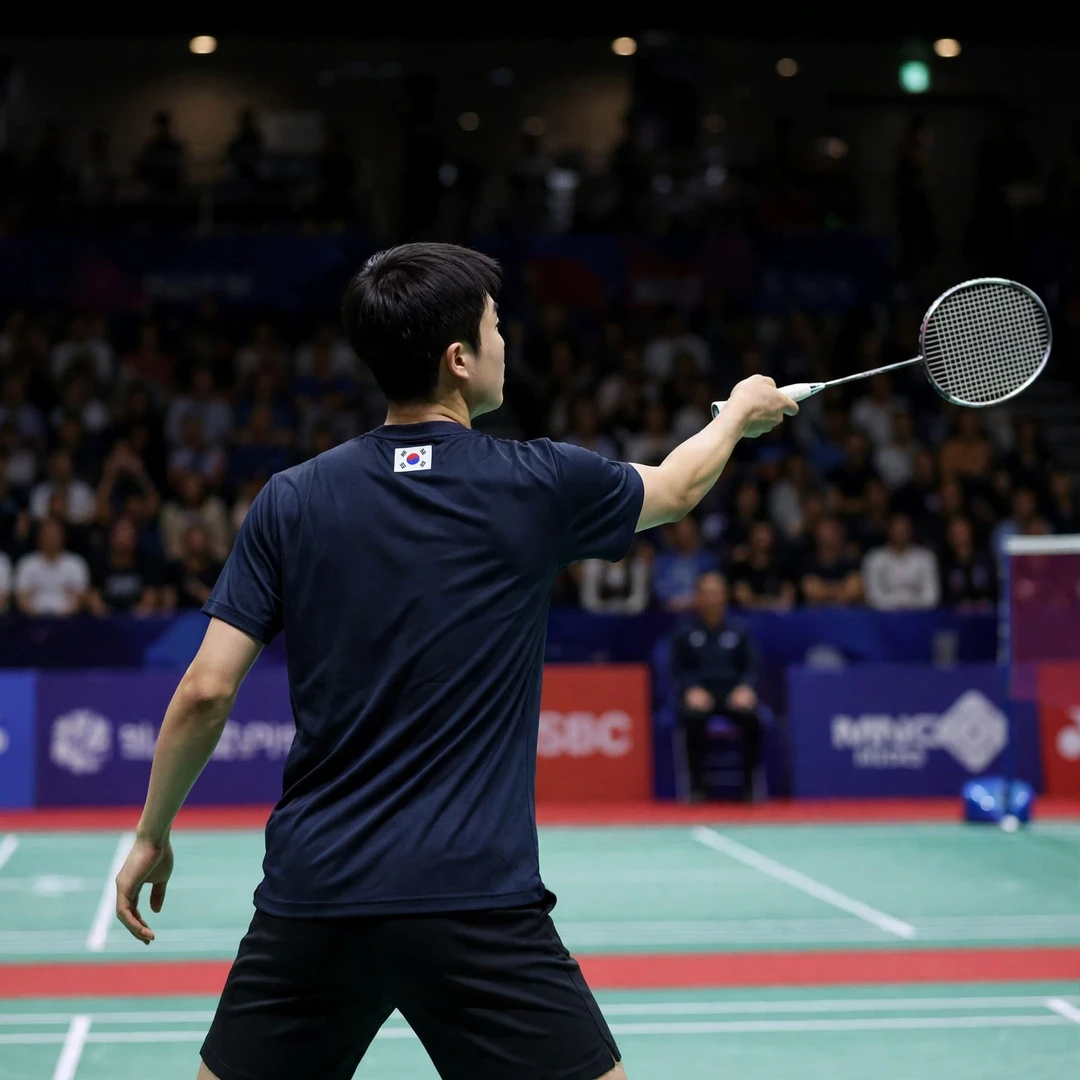
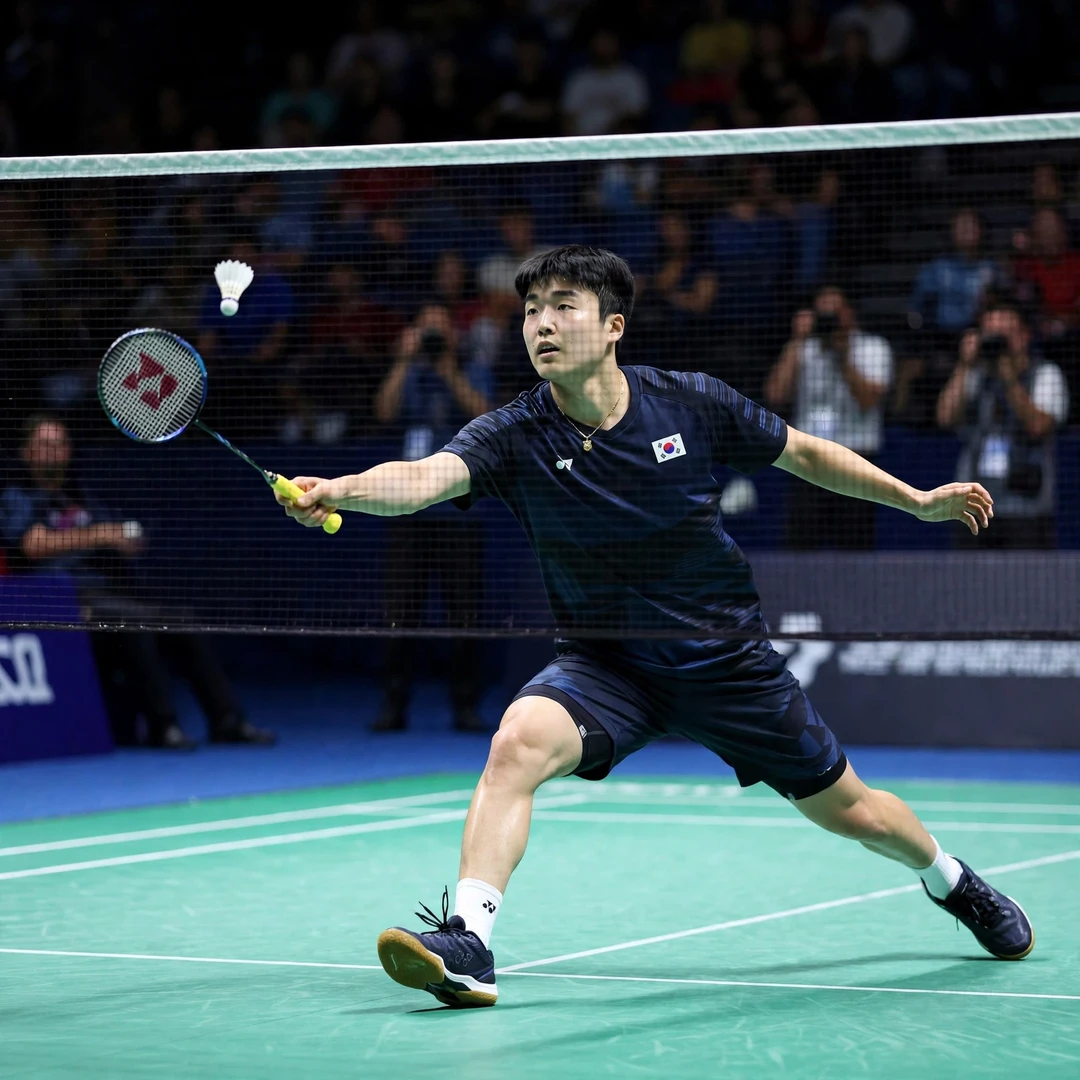
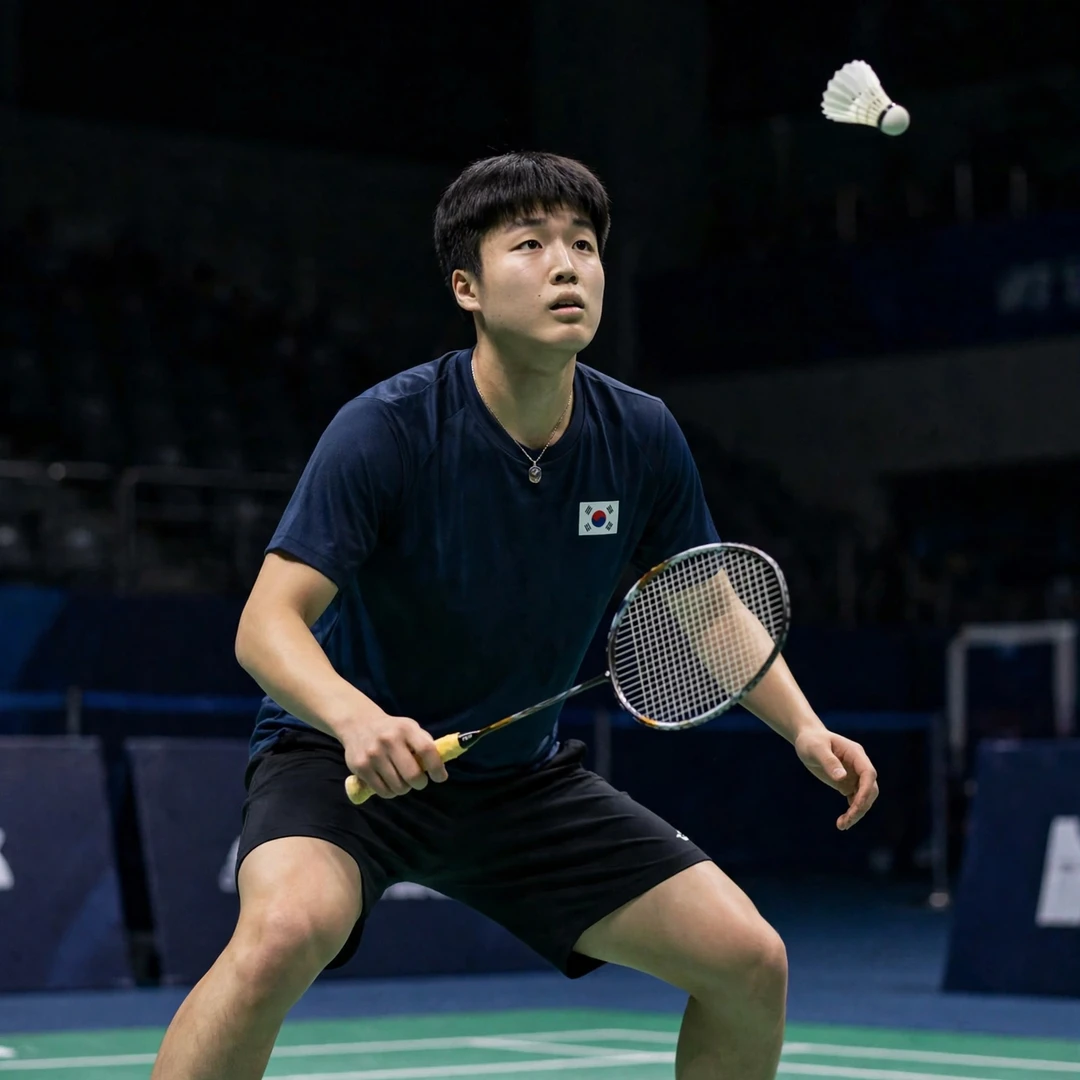
On court, Jeon is a counter-puncher with a heavy finishing shot. The racket in his right hand is first a shield: his defence is among the most dogged of his generation, built on fast feet, a low centre of gravity and an refusal to concede the rally — opponents must win points two or three times against him. Then, the moment a return drops short, the same right arm produces a genuinely big smash, the shot that carried him past heavy hitters like Sitthikom Thammasin. Between those poles he plays flat, fast exchanges, cross-court counters on the turn, and net shots that hurry taller opponents forward. He is, in the Korean tradition, a rally player — but one whose rallies end with a bang.
The evidence is in his deciding games. The 2015 Universiade final was won in a decider after Son Wan-ho had levelled; the 2022 Korea Masters quarter-final produced a 21–3 game against the same Son Wan-ho, a scoreline that only total rally control makes possible; and at Nagoya 2026 he lost a first game 12–21 to Li Shifeng and still owned the third. Jeon’s closing skill is repeatable: the longer a match runs, the more his defence, fitness and shot discipline compound. Players facing him know the pattern — win early, or be worn down. His ten-plus years at the top of the Korean system, and a career record built on three-game wins, say the wearing-down usually wins.
His next frontier is turning veteran mastery into one more ranking climb. From No. 53, the targets are the top 32 — where the Los Angeles 2028 Olympic qualification race will be decided — and more weekends like Johor Bahru and Gwangju 2022 on the World Tour. At 31, with a knee that ended his first career, the puzzle is scheduling: enough events to climb, few enough to last. And whenever Korea names a team, his name belongs in the conversation on record alone — Sudirman Cup and Asian Games ties are exactly the arenas where his dogged, decider-proof game is worth most. Few players ranked in the fifties carry a story half as instructive.

Mental Strength
Doggedness, Defence and Never Knowing When He Is Beaten
The first lesson of Jeon’s career is that a complete game is built in childhood and cannot be faked later. Asian junior silver, a World Junior team title and an East Asian Games bronze all came before his first senior title, and the footwork, defence and retrieving he learned as a junior in Ulsan are still the shots winning his matches at 31. Young players who want his completeness should copy the order: movement and rally skills first; the spectacular winners are only the visible tip of a decade of basics.
The second lesson is that being stopped is information, not a verdict. A knee problem ended Jeon Hyeok Jin’s first career at world No. 18 — three years outside the tour, no ranking, no guarantees. He came back anyway, started from zero at the 2021 Sudirman Cup, and within a year he was a Super 300 champion again. A young player who loses a season, a squad place or a ranking to injury has lost time, not a future. Jeon’s second career is the working proof.
The third lesson is professional patience. Jeon treats his career as a project with levels: International Challenge events in Saipan, Baku and Bangkok to rebuild ranking points, Super 100 finals to bank confidence, then World Tour weeks and team championships chosen carefully — the Korea Masters title, the Paris Olympics, the Asian Games win over Li Shifeng. Nothing about either of his careers was rushed, and nothing was left to hope. Juniors and their parents can copy that mindset exactly: pick the right level, peak for the right weeks, and let the ranking follow the results.
Learning Reference
ST Badminton Academy Connection
Jeon Hyeok Jin is a South Korean national team player and does not coach for, teach at or endorse ST Badminton Academy, and there is no official connection between him and the academy. Students may occasionally see his name in academy discussions of the professional game because his comeback — three years lost to injury, a return from no ranking, and a Super 300 title within a year — is such a clear case study in resilience — but he has no coaching role, sponsorship or teaching relationship with the academy, and nothing on this page should be read as his endorsement.
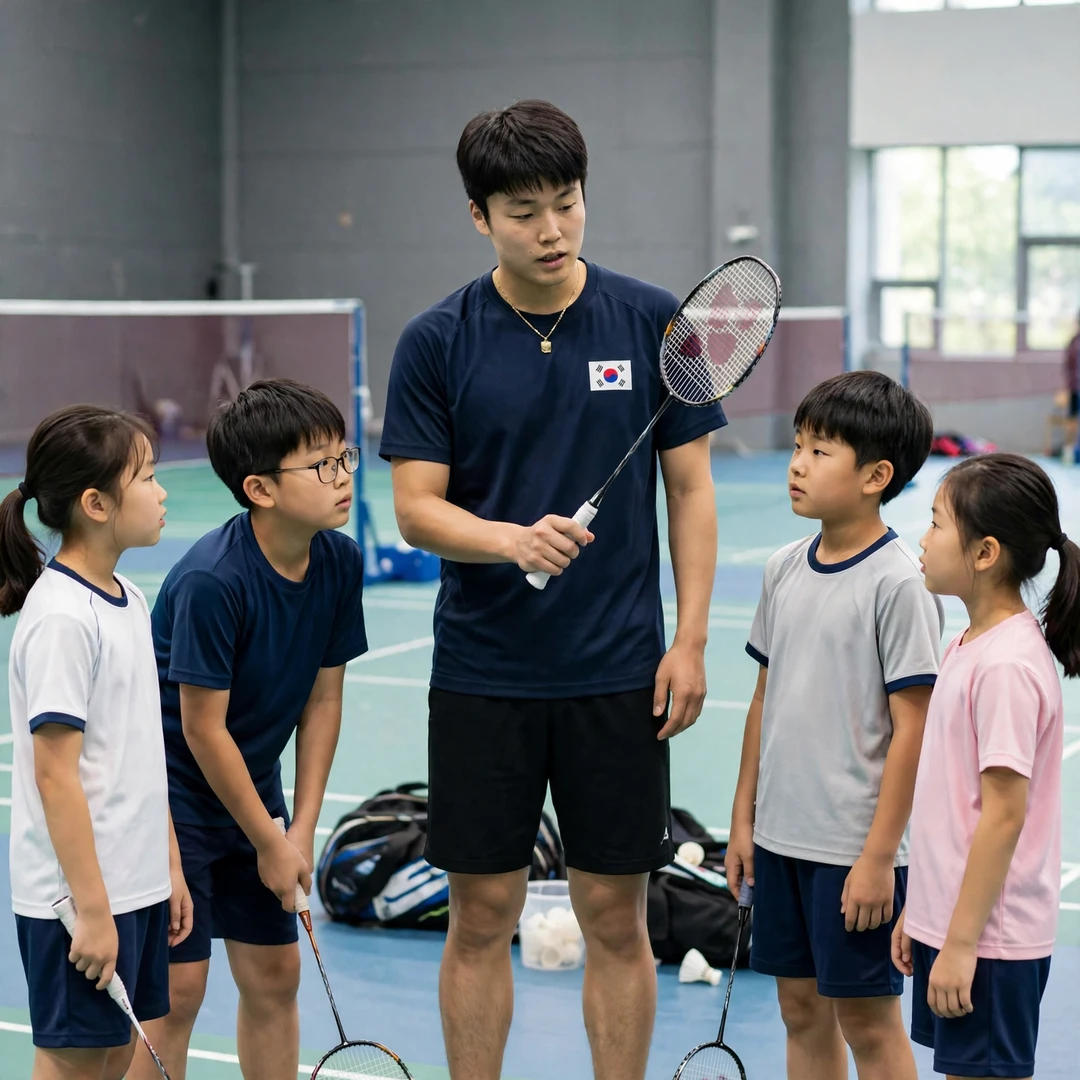
Coaches can use Jeon’s 2026 Asian Games match against Li Shifeng as a teaching film for counter-punching. Freeze the third game and count how rarely he gives away a cheap error; show juniors how a defender turns defence into attack with one cross-court counter; then rebuild the same patterns in training — multi-shuttle defence, retrieving games with a no-error rule, third-game conditioning sets, and match plans written for specific opponents rather than generic aggression. The Nagoya match is a complete syllabus: lose the first game, change nothing about your discipline, and win the match anyway.
For parents, Jeon’s timeline is a healthy reality check. He was an Asian junior finalist at 18 and world No. 18 at 22 — and he still needed a second career, built from no ranking at 26, to be standing at No. 53 beating Li Shifeng at 31. Progress measured in decades, not weekends; a career interrupted by injury and rebuilt twice — that is what real development often looks like, and it is worth trusting.
FAQs: Jeon Hyeok Jin South Korean Badminton Player
Here are the questions badminton fans in Korea, Malaysia, Singapore and beyond ask most about Jeon Hyeok Jin — his background, his Sudirman Cup and Asian Games team golds, his Korea Masters comeback, and what young players can learn from his dogged, counter-punching style.
Who is Jeon Hyeok Jin and which country does he represent in badminton?
Jeon Hyeok Jin is a South Korean men’s singles badminton player. Born on 13 June 1995 in Ulsan, he is right-handed, stands 1.78 metres tall and has represented Korea in team championships for over a decade. A former world No. 18, in the Week 43 rankings of 20 October 2026 he sits at world No. 53 with 31,440 points.
What are Jeon Hyeok Jin’s biggest badminton achievements?
His biggest achievements are the Sudirman Cup gold medal with Korea in 2017, men’s team gold at the 2014 Asian Games, Universiade singles gold in 2015, the Korea Masters titles of 2017 and 2022, the 2015 Macau Open title, a runner-up finish at the 2016 Australian Open Superseries, six senior international titles in all, and an Olympic debut at Paris 2024.
What is Jeon Hyeok Jin’s playing style?
Jeon plays a counter-punching all-court game. The right-hander builds rallies on elite defence and retrieving, controls the flat exchanges, and finishes with a heavy smash when the return drops short. He is at his most dangerous in deciding games: his three-game wins over Son Wan-ho, Kodai Naraoka and Li Shifeng all followed the same pattern of patience first, pressure last.
How did Jeon Hyeok Jin beat Li Shifeng at the 2026 Asian Games?
At the 2026 Asian Games in Aichi-Nagoya, Jeon played second singles for Korea in the men’s team quarter-final against China, the day after a draining win over Hong Kong. He lost the first game to Li Shifeng 12–21, rebuilt the rally patterns, and won 21–17, 21–16 to level the tie at 2–2. China took the deciding match 3–2, but Li Shifeng himself cited the defeat afterwards — the defending Asian Games singles champion had been beaten by a 31-year-old veteran.
How can my child learn from Jeon Hyeok Jin’s development path?
Children can learn from the order of his career: junior medals first, team golds, senior titles step by step, and a comeback built from no ranking when injury took his first career. On court they can copy his craft — at Nagoya he beat Li Shifeng with the racket in his right hand by defending one more shot and countering once more than a younger, higher-ranked opponent — and his habit of treating every setback, from a lost ranking to a lost first game, as information rather than an ending.
Did Jeon Hyeok Jin win titles and medals as a junior player?
Yes. Jeon won the boys’ singles silver medal at the 2013 Asian Junior Championships in Kota Kinabalu, losing the final to Malaysia’s Soo Teck Zhi, and mixed team silver at the same event. He was also part of Korea’s gold-medal mixed team at the 2013 World Junior Championships in Bangkok, took team bronzes at both junior championships in 2012, and won a men’s singles bronze at the 2013 East Asian Games while still a junior.
What is Jeon Hyeok Jin’s best result on the BWF World Tour?
His best BWF World Tour result is winning the 2022 Korea Masters, a Super 300 in Gwangju: he beat Son Wan-ho 21–3, 21–16 in the quarter-finals and Kodai Naraoka 21–17, 21–16 in the final, completing his comeback from a three-year injury break. He also reached the 2025 Indonesia Masters Super 100 final in Pekanbaru, losing to Chico Aura Dwi Wardoyo in three games.
What playing style should young players copy from Jeon Hyeok Jin?
Young players should copy his defensive patience: build rallies with footwork and defence, retrieve one more shuttle than the opponent expects, and treat the smash as the finisher of a rally you have already constructed. His career also teaches the mindset: a fixed routine, one more good shot under pressure, and the refusal to let an injury or a lost ranking decide the ending.
Does ST Badminton Academy have any connection with Jeon Hyeok Jin?
No. Jeon Hyeok Jin is a South Korean national team player and has no official connection to ST Badminton Academy. He does not work with the academy as a coach or ambassador, and the academy follows his career only as followers of professional badminton and as a case study in resilience and step-by-step player development.
Jeon Hyeok Jin Career Highlights

Career Statistics and Rankings
The next chapter is already being written. Jeon turned 31 in June 2026 holding a world ranking of No. 53, built on an Asian Games win over Li Shifeng and a Malaysia Super 100 semi-final. The targets now are more World Tour quarter-finals and finals, a seventh senior title, and a climb towards the top 32 as the qualification race for the Los Angeles 2028 Olympic Games takes shape — with Korea's team championships, where his record is talismanic, still ahead of him.
| Development Area | Common Misconception | What Jeon Hyeok Jin's Career Shows REALITY |
|---|---|---|
| Junior Foundation | Talent alone decides who becomes a champion. | Jeon was Asian junior singles runner-up in 2013 and a World Junior mixed team champion the same year — a structured junior base came first. |
| Playing Style Priority | Kids should copy the flashiest attacking shots. | Jeon built a complete game first; his heavy smashes are the finishing touch on dogged defence, fast feet and relentless retrieving. |
| Fitness Importance | Juniors can out-train everyone without rest. | Jeon lost over three prime years to a knee problem after 2018 — his 2022 Korea Masters title came from a patient rebuild, not more hours. |
| Mental Approach | Top players never get nervous or upset. | Jeon keeps producing for his team — Asian Games gold in 2014, Sudirman Cup gold in 2017 and a famous win over Li Shifeng at the 2026 Asian Games — the team shirt brings out his best. |
| Attacking Training | Smashing harder is always the answer. | His 2015 Universiade final win over Son Wan-ho (22-20, 13-21, 21-17) and his 2022 Korea Masters final win over Kodai Naraoka came from controlled aggression and defence, not raw power alone. |
| National Milestones | Only world titles matter. | Jeon's Asian Games team gold in Incheon (2014) and Sudirman Cup gold on the Gold Coast (2017) made him a national hero in Korea — continental milestones build a career step by step. |
| Career Timeline | Champions peak once and fade fast. | From Asian junior runner-up in 2013 to beating Li Shifeng at the Asian Games in 2026 as a 31-year-old, Jeon proves sustained development beats a short peak. |
Study Jeon Hyeok Jin's Resilience and Counter-Attacking Craft
Whether you are a Korean supporter, a Malaysian fan who watched his semi-final run in Johor Bahru, or a junior learning how a defender turns defence into attack, Jeon Hyeok Jin's matches reward close study. Watch how he refuses to lose the rally first and asks questions later — then bring that patience, and his professional approach to rebuilding a career, into your own training week.