Badminton And Plyometric Training: Exercises For Building Explosive Power (Plyometrics Guide)
Every jump smash, every deep lunge recovery and every desperate dive back to base runs on the same hidden skill: how fast your legs can switch from landing to taking off again. Plyometric training is the method built to train exactly that switch. Done properly, it is not random jumping and it is not a fitness circuit. It is a small menu of jumps and bounds, performed fresh, landed quietly, and counted carefully. This guide explains what plyometrics train, why landing mechanics come before height, which jumps belong on the menu, and how the work fits a badminton week. At ST Badminton Academy in Setapak, Kuala Lumpur, we coach it in that order.
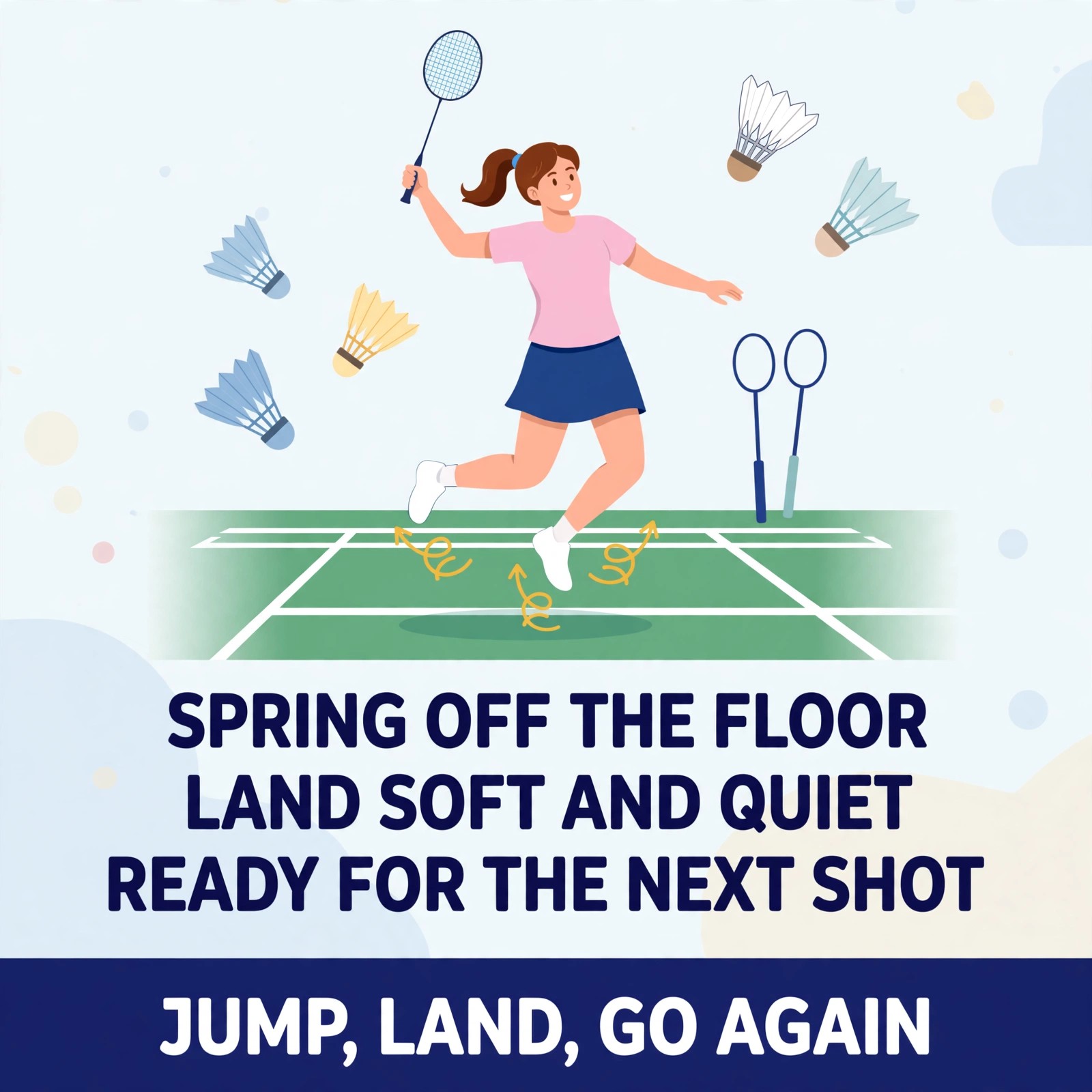
Jump Check #1
What Plyometric Training Actually Trains
The science underneath has a plain name: the spring. When you land from a jump, your muscles and tendons load like a spring being pressed down. If you take off again immediately, some of that stored energy returns and the jump costs less effort and leaves the floor faster. Wait too long on the ground and the energy leaks away as heat. Badminton lives inside that short window. A jump smash is a load and an instant reply. A lunge recovery is a landing that must become a push back to base. Plyometrics train your body to use the spring instead of wasting it.
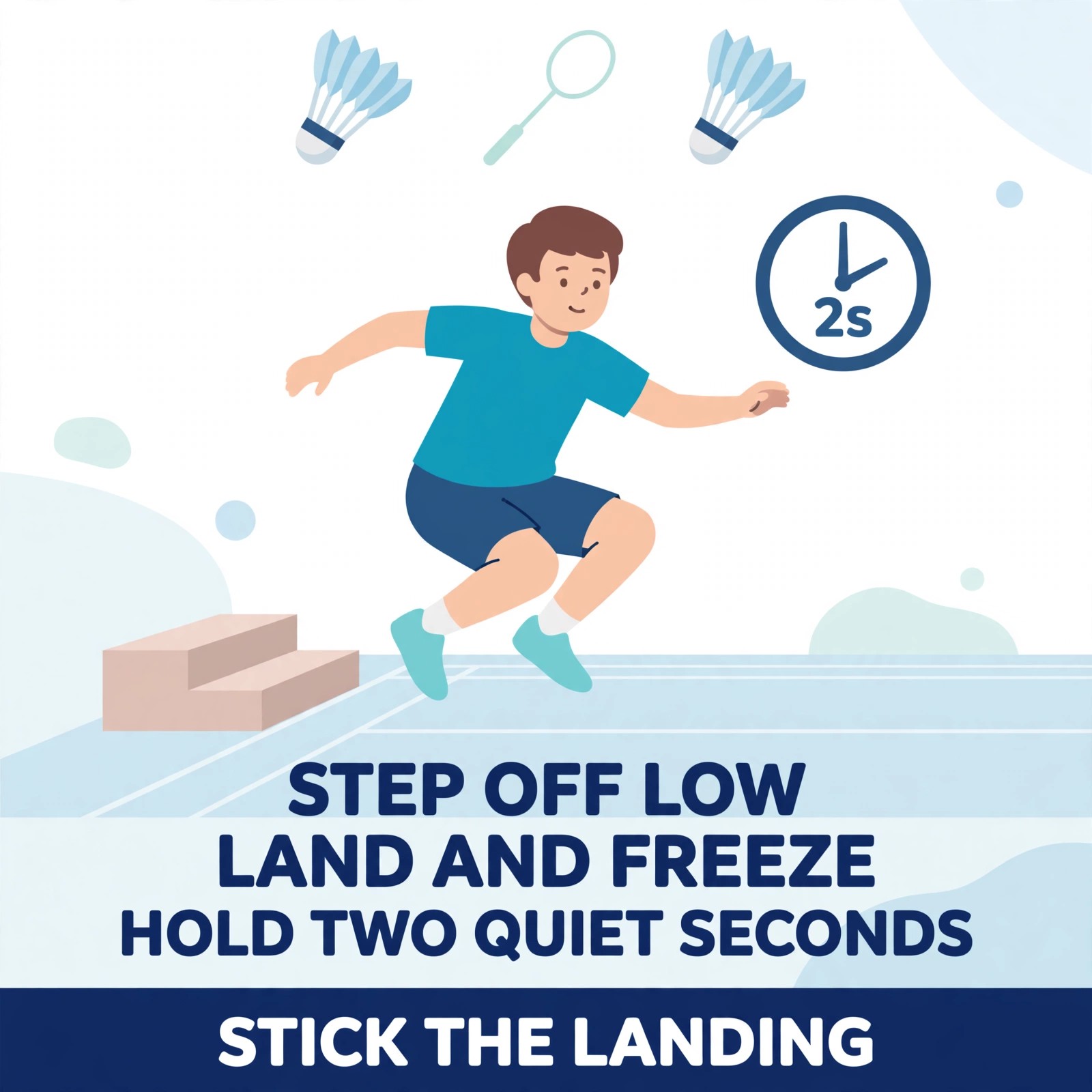
That is also what plyometrics are not. They are not conditioning, and a session should never feel like a long, grinding workout. The moment your landings get loud, your knees start caving or your jumps shrink, the training effect is gone and only the pounding remains. Real plyometric work looks almost easy from the side: a handful of jumps, full rest, everything quiet and tidy. Players expecting exhaustion often think they have done too little. Then they try to land silently off a low step, hold still for two seconds, and discover how much control the work actually asks for.
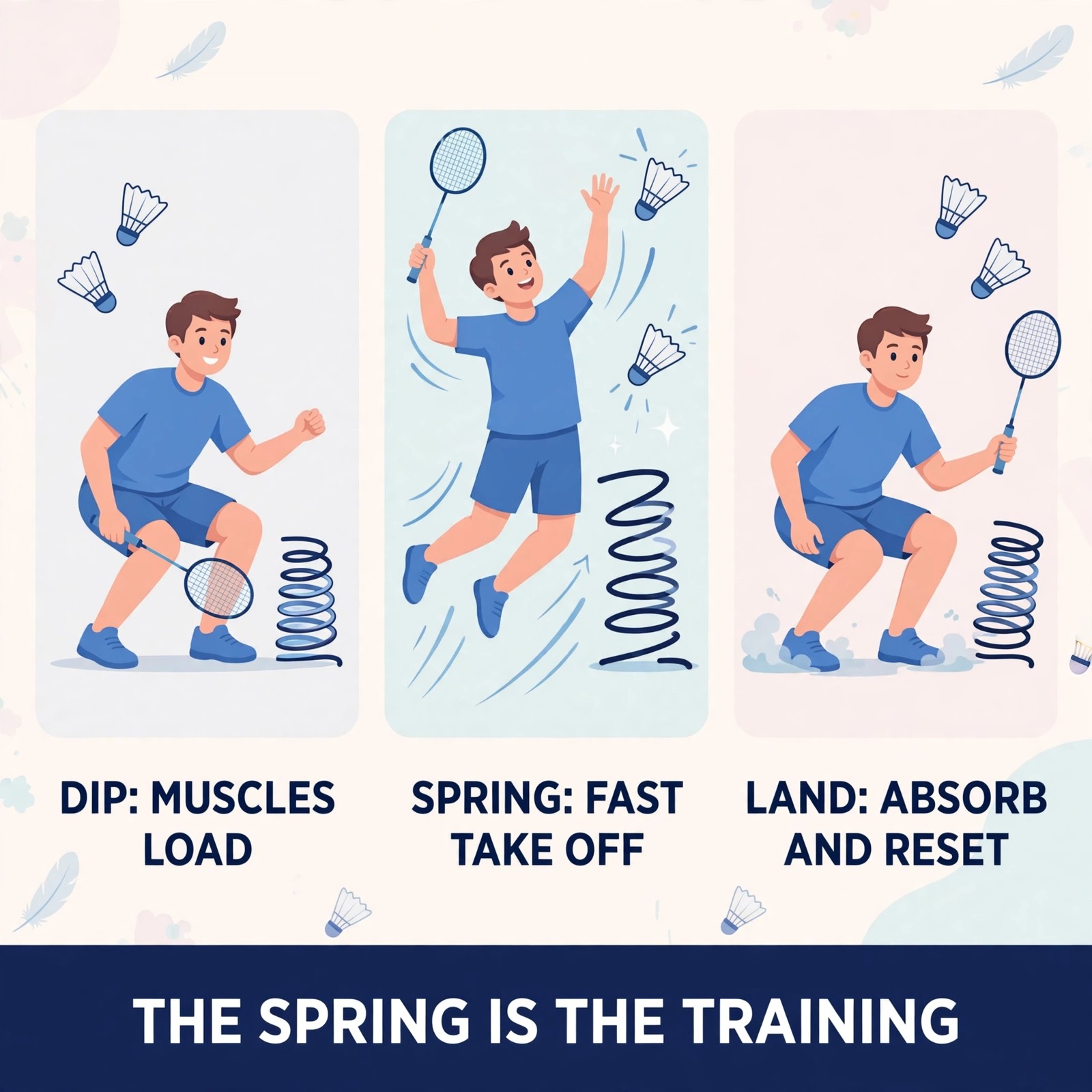
Jump Check #2
Landing Mechanics Come Before Height
Landing is the first skill, and it is coached before any player chases height. A good landing has a clear shape. You touch down on the front of the foot, not flat and never on the heels alone. The knees track over the toes, pointing where the feet point, never collapsing inward. The hips sit back, the chest stays up, and the whole landing is quiet. Quiet is not politeness; it is proof that your muscles absorbed the force instead of your joints. A coach can hear a bad landing from across the hall, and that sound is the first thing we fix.
The teaching drill is humble: the snap down and stick. Step off a low step or a small height, land in the shape described above, and freeze for two full seconds. No wobble, no extra step, no hands on knees. When a player can stick ten landings in a row, silent and still, they have earned the right to jump. Until then, height is just falling from further away. This gate feels strict, but it protects knees and ankles, and it makes every later drill safer and better. Landing is not the boring part of jump training. Landing is jump training.
Only after the gate do the shapes grow. First come jumps in place with a stick landing, then jumps that travel, then low hurdles, then single leg work for players whose two leg landings are flawless. Each step is earned, not scheduled. A player also learns to land from the actions badminton actually uses: land from a jump and turn, land and push back toward base, land on one leg in a lunge shape and hold it. The closer the landing looks to the game, the more the training carries over, provided the shape never breaks.

Jump Check #3
The Jump Menu: Bounds, Hops and Hurdles
With landings in place, the menu itself is small. The squat jump is the foundation: dip to a quarter squat and jump straight up, arms swinging, then land and stick before the next rep. It trains the basic spring both legs together, the same action behind a standing smash jump. Tuck jumps and repeated vertical jumps come later for stronger players, in very short sets. Every jump on the menu obeys the same rule: if the landing cannot be stuck quietly, the set is over, whether the plan said four more or not.
Bounds train the sideways and forward spring that rallies are made of. A lateral bound is a push off one foot, a flight sideways, and a landing on the other foot that must be stuck still. It is the jump version of defence: reach, land, hold, recover. Forward bounds and single leg hops follow the same pattern at higher demand, and they stay rare and careful, because one leg absorbs everything. Bounds also expose cheating. A player who cannot stick a bound is not ready for the height their ambition is asking for, and the drill tells the truth politely.
Hurdle hops finish the menu. Low, soft hurdles, jumped with both feet together, teach quick contacts: down and up with barely a pause, landings still quiet. The hurdles stay low on purpose. Height in this drill comes from the spring in your ankles and calves, not from climbing over a tall barrier with your knees around your ears. A line on the floor or a row of low cones does the same teaching job for beginners. When the contacts stay quick and the sound stays soft across a short set, the spring is learning its trade.

Jump Check #4
Low Contacts, Full Recovery, Safe Surfaces
Every landing in a plyometric session is counted, and the total is called contacts. Contacts are the dose, and the dose stays low. A beginner session might hold forty to sixty contacts in total, spread across drills with full rest between sets. Strong, experienced players still rarely pass a hundred. Counting sounds fussy until you realise what it prevents: the enthusiastic extra sets that turn a sharp training tool into a week of sore shins and complaining knees. The notebook where contacts are written is as much a part of plyometrics as the jumps are.
Rest is the other half of the dose. Between sets, you wait until jump quality can fully return: breathing settled, legs feeling springy again, landings easy to keep quiet. That usually means a minute or more, sometimes several. Plyometrics done tired teach the body to jump slowly and land badly, the exact opposite of the goal. This is why the work sits at the start of a session or stands alone. If a player asks whether they may do one more set, the answer lives in their last landing. Quiet and stuck: yes. Loud and wobbling: the session has already ended.
Surface and footwear are safety equipment, not details. Jump on a proper court floor or on mats, in court shoes that grip sideways and cushion the front of the foot. Never jump on concrete, tiles or wet floors, and never in running shoes with soft, tall heels that roll under sideways landings. Check the space as well: clear floor, no stray shuttles underfoot, room to land without dodging furniture. Most plyometric injuries are not caused by the jumps. They are caused by the floor, the shoes or the clutter that somebody meant to move.
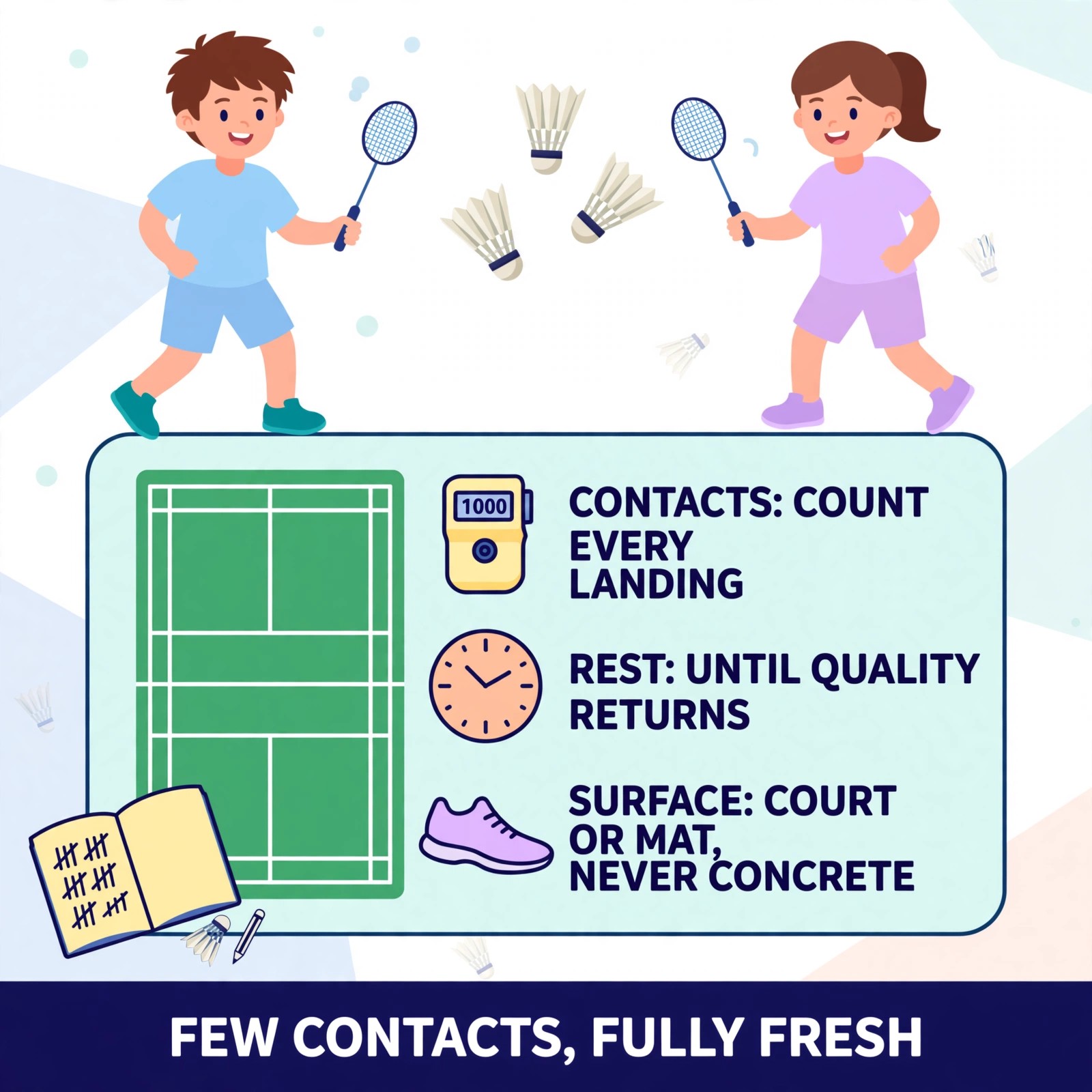
Jump Check #5
How Plyometrics Fit the Training Week
In the training week, plyometrics take a small, protected slot. Once a week is enough for most players; twice suits stronger players with clean landings and no joint complaints. The sessions are short, often fifteen to twenty minutes of actual work inside the rests. Place them on fresh legs: before court training begins, or on a day of their own, and never the day before an important match. Jump work and heavy leg lifting also dislike sharing a day. Give the spring its own space and it returns the favour on court, in the third game, when a tired opponent’s jumps have gone quiet in the wrong way.
Progress shows up in measures, not feelings. The same low step, the same stick test, the same standing jump measured against a wall mark or a reach, repeated every month or so. Contacts rise slowly, drills move one step along the ladder, and landings stay silent throughout. What you are really tracking is the sound and the stillness. When a player lands like a cat in month three who landed like a falling wardrobe in month one, the training is working, whatever the tape measure says.
Young players can do plyometric work, and most already do: it is called playing. Hopping games, skipping and low jumps with coached landings suit young legs well, provided the contacts stay low, the surfaces stay kind and a coach watches the shapes. What young players should not do is high volume jumping, depth jumps from heights, or tired jumping to exhaustion. The rules protect growing joints while the habits form. At our academy the youngest groups meet jumping through games first, and the formal menu arrives only when landings are tidy enough to deserve it.

Myth vs Reality
Myths About Plyometric Training
Myth one: more jumps means more power. Plyometrics obey the opposite maths. The training effect lives in the quality of each contact, and quality falls as contacts pile up. Past a modest total, extra jumps mostly practise slow take offs and sloppy landings, while adding pounding that knees must pay for. The best jump sessions in our hall look short enough to disappoint visitors. Then the players land, silently, like the floor is made of glass, and the visitors understand.
Myth two: tired legs jump best, because that is match conditions. Matches do ask for jumps on tired legs, but training is where you teach the jump itself, and a tired body teaches a broken version. You would not practise a smash with ruined technique just because matches get messy late. The spring is trained fresh so that the good pattern is the one burned in. Match toughness comes from match play. Jump quality comes from fresh, rested reps, and confusing the two produces players who are very good at jumping badly.
The honest summary is that plyometrics are a sharp tool with a small handle. Train the spring with a few well chosen jumps. Land before you leap: knees tracking, weight forward, everything quiet and stuck. Count the contacts, rest until quality returns, and respect the floor and the shoes. Fitted into the week in small, fresh doses, this work changes how a player leaves the floor and, just as much, how they come back to it. The jump smash gets the applause, but the landing is what lets you play the next shot, and the next hundred matches.

Why Choose Us
Why Players Choose ST Badminton Academy
At ST Badminton Academy, plyometric work is coached inside our regular sessions in small groups of no more than four students. Every player passes the landing gate first: snap down, stick, hold, in silence. Only then do hurdles, bounds and single leg work enter, matched to the player’s shapes rather than their enthusiasm. Contacts are counted and written down, so a month of jump work can be read at a glance. Badminton stays the main sport; the jumps exist to serve the rallies.
Head coach Eric Chuar leads the programme, with over 15 years of coaching experience across Singapore and Malaysia. Eric’s first question about any jump drill is about the landing, never the height. He will lower a hurdle, shorten a set or send a player back to stick landings without apology, because he has seen what tidy landings do for a player’s knees across a long season. His rule hangs over every session: if it is not quiet, it is not finished.
You will find us in Setapak, Kuala Lumpur, easy to reach from Wangsa Maju, Melati Utama, Danau Kota and Gombak. If your jump smash feels heavy, your landings are loud, or your legs feel slow to leave the floor late in matches, come and try a session with us. We will start with the snap down and stick, because that is where jumping truthfully begins, and build your spring from there.
FAQs: Badminton Plyometric Training in Malaysia (KL)
Plyometrics raise fair questions, especially about landings, home training and sore legs. Here are the answers we give most often.
Where can I train badminton plyometrics if I live in Setapak or Gombak?
With us, in Setapak. ST Badminton Academy is based in Setapak, Kuala Lumpur, and players travel in from Gombak, Wangsa Maju, Melati Utama and Danau Kota. Plyometric work is coached inside our small group sessions on proper court flooring, so your landings are checked before any height or volume is added to your jumps.
What matters most for jump training in KL?
Landing quality, by a long way. Quiet feet, knees tracking over the toes, hips back and a still hold decide whether jump training helps you or hurts you. Height, contacts and new drills all come second. A player who lands well can progress for years. A player who lands badly is borrowing against their knees.
How often should I do plyometrics to improve at a steady level?
Once or twice a week is the range that works for most players, in short sessions with full rest between sets. Beginners start at once, with a low contact count, and earn the second day only when landings stay quiet. More often is not better with jump work. The spring needs days to rebuild between sessions.
Can I start plyometric training at home with no equipment or partner?
Yes, the beginning of the menu travels well. Snap downs from a low step, jumps in place with stick landings and low hops need no equipment, just a kind floor, proper shoes and clear space. What home cannot give you is a coach watching your knees, so learn the landing shapes in a session first.
Should plyometrics come before or after court training in a session?
Before, while your legs are fresh. Plyometrics teach the spring, and the spring only fires properly when you are rested. Put jump work at the start of a training day or in its own short block. After hard court training, finish with steady work and stretching instead. Tired jumping teaches slow, loud habits.
Do you offer plyometric and jump coaching near Wangsa Maju?
Yes. Our base is in Setapak, a short drive from Wangsa Maju, and jump coaching runs inside our regular small group sessions rather than as a separate course. Your landing gate, contact counts and drill progressions are set by a coach who watches every set you do.
Does your academy check landing form before adding jump height in Malaysia?
Yes, always. No player at our academy adds height, hurdles or single leg work until their two leg landings are silent and stuck, every time. The check happens in your first sessions and again whenever a new drill arrives. It is the rule that keeps jump training a help instead of a hazard.
Where does ST Badminton Academy coach plyometric training?
At our home base in Setapak, Kuala Lumpur. Plyometric work happens inside regular badminton training on proper courts, with no more than four students in a group. Players come in from Wangsa Maju, Gombak and across the Klang Valley, and trial sessions can be arranged through the academy.
What makes Mr Eric Chuar a suitable coach for jump training in badminton?
Eric starts every jump conversation with the landing. He checks the shape first: front of the foot, knees tracking, hips back, total quiet. Then he sets small contact counts, long rests and simple drills, and only raises the demand when the landings stay perfect. After 15 years of coaching, he credits that patience for jumpers who stay healthy.
Badminton Plyometric Training in Action


One Standard for Every Player and Every Session
Hold your plyometric training to five standards. Land before you leap: shape and silence first, height later. Count every contact and keep the total low. Rest until quality fully returns between sets. Court floor, court shoes, clear space, every time. And write the session down, so progress is proven. Standards like these keep a sharp tool safe. Kept across a season, they build a spring your opponents can hear, mostly by how quiet it is.
| Factor | Random Jumping | Planned Plyometric Training JUMPS |
|---|---|---|
| Frequency | 1 or 2 times a week. Mostly for fun and sweat. | One or two short jump sessions a week, always on fresh legs. |
| Drills Focus | Basic static feeding. Minimal footwork pressure. | Stick landings, bounds and low hurdles with counted contacts and full rest. |
| Physical Conditioning | Rarely included. Just playing games on court. | Core, agility, and speed training included in every session to prevent injury and build stamina. |
| Tactical Awareness | "Just hit it over." No real game plan. | Video analysis, point construction, and learning to read the opponent's game. |
| Coach Ratio | Large groups (8-10 kids). Coach barely watches you. | Max 4 students. Mr Eric Chuar personally corrects every stroke and movement detail. |
| Goal Setting | Fun and exercise. | Landings checked for silence first, jump progress logged second. |
| Long Term Result | Good recreational player. | A player who leaves the floor faster and lands ready for the next shot. |
Badminton Plyometric Coaching in Kuala Lumpur
Plyometrics train the spring that badminton is played on: the fast switch between landing and taking off. Learn to land quietly and stick it, keep the menu small, count the contacts, and rest like it matters, because it does. If you would like your jumps coached rather than copied from videos, train with us in Setapak. Bring your court shoes and your questions. We will start with your landing, and build your spring from there.






