My Child Uses the Same Grip for Every Badminton Shot
Your child can hit a shuttle, but the racket stays in much the same position for every shot. A new coach notices it and says the grip needs attention. After years of lessons, it is natural to ask why nobody dealt with it earlier. First find out which task is affected and what your child needs to learn.
Discuss your child’s training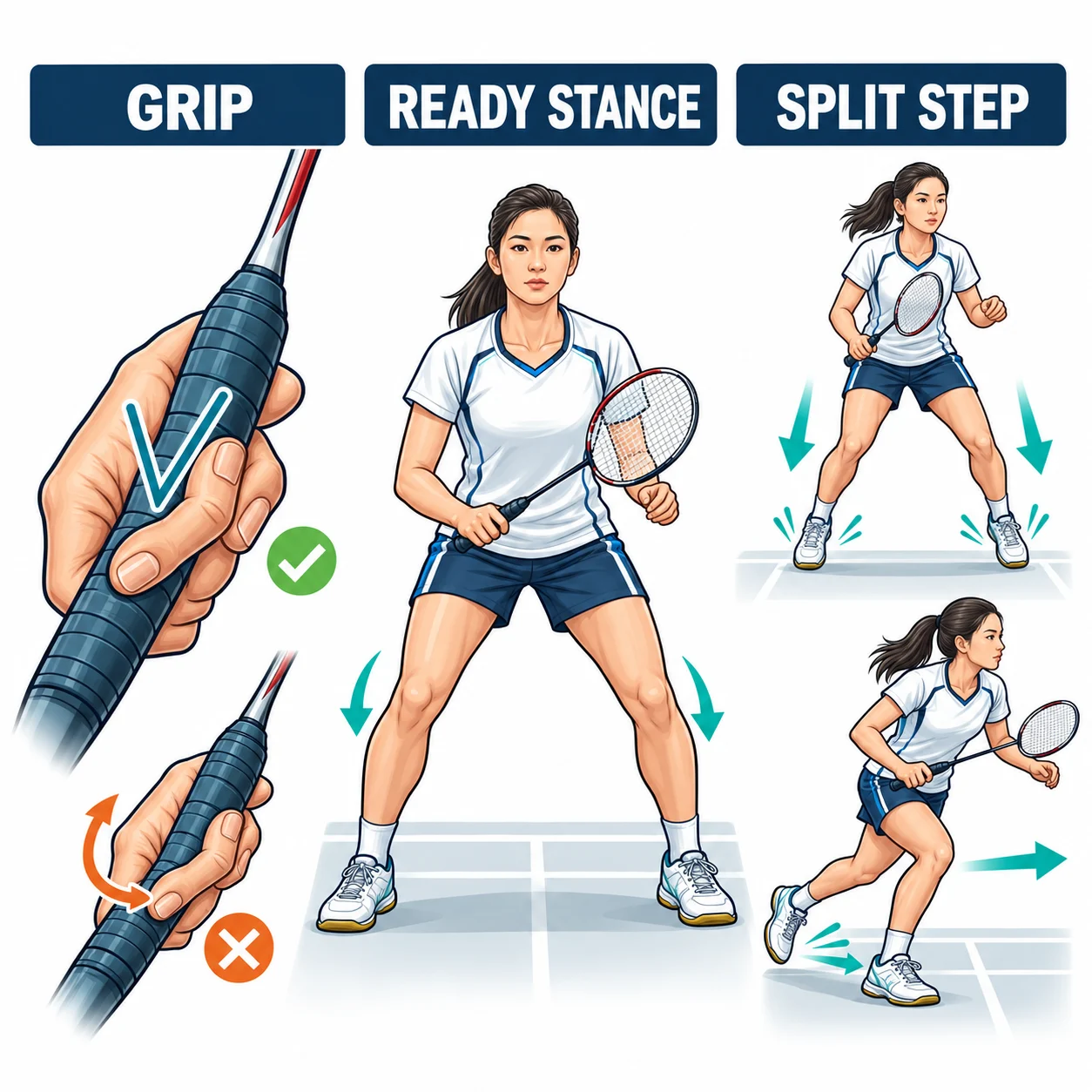
Do not judge the grip from a still photograph
Badminton does not ask for one fixed hand position in every situation. The useful question is whether your child can make the adjustment needed for the actual shot. A racket position that works for a shuttle in front of the body may not serve the same purpose in another task.
Ask the coach to demonstrate the relevant situation, rather than treating every familiar-looking grip as a mistake. Some families hear “panhandle” and assume it is always forbidden. The coach should explain the context, the alternative and what difference it makes to contact or shot choice.
Separate knowing the position from changing into it
A child might show the requested grip when standing still, then return to the old position as soon as a shuttle arrives. That does not necessarily mean they ignored the lesson. The adjustment may not yet be available when attention shifts to judging and hitting the shuttle.
Ask the coach to compare a simple demonstration, a controlled feed and a small rally task. Those are different demands. If the child succeeds only when someone positions the racket for them, the next practice should help them recognise and make the adjustment themselves.
A simple checklist for your next conversation
| What happens | What to ask the coach |
|---|---|
| The child demonstrates a grip but loses it when hitting | Can we separate the adjustment from the full shot? |
| The same position is used for different tasks | Which situation needs a different grip, and why? |
| A parent has to arrange the child’s hand | How can the child recognise and make the adjustment independently? |
| The new grip appears only in easy feeds | What is the next step towards using it in a rally? |
Ask for a task with a clear purpose
A useful practice could focus on changing between two agreed racket positions in an easy task before adding movement or uncertainty. The coach must choose the actual grips and feed after observing the child. Parents should not prescribe angles from an online image.
Know the cue your child has been given. “Hold it properly” does not tell a learner what to try next. Ask for a demonstration and an explanation in words your child can repeat. Keep the practice manageable enough for the coach to see whether the change is happening.
What parents can do between lessons
Ask whether any home practice is needed at all. If it is, have the coach show both the task and what to check. You can help your child remember the agreed cue without moving their hand into a position you do not fully understand.
Avoid combining a lesson cue with several video tips about squeezing, wrists and power. A child trying to learn one adjustment can end up being coached by three different voices. If you are unsure, write down the question and take it back to the coach.
Look for use in the game, not a perfect demonstration
When reviewing progress, ask whether the child can choose and change grip in the agreed task with less prompting, and what happens as the next shuttle becomes less predictable. A stronger shot alone does not show that the adjustment is understood.
If the old grip keeps returning, discuss whether the task is too complex, whether the cue is clear or whether the priority needs changing. Do not label the child lazy. A practical assessment can decide whether focused foundation work in the current group or a more individual format makes sense.
Questions parents ask
Is a panhandle grip always wrong?
Do not decide from a label alone. Ask the coach which situation is being assessed and why a different adjustment is needed there.
Should I change my child’s grip myself?
Only help with a task the coach has clearly demonstrated. If you do not understand the adjustment, ask again instead of moving the hand by guesswork.
Will a new racket solve the habit?
An equipment change does not explain whether the child understands or uses the required adjustment. Ask the coach to assess that before making a purchase.
Does returning to the old grip mean the child is not trying?
Not necessarily. Observe the demands of the task and whether the child can perform the adjustment with fewer prompts in a simpler setting.
A practical next step
Ask for a grip assessment in a specific shot situation. Agree on one cue, one practice task and how the coach will check it when the game becomes less predictable.
Compare badminton training options and children’s private badminton training. Confirm the suitable group, venue, times and fees directly before enrolling.
For the wider picture, read the slow-progress review, the guide to changing established habits, or return to badminton learning problems.